
Same-Day Service Available
00
Hrs
00
Mins
00
Secs
Need a Plumber in Knoxville? We’re Ready to Help!
Same-Day Service Available
Need a Plumber in Knoxville? We’re Ready to Help!
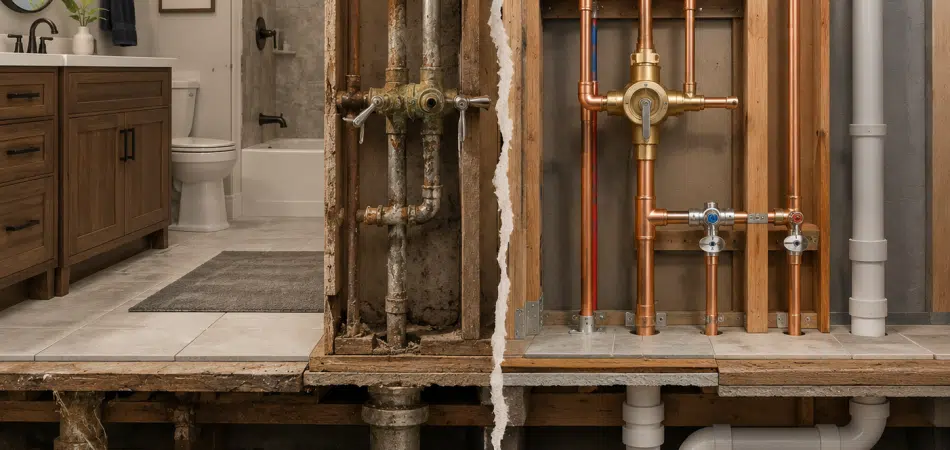
Bathroom upgrade lists usually stop at tile, paint, and vanity styling. The upgrades that change how a Maryville bathroom actually performs are hidden behind those surfaces: the valve, the stops, the supply lines, the drain, and the fixtures that regulate how much water leaves the house. Those are the changes homeowners notice every day, and several of them are far easier to make while a wall is already open. Households comparing Maryville plumbing services tend to ask about them in the wrong order.
Tennessee Standard Plumbing handles bathroom plumbing across Maryville, Alcoa, Rockford, and the rest of Blount County, including faucet work, shower and tub services, toilet work, and the drain and supply piping behind them. Our team sees the same upgrade requests come up again and again in Blount County homes, and the reasons behind them are practical rather than decorative.
This page covers the plumbing side of a bathroom upgrade. It does not cover layout, storage, lighting, or tile selection, and it does not price any of the work, since no named local source for Maryville pricing exists.
Fixture swaps are the most requested bathroom plumbing upgrade because they are visible, quick, and measurable on a water bill. Toilets, showerheads, and faucets each have a published efficiency standard, and older versions of all three move considerably more water than current models. The savings come from the fixtures themselves rather than from any change in habits.
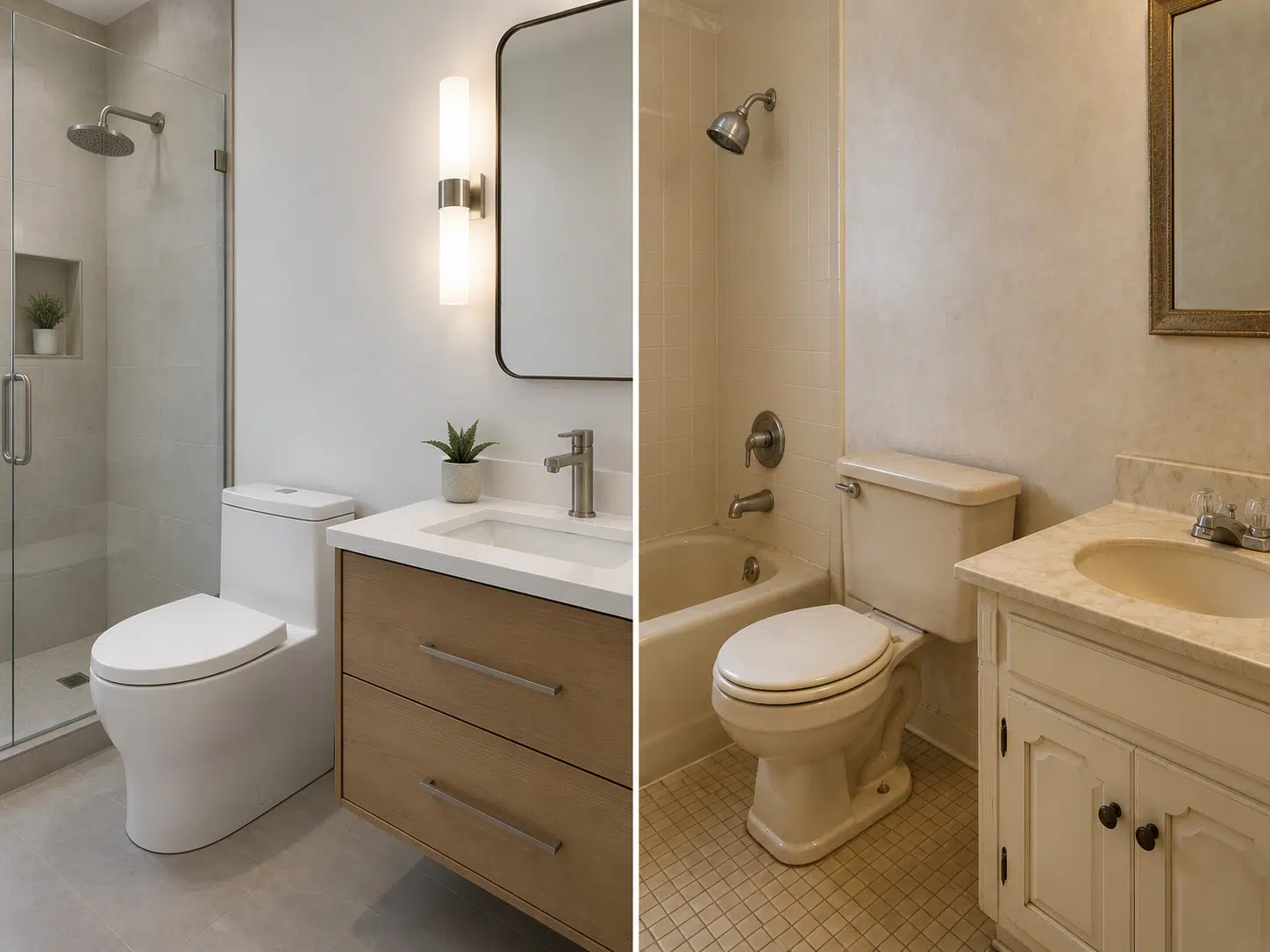 The EPA WaterSense program labels toilets that use 1.28 gallons per flush or less, against older toilets that the agency says can use as much as 6 gallons per flush. EPA reports that replacing inefficient toilets can reduce water used for toilets by 20 to 60 percent, which it puts at nearly 13,000 gallons of savings for a home every year, and more than $170 per year in water costs. Those are national figures from the agency, not Maryville-specific measurements.
Standard showerheads use 2.5 gallons per minute, and EPA says showerheads earning the WaterSense label must demonstrate they use no more than 2.0 gallons per minute. The agency reports that the average family could save 2,700 gallons per year and more than 330 kilowatt hours of electricity annually by installing labeled showerheads. The electricity figure matters because a share of shower water is heated water.
WaterSense labeled bathroom sink faucets and accessories carry a maximum of 1.5 gallons per minute. EPA puts the savings for an average family replacing old faucets at 700 gallons of water per year and nearly 11,000 gallons over the lifetime of the faucets. An aerator swap is the cheapest version of this upgrade and is often the first thing tried in a Maryville home before a full faucet replacement.
Efficiency figures assume the old fixture was inefficient. A house whose toilets were replaced within the last decade has less to gain than a house running original 1980s fixtures. Water heating is the other half of the picture, since reducing hot water volume reduces the energy used to heat it. A household deciding where to start usually gets the clearest answer by checking the age of the fixtures rather than the look of them. The toilet is often the practical starting point, and toilet repair and installation is a self-contained job that does not require opening a wall.
The controls are where comfort and safety live. A shower that swings hot when a toilet flushes, a bathroom with no shutoff, and a fixture stop that will not close are valve problems rather than fixture problems. These upgrades are less visible than a new faucet and make a larger difference to how the room behaves.
Section P2708.4 of the 2018 International Residential Code, the residential code Tennessee has adopted, calls for individual shower and tub-shower combination valves to be balanced-pressure, thermostatic, or a combination of the two, conforming to ASSE 1016 or ASME A112.18.1, and equipped with a means to limit the maximum setting to 120 degrees Fahrenheit. Homes still running older two-handle valves are the ones where a flushed toilet changes the shower temperature.
Many older Blount County homes lack the ability to isolate a single bathroom, which can turn a small repair into a whole-house water shutdown. Adding an accessible shutoff for the bathroom group is a modest change that pays off the first time a fixture fails at an inconvenient hour. It is far cheaper to add while a wall is open than as a standalone project later.
The small angle stops under a sink and behind a toilet are the parts most likely to be seized when they are finally needed. Replacing tired stops and swapping older supply connectors for current braided ones is a low-cost upgrade that is usually bundled into other work. Connectors are generally treated as replaceable parts rather than components to be reused indefinitely.
Maryville’s cross-connection rules address this directly. Under the city’s backflow requirements, a device for the control of thermal expansion is to be installed on a customer’s water system where thermal expansion would push pressure past the setting of the water heater’s pressure relief valve, so that the relief valve does not discharge. Whether a specific home needs one depends on the system, and the water department is the office to ask.
Older bathrooms hide their real condition until a wall opens. Galvanized supply runs, undersized or poorly vented drains, and piping joined from several eras are common findings in Blount County houses. None can be confirmed from a walkthrough, and none is certain in any given home, but an open wall is the cheapest moment to deal with them.
Galvanized steel supply piping corrodes from the inside, narrowing the bore over time and reducing flow at the fixture. Pressure complaints in an older bathroom sometimes trace back to the piping rather than to the fixtures or the street pressure. Whether replacement is warranted depends on inspection rather than on the age of the house alone, and homeowners can read more about local piping materials in the guide to whether Maryville homes still have galvanized or lead pipes.
A drain that gurgles or empties slowly after cleaning may be a venting issue rather than a blockage. Adding a fixture to an existing bathroom, or converting a half bath to a full bath, brings drain sizing and venting into the conversation because the existing arrangement was sized for the original fixture count.
Adding a bathroom below the level of the sewer line generally requires a pump rather than gravity drainage. Maryville’s plumbing code amendments also set specific requirements for building sewers, including a minimum 18 inch separation between the water service and the building sewer, which is stricter than the base code figure of 12 inches. Projects that reach the yard run into those provisions.
The economics of a bathroom upgrade shift once demolition is done. Shutoffs, valve replacement, supply line upgrades, blocking for future grab bars, and drain corrections all cost far less as part of open-wall work than as separate visits. Deciding what goes on that list before demolition, rather than during it, is the practical way to avoid change orders.
Aging in place drives a growing share of bathroom projects in Blount County, and several of those changes are plumbing work rather than hardware work. Seat height, threshold height, and where the water actually comes out all depend on decisions made before the finished surfaces go on, which is why they belong in the planning conversation.
Comfort-height bowls sit higher than the older standard and are often chosen when a household is planning. Wall-hung units move the tank into the wall, which changes the framing and the rough-in rather than only the fixture, so they are a larger project than a standard swap.
Removing or lowering the curb is the access change with the biggest structural consequence, because the floor has to hold the slope without a raised edge. On a crawl space that generally means recessing framing, and on a slab it can mean modifying concrete. The finished result looks simple and the work underneath is not.
A handheld unit on a slide bar is a modest change that makes a shower usable seated or standing. It pairs naturally with a valve upgrade, since the valve and diverter arrangement determines what outlets are possible. Doing both at once avoids opening the same wall twice.
Grab bars need solid backing to hold a load, and adding blocking is close to free while the studs are exposed. Households that expect to add hardware later often have blocking installed during a shower project even when no bars are going in yet, which keeps the option open without a second demolition.
The short version: fixture swaps deliver measurable water savings when the old fixtures were inefficient, valve and shutoff upgrades change how the room behaves day to day, older piping and venting are best addressed while a wall is open, and access changes need to be decided before framing rather than after. Permit questions belong to the City of Maryville Building Official for addresses inside city limits, and to Blount County Development Services for unincorporated territory.
Tennessee Standard Plumbing handles bathroom plumbing, faucet repair and installation, shower and tub services, toilet repair and installation, and the supply and drain work behind them across Maryville and Blount County. If a household is weighing which upgrades to bundle into one visit, we can walk the bathroom and lay out what the existing plumbing allows. Call us at (865) 352-9003 or contact our team to set up a visit.
We serve Maryville, Alcoa, Rockford, Friendsville, and communities across Blount County and East Tennessee.
Replacing an old toilet usually delivers the largest single reduction. EPA WaterSense labels toilets at 1.28 gallons per flush or less against older units that can use as much as 6 gallons, and the agency reports that replacing inefficient toilets can cut toilet water use by 20 to 60 percent. Those are national averages, and the actual saving depends on how inefficient the existing fixture is.
That behavior points to an older shower valve without pressure balancing. The 2018 International Residential Code calls at P2708.4 for balanced-pressure, thermostatic, or combination valves with a means to limit the maximum setting to 120 degrees Fahrenheit. Correcting it means replacing the valve body inside the wall, not just the visible handle and trim.
A showerhead swap is one of the simpler fixture changes, since it threads onto the existing arm. Complications turn up when the arm is corroded, the threads are damaged, or the existing valve limits flow for another reason. If flow is still poor after the swap, the issue is usually upstream of the head.
A comfort-height bowl sits higher than the older standard height, and many households find it easier to use. Whether it suits a particular home depends on who uses the bathroom, since a higher seat is not preferable for everyone, including small children. It is a common choice when a toilet is being replaced anyway.
It is a practical upgrade in homes that currently have to shut off water to the whole house for a single fixture repair. The cost is much lower when it is added during work that already has a wall open. Whether it is feasible depends on how the existing supply piping is arranged.
Some do, and galvanized steel corrodes from the inside, narrowing the bore and reducing flow over time. Age alone does not establish that a home has it or that replacement is warranted. That is determined by inspecting the actual piping, and the decision between repair, partial replacement, and full replacement depends on what the inspection finds.
It depends on scope and on whether the address is inside city limits. The City of Maryville notes that ordinary minor repairs may be made with the approval of the Building Official without a permit, while work that alters plumbing generally falls under the permit and inspection process. Call the city at 865-273-3500, or Blount County Development Services at 865-681-9301 for unincorporated addresses.
It controls the pressure rise that occurs when water is heated in a closed system. Maryville’s backflow rules call for a thermal expansion control device on a customer’s water system where expansion would push pressure past the setting of the water heater’s relief valve, so the relief valve does not discharge. Whether a specific home needs one depends on the system, and the City of Maryville Water and Sewer Department is the office to ask.
Many households do it during a shower project because the studs are already exposed and the added material is minor. Grab bars need solid backing to hold a load, and installing that backing later usually means opening a finished wall. It keeps the option available without committing to the hardware now.
Anything that requires the wall or floor to be open. Valve replacement, a bathroom shutoff, supply line upgrades, drain corrections, and grab bar blocking all cost far less bundled into one project than as separate visits. Deciding that list before demolition, rather than during it, is what keeps change orders down.
Same-day Service Available
Mon – Fri: 7:30 am – 5:00 pm