Same-Day Service Available
00
Hrs
00
Mins
00
Secs
Need a Plumber in Knoxville? We’re Ready to Help!
Same-Day Service Available
Need a Plumber in Knoxville? We’re Ready to Help!
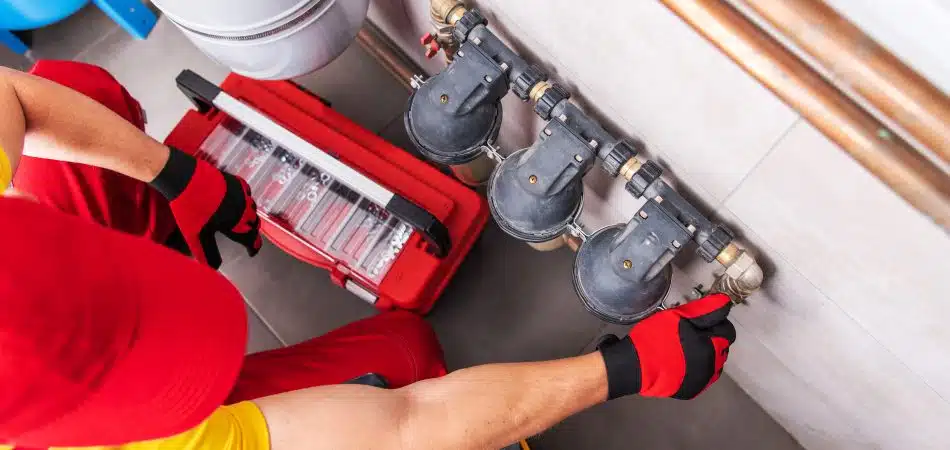
Commercial plumbing in Maryville is not residential plumbing at a larger scale. A restaurant, a multi-tenant office building, and a school each carry obligations a house does not, and several of those obligations come straight out of the City of Maryville’s own ordinances rather than from general practice. Operators comparing Knoxville plumbing services usually want to know two things: what is available, and what the city expects of the building.
Tennessee Standard Plumbing serves both homes and businesses across Maryville, Alcoa, Rockford, and Blount County. Our commercial plumbing work covers repairs, installations, underground plumbing, water line boring, backflow testing and certification, and boiler and commercial water heater services. This page maps those categories to local rules that often catch building owners by surprise.
No pricing appears here. Commercial plumbing cost depends on the building, the system, access, scheduling, and contract terms, and no named, dated local source exists for Maryville figures.
Commercial work divides into four broad areas: repairs to an operating system, installations for new construction or a fit-out, underground and site work outside the building, and mechanical equipment such as boilers and commercial water heaters. Most Maryville businesses touch all four over a building’s life, though rarely at the same time.
Repair work on an occupied commercial building carries a constraint a house does not: the building has to keep operating, or the downtime itself becomes the largest cost. Fixture failures, supply leaks, drain blockages, and water heater faults all get triaged against how much of the building they take offline and how quickly the business can absorb the interruption.
New commercial installation covers everything from a tenant fit-out in an existing shell to full plumbing for new construction. Fixture counts, drainage sizing, venting, water supply capacity, and equipment connections are set at this stage. Maryville’s plumbing amendments apply here, including the requirement that a common building sewer line be a minimum of six inches in diameter.
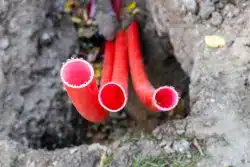 Site work outside the building includes water service lines, building sewers, and the boring methods used to install piping without open-cut trenching across a parking lot or a drive. Maryville’s code sets specific local requirements for this work, including a minimum 18 inch separation between the water service and the building sewer, which is stricter than the base code figure of 12 inches, and a prohibition on bends greater than 45 degrees in the building sewer.
Commercial hot water and heating equipment is a category of its own, covering installation and repair for boilers and for commercial water heaters. These systems tend to serve the whole building, so a failure has broader consequences than a single fixture problem, and their maintenance schedules are usually tied to the building’s operating calendar rather than to a complaint.
This is the obligation most commonly missed by Maryville business owners, and the city’s rule is unambiguous. The municipal code states that all commercial cross-connections will require backflow prevention assembly installation, and that assemblies must be tested no less than once every twelve months, or more often as the city deems necessary.
Maryville’s cross-connection chapter puts the requirement plainly, and it authorizes city employees with proper identification to access premises supplied with potable water to conduct hazard assessments. Refusing access has a consequence: the code provides that the plumbing system is then classified as a high hazard connection, with water service subject to termination if access is not provided within the stated window.
The code requires testing on every new and repaired assembly before the city accepts it and before use, and at intervals of not more than twelve months after that. Testing is to be performed by persons holding a valid Certification of Competency in Testing and Evaluation of Backflow Prevention Assemblies issued by the state Division of Water Supply, using a valid test kit certification.
Some buildings cannot lose water while an assembly is tested or repaired, and Maryville addresses that directly. The code calls for duplicate backflow prevention assemblies where water is critical to normal operations, protection of life, property, or equipment, naming apartment or residential housing buildings, barber shops or beauty salons with four or more chairs, dental or medical facilities, multi-tenant buildings served by a single water service line, and restaurants.
Maryville treats lawn irrigation separately. The code provides that irrigation systems be protected by a reduced pressure principle assembly or reduced pressure principle detector assembly, and states that double check valves cannot be used for lawn irrigation on either public or well water systems. It also sets a seasonal expectation, requiring irrigation assemblies to be installed and in service no later than May 1 each year and to remain so until September 30 to allow for annual inspection and testing. Details of the service itself are covered under commercial backflow testing and certification.
Food service operators in Maryville run into the sewer use ordinance early. The city’s pretreatment program exists to comply with the Clean Water Act, Tennessee’s General Pretreatment Regulations, and the federal pretreatment regulations at 40 CFR Part 403, and it sets requirements for what a business may send into the collection system.
The ordinance calls for gravity-type separators, interceptors, or similar devices for removing oil, grease, sand, grit, glass, entrails, or other material likely to create or contribute to a blockage of the wastewater collection system, at commercial sources where required by the plumbing code or by other city ordinance or regulation. It also provides that the need for traps or separators is assessed during site plan review of proposed commercial and industrial developments.
The code specifies that such devices be of a type and capacity approved by the control authority, and located so as to be readily and easily accessible for cleaning, pumping, and inspection. Access is a design decision rather than a maintenance afterthought, and an interceptor placed where a pump truck cannot reach it creates an ongoing operating problem.
Maryville’s code refers directly to the prohibition on the discharge of chemicals and cooking grease into the sanitary sewer system. Beyond that general prohibition, the ordinance sets numeric limits on wastewater strength for a list of parameters, and provides that users discharging above those concentrations may be subject to fines or other enforcement action.
The city acts as the control authority for its pretreatment program, which includes reviewing and approving devices, issuing wastewater discharge permits where they apply, and monitoring. The ordinance also provides for annual public notification, published in the local newspaper, naming industrial users that failed to meet pretreatment program requirements during the previous twelve months. Businesses uncertain whether a permit applies to their operation should ask the city rather than assume.
 Different building types carry different plumbing obligations in Maryville, and the city’s own ordinances draw some of those distinctions explicitly. Food service, multi-tenant buildings, and institutional facilities each appear by name in the code, which makes their requirements easier to anticipate than most operators expect.
Food service carries the heaviest overlap. Restaurants appear in the backflow chapter as a property type where duplicate assemblies are called for, and grease interceptor requirements apply to commercial sources under the sewer use ordinance. Drain maintenance tends to be scheduled rather than reactive in these buildings because a blocked line closes the kitchen. Property-specific considerations are covered further on the page for restaurant managers.
Buildings served by a single water service line are named in Maryville’s duplicate assembly provision, alongside apartment and residential housing buildings. The practical consequence is that testing or repairing a single assembly would otherwise interrupt every tenant, so the code anticipates the problem at the design stage rather than at the test date.
Institutional buildings tend to have long fixture runs, high peak demand in short windows, and maintenance schedules built around occupancy calendars. Dental and medical facilities are named in the duplicate assembly provision as well, reflecting how much their operations depend on uninterrupted water.
Permit authority follows the address. The City of Maryville handles permits and inspections inside city limits through its Building Official, reachable at 865-273-3510, with permit information at 865-273-3500. Blount County Development Services handles unincorporated territory at 865-681-9301. Maryville’s code also provides that a new building shall not be occupied, and a change of occupancy or use shall not be made, until the Building Official has issued a Certificate of Occupancy.
Four points sum it up. The service categories available cover repairs, installations, underground work and boring, backflow testing and certification, and boiler and commercial water heater work. Backflow assemblies on commercial cross-connections carry a twelve-month testing requirement and a state certification requirement for whoever tests them. Grease interceptors and the sewer use ordinance drive most food service obligations. And permit authority depends on whether the property sits inside Maryville city limits or in unincorporated Blount County.
Tennessee Standard Plumbing handles commercial plumbing repairs, commercial plumbing installations, commercial underground plumbing, commercial water line boring, commercial backflow testing and certification, and commercial boiler and water heater services for businesses across Maryville, Alcoa, Rockford, and Blount County. We work with apartment complexes, condo associations, government buildings, offices, property managers, restaurants, schools, and universities. Call us at (865) 352-9003 or book an appointment to talk through a building.
We serve Maryville, Alcoa, Rockford, Friendsville, and communities across Blount County and East Tennessee.
The main categories are commercial plumbing repairs, commercial plumbing installations, commercial underground plumbing, commercial water line boring, commercial backflow testing and certification, and commercial boiler and water heater services. Which of those a building needs depends on its use, its age, and whether the work is corrective, planned, or part of new construction.
The City of Maryville’s cross-connection chapter states that all commercial cross-connections will require backflow prevention assembly installation. Whether a specific connection at a specific building qualifies is determined through a hazard assessment, and the code authorizes city employees with proper identification to access premises supplied with potable water to conduct one.
The city’s code requires that all backflow prevention assemblies be tested no less than once every twelve months, or more often as the city deems necessary. New and repaired assemblies are also inspected and tested before the city accepts them and before use. Confirm current requirements with the City of Maryville Water and Sewer Department.
Maryville’s code provides that assemblies be tested by persons holding a valid Certification of Competency in Testing and Evaluation of Backflow Prevention Assemblies issued by the state Division of Water Supply, using a valid test kit certification. Building owners should confirm that whoever tests their assemblies holds that certification and that the test kit certification is current.
Maryville’s code calls for duplicate assemblies where water is critical to normal operations or to the protection of life, property, or equipment, so that service does not have to be interrupted for testing or repair. It names apartment or residential housing buildings, barber shops or beauty salons with four or more chairs, dental or medical facilities, multi-tenant buildings on a single water service line, and restaurants.
The sewer use ordinance calls for separators or interceptors at commercial sources where required by the plumbing code or by other city ordinance or regulation, for removing oil, grease, sand, grit, and similar material likely to contribute to a blockage. The need is also assessed during site plan review of proposed commercial developments, so the applicable determination comes from the city.
No. Maryville’s code refers to the prohibition on the discharge of chemicals and cooking grease into the sanitary sewer system. The ordinance also sets numeric limits on wastewater strength for a list of parameters and provides that users discharging above those concentrations may be subject to fines or other enforcement action.
The City of Maryville handles permits and inspections inside city limits through its Building Official, with permit information published at 865-273-3500 and the Building Official at 865-273-3510. Blount County Development Services handles unincorporated territory at 865-681-9301. Which office applies depends on the address rather than the mailing city.
Maryville’s code provides that a new building shall not be occupied, and a change in occupancy or in the nature or use of a building shall not be made, until the Building Official has issued a Certificate of Occupancy. The code lists fire protection systems, mechanical systems, utility systems, site work beyond the building, and general building construction requirements among the items tested or approved beforehand.
Yes. Maryville’s code provides that lawn irrigation systems be protected by a reduced pressure principle assembly or reduced pressure principle detector assembly, and states that double check valves cannot be used for lawn irrigation on public or well water systems. It also expects irrigation assemblies to be installed and in service from May 1 through September 30 each year to allow annual inspection and testing.
Same-day Service Available
Mon – Fri: 7:30 am – 5:00 pm