
Same-Day Service Available
00
Hrs
00
Mins
00
Secs
Need a Plumber in Knoxville? We’re Ready to Help!
Same-Day Service Available
Need a Plumber in Knoxville? We’re Ready to Help!
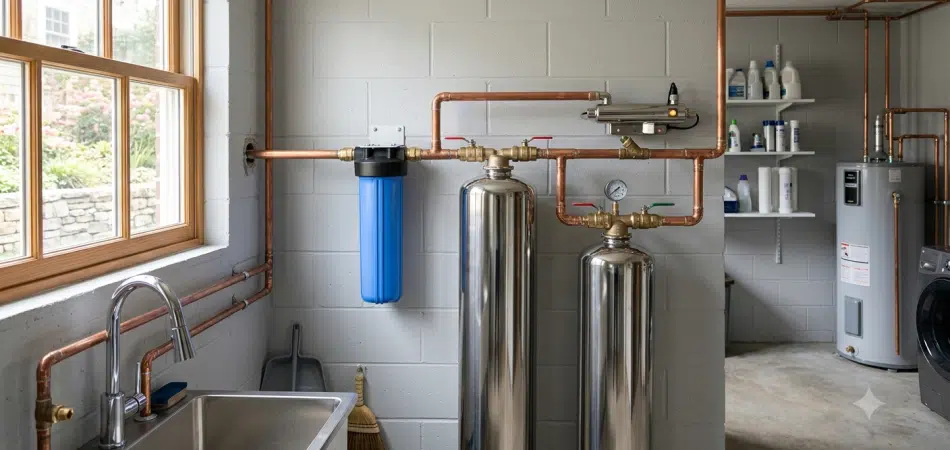
Many homeowners only think about their water when something goes wrong, like a strange smell from the tap or spots left behind on glassware. Whole-home water filtration takes a different approach by treating water at the point where it enters the house, so every faucet, shower, and appliance draws from the same improved supply. For homeowners in the Maryville area who want to understand what this type of system generally offers, the Maryville plumbing services team can answer questions specific to your household.
This guide covers the general benefits homeowners tend to notice after adding whole-home water filtration to their property. It is meant to be an educational overview, not a technical breakdown of any particular system, so you can walk away with a clearer picture of why this upgrade continues to come up in conversations about home comfort. You can also visit the Tennessee Standard Plumbing homepage to see the fuller range of services offered across the region.
 One of the most noticeable changes homeowners report after whole-home water filtration is in how their water tastes and smells. Municipal and well water can carry a faint chemical scent or a flat, mineral taste that becomes part of the background of daily life until it is treated.
Once water is filtered at the source, many households notice that drinking water, coffee, and even ice cubes taste cleaner and more neutral. Cooking with filtered water can also make a difference, since foods and beverages tend to take on the taste of the water used to prepare them.
Beyond drinking water, taste and odor improvements tend to show up in small daily moments that are easy to overlook. Filling a water bottle, brushing your teeth, or making a pot of tea all become slightly more pleasant when the water behind them is treated. Over time, these small improvements add up to a home that simply feels more comfortable to live in.
Untreated water often carries minerals and particles that can build up inside pipes, fixtures, and water-using appliances over time. Whole-home water filtration is generally understood to help reduce this kind of buildup by treating water before it reaches your plumbing system. Homeowners who deal with cloudy spots on dishes, dull-looking faucets, or appliances that seem to work harder than they should sometimes trace the issue back to untreated water moving through the home.
Water heaters, dishwashers, washing machines, and coffee makers all rely on a steady flow of water to function properly. When that water carries excess minerals or particles, it can be harder on the internal components of these appliances. Filtering water before it reaches these systems is one general way homeowners try to support smoother everyday performance from the equipment they already own.
Comfort at home is often about the small things working the way they should, and water quality plays a bigger role in that than many homeowners realize. From softer-feeling water during a shower to fewer spots on freshly washed dishes, whole-home filtration touches nearly every part of daily life that involves water.
Some homeowners notice a difference in how water feels on their skin and hair after whole-home filtration is in place. While everyone’s experience is different, treated water is generally described as feeling softer, which can make showers and baths feel more comfortable for the whole household.
Clothes and dishes both come into direct contact with your home’s water supply during every wash cycle. Homeowners with whole-home filtration often mention that laundry feels softer and dishes come out with fewer spots, since the water reaching the washing machine and dishwasher has already been treated before it arrives.
For many homeowners, the biggest benefit of whole-home water filtration is not something you can measure directly. It is the general peace of mind that comes from knowing your household’s water is being treated before it reaches your family, your pets, or your plants. Instead of wondering about what might be in the water at any given faucet, homeowners with a whole-home system can rely on consistent treatment throughout the property.
This kind of reassurance matters most for households with young children, guests who visit often, or anyone who simply wants one less thing to think about at home. Whole-home water filtration is one way homeowners choose to take a more proactive approach to the water quality throughout their home, rather than addressing concerns one faucet at a time.

Every home is different, and the right approach to water quality depends on factors specific to your property, your water source, and your household’s preferences. What is generally true, however, is that whole-home filtration offers a broader style of coverage compared to treating water at a single faucet or appliance. Homeowners who want a fuller picture of how this fits their specific situation are welcome to reach out and ask questions.
Better tasting water, less buildup around fixtures, everyday comfort, and general peace of mind are not separate reasons to consider whole-home water filtration so much as different sides of the same idea. Homeowners rarely think about only one of these benefits in isolation.
Instead, the appeal usually comes from knowing that a single system placed at the point where water enters the home can influence nearly everything that depends on that water, from a morning shower to a load of laundry to a glass of water at dinner. For homeowners in Maryville who are comparing their choices, understanding how these general benefits connect can make it easier to decide whether whole-home filtration fits your household’s priorities.
If you are considering whole-home water filtration for your Maryville home, the team at Tennessee Standard Plumbing is available to talk through general questions about your home’s water quality. You can call (865) 352-9003 to speak with someone directly, or schedule a visit online at a time that works for your household. Homeowners can also find the Maryville plumbing team on Google Maps to see reviews and get directions before reaching out.
Yes, that is the general idea behind a whole-home approach. Rather than treating water at a single sink or appliance, the system is placed where water enters the home, so kitchen faucets, bathroom fixtures, outdoor spigots, and appliances all draw from the same treated supply.
Not necessarily. While many homeowners first think about drinking water, a whole-home system also affects the water used for bathing, cooking, laundry, and cleaning. Because every tap draws from the same treated supply, the general benefits tend to reach far beyond the kitchen sink.
Many homeowners describe noticing a difference in how their water tastes, smells, or feels once whole-home filtration is in place, though individual experiences vary based on the home and the water source. General observations like clearer glassware or softer-feeling water are common talking points among homeowners who have made the switch.
Not typically. Homeowners often bring up several general benefits together, such as better-tasting water, less buildup around fixtures, and a more comfortable feel throughout the home. A whole-home approach is generally considered a broader way to address water quality rather than focusing on a single concern in isolation.
Same-day Service Available
Mon – Fri: 7:30 am – 5:00 pm