
Same-Day Service Available
00
Hrs
00
Mins
00
Secs
Need a Plumber in Knoxville? We’re Ready to Help!
Same-Day Service Available
Need a Plumber in Knoxville? We’re Ready to Help!
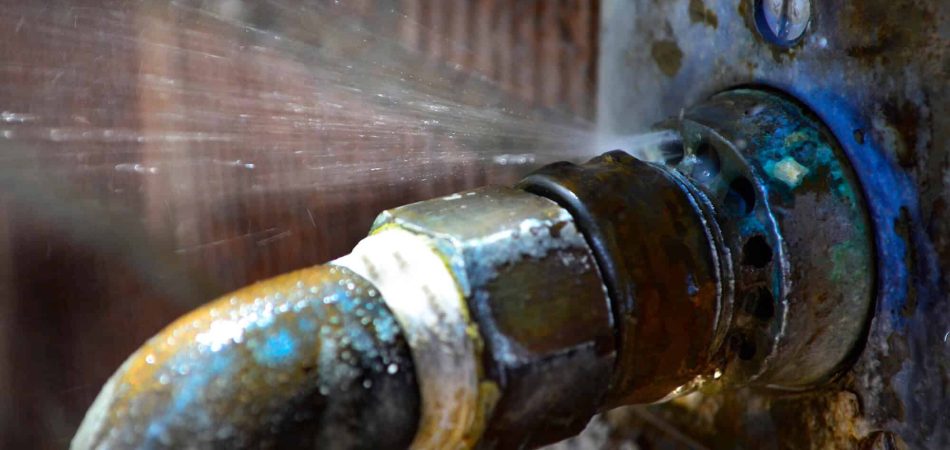
When a pipe bursts, shut off the main water supply valve immediately to stop discharge before water spreads into walls, floors, and structural assemblies. A half-inch supply line at full residential pressure can release 4 to 8 gallons per minute — every minute of delay multiplies remediation cost. Once water is off, a temporary patch using a pipe repair clamp, epoxy putty, or rubber patch with hose clamps can reduce flow at the rupture point. These are damage-control steps only. A licensed plumber must inspect the failed section and make a code-compliant repair before water service is fully restored.
A burst pipe does not give you time to research options. Within minutes, pressurized water discharged from a ruptured supply line can saturate wall cavities, subfloor assemblies, and insulation, turning a straightforward plumbing repair into a multi-thousand-dollar water damage and mold remediation project.
The actions you take in the first five to ten minutes after a pipe bursts determine the scope of the damage. At Tennessee Standard Plumbing, our licensed technicians respond to burst pipe repair emergencies throughout Knoxville and the greater East Tennessee area. Before we arrive, there are specific steps every homeowner can take to limit water intrusion, reduce structural damage, and safely apply a temporary patch to the failed section.
This guide covers exactly what to do, in order, from the moment a pipe bursts until our team arrives. Call us at (865) 352-9003 the moment you identify a burst pipe so we can dispatch a technician while you follow these steps.
Stopping the flow of water is the single highest-impact action you can take in a burst pipe emergency. Every second the supply remains open, pressurized water continues discharging into your home.
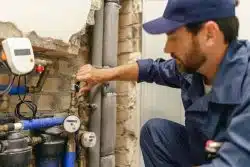 The main water shutoff valve controls supply to the entire house. In most Knoxville homes, it is located in one of three places: near the front foundation wall in the basement or crawl space, inside a utility closet near the water heater, or in a covered meter box near the street (this is the city-side shutoff and requires a meter key).
The interior shutoff is what you want. It is typically a gate valve (round handle that requires multiple turns to close) or a ball valve (lever handle that closes with a quarter turn). Turn clockwise to close a gate valve. Rotate the lever perpendicular to the pipe to close a ball valve. Locate this valve before an emergency occurs and confirm it operates freely.
If the burst pipe serves a specific fixture and you can identify and access the affected run, the individual stop valve under that sink, behind the toilet, or behind the washing machine can be closed without shutting down water service to the entire home. This is only viable when the rupture is clearly localized and not inside a wall cavity or under a floor. When in doubt, close the main.
After closing the main water supply, turn off the water heater. A tank-style water heater that continues operating without a cold water supply can overheat the heating element or damage the tank. For gas units, set the thermostat to the pilot position. For electric units, shut off the breaker. This step protects the water heater from dry-fire damage during the repair window.
Once the water supply is off, you have a stable environment to assess how far the discharge has spread and begin protecting your home’s contents and structure.
Before moving anything or attempting a patch, photograph and video the rupture point, all visible water intrusion areas, and any damaged contents. This documentation is the foundation of a homeowners insurance claim and should capture the scope of discharge before cleanup begins. Note the time you discovered the burst and the time you closed the main shutoff, as insurers often use this timeline in claims assessment.
Do not enter standing water if electrical outlets, panels, or appliances are submerged or nearby. Water contacting live electrical circuits creates an electrocution hazard. If standing water is present near your electrical panel or within two feet of any outlet, switch off the circuit breaker for the affected area before entering. If the panel itself is in the water’s path, do not touch it and contact your utility provider (KUB for most Knoxville residents) before proceeding.
Use mops, towels, and wet-dry vacuums to remove standing water from hard surfaces as quickly as possible. Pull back area rugs and move portable furniture out of the wet zone.
Open windows if outdoor temperatures and conditions allow to begin air exchange. The goal is to reduce the duration of moisture contact with wood framing, drywall, and subfloor materials, as water leak detection after the fact often reveals that water traveled much farther than the visible wet zone suggests.
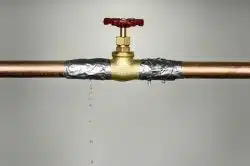 A temporary patch reduces or stops flow at the rupture point after the main is closed, allowing you to restore partial water service to the home if needed while waiting for professional repair. These methods work on accessible pipe runs in crawl spaces, utility rooms, basements, and under sinks. They do not apply to pipes inside sealed wall cavities.
A split-sleeve pipe repair clamp (also called a pipe repair clamp or slip coupling repair sleeve) is the most effective temporary fix for a split or cracked section of pipe. The clamp consists of a rubber gasket pad and a two-piece metal sleeve that bolts together over the damaged section. To apply: dry the pipe surface, center the rubber pad directly over the rupture, fit the two metal halves over the pad, and tighten the bolts evenly in an alternating pattern until the clamp seats firmly against the pipe surface.
These clamps are available at most hardware stores and are designed to hold residential water pressure (40 to 80 psi) for a limited period. They are not a code-compliant permanent repair and should not be left in place as a final fix. Understanding why proper repairs matter more than temporary fixes is key to making the right call about when to restore service.
Two-part epoxy putty works on pinhole failures, hairline fractures, and small rupture points on copper, PVC, CPVC, and galvanized steel pipe. The putty consists of a resin core and a hardener shell. To apply: wear latex gloves, cut a section of putty, and knead it between your fingers until the two components blend to a uniform color, typically 30 to 60 seconds. Pack the blended putty firmly into and around the rupture point, pressing it against the pipe surface to create a seal.
Allow it to cure for the manufacturer-specified time, typically 1 to 2 hours before pressure testing, and 24 hours for full cure strength. Epoxy putty loses effectiveness on actively wet or dirty pipe surfaces, so drying the pipe before application improves adhesion significantly.
For a field-expedient patch when commercial repair products are not available, a rubber patch secured with hose clamps can temporarily seal a split or hole. Cut a section of rubber from a garden hose, inner tube, or purpose-made repair patch. Wrap the rubber tightly over the rupture so it overlaps on both sides of the failure point by at least one inch.
Place a hose clamp on each side of the patch, centered over the rubber, and tighten firmly with a screwdriver. This method is less reliable than a purpose-built repair clamp but can reduce discharge significantly while waiting for professional pipe leak repair.
Applying a temporary patch is damage control, not a repair. Knowing the limits of these methods prevents homeowners from leaving a patched pipe in place longer than it is safe to do so.
Pipe repair clamps, epoxy putty, and rubber patches do not restore the structural integrity of a failed pipe section. They reduce pressure at the failure point but do not address the pipe wall’s weakened condition on either side of the patch. Thermal cycling, water hammer, and normal operating pressure continue stressing the pipe adjacent to the patch. A clamp that holds for two days under normal use can fail suddenly under a pressure spike caused by a fast-closing valve or a pump cycling on. The how to fix a leaky pipe guide covers why cutting out and replacing the failed section is always the correct long-term answer.
The visible rupture point is rarely the only problem. Hydraulic pressure at the moment of failure and the subsequent water discharge often damage surrounding pipe fittings, accelerate corrosion at nearby joints, and saturate insulation and framing that conceals additional moisture damage. Homes with older pipe systems, particularly those with galvanized steel or polybutylene supply lines, frequently show multiple failure points when the plumber inspects the system after a burst event. In these cases, a whole-home repipe is often the more cost-effective long-term solution compared to repeated localized repairs.
If the rupture is inside a wall cavity, under a slab, or in a location you cannot access and patch safely, keep the main water supply closed until a licensed plumber arrives. Restoring water service to a pipe you cannot visually inspect risks a second discharge event that may go undetected in a concealed space, dramatically increasing water intrusion and mold remediation costs. Reviewing the best sealants and leak prevention tips is useful for understanding which materials hold under pressure and which do not.
The difference between a $400 pipe repair and a $15,000 water damage restoration project almost always comes down to how fast the water supply was shut off and how quickly a licensed plumber made a permanent repair. Temporary patches buy time, but they are not a substitute for professional service.
If you are dealing with a burst pipe in Knoxville or the surrounding Greater Knoxville area right now, Tennessee Standard Plumbing is ready to respond. Our licensed plumbing technicians handle burst pipe repair and pipe leak repair for homeowners across East Tennessee. Call us immediately at (865) 352-9003 and our team will dispatch while you follow the steps above to limit damage before we arrive.
Close the main water supply valve immediately to stop the flow. Every minute the supply stays open, a half-inch pipe at residential pressure can release 4 to 8 gallons of water. Shutting off the main within the first minute is the single most impactful action you can take to limit damage before a plumber arrives.
In most Knoxville homes, the main shutoff is located near the front foundation wall in the crawl space or basement, inside a utility room near the water heater, or in a covered meter box near the street curb. Walk your home now and locate this valve before an emergency occurs so you are not searching for it under pressure.
Yes, for accessible pipe sections. A pipe repair clamp, epoxy putty, or a rubber patch secured with hose clamps can reduce or stop discharge at a visible rupture point. These are temporary measures only. A licensed plumber must make a permanent, code-compliant repair before the patch is considered resolved.
A properly applied pipe repair clamp can hold residential water pressure for days to weeks under normal operating conditions. However, it is not rated for permanent use and should be replaced by a licensed plumber within 24 to 72 hours. Thermal cycling, water hammer, and pressure spikes can cause a clamped section to fail without warning.
Yes. After shutting off the main water supply, turn off the water heater. A tank-style heater running without a cold water supply can overheat the heating element or damage the tank lining. Set a gas heater to pilot mode and shut off the breaker for an electric unit until water service is fully restored and the system is confirmed intact.
Not immediately. Check for submerged or nearby electrical outlets, appliances, or panels before entering standing water. If any electrical source is near the water, shut off that circuit at the breaker before entering. If the electrical panel itself is at risk, stay out and contact KUB before proceeding.
A half-inch residential supply line at 60 psi can discharge 4 to 8 gallons per minute. At that rate, a pipe that runs for 30 minutes before shutoff can release 120 to 240 gallons of water into your home. Larger supply lines discharge substantially more. According to insurance industry data, a 1/8-inch crack alone can release up to 250 gallons in a single day.
Most standard homeowners insurance policies cover sudden and accidental burst pipe damage, including water remediation and structural repair. Gradual leaks that were not addressed are typically excluded. Document the rupture point and all water intrusion areas with photos and video immediately after discovery, note the time of the event and shutoff, and contact your insurer as soon as the emergency is stabilized.
Signs of concealed water intrusion include soft or discolored drywall, bubbling paint, a musty odor, warped baseboards, and buckled flooring in the days following a burst event. Professional water leak detection using moisture meters and thermal imaging can identify saturated assemblies that are not visible to the eye and should be performed after any significant burst pipe event.
A single burst pipe in an otherwise sound system calls for localized repair. But if your home has galvanized steel supply lines, polybutylene pipe, or a history of multiple leaks in a short time period, the burst is often a symptom of systemic pipe failure rather than an isolated event. A licensed plumber can assess the full system and advise whether targeted repair or whole-home repiping is the more cost-effective long-term solution for your Knoxville home.
Same-day Service Available
Mon – Fri: 7:30 am – 5:00 pm