
Same-Day Service Available
00
Hrs
00
Mins
00
Secs
Need a Plumber in Knoxville? We’re Ready to Help!
Same-Day Service Available
Need a Plumber in Knoxville? We’re Ready to Help!




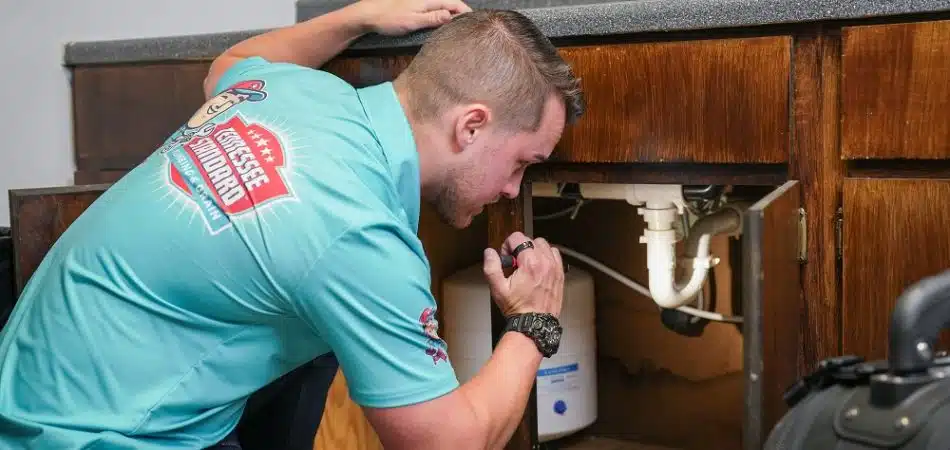
Proper repairs are crucial because they address the root cause of an issue, restoring functionality and structural integrity, whereas temporary fixes only mask symptoms. While temporary solutions, such as sealants or patches, can act as necessary emergency measures in the short term, they are not designed to endure long-term wear, frequently failing when exposed to harsh conditions.
A small drip under the kitchen sink. A toilet that runs every few minutes. A drain that clogs every other month. These problems feel minor, so the temptation is to grab some plumber’s tape, a bottle of drain cleaner, or a tube of epoxy putty and call it good. The leak slows. The drain opens. The job feels done.
The truth is that proper plumbing repairs save Knoxville homeowners thousands of dollars over time, while temporary fixes almost always come back as bigger, more expensive problems. Our team at Tennessee Standard Plumbing has been pulling apart patch jobs, replacing rotted subfloors caused by ignored leaks, and explaining to homeowners why their insurance claim was denied since 2020. The pattern is consistent: short-term fixes buy a few weeks of relief and a few years of damage.
If you have a recurring plumbing issue in your home, contact us today to schedule an appointment and get the repair done correctly the first time.
A temporary plumbing fix stops or slows a symptom without addressing the underlying failure. A proper plumbing repair identifies the root cause, replaces or restores the failed component to manufacturer specifications, and brings the system back into Tennessee plumbing code compliance. The difference often determines whether a fix lasts six weeks or sixty years.
Most homeowners reach for the same handful of band-aid solutions when something fails:
Manufacturers list these patch materials as emergency repair products with limited service life, not for long-term use in pressurized water systems.
Patch materials sit on top of the failure point. They do not stop corrosion, root infiltration, scale buildup, or thermal fatigue happening below the patch. Pinhole corrosion (also called pitting corrosion) is electrochemical. The pipe wall continues to thin around the patch until a new leak opens nearby, often inside a wall or under a slab where it is much harder to find.
A proper repair starts with diagnosis. A licensed plumber identifies the failed component, isolates the cause (water chemistry, pressure, age, installation defect, ground movement), and restores the system using code-approved materials. This may include a section replacement of copper, CPVC, or PEX, a sleeve repair on a sewer lateral, or a full repipe when galvanized steel or polybutylene has reached end of life.
Temporary plumbing fixes carry costs that do not show up on the receipt for the patch material. The Insurance Information Institute reports that water damage accounts for about 24 percent of all homeowner insurance claims, with average payouts of more than 11,000 dollars per claim. Most of that damage starts as a small, ignored leak.
 Water Damage and Structural Rot
A slow leak hidden behind drywall or under a cabinet feeds moisture into wood framing, subflooring, and insulation 24 hours a day. The EPA’s WaterSense program estimates that the average household’s leaks waste nearly 10,000 gallons of water per year. Sustained moisture leads to:
Repairing the structural damage from a single ignored slab leak can cost more than 15,000 dollars before the plumbing repair itself is included. Early slab leak detection is the only reliable way to catch these failures before they reach that scale.
Mold colonies establish on damp drywall and wood within 24 to 48 hours of sustained moisture exposure. Once mold takes hold, remediation typically involves removing affected materials down to the studs, treating the cavity, and replacing finishes. Black mold (Stachybotrys chartarum) and other moisture-driven species also produce health risks for residents, particularly children, the elderly, and anyone with respiratory conditions.
Homeowner policies generally cover sudden and accidental water damage. They do not cover damage from leaks that were known, ignored, or repeatedly patched. Insurance adjusters review failure history during a claim. If the wall opens to reveal an old epoxy patch on a corroded copper line, the claim is often denied as a maintenance issue rather than a sudden loss. Proper pipe leak repair keeps your home insurable and your future claims defensible.
Temporary plumbing fixes almost always lead to recurring failures because they do not address the conditions that caused the original problem. Pressure transients, water chemistry, root intrusion, and component age continue working against the patch from the moment it is applied, which is why the EPA notes that 10 percent of U.S. homes have leaks wasting 90 gallons or more per day.
A pinhole leak in a copper line is rarely isolated. Pinhole corrosion is driven by water chemistry, dissolved oxygen, and pH levels. When one pinhole appears, others are forming along the same run of pipe. Patching the visible hole only delays the next failure by weeks or months. Whole-section replacement or, in older homes, full repiping through professional water piping services is the only reliable solution.
Repeated drain snaking removes the obstruction at the moment but does not clear the pipe wall scaling, biofilm accumulation, or root infiltration causing the clog. Each return visit usually requires more aggressive snaking, which can score cast iron pipe walls and accelerate failure. A camera inspection followed by hydro jetting or proper drain repair services restores full pipe diameter and resets the maintenance clock.
Underground and under-slab leaks pressurize the surrounding soil, washing out backfill and causing settlement. A small leak left alone for six months can undermine concrete, crack a foundation, or saturate a crawl space. Early water leak detection using acoustic listening equipment and thermal imaging finds these failures before they compromise the structure.
A proper plumbing repair is a one-time cost that delivers years of reliable service, lower utility bills, and a documented maintenance history. Because the average household loses nearly 10,000 gallons of water per year to leaks (per EPA WaterSense), correct repair recovers both the wasted water and the cost of repeat service calls.
 Three repeat service calls for a recurring drain clog often cost more than a single hydro jetting and camera inspection. Five emergency patches on a deteriorating copper line cost more than a section repipe. Tracking the lifetime cost of a plumbing problem (parts, labor, water damage, time off work) almost always points to the proper repair as the cheaper option.
A faucet leak at one drip per second wastes more than 3,000 gallons per year, according to EPA WaterSense data. A running toilet can waste 200 gallons per day. Proper repair of these fixtures pays for itself in reduced KUB water bills within months. Knoxville’s moderately hard water (60 to 120 parts per million) also accelerates failure of patched fixtures, making correct repair even more cost-effective in East Tennessee.
Buyers and home inspectors flag visible patch jobs during a sale. A line marked with old plumber’s putty, a crusted joint, or a section of taped pipe gives the buyer negotiation power and reduces appraised value. Documented professional repairs preserve resale value and shorten time on the market.
Every plumbing problem comes with a fork in the road: patch it now or fix it right. The patch feels cheaper today and almost always costs more by next year. The proper plumbing repair feels like the bigger expense in the moment but ends the cycle of repeat service calls, water damage, and insurance headaches.
The right move for any Knoxville homeowner is to treat patches as what they are: short-term stopgaps that buy 24 to 72 hours before a licensed plumber arrives. Once a leak, clog, or fixture failure happens twice at the same spot, the component has reached end of service life and needs replacement, not another wrap of tape or coat of putty.
Tennessee Standard Plumbing has served East Tennessee for five generations. Our 34 licensed plumbers (as of October 2026) diagnose problems at the source and finish repairs built to last in Knoxville’s hard water and Tennessee winters. From residential plumbing services and sewer line repair to emergency burst pipe repair, we serve Greater Knoxville, Maryville, Oak Ridge, Lenoir City, and surrounding communities.
Call us today to schedule service and get the repair done right the first time.
A proper plumbing repair identifies the root cause and restores the system using code-approved materials and methods designed for long-term service. A temporary fix masks the symptom with materials like epoxy putty, rubber clamps, or repeat snaking that are not rated for permanent installation. Proper repairs are warrantied and code-compliant; temporary fixes are not.
Most temporary plumbing fixes last weeks to a few months under residential water pressure. Epoxy putty, fiberglass wrap, and rubber pipe clamps are emergency products with manufacturer-stated service lives measured in weeks, not years. Aggressive water chemistry, hot water exposure, and pressure cycling all shorten that window further.
Yes. Insurers track loss history and exclude damage tied to neglected or repeatedly patched plumbing. Documented professional repairs by a licensed plumber demonstrate maintenance and protect future claim eligibility. Some insurers also offer premium discounts for documented system upgrades like a full repipe or new water heater install.
Knoxville plumbing repair costs vary by scope, but most spot repairs range from 250 to 1,200 dollars, while sewer line repair, repipes, or slab leak repairs typically run 2,000 to 8,000 dollars. The real comparison is proper repair versus proper repair plus water damage restoration averaging 11,000 dollars or more per claim.
Yes, but only as a true emergency stopgap. If a pipe bursts at 9 PM on a holiday weekend, a clamp or wrap to reduce damage until a licensed plumber arrives is reasonable. The patch should never be left in place as the final repair, and the underlying cause needs proper diagnosis within days, not months.
Most licensed plumbing contractors warranty their repairs for one to ten years depending on the scope. Manufacturer warranties on water heaters, valves, and fittings often extend longer when the equipment is installed by a licensed professional. DIY repairs and patch jobs carry no warranty and frequently void manufacturer coverage on connected equipment.
Recurring leaks at the same fixture, drain clogs returning within 90 days, water bills climbing without increased usage, visible corrosion on multiple sections of pipe, and any leak inside a wall or under a slab all signal that patching is no longer effective. These conditions usually mean a section replacement or full repipe is overdue.
Yes. Insurance adjusters routinely deny water damage claims when the failure traces back to a DIY repair, an uninspected modification, or a known leak that was patched rather than properly repaired. Hiring a licensed plumber and keeping invoices creates the paper trail insurers require during a claim.
Common signs include water bills that rise without lifestyle changes, warm spots on tile floors (a slab leak indicator), staining on ceilings or baseboards, musty odors near walls or under cabinets, and reduced water pressure at one or more fixtures. Professional leak detection using acoustic listening and thermal imaging confirms hidden damage without opening walls.
Replace it. When a single line of copper, galvanized steel, or polybutylene develops two or more leaks within a year, the pipe material has reached end of life. Continuing to patch wastes money and increases water damage risk. A whole-home or whole-line repipe in PEX or copper resets the system and typically lasts 50 years or more.


