
What Knoxville Homeowners Get Wrong About What Water Softeners Do
Water softeners are widely misunderstood. The most common misconceptions include believing a softener also filters out contaminants like chlorine o... Read More

Same-Day Service Available
Need a Plumber in Knoxville? We’re Ready to Help!




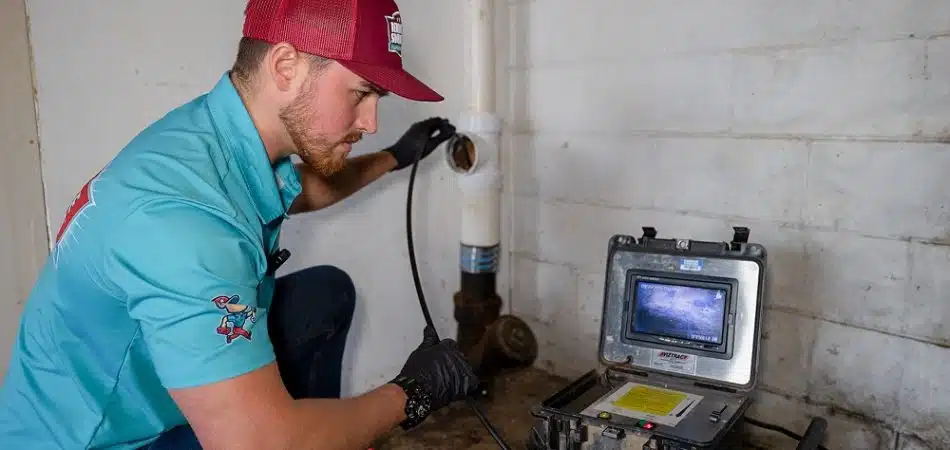
A collapsed sewer line in Knoxville is a serious plumbing emergency that typically results in immediate, widespread sewage backups into the home, foul odors, and significant yard damage, often caused by aging clay pipes, tree root intrusion, or soil shifting. Because Knoxville has heavy clay-based soils, water from a broken pipe does not drain away, leading to soggy, foul-smelling, and lush green patches in the yard.
A collapsed sewer line underground is one of the most disruptive plumbing failures Knoxville homeowners face. The buried lateral pipe carrying wastewater from your house to the city main can fracture, cave in, or separate at the joints with no surface warning, forcing raw sewage to back up through your lowest drains or surface in your yard.
Older East Tennessee homes face the highest risk because many were built with cast iron, clay, or Orangeburg pipe now past its service life. Our team at Tennessee Standard Plumbing has handled hundreds of underground sewer failures across Greater Knoxville. As a trusted Knoxville plumbing company, we can confirm a collapse and recommend the right fix.
Schedule a camera inspection today before damage reaches your foundation.
A sewer line collapse occurs when the buried lateral pipe loses structural shape and can no longer move wastewater to the city main. Collapses are partial when pipe walls cave inward and restrict flow, or full when the pipe fractures and disconnects entirely.

Cast iron, clay, and Orangeburg pipes weaken from the inside out over decades. Cast iron suffers electrochemical corrosion that thins the pipe wall. Orangeburg (compressed wood fiber and tar) absorbs ground moisture and deforms under soil weight.
A partial collapse causes recurring backups that respond temporarily to drain clearing but return within weeks. A full collapse blocks the line completely, toilets stop flushing, and sewage may surface in the yard within hours.
The lateral, the segment running from your home’s foundation to the public sewer main, is the highest-risk section. Lateral lines typically sit 2 to 6 feet deep, and joint connections, vertical drops, and the city tap point fail most often.
Underground sewer line collapse in East Tennessee is caused by aging pipe materials, tree root intrusion, soil shifts, and external loads from heavy weight above. Most failures trace back to pipes installed before 1980. Knoxville’s clay-heavy soil and freeze-thaw cycles accelerate the breakdown.
Tree roots seek moisture at the smallest joint gap. A single root that threads inside grows in diameter and exerts steady outward pressure, splitting the pipe wall over a few growing seasons. Mature oaks, silver maples, and willows are common Knoxville culprits.
Cast iron pipe lasts 30 to 50 years in real soil conditions. Orangeburg pipe (used 1940s through early 1970s) rarely lasts past 30 to 50 years and often fails sooner. Schedule a consultation about underground water line services if your home was built before 1980.
East Tennessee’s expansive clay soil pushes against pipe walls with strong hydrostatic pressure after heavy rain. Driveways, parking pads, and large planted trees add loads that crush brittle pipe over time.
The clearest warning signs of a collapsed sewer line are multiple slow drains at once, gurgling toilets, sewage odors, and soggy or sunken patches in the yard above the pipe path. Symptoms appear gradually, then escalate quickly once full blockage occurs.
 A single slow drain usually means a localized clog. Slow drainage in two or more fixtures at once, especially on the lowest level, points to a problem in the main lateral. Gurgling toilets when a sink drains signal trapped air.
Backups in the lowest fixtures (basement floor drain, ground-floor tub, or laundry standpipe) clearly indicate the lateral is collapsed. Recurring sewer odor indoors signals gas escaping a broken pipe.
Outdoor signs often appear before indoor symptoms. Watch for:
Diagnosing a collapsed sewer line starts with a video camera inspection that confirms the location, severity, and cause. Repair selection depends on whether the pipe still has structural shape for lining or whether full replacement is needed.
A flexible camera is fed through a cleanout or removed toilet flange to record interior video showing cracks, sags, root intrusion, and collapsed sections. A professional sewer camera inspection is the only reliable way to confirm a true collapse.
If the line still carries some flow, plumbers use hydro jetting at high water pressure to clear sediment, grease, and root mass before inspection. Hydro jetting does not fix structural damage but removes obstructions hiding the true pipe condition.
Cured-in-place pipe (CIPP) lining inserts a resin-saturated liner that cures inside the existing pipe, creating a smooth jointless new pipe. Pipe bursting fractures the old pipe outward while pulling new HDPE pipe through the same path, ideal for fully collapsed lines. Both rely on trenchless pipe installation techniques that protect your yard and hardscape.
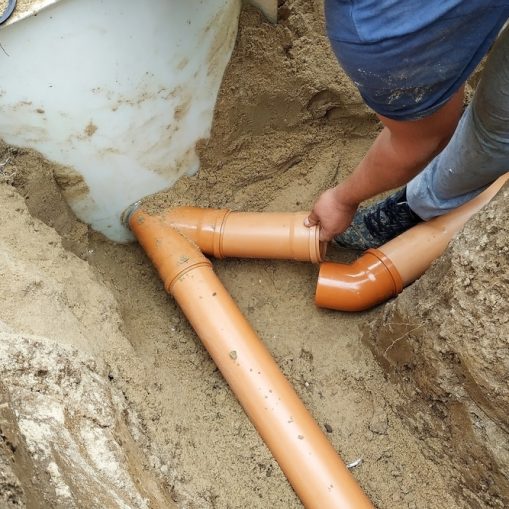
When a pipe has shifted out of alignment, has a major belly, or runs too shallow for liner equipment, sewer line repair requires open-trench excavation to replace the affected segment with new Schedule 40 PVC. Full sewer line replacement of the entire lateral is recommended when more than half the pipe is failing.
A collapsed sewer line rarely happens overnight. The pipe weakens for years, sends warning signs through your drains and yard, and fails when soil pressure or roots finish the job. Acting at the first sign of recurring backups can mean the difference between a $3,500 spot repair and a $20,000 full replacement plus foundation work.
Tennessee Standard Plumbing handles every step from camera diagnosis through trenchless or traditional repair across Knoxville, Maryville, Oak Ridge, Lenoir City, and surrounding East Tennessee. To schedule sewer line service in Knoxville, cal us today!.
Multiple drains backing up at once, gurgling toilets, sewage surfacing in the yard, and unusually green grass over a single strip are the clearest signs. Sinkholes, soggy lawn patches, and persistent indoor sewer odors confirm collapse. A camera inspection is the only way to verify a true collapse versus a routine clog.
Tree root intrusion at pipe joints, aging cast iron or Orangeburg pipe past its service life, freeze-thaw soil movement, and external loads from driveways or heavy vehicles cause most collapses. Pipes 30 to 50 years old are at highest risk. Knoxville’s clay-heavy soil accelerates breakdown of brittle pipe materials.
Yes. Trenchless methods like CIPP lining or pipe bursting repair the line through small access points. CIPP works when the pipe still holds shape, and pipe bursting works for fully collapsed lines. Severely misaligned or shallow pipes still require open-trench excavation.
Repair costs typically range from $3,500 to $25,000 depending on length, depth, pipe material, and method. CIPP lining runs $80 to $250 per linear foot, pipe bursting $60 to $200, and traditional excavation $150 to $500. Hardscape restoration drives total project costs sharply higher.
Trenchless repairs take one to two days from start to finish. Traditional excavation and full replacement take three to seven days, plus extra time for yard restoration. Camera diagnosis and city permitting may add a day or two before work begins.
Most standard policies do not cover underground sewer line failures unless you carry a separate service line endorsement or water and sewer backup coverage. Damage from indoor backup may be covered under specific conditions. Add the endorsement before damage occurs.
Schedule 40 PVC sewer pipe has a design life of 50 to 100 years. Cast iron pipe lasts 30 to 50 years in most soil conditions. Most homes built in Knoxville before 1980 are running on pipe at or past its service life.
Get a baseline camera inspection to know your pipe’s age and material. Avoid planting trees within 10 feet of the line path, never park heavy vehicles over the lateral, and schedule periodic hydro jetting to clear root mass. Replace older cast iron, clay, or Orangeburg pipe proactively.


Water softeners are widely misunderstood. The most common misconceptions include believing a softener also filters out contaminants like chlorine o... Read More
Key Takeaways Tree roots are one of the leading causes of sewer line damage across East Tennessee, especially in older neighborhoods with ... Read More

Knoxville tap water is treated by the Knoxville Utilities Board to meet federal safety standards, and the utility found no evidence of lead service... Read More