
Same-Day Service Available
00
Hrs
00
Mins
00
Secs
Need a Plumber in Knoxville? We’re Ready to Help!
Same-Day Service Available
Need a Plumber in Knoxville? We’re Ready to Help!
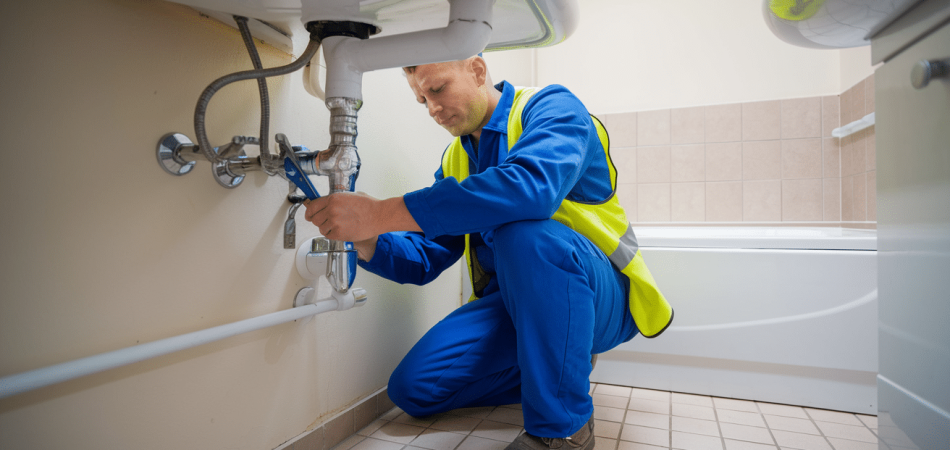
Pipes burst in winter when frozen water expands by approximately 9 percent, generating internal pressure that exceeds the rated capacity of most residential pipe materials. In Knoxville and East Tennessee, the highest-risk locations are exterior walls, unheated crawl spaces, attics, and uninsulated garages. Freeze risk rises sharply when outdoor temperatures drop below 20°F for six or more consecutive hours. Older materials like galvanized steel and polybutylene are more vulnerable than modern PEX-A or copper. Homeowners can reduce risk by keeping indoor temperatures above 55°F, insulating exposed pipe runs, and allowing a slow drip at exterior-wall fixtures during hard freezes.
East Tennessee winters are unpredictable. One week brings mild 50-degree afternoons, and the next drops overnight lows into the single digits. That freeze-thaw pattern is exactly what makes burst pipes one of the most common and costly plumbing emergencies Knoxville homeowners face every winter season.
Understanding why pipes burst and which conditions in your home make a freeze more likely gives you a real advantage before temperatures plunge. At Tennessee Standard Plumbing, our licensed technicians respond to burst pipe repair calls throughout Knoxville and the greater East Tennessee area every winter. What we see most often are situations that were preventable with the right knowledge ahead of time.
If you are a Knoxville homeowner heading into a cold stretch, this guide walks you through the science behind pipe bursts, which pipes in your home carry the highest risk, and what warning signs to watch for before a freeze becomes a flood. Schedule an appointment with our team today before the next cold event hits.
Pipes do not burst simply because they freeze. The failure mechanism is more specific, and understanding it helps explain why some pipes survive a freeze while others rupture.
When water transitions from liquid to solid state, it undergoes volumetric expansion of approximately 9 percent. Inside a rigid pipe with no outlet for that expansion, the forming ice displaces the water column downstream toward a closed fixture. The water trapped between the ice blockage and the closed valve builds hydraulic pressure, not from the ice itself but from the pressurized water column that has nowhere to move.
Research data shows that pressure inside a sealed residential pipe can climb from a normal operating level of 60 psi to over 2,000 to 4,000 psi during a freeze event, far exceeding the burst pressure ratings of copper, PVC, and CPVC pipe systems. The pipe wall fails at its weakest point, typically a solder joint, elbow fitting, or a section thinned by prior corrosion.
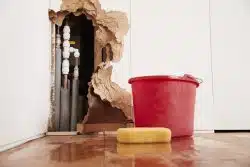 Research from the Building Research Council at the University of Illinois established that pipes in unheated or under-insulated spaces begin to freeze when outdoor air temperatures drop to 20 degrees Fahrenheit (-6.7 degrees Celsius) and remain there for six or more consecutive hours. The actual threshold in any specific home depends on several variables: the R-value of surrounding insulation, air movement across the pipe surface, the pipe diameter, and whether water in the line is stagnant or flowing.
A drafty crawl space at 28 degrees Fahrenheit can produce faster pipe freeze than still air at 18 degrees Fahrenheit because convective heat loss from moving air accelerates the thermal drop inside the pipe wall. Uninsulated half-inch copper pipe can freeze solid in as little as three hours at 20 degrees Fahrenheit under typical residential conditions.
Knoxville’s climate sits in a transition zone between the moderate mid-South and the colder Appalachian highlands. According to NOAA engineering weather data for Knoxville (Station 723260), the city experiences an average of 50 freeze-thaw cycles annually, with temperatures frequently oscillating across the 32-degree threshold multiple times within a single week.
The 50-year recurrence frost depth for Knoxville is 9 inches, meaning underground supply lines buried at less than 9 inches carry documented long-term freeze risk. This repeated thermal cycling creates cumulative mechanical fatigue at pipe joints, elbows, and solder connections through successive rounds of thermal expansion and contraction stress. A pipe that holds through the first hard freeze of the season may develop a stress fracture at a fitting by the third event, then rupture entirely on the fourth. Every hard freeze is a separate risk event, not a confirmation that your pipes are safe.
Not every pipe in your home carries equal freeze risk. Location, material, and installation age all determine how likely a given pipe run is to fail during a Knoxville cold event.
The highest-risk pipe runs are those that share a wall cavity with the exterior of the home or pass through unheated spaces. Exterior wall pipe runs, particularly in kitchens and bathrooms on the north or west face of the home, receive minimal heat transfer from the living space and are separated from the outside only by the wall assembly.
Pipes in unheated crawl spaces, attics, and detached garages face direct ambient temperature exposure with no interior heat source to counteract a prolonged freeze. Knoxville’s older housing stock, much of which was built between the 1940s and 1980s, frequently has supply lines routed through exterior cavities without pipe insulation, making frozen pipe repair a recurring need in these homes every hard winter.
Pipe material directly affects both freeze tolerance and the failure mode when freeze pressure is exceeded. Copper pipe is pressure-rated and durable, but the solder joints at fittings are the weakest point during a freeze event and the location where splits most commonly occur. CPVC (chlorinated polyvinyl chloride) becomes increasingly brittle at low temperatures and is more prone to shattering than splitting under freeze stress.
PEX-A (cross-linked polyethylene, peroxide method) has a degree of elastic memory that allows limited expansion under freeze pressure, making it more resilient than rigid materials, though it is not freeze-proof. Polybutylene pipe, installed widely in homes built between 1978 and 1995, was already subject to accelerated degradation from oxidants in municipal water supplies, and freeze-thaw stress compounds its failure rate significantly. Homes still carrying polybutylene supply lines are strong candidates for whole-home repiping services before another winter season.
Outdoor hose bibs are a direct thermal bridge between your supply system and outdoor air temperatures. A standard non-frost-free hose bib retains water in the spigot body after use, and that trapped water freezes and expands back into the connecting supply pipe.
Frost-free hose bibs drain back into the pipe 6 to 8 inches inside the wall after the handle is closed, but only function correctly when a garden hose has been disconnected. Leaving a hose connected on a frost-free bib prevents drain-back and negates the design protection entirely. Underground water supply lines are generally protected by soil thermal mass, but Knoxville’s documented frost depth of 9 inches means lines buried at less than that depth are at documented freeze risk during multi-day hard-cold events.
Recognizing early indicators of a pipe freeze gives you a window to act before rupture occurs. Knowing what to look for in the hours before and during a hard freeze can be the difference between a minor service call and a major water damage claim.
 When you turn on a tap during or after a cold stretch and get no water or only a trickle, an ice blockage has likely formed somewhere in the supply line serving that fixture. The affected pipe has not necessarily burst yet. This is the intervention window. Calling for pipe leak repair or a professional freeze assessment at this stage costs significantly less than responding after a rupture.
In areas where supply lines are visible, including under sinks, in utility rooms, and in crawl spaces, frost accumulation on the outer pipe surface or visible deformation such as bulging or bowing indicates that ice formation has begun inside the pipe wall. A bulging section means the freeze has already displaced the pipe material outward, and rupture is imminent or has already occurred at a concealed point in the run.
Banging, cracking, or gurgling sounds originating from wall cavities or under floors during or after a freeze event can indicate hydraulic pressure transients caused by a partial ice blockage, or water running through a completed rupture into a contained wall or floor assembly. Water leak detection performed immediately after a freeze event can locate a failure point before water migrates further into structural assemblies.
A standard residential supply line operating at 60 psi can discharge up to 8 gallons of water per minute through a burst pipe failure. Depending on the pipe location and how quickly the main water shutoff is closed, a single rupture event can release hundreds of gallons into wall cavities, subfloor assemblies, insulation batts, and finished living spaces in minutes. Knowing the location of your main shutoff valve before a cold event is one of the most important steps any Knoxville homeowner can take.
Water that saturates framing lumber, subfloor sheathing, drywall, and insulation creates the moisture and organic substrate conditions needed for mold colony establishment. Visible mold growth can begin within 24 to 48 hours of a moisture intrusion event at typical indoor winter temperatures. Beyond mold, prolonged saturation of wood framing causes swelling, delamination of engineered wood products, and in severe cases, compromised structural integrity at load-bearing elements.
The Insurance Information Institute identifies frozen and burst pipes as one of the leading causes of residential property damage claims nationally, with average claim costs ranging from $10,000 to $25,000 when water damage remediation, structural repair, and mold abatement are included. Claims are substantially lower when the rupture is contained quickly and remediation begins within the first 24 hours. Reviewing tips for preventing frozen pipes before a cold event is one of the most cost-effective investments a Knoxville homeowner can make heading into winter.
Knoxville winters do not always look dangerous on the forecast. A mild December followed by a sudden January hard freeze is exactly the pattern that catches homeowners off guard: heating systems get turned down, outdoor hose bibs stay connected, and crawl space vents remain open. Those small oversights compound quickly when overnight lows drop into the teens and stay there for days.
The pipes most at risk in your home are the ones you likely never think about: the supply line running along the exterior wall behind your kitchen cabinets, the pipe crossing the crawl space under your addition, the hose bib that still has a garden hose attached. Identifying and protecting those runs before a hard freeze is the most effective burst pipe prevention available to any Knoxville homeowner.
If you have experienced a burst or frozen pipe this season, or want a professional assessment of your home’s most vulnerable pipe runs before the next cold event, Tennessee Standard Plumbing is ready to help. Our licensed plumbing technicians serve Knoxville and the surrounding Greater Knoxville area with frozen pipe repair, burst pipe repair, and whole-home winter plumbing assessments. Call us at (865) 352-9003 or schedule an appointment online to protect your home before the next freeze.
Pipes in unheated or under-insulated spaces typically begin to freeze when outdoor temperatures drop below 20 degrees Fahrenheit and stay there for six or more hours. The actual freeze threshold depends on pipe location, insulation quality, and air movement. Pipes in drafty crawl spaces or on exterior walls can freeze at temperatures closer to 25 to 28 degrees Fahrenheit when wind chill accelerates heat loss across the pipe surface.
The rupture is caused by hydraulic pressure buildup, not direct ice pressure. When an ice blockage forms inside a pipe, it traps the water column between the blockage and a closed fixture. That water has nowhere to go, so pressure builds until the pipe wall fails at its weakest point. Research data shows pipe pressure can climb from a normal 60 psi to over 2,000 to 4,000 psi during a freeze event, far exceeding the rated capacity of copper, PVC, or CPVC systems.
The highest-risk runs are those in exterior walls, unheated crawl spaces, unheated garages, and attic spaces. Outdoor hose bibs and any supply line passing through an uninsulated space are also high-risk. Pipes in interior walls and fully conditioned spaces are significantly less likely to freeze under typical Knoxville winter conditions.
Yes, significantly. PEX-A has limited elastic memory that gives it more resilience under freeze pressure than rigid materials. Copper is durable but fails at solder joints under freeze stress. CPVC becomes brittle at low temperatures and tends to shatter rather than split. Polybutylene pipe, found in many Knoxville homes built between 1978 and 1995, is particularly prone to freeze-related failure due to preexisting material degradation from water chemistry exposure.
The most common sign is losing water flow at one or more fixtures while other areas of the home still have normal pressure. If you open a tap on a cold morning and get no flow or reduced flow, the supply line serving that fixture likely has an ice blockage. Open the faucet and gently warm the pipe with a hair dryer or pipe heat tape, working from the faucet end back toward the coldest section. Never use an open flame.
Shut off the main water supply valve to your home immediately to stop the discharge. Then call a licensed plumber for emergency burst pipe repair. While waiting, move valuables out of the water’s path and document the damage with photos for your insurance claim. Do not restore water service until the damaged pipe section has been professionally repaired and confirmed intact.
The plumbing repair itself for a single burst pipe typically ranges from $150 to $500 depending on pipe location, access difficulty, and material. However, total costs including water damage remediation, drywall repair, and mold abatement can reach $10,000 to $25,000 or more when the rupture goes undetected for any extended period. Early detection and quick shutoff significantly reduce the total cost of a freeze event.
Several prevention steps are within a homeowner’s reach: maintain indoor temperatures above 55 degrees Fahrenheit during cold snaps, disconnect garden hoses from exterior hose bibs before a freeze, open cabinet doors under kitchen and bathroom sinks on exterior walls, and allow a slow drip at cold-water faucets on exposed runs during a hard freeze warning. However, insulating crawl space pipe runs, installing frost-free hose bibs, and replacing at-risk pipe materials are tasks best handled by a licensed plumber.
Yes. Allowing a slow drip at fixtures on exterior walls or at the end of long supply runs helps relieve hydraulic pressure buildup if a partial blockage forms. Moving water is also marginally more resistant to freezing than stagnant water. Focus dripping on cold-water faucets served by pipes that run through exterior walls or unheated spaces.
Call a licensed plumber if you cannot locate the frozen section, if the affected pipe runs inside a wall cavity or under a slab, if you see visible pipe bulging or deformation, or if you suspect the pipe has already burst internally. Attempting to thaw a pipe that has already ruptured can cause the failed section to release suddenly, flooding the surrounding space. A professional assessment confirms the pipe is structurally intact before water service is restored.
Same-day Service Available
Mon – Fri: 7:30 am – 5:00 pm