
Same-Day Service Available
00
Hrs
00
Mins
00
Secs
Need a Plumber in Knoxville? We’re Ready to Help!
Same-Day Service Available
Need a Plumber in Knoxville? We’re Ready to Help!
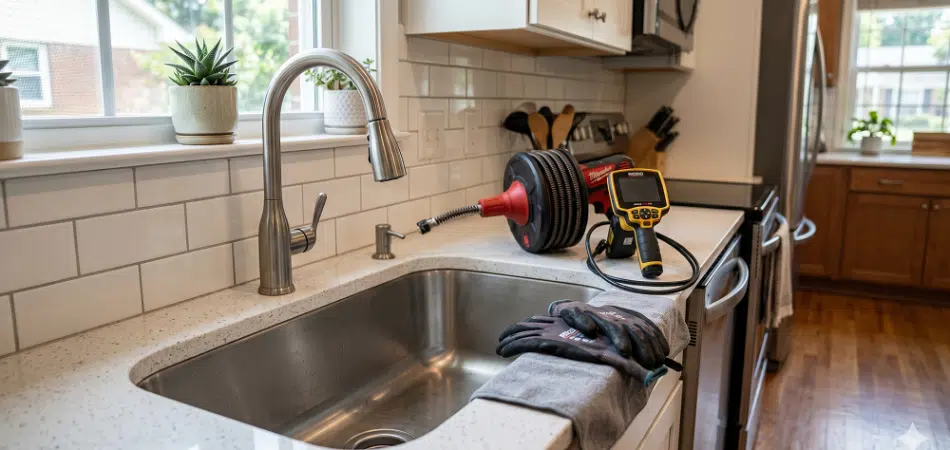
For most Maryville homes, professional drain cleaning is recommended at least once a year to proactively prevent clogs and ensure optimal performance. While this is a standard recommendation for the Greater Knoxville/Maryville area, the actual frequency depends on factors like household size, the age of the plumbing, and the presence of hard water.
Drain maintenance sits at the bottom of most homeowner checklists until a backup floods the laundry room or the kitchen sink refuses to drain mid-dinner prep. For Maryville households, the right professional drain cleaning frequency depends on home age, household size, pipe material, and local water conditions that affect buildup rates inside drain lines.
The benchmark for most single-family homes in Maryville falls between 12 and 18 months, but that window shifts based on specific conditions inside your home. If you’re weighing whether it’s time to schedule service, our team at Tennessee Standard Plumbing can help you figure out the right interval for your property.
Need help deciding if your home is due for service? Contact us today for a straightforward assessment and speak with one of our licensed technicians.
Professional drain cleaning is a plumbing service where licensed technicians use mechanical and hydraulic tools, including motorized drain augers, hydro jetters, and fiber-optic sewer cameras, to remove buildup from inside residential drain lines. Unlike chemical drain cleaners, which typically address only the top few inches of a clog and can corrode older pipes, professional methods physically remove obstructions along the entire pipe length without damaging the drainage system.
Mechanical cable cleaning, also called drain snaking or rodding, uses a rotating steel cable fitted with cutting heads to break through blockages inside drain pipes. The cable reaches through cleanouts and fixture drains to clear hair, soap scum, and organic debris lodged against the pipe wall. This method works effectively on residential drain lines up to 4 inches in diameter and handles most routine clogs in Maryville homes.
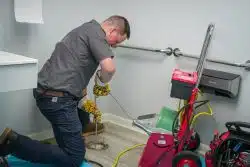 Hydro jetting uses pressurized water, typically 1,500 to 4,000 PSI delivered through a specialized rotating nozzle, to scour interior pipe walls completely clean. The process removes grease deposits, calcium scale, biofilm, and small tree roots that mechanical cables cannot fully eliminate. Our hydro jetting services restore drain lines to near-original flow capacity and perform best on main sewer lines or heavily built-up kitchen drains.
Sewer camera inspection involves threading a waterproof fiber-optic camera, typically 100 to 200 feet of flexible cable, through the drain line to visually assess interior pipe condition. Technicians use this diagnostic tool to identify root intrusion, pipe collapse, bellied sections, offset joints, or corrosion that may require repair rather than cleaning. A sewer camera inspection takes 30 to 60 minutes and provides recorded documentation of the drain system’s exact condition.
Unlike caustic drain cleaners sold at hardware stores, professional methods do not rely on sodium hydroxide or sulfuric acid compounds that can erode cast iron, galvanized steel, and older PVC joints. Mechanical and hydraulic techniques physically remove obstructions without introducing corrosive substances into the plumbing system or septic tank.
Maryville homeowners should schedule kitchen drain cleaning every 4 to 6 months, bathroom drain cleaning every 3 to 6 months, and main sewer line cleaning every 12 to 24 months. Different drain types accumulate different debris at different rates, so no single schedule fits every fixture. Kitchen lines face daily grease exposure, bathroom drains collect hair and soap scum, and main sewer lines handle the combined wastewater of every fixture in the home.
Kitchen drains are the most frequently clogged fixtures in residential homes due to grease, food particles, and soap residue that solidify against pipe walls. Industry guidance recommends professional cleaning every 4 to 6 months for active kitchens, especially homes with garbage disposals or daily cooking. Grease cools rapidly inside 1.5-inch and 2-inch kitchen branch lines, forming a hardened layer called fat, oil, and grease (FOG) buildup that reduces effective pipe diameter even when drainage appears normal.
Bathroom sinks, showers, and tubs collect hair, soap scum, toothpaste residue, and mineral deposits that bind together into drain-blocking clumps. In busy Maryville households, professional cleaning every 3 to 4 months prevents slow drainage and standing water in shower pans. Shower drains in single-occupant or low-use bathrooms can go 6 to 12 months between cleanings, but family homes with multiple daily users benefit from shorter intervals.
Toilet drain lines typically do not require standalone cleaning on a fixed schedule, but they should be inspected whenever flushing slows, gurgling occurs, or backups develop in nearby fixtures. Non-flushable items including so-called flushable wipes, cotton balls, feminine hygiene products, and dental floss cause the majority of toilet-related blockages and often require professional mechanical removal.
The main sewer line carries wastewater from every fixture in the home out to the municipal sewer connection or private septic tank. Plumbing professionals recommend main line cleaning every 18 to 24 months for homes with no backup history, and every 12 months for homes built before 1980, homes with mature trees within 20 feet of the lateral, or homes with clay tile or cast iron sewer pipes. Root intrusion through pipe joints remains the leading cause of main line failure across East Tennessee homes.
Five main factors adjust the standard 12 to 18 month drain cleaning interval for Maryville homes: home age, pipe material, household size, water hardness, and landscape features near the sewer lateral. Buildup rates differ significantly between a 1950s home with cast iron drains and a 2015 build with PVC piping, so homeowners should calibrate their schedule to match actual property conditions rather than a one-size-fits-all calendar.
Homes built before 1980 often contain cast iron, galvanized steel, or Orangeburg pipe, all of which develop interior corrosion, tuberculation, and surface roughness that trap debris faster than modern PVC or ABS lines. Orangeburg pipe, a bituminous fiber material manufactured from the 1940s through the early 1970s, is particularly prone to deformation and collapse in homes from that era. Properties older than 30 years typically require professional cleaning at least once per year, and Maryville’s significant inventory of mid-century homes often retains some or all of its original drain piping.
 A four-person household produces roughly four times the drain waste volume of a single occupant, and debris accumulates proportionally inside pipe walls. Large families, multigenerational households, and homes with long-haired residents generally need cleanings every 6 to 12 months. Households with heavy cooking habits, frequent entertaining, or in-home businesses that generate wastewater should compress the interval further.
Water mineral content affects buildup rates inside drain lines, though the impact varies significantly based on your water source. The City of Maryville draws its municipal water from the Little River, a surface water source originating in the Great Smoky Mountains, and according to the city’s 2022 Consumer Confidence Report, the water measures 44.5 mg/L hardness, which the U.S. Geological Survey classifies as “soft” water. Homes on private wells, which serve roughly 10 percent of Tennessee residents according to the Tennessee Department of Health, often draw groundwater through the limestone formations common in Blount County and typically experience higher mineral loading than homes on Maryville municipal water.
Mature trees within 20 feet of the sewer lateral send feeder roots toward the moisture and nutrients leaking from pipe joints. Species known for aggressive root intrusion into sewer lines include silver maple, willow, poplar, sweetgum, and elm, all of which grow commonly across East Tennessee. Properties with established landscaping should schedule annual sewer camera inspection and drain repair services to catch root intrusion before it causes full line collapse.
Five specific symptoms indicate active drain problems that require immediate professional attention: slow drainage in multiple fixtures, gurgling sounds from drains or toilets, recurring clogs despite DIY attempts, persistent sewer gas odors, and water backing up into fixtures. These signs typically appear days or weeks before a full backup, giving homeowners a narrow window to prevent significant water damage.
A single slow drain usually indicates a localized clog near the fixture trap, but simultaneous slow drainage in multiple fixtures points to a deeper blockage in the branch line or main sewer line. When two or more drains slow at the same time, the obstruction is almost always downstream of the individual fixture drains and requires professional service.
Gurgling noises from drains, toilets, or vent stacks occur when air pushes through partial blockages or venting becomes disrupted by an obstruction. These sounds typically precede a full backup by several days and represent one of the clearest early warning indicators that buildup has reached critical levels.
A drain that clogs repeatedly despite plunging or snaking attempts has an underlying issue such as calcium scale, hardened grease, biofilm, or a pipe defect that surface-level methods cannot resolve. Professional drain clearing with hydro jetting and camera inspection identifies and permanently addresses the underlying cause.
Sewer gas odors, including hydrogen sulfide, emerging from drains indicate decomposing organic matter lodged inside the pipe, dried P-trap seals, or venting problems in the drain-waste-vent (DWV) system. Persistent odors should never be masked with chemical deodorizers and typically require professional cleaning to resolve at the source.
Water rising into a sink, tub, or floor drain when another fixture is operated indicates a main sewer line blockage downstream of the branch connection. This situation requires immediate professional attention because continued fixture use can cause raw sewage to back up into the home through the lowest drain opening.
The table below summarizes recommended professional drain cleaning frequency based on home profile and usage. Use it as a baseline and adjust based on the specific factors affecting your Maryville property.
How Preventive Drain Maintenance Protects Your Plumbing Investment
Scheduled professional drain cleaning extends pipe lifespan, reduces emergency plumbing costs, and catches pipe defects before they require full sewer line replacement. Preventive maintenance costs significantly less than emergency repair service, and a single sewer backup can cause substantial water damage that far exceeds years of routine cleanings combined.
Drain pipes accumulate calcium scale, hardened grease, and biofilm over decades of continuous use. Regular cleaning removes these deposits before they consolidate into permanent buildup that forces sewer line replacement. Cast iron drain pipes typically last 50 to 75 years under normal conditions, though deterioration can begin as early as 25 years and poorly maintained lines often fail sooner.
Emergency plumbing service typically costs more than scheduled maintenance, and after-hours rates add further to the bill. Maryville homeowners who follow a preventive drain cleaning schedule rarely experience the 2 AM backup that drives most emergency calls.

Annual camera inspection catches pipe damage, root intrusion, and joint separation before these defects cause complete line failure. Early sewer line repair costs a fraction of emergency excavation and full replacement after a pipe collapse, especially for homes with paved driveways or landscaping over the sewer lateral.
Functional plumbing is a non-negotiable requirement for real estate transactions, and a documented drain maintenance history reassures buyers and home inspectors during Blount County property sales. Properties with chronic drain issues often face repair credits, inspection contingencies, or price reductions at closing.
Most Maryville homeowners do well with professional drain cleaning every 12 to 18 months, shifting toward the shorter end for older homes, larger households, or properties with mature landscaping. Kitchens and bathrooms in high-use homes typically need service every 4 to 6 months, and warning signs including slow drainage, gurgling, persistent odors, or recurring clogs should always override the calendar and trigger an immediate service call.
Our licensed master plumbers at Tennessee Standard Plumbing handle professional drain cleaning services throughout Maryville, Greater Knoxville, Oak Ridge, Lenoir City, and surrounding East Tennessee communities, offering mechanical cable cleaning, high-pressure hydro jetting, sewer camera inspection, and preventive drain maintenance plans with upfront flat-rate pricing.
Call us at (865) 352-9003 to schedule service today!
Maryville homes should have drains professionally cleaned every 12 to 18 months as preventive maintenance. Homes older than 30 years, households with five or more occupants, and properties with mature trees near the sewer lateral need cleaning every 6 to 12 months. Kitchen drains in active households require service every 4 to 6 months due to grease buildup.
Drain snaking uses a rotating steel cable with a cutting head to break through clogs and pull debris out of the pipe, while hydro jetting uses pressurized water at 1,500 to 4,000 PSI to scour interior pipe walls completely clean. Snaking clears isolated blockages, while hydro jetting removes buildup along the entire pipe length and restores near-original flow capacity. Snaking costs less but hydro jetting lasts longer between cleanings.
Professional drain cleaning costs in Maryville vary based on drain type, accessibility, and blockage severity. Standard fixture drain cleaning generally runs less than main sewer line service, and hydro jetting typically costs more than cable cleaning due to equipment and time requirements. Reputable local plumbing companies including Tennessee Standard Plumbing provide upfront flat-rate pricing before any work begins, so homeowners know the full cost before authorizing service.
Chemical drain cleaners containing sodium hydroxide or sulfuric acid are not safe for regular use in most residential plumbing systems. These compounds can damage older cast iron and galvanized pipes, corrode metal fittings, and disrupt septic systems. Homeowners who want to maintain drains between professional service should use enzyme-based cleaners monthly and flush drains weekly with hot water instead of chemical products.
Professional drain cleaning for a single residential fixture takes 30 to 60 minutes depending on clog severity. Main sewer line cleaning using hydro jetting typically requires 60 to 90 minutes of active work. Sewer camera inspection adds another 30 to 45 minutes when the homeowner wants recorded documentation of pipe condition.
Homeowners can clear minor surface clogs in sinks and tubs with a plunger, hand auger, or natural methods such as baking soda and vinegar. However, deeper clogs, recurring blockages, main sewer line issues, and hardened buildup require professional equipment and licensed training to resolve safely. DIY methods cannot reach far enough into the drain system or generate sufficient pressure to fully clean interior pipe walls like a commercial hydro jetter can.
Five signs indicate immediate need for professional drain cleaning: slow drainage in two or more fixtures at once, water backing up when another fixture is used, persistent sewer gas odors, gurgling sounds from drains or toilets, and recurring clogs in the same drain. Ignoring these symptoms usually leads to a full sewer backup within days or weeks and potential water damage to floors and walls.
Homeowners insurance does not cover routine drain cleaning or preventive maintenance, as these services are classified as homeowner responsibility. Insurance may cover water damage caused by a sudden sewer backup if the policy includes an optional sewer backup rider, but the cleaning itself remains out of pocket. Following a preventive schedule protects Maryville homeowners from the unexpected costs of a covered or uncovered backup event.
Professional drain cleaning performed by a licensed plumber does not damage older pipes when the technician selects the correct method for the specific pipe material. Mechanical cabling works safely on cast iron, galvanized steel, and PVC drain lines, while hydro jetting pressure settings must be calibrated lower for older or deteriorated pipes. A camera inspection before cleaning helps determine the safest approach for each Maryville home.
Tree root intrusion in a Maryville sewer line causes recurring clogs, slow drainage in multiple fixtures, gurgling sounds from toilets, and sewage odors in the yard near the lateral. The most reliable confirmation method is sewer camera inspection, which shows roots growing through pipe joints on live video. Homes with mature silver maple, willow, poplar, sweetgum, or elm trees within 20 feet of the sewer lateral face the highest risk of root intrusion.
Same-day Service Available
Mon – Fri: 7:30 am – 5:00 pm