
Same-Day Service Available
00
Hrs
00
Mins
00
Secs
Need a Plumber in Knoxville? We’re Ready to Help!
Same-Day Service Available
Need a Plumber in Knoxville? We’re Ready to Help!
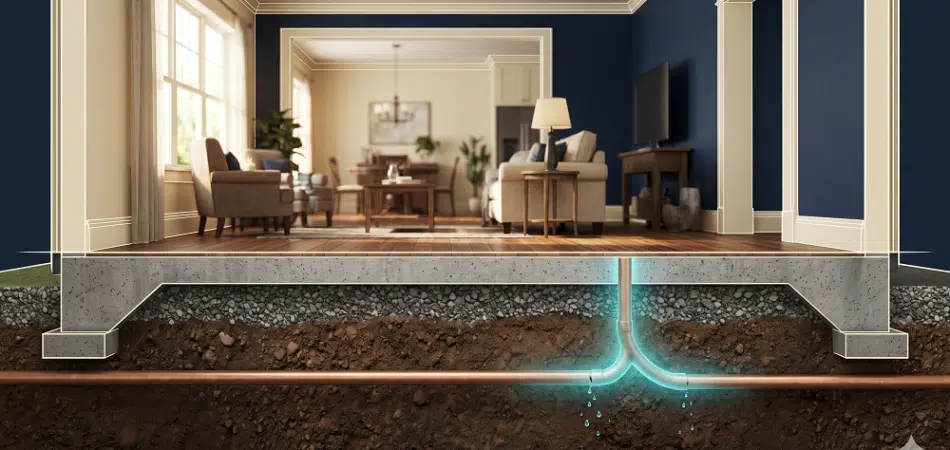
A slab leak is a break or crack in the water pipes running beneath your home’s concrete foundation. In a Maryville home, the most common signs include a water bill that climbs without explanation, the sound of running water when every faucet is off, warm or damp spots on your floors, a sudden drop in water pressure, a musty smell near baseboards, and new cracks appearing in your walls or flooring. These leaks hide under concrete, which means they can run undetected for weeks while silently eroding the soil that holds up your foundation. The faster you recognize the signs, the less damage you are dealing with when the repair crew arrives.
A slab leak does not announce itself with a gush of water or a burst pipe. It works quietly, beneath your feet, until the evidence becomes impossible to ignore. By then, the foundation has often been sitting in moisture for weeks.
At Tennessee Standard Plumbing, we detect and repair slab leaks throughout Maryville and the greater East Tennessee region. If any of the signs below sound familiar, call us at (865) 352-9003 or schedule an appointment online, and we will get a technician out to your home the same day.
A slab leak is any leak that develops in the water lines running under or through your home’s concrete slab. Both your pressurized supply lines and your drain lines can be affected. Supply leaks are under constant pressure, so they tend to show up in your water bill quickly. Drain leaks only carry water when a fixture is in use, so they can go undetected far longer and cause more soil damage before you notice.
Pressure-side leaks are active around the clock because your supply lines are always under pressure. You will often catch these first through a spike in your water bill or the sound of running water at odd hours. Drain-side leaks are trickier. They only run when you use a sink, shower, or toilet, so they can seep into the soil beneath your slab for months before any sign appears at floor level. Both types can undermine your foundation and both require professional water leak detection to locate accurately.
Your water usage has not changed, but your bill keeps going up month after month. That gap between what you are using and what you are being charged for is water going somewhere it should not. Even a small break in a supply line beneath the slab loses water 24 hours a day. A pinhole-sized leak can waste 30 to 70 gallons per day, and your utility bill reflects every gallon.
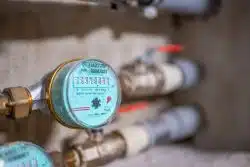 Turn off every faucet, appliance, toilet, and outdoor spigot in the house. Go to your water meter and watch the dial. If the needle moves while nothing is running, water is leaving your system somewhere. That test takes three minutes and gives you a clear signal before you make the call.
Pull your last six months of water bills and compare them month over month. A gradual climb that accelerates over time points to a small leak that is getting worse. A sharp jump in a single billing period points to a more sudden break. Either pattern warrants a slab leak detection inspection.
Most homeowners chalk a higher bill up to seasonal use, a running toilet, or a guest’s visit. Those explanations are worth ruling out first. But if you cannot point to a specific reason for the increase and the meter is still moving when the house is completely shut off, do not keep waiting for the next bill to confirm it.
Turn off every faucet and appliance in the house. Shut off the washing machine, dishwasher, and outdoor spigots. Stand quietly near the center of your ground floor and listen. If you still hear water moving through pipes or trickling beneath the flooring, that sound has to come from somewhere.
A steady trickling or hissing sound with all fixtures off almost always means pressurized water is escaping a pipe. Because the pipe is under your slab, the sound seems to come from below or from inside the wall at floor level. Some homeowners describe it as a faint rushing sound. Others hear a low hiss. Any of these sounds, heard when the house is quiet and nothing is running, should be taken seriously rather than dismissed as the house settling.
The clearest spot to listen is near the floor in a room that is close to where your main water supply enters the home, usually near the kitchen or a first-floor bathroom. Move slowly between rooms. A sound that is louder in one area than another is telling you the leak is closer to that room, which gives a detection technician a useful starting point.
Walk barefoot across your ground floor, especially over tile or hardwood near the kitchen or bathrooms. A concentrated warm patch on an otherwise cool floor is a direct indicator that a hot water supply line is leaking directly beneath that spot. The heat from the escaping water transfers right through the concrete and into your flooring.
A soft, wet, or spongy section of carpet on a slab-grade room with no rain intrusion or spill to explain it means moisture is wicking upward through the concrete from below. This is one of the most location-specific signs a slab leak can give you. The spot where you feel the dampness is often directly above or very near the break, which gives a technician using electronic leak detection a strong starting point.
Hot water lines experience more thermal stress from repeated heating and cooling cycles. They develop leaks more frequently than cold lines, and when they do, the floor above them becomes noticeably warm before any other sign appears. If the warm spot is only noticeable after your hot water has been running recently, that pattern points directly to a hot water supply line beneath the slab.
 Your shower pressure has weakened. The kitchen faucet does not fill a pot the way it used to. Multiple fixtures in different rooms all feel less forceful than they were a few months ago. When a pipe leaks underground, the water escaping through the break never makes it to your fixtures. The result is reduced pressure throughout the home, or pressure that surges and drops unpredictably.
This sign is easy to attribute to a city water issue, but if your neighbors are not reporting the same problem and the drop is gradual rather than sudden, the source is more likely inside your home than outside it. A pipe leak repair assessment can determine whether the pressure loss is originating beneath the slab or somewhere else in your system.
A slab leak saturates the soil beneath your home and pushes moisture upward through the concrete. That moisture gets trapped inside wall bases, under flooring, and behind baseboards. Mold and mildew need two things to grow: an organic surface and sustained dampness. Your drywall and wood framing provide the surface. The slab leak provides the dampness.
You will usually smell the mold before you see it. A musty odor that keeps coming back after cleaning, or one that is strongest in one particular room or corner, means a moisture source is feeding it continuously. If you also notice discoloration or bubbling paint along baseboards, the moisture has been there long enough to start working through the surface material. Cleaning the mold without addressing the leak beneath it is like treating a symptom and ignoring the cause.
When a slab leak runs long enough, the escaping water erodes the soil beneath your foundation. As that soil shifts or washes away, the slab loses support and begins to settle unevenly. The structure above it moves with it. That movement shows up as cracks in drywall, cracks in tile grout lines, gaps opening along baseboards, or visible separation where interior walls meet the floor.
These are structural concerns, not cosmetic ones. A crack in a wall above a warm floor spot, combined with a rising water bill, tells a clear story. Each sign on its own might have another explanation, but when two or three appear together, a slab leak is the most likely common cause. At that point, the right step is a sewer camera inspection and full leak detection, not a wait-and-see approach.
Not every sign requires you to shut the water off immediately, but none of them should be left for weeks. Here is a quick breakdown of urgency levels:
If you are seeing two or more of these signs together, treat the situation as urgent regardless of how minor each one seems on its own.
Some situations call for a licensed plumber immediately rather than a few days from now.
A slab leak does not stay small. Every day it continues, more soil erodes beneath your foundation, more moisture feeds mold growth inside your walls, and the scope of the repair grows. The six signs in this article are not things to watch and monitor. They are signals to act on.
Tennessee Standard Plumbing serves Maryville and the surrounding East Tennessee area with 50 or more licensed technicians who use proven acoustic and electronic detection tools to locate slab leaks without unnecessary damage to your floors or foundation. We carry a 5.0 Google rating backed by 1,000 or more reviews, and our four-step process means you know exactly what is happening and what it will cost before work begins. If your home is showing any of these signs, do not wait until the foundation cracks tell the full story. Call us at (865) 352-9003 or contact our team online to schedule same-day slab leak detection in Maryville.
A slab leak is located specifically beneath your home’s concrete foundation, while a regular pipe leak is visible inside a wall, cabinet, or ceiling. If your water bill is rising with no wet spot visible anywhere in the house, or if you hear running water with all fixtures off but cannot find the source, the leak is most likely below the slab. A licensed plumber can confirm this with pressure testing or acoustic detection in a single visit.
Yes, and it can happen faster than most homeowners expect. Sustained water intrusion beneath a concrete slab washes away the supporting soil, causing the slab to settle unevenly or crack. East Tennessee clay soil is particularly vulnerable because it softens significantly when saturated. Foundation repairs caused by an untreated slab leak can cost tens of thousands of dollars, far exceeding what the plumbing repair alone would have cost.
A drain-side slab leak can go undetected for months because it only carries water when a fixture is in use. A supply-side leak is more active and tends to show up in your water bill within one or two billing cycles. The smaller the initial break, the longer it takes to produce visible signs at floor or wall level.
A large or fast-moving slab leak should be treated as an emergency. Shut off your main water supply and call a plumber the same day. A slower seepage-type leak is serious but gives you a short window to schedule service without it being a drop-everything call. In either case, waiting more than a few days allows mold to develop and foundation soil to weaken further.
The primary factors are aging copper pipe systems in homes built from the 1950s through 1980s, local water mineral content that speeds up interior pipe corrosion, and clay-heavy soil that expands and contracts with seasonal moisture changes. East Tennessee’s cold winters and humid summers create a stress cycle on buried pipes that compounds every year.
Professional slab leak detection typically costs a few hundred dollars for the inspection, and that fee is often credited toward the repair when you use the same company. Repair costs generally range from around $630 to $4,400 depending on where the leak is, what the pipe is made of, and which repair method is needed. More complex situations involving full repiping or extensive excavation can run higher. Some homeowner’s insurance policies cover water damage from slab leaks, so reviewing your coverage before work begins is worth doing.
Many standard homeowner’s insurance policies cover sudden and accidental water damage caused by a slab leak, including damage to flooring, drywall, and personal property. The cost of the plumbing repair itself is often excluded. Coverage terms vary by insurer, so contact your provider before work begins and ask what documentation you will need from the plumber for your claim.
No. Locating a slab leak without specialized acoustic or thermal detection equipment means guessing, and a wrong guess means cutting into concrete in the wrong place with no guarantee the actual problem is found. Repairing the leak itself requires a licensed plumber with experience in below-slab work. This is not a repair suited for a general handyman or a DIY approach.
An untreated slab leak leads to progressive foundation damage, active mold growth inside your walls, continuous water waste on your utility bills, damage to hardwood floors, tile, carpet, cabinetry, and drywall, and in severe cases, structural instability affecting the entire home. Repair costs increase significantly the longer the leak runs because more of the home’s structure gets pulled into the damage zone.
Modern detection tools narrow the leak location to a specific spot, so excavation is targeted rather than wide-ranging. For smaller leaks, a plumber opens only a small section of flooring and repairs the damaged pipe directly. Epoxy pipe lining can seal some leaks from the inside without removing concrete at all. Pipe rerouting runs a new water line above ground or through the walls, bypassing the damaged section entirely. For homes with widespread pipe deterioration, a whole-home repipe addresses the root problem rather than chasing individual breaks one at a time.
Same-day Service Available
Mon – Fri: 7:30 am – 5:00 pm