Same-Day Service Available
00
Hrs
00
Mins
00
Secs
Need a Plumber in Knoxville? We’re Ready to Help!
Same-Day Service Available
Need a Plumber in Knoxville? We’re Ready to Help!




Your well is the only water supply your house has. When the pressure sags in the shower, the water cuts in and out at the kitchen sink, or the system kicks on and off every few seconds, every routine in the house slows down with it.
Tennessee Standard Plumbing handles the well system plumbing for homes across Knoxville, Powell, Halls, Hardin Valley, Cedar Bluff, and the surrounding Knox County area. Our work covers everything past the pump and toward your house: the water line coming in from the well, the pressure tank, the pressure switch and the wiring at the tank, and the valves and fittings from there on. We do not service the pump itself or anything else down inside the well casing.
If your water is cycling, weak, or cutting out, call (865) 352-9003 or book your appointment online. We diagnose the system first and tell you exactly what failed before any work starts.




A private well pulls groundwater up and sends it into your home’s plumbing. The pump does the lifting. From the pressure tank forward, it is the above-ground plumbing that decides whether you actually get steady, usable water at the fixture, and that is the part we work on.
We service and maintain the following well system components:
These parts work together to hold pressure and keep a steady supply moving into the house, and the pressure tank does most of that work. Most tanks installed today have a rubber bladder or a diaphragm inside that separates the water from a cushion of compressed air, and that cushion is what holds your pressure steady between cycles. When the bladder ruptures or the air charge bleeds off, the tank stops holding a reserve and the system starts and stops repeatedly. That is called short cycling, and because motor wear tracks with the number of starts rather than hours of run time, it is generally worth correcting early.
Older homes around Knox County sometimes still run a galvanized tank with no bladder, where the air and the water sit in direct contact. Those lose their air charge for different reasons and get checked differently, so the first thing we do is work out which kind of tank you have before we touch anything.
Our well system plumbing work covers everything past the pump and toward the house. We do not service the pump, the drop pipe, the pitless adapter, or anything else inside the well casing. If the diagnosis points down the well, we will show you what we found and tell you plainly, and you can bring in a well drilling contractor for that portion.

When the above-ground side of a well starts to fail, the water tells you first. These are the symptoms that usually bring us out.

Often a waterlogged pressure tank, a pressure switch that has drifted out of adjustment, or a valve that is partly closed or failing.

Short cycling generally points to a pressure tank that has lost its air charge or a ruptured bladder. It is usually repairable, and it is worth acting on early, because the cycling itself is what does the damage.

May be a fault in the controls at the tank, a failing tank, or a valve that is not seating. It can also start down the well, which is why the diagnosis comes before the quote.

Most often air entering from the well side, which usually means a low water level or a draw problem. Less commonly, a ruptured bladder lets the tank's air charge mix with the water. We can check the tank and the house side to rule that in or out.

Often a pressure switch cycling on worn contacts, or a tank with no air cushion left.

That is a water quality question rather than a pressure question. See our water treatment options and water quality testing.
Catching these early takes strain off the equipment down the well, which is the part you least want to be replacing.


If something goes wrong with our workmanship, we make it right—no excuses, no runaround, even if it means covering the cost ourselves.

You’ll always receive multiple options and a clear price before any work begins. Once you approve, that price won’t change.

We respect your schedule. If we miss our arrival window, we waive the service fee.
Bringing in a plumber for the above-ground side of a well keeps the system running safely and predictably.
See the full range of residential plumbing services we handle across Knox County.



$250 off from us, plus the $900 TVA EnergyRight rebate expected back in October
$250 discount from Tennessee Standard on qualifying residential installations. $900 TVA EnergyRight rebate claimed separately, subject to availability and eligibility.
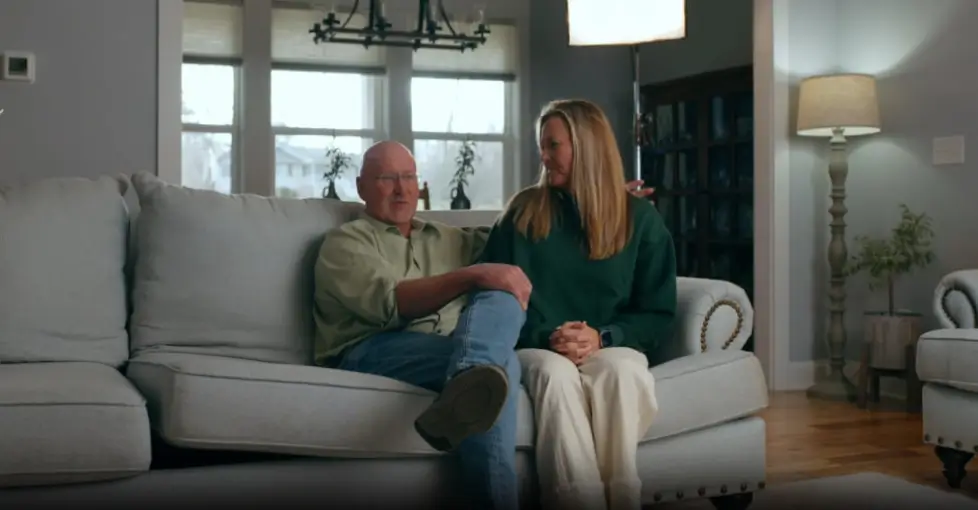

“ I feel comfortable calling and sending Tennessee Standard in my house to fix a problem. He respected my home just like I do. To us, Tennessee Standard is the gold standard.”
The plumbing side of the well, which is where most well problems actually are. That covers pressure tanks, pressure switches, the control wiring at the tank, check valves and shutoffs, fittings, and the water line running from the well into your house. If your water pressure is weak, cycling, or cutting in and out, start with us.
No. We do not service the pump, the drop pipe, or anything else inside the well casing. We service everything past the pump and toward the house, which is the line coming in from the well, the pressure tank, and the plumbing from there on. If the diagnosis points to the pump, we will tell you, and you can bring in a well drilling contractor for that part.
It can. A tank that has lost its air charge stops holding a reserve, so the system cycles on and off constantly. Motor wear is driven largely by the number of starts rather than hours of run time, which is why a tank fault left alone can turn into a more expensive problem.
Often, yes. Weak or fluctuating pressure frequently traces back to the pressure tank, the pressure switch, or a valve, and all three are ours to work on. A tank that sounds solid all the way up when you tap it, or a system cycling every few seconds, points toward the tank. If the fault turns out to be down the well instead, we will say so.
Yes. We serve Knox County and the surrounding East Tennessee area, including Powell, Halls, Hardin Valley, Cedar Bluff, Heiskell, Karns, and Corryton. Being outside a municipal water district does not change anything about the plumbing between your well and your fixtures.