
Same-Day Service Available
00
Hrs
00
Mins
00
Secs
Need a Plumber in Knoxville? We’re Ready to Help!
Same-Day Service Available
Need a Plumber in Knoxville? We’re Ready to Help!
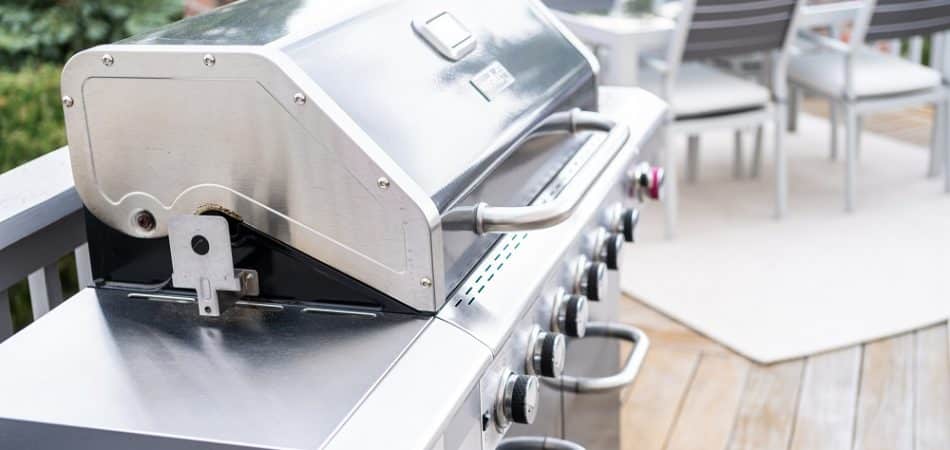
Yes, you can add a gas line for an outdoor kitchen in Maryville, TN, but it must be installed by a licensed professional, such as a plumber or gas fitter, to ensure safety and compliance with local building codes. The installation requires obtaining permits from the local building department and passing a final inspection.
Outdoor kitchens in the Maryville and Blount County area have become one of the most popular home upgrades in East Tennessee. Built-in gas grills, side burners, pizza ovens, and fire features all need a dedicated gas supply. That means extending your existing system to a new outdoor location. The good news is that adding a gas line for an outdoor kitchen in Maryville is entirely doable for most homes, whether you are on natural gas or propane.
At Tennessee Standard Plumbing, we handle gas line installation throughout Maryville, Blount County, and the greater Knoxville area. Our licensed plumbers assess your existing system, size the new line correctly for your appliance load, pull the required permit, and complete the job to Tennessee code.
Contact us today to schedule a no-surprise estimate.
Adding an outdoor kitchen gas line in Maryville is not a weekend DIY project. It is a permitted, licensed plumbing installation that follows Tennessee’s International Fuel Gas Code (IFGC). Understanding the full scope before you start helps you plan your project budget accurately and avoid delays.
All new gas line installations in Tennessee require a permit. In Maryville, permits are handled through the City of Maryville Codes Enforcement office. Properties in unincorporated Blount County outside the city limits fall under Blount County’s permit office at 1221 McArthur Road. A licensed plumber pulls the mechanical permit, completes the installation, and arranges the required inspection before the line is placed into service.
Skipping the permit creates liability at sale and may result in the line failing to pass a future home inspection.
Every gas appliance carries a BTU rating, and the total load of all outdoor appliances determines the pipe diameter and run length your new line requires. Common outdoor appliance BTU ranges:
 Built-in gas grill: 30,000 to 60,000 BTU per hour
The plumber totals the BTU demand, measures the run from supply to outdoor kitchen, and sizes the pipe per IFGC flow tables to maintain pressure at the farthest appliance.
Before the gas company allows any new line to go into service, a licensed inspector reviews the completed installation. Tennessee code requires a pressure test of all new gas piping before concealment and before the line is activated. The plumber pressurizes the system and holds pressure for a set period to confirm there are no leaks at any joint, fitting, or connection point. Only after the installation passes inspection is the line turned on and placed into service.
The material used depends on where the pipe runs and whether it is exposed or buried. Tennessee follows the IFGC, which governs approved materials for each application.
Black iron pipe, also called black steel pipe, requires threaded fittings at each joint, which makes it more labor-intensive to install than flexible alternatives. That rigidity is also its strength: it holds up well outdoors when coated or wrapped to block surface rust. Paint, galvanized wrap, or an approved corrosion-resistant coating should be applied to any section exposed to weather.
Corrugated stainless steel tubing (CSST) bends around framing members without needing multiple fittings, which cuts both connection points and installation time. The mandatory bonding requirement means a minimum 6 AWG copper jumper must connect the CSST to the home’s grounding electrode system. This applies whether or not the tubing carries an arc-resistant jacket. There is no exemption under Tennessee code.
Polyethylene (PE) pipe cannot go vertical on its own. Tennessee code requires it to transition to a ferrous metal riser before rising above grade at the outdoor kitchen. A yellow tracer wire must also be run alongside any buried PE segment so the line can be located by utility workers in the future. Your plumber selects the material for each segment of the run based on whether it is exposed, buried, or routed through the structure.
In Maryville, many homeowners build outdoor kitchens over existing concrete patios, under pergolas, or attached to a deck. Running the gas line to those locations without tearing up finished surfaces requires planning and, in some cases, directional boring.

If your outdoor kitchen is attached to or directly adjacent to your home, the gas line can often be routed through the house wall and transitioned to exterior pipe at the point where it exits the structure. The penetration must be sleeved where the pipe passes through the wall, and the sleeve must be sealed against moisture and pest entry. Exposed gas piping on the exterior should be positioned out of traffic areas and protected from physical damage where applicable.
When the gas supply must cross a finished concrete patio, a driveway, or an area where open trenching would damage landscaping or hardscaping, directional boring is the preferred method. A boring machine drives a small-diameter bore under the surface and pulls the gas line through without disturbing the finished area above. It is the go-to approach for under-deck and patio gas line installations. It avoids removing and replacing pavers, concrete, or deck decking.
Tennessee’s residential code requires that gas piping running above ground outdoors be maintained at a minimum of 3.5 inches above the ground or roof surface. That clearance prevents physical damage from lawn equipment, foot traffic, and ground contact that would accelerate corrosion. Pipe routed along a wall must be secured with approved hangers or clamps to prevent sagging and vibration stress at the joints.
A licensed plumber evaluates your existing system capacity and supply pressure before sizing the new outdoor line.
Your gas meter and service regulator are sized for a specific total BTU load. If your home already runs a gas furnace, water heater, range, and dryer, adding a high-output outdoor kitchen may approach or exceed the meter’s rated capacity. The plumber checks the existing system load against the meter’s flow rating and determines whether the new appliances can be supported without a meter upgrade. If an upgrade is needed, your gas utility, such as Atmos Energy, coordinates the meter upgrade.
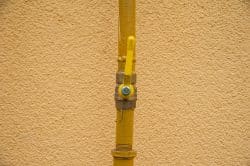 The pressure available at your tap point determines how far the new line can run at a given pipe diameter while maintaining adequate pressure at the outdoor appliances. Low pressure on a long run with an undersized pipe produces weak flame performance. The plumber measures supply pressure and sizes each pipe segment per IFGC flow tables before any work begins.
Tennessee code requires a readily accessible shut-off valve near each gas appliance. For an outdoor kitchen, this means a dedicated shut-off valve within reach of the appliance zone, separate from the main gas shutoff for the house. Installing a quick-disconnect or a properly located manual shut-off at the outdoor kitchen allows the outdoor gas supply to be isolated without affecting interior appliances.
Some homeowners also add a secondary shut-off at the exterior wall penetration for additional control. Your plumber can walk through how gas line safety requirements apply to your specific setup before work begins.
A properly installed gas line transforms an outdoor kitchen from a simple grill station into a fully functional cooking space. For a licensed plumber with outdoor gas experience, it is a straightforward job. Done right, it adds lasting value to your property and a safe, reliable gas supply for every outdoor appliance.
Tennessee Standard Plumbing serves Maryville, Blount County, and the surrounding East Tennessee area. Our team pulls the permit, routes the line using the right materials for each segment, pressure tests the system, and schedules the inspection. Need gas pipe sizing guidance before your build begins? Call us at (865) 352-9003 or book online. No surprises, no guesswork, just a gas line done right.
Problems after installation? We handle gas line repair and gas line replacement across the area.
No. All new gas line installations in Tennessee require a permit. Maryville is no exception. The licensed plumber pulls it, and the installation must pass a code inspection before the line is activated. Unpermitted gas work creates safety risks, liability at property sale, and potential code violations that can be costly to correct after the fact.
The material depends on where each segment of the line runs. Black iron pipe is standard for exposed above-ground outdoor runs. CSST is used for interior routing through walls and floors, with mandatory electrical bonding required under Tennessee code. Polyethylene pipe is used for buried underground segments and must transition to a ferrous metal riser before going above grade.
Run length depends on pipe diameter and the total BTU load of your outdoor appliances. A larger pipe diameter carries gas farther before pressure drops below the appliance minimum. Your plumber calculates the required pipe size using the IFGC sizing tables for your specific run length, supply pressure, and appliance BTU demand. There is no universal maximum distance, but undersized pipe on a long run will produce poor performance.
Possibly, depending on your current total appliance load. If your home already runs near the meter’s rated capacity with interior appliances, adding a high-output outdoor grill, side burner, and fire feature may require a meter upgrade. Your plumber assesses the existing load and the meter’s flow rating before designing the new outdoor line. If an upgrade is needed, the local gas utility handles the meter upgrade.
A standard built-in grill draws 30,000 to 60,000 BTU per hour. A single side burner typically adds 10,000 to 15,000 BTU. A gas fire pit or outdoor fireplace can add 60,000 to 90,000 BTU. A full outdoor kitchen with multiple appliances running simultaneously may require a line capable of delivering 100,000 BTU or more. The plumber totals the BTU ratings of all appliances before sizing the supply line.
Yes. Tennessee’s residential code requires all CSST gas piping to be electrically bonded to the home’s grounding electrode system. The bonding jumper must be a minimum of 6 AWG copper wire. This requirement applies regardless of whether the CSST has an arc-resistant jacket or coating. Bonding is a mandatory code requirement and must be completed as part of the permitted installation.
When trenching would damage a finished patio, directional boring is used. A boring machine drives a small hole under the concrete surface and pulls the gas line through without disturbing the slab above. The underground segment uses polyethylene pipe, which transitions to a rigid riser above grade at the outdoor kitchen location. This method avoids costly concrete removal and restoration.
Yes. If your Maryville home is not on natural gas, or if running a line is not practical for your layout, a dedicated propane tank can supply your outdoor kitchen. A licensed plumber installs the regulator, supply line, and shut-off valve from the tank in the same permitted, code-compliant manner as a natural gas installation. Propane and natural gas require different regulators and appliance orifices, so appliances must be configured for whichever fuel source you choose.
Same-day Service Available
Mon – Fri: 7:30 am – 5:00 pm