
Septic vs. City Sewer in Corryton and Mascot: What Property Owners Need to Know
Many properties in northeastern Knox County use onsite wastewater systems because public sanitary sewer is not available at every location. Northea... Read More

Same-Day Service Available
Need a Plumber in Knoxville? We’re Ready to Help!




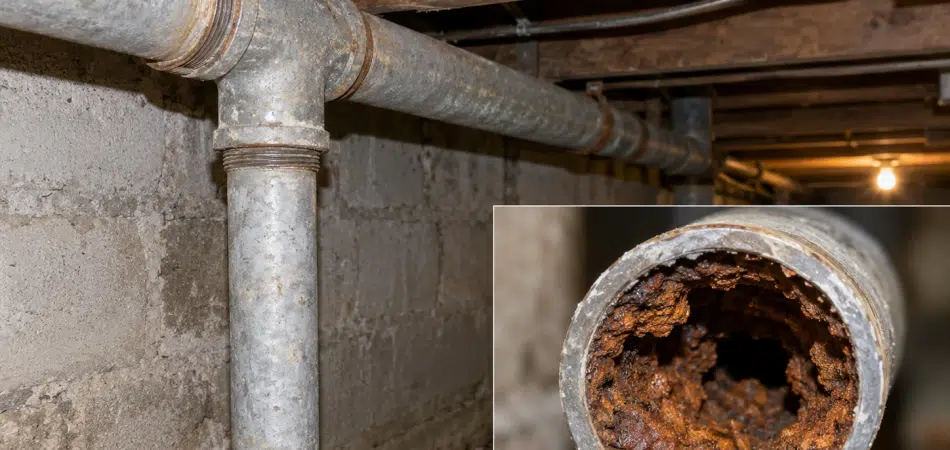
Galvanized steel supply pipe corrodes internally as its zinc coating depletes, and rust deposits narrow the bore in a process called tuberculation. Because the damage is internal, exterior appearance is a poor guide to condition. Households usually notice weak pressure upstairs or at the farthest fixture long before any leak appears. Federal drinking water rules finalized in October 2024 also require full replacement of galvanized service lines that sat downstream of a lead line, which is a separate matter from interior piping. Inspection, not the year a house was built, is what settles whether a specific system needs work.
Bearden has aged well. The houses have good bones, mature trees and the kind of street presence that newer subdivisions spend a lot of money trying to imitate.
The supply piping inside a fair number of them has not aged nearly as gracefully.
Galvanized steel was standard for the era, and it fails in a way that is genuinely different from a burst pipe. It closes up from the inside, slowly, over decades, so the household adapts to the decline without ever registering it as a problem. By the time anybody describes the pressure as bad, it has usually been getting worse for a very long time.
Galvanized steel pipe is carbon steel dipped in molten zinc. The zinc layer is sacrificial, standing between the water and the steel underneath. It was the common residential water supply material for decades before copper took over, which is why houses from the first half of the twentieth century carry it and newer construction does not.
Galvanized pipe is dull grey, threaded at the joints, and non-magnetic tests do not apply to it because it is steel and a magnet sticks. Copper is reddish and soldered. Plastic is obvious. A quick scratch on a hidden section with a coin shows silver-grey steel on galvanized, bright copper on copper, and dull grey on lead. Mixed systems are common in Knoxville, because partial replacements over the decades leave several materials in one house.
Cutting threads into a pipe removes wall thickness at exactly the point where the joint sits. Corrosion concentrates there, which is why galvanized systems often start weeping at fittings and unions rather than mid-run. It also explains why disturbing an old galvanized system during unrelated work can start a leak that was not there the day before.
Where galvanized steel meets copper without a dielectric fitting, galvanic corrosion attacks the steel side of the joint. Houses that received a partial copper upgrade in the 1980s frequently carry these junctions. Households looking at a whole home repipe often find these transition points are where the current leaks are.
The failure sequence is consistent. Zinc depletes, steel gets exposed to water, iron oxide builds on the interior wall, and the bore narrows. That buildup is called tuberculation, and it restricts flow long before it produces a hole. Exterior condition stays deceptively good throughout.
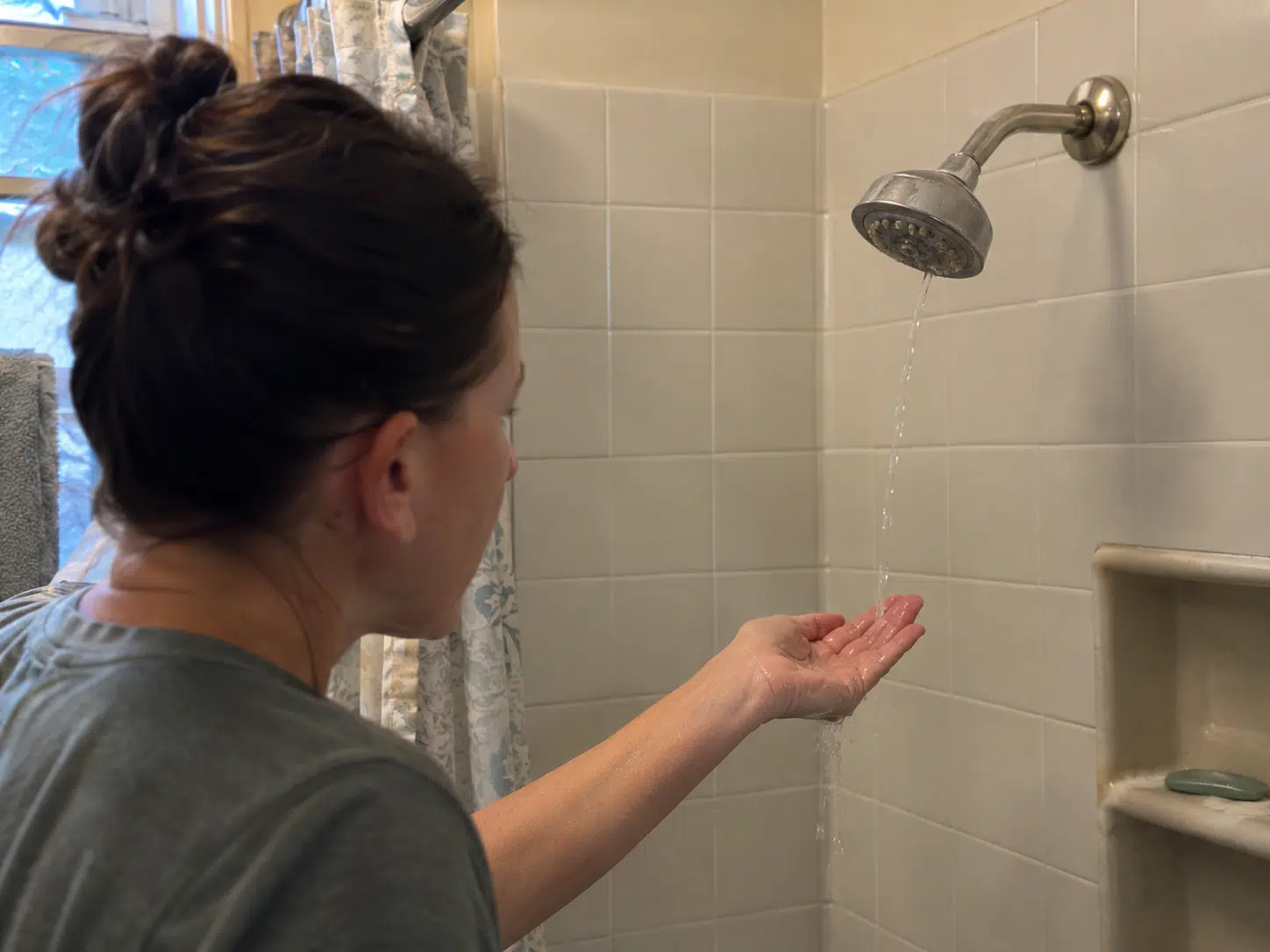
Households notice it upstairs first, and at fixtures farthest from the meter, because those runs have the least pressure to spare. A second fixture opening and killing the flow at the first is a classic sign. The change is gradual enough that people adapt to it, which is why the complaint often arrives only after a guest mentions the shower.
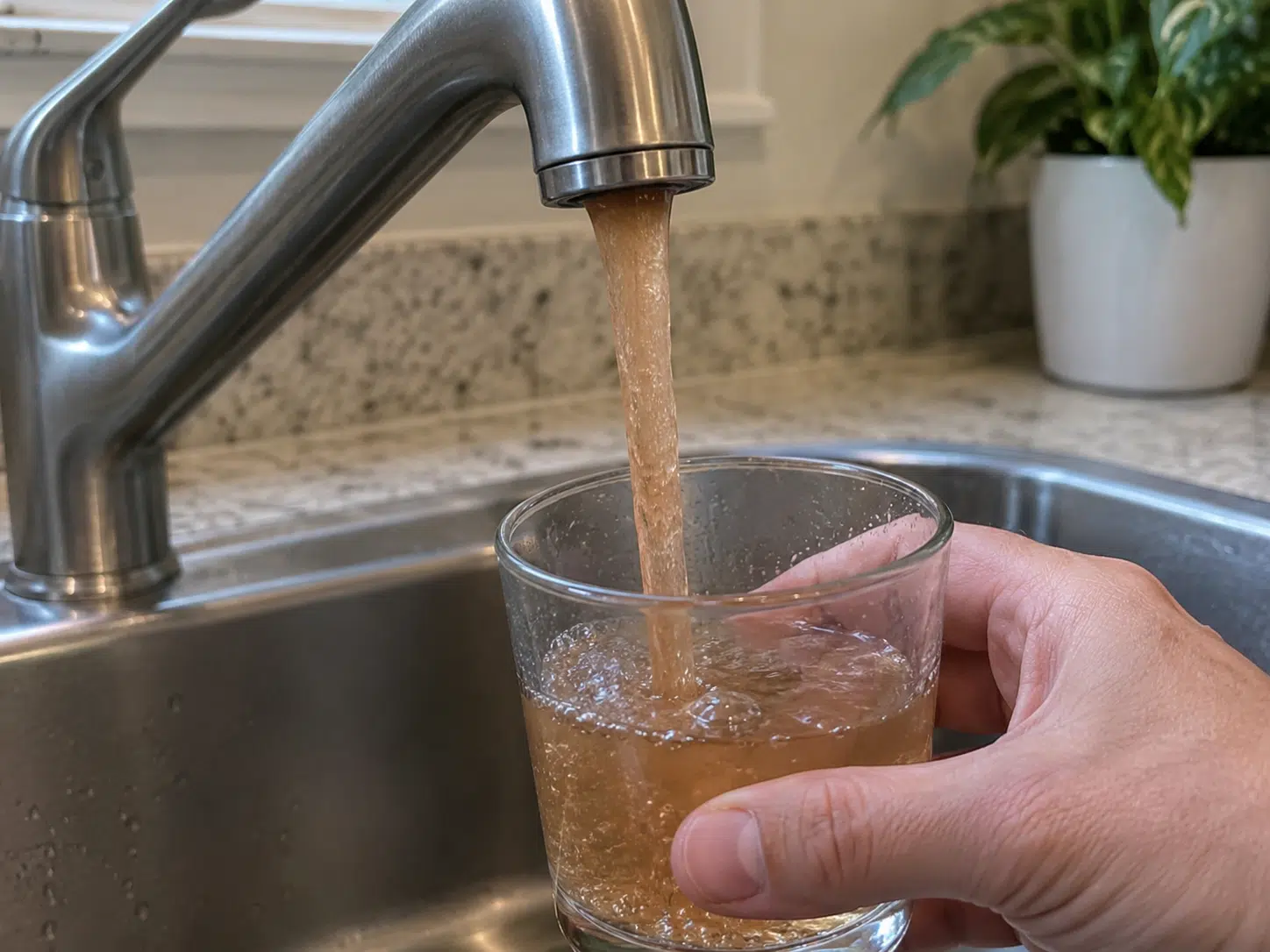 Rust-tinted water at the first tap of the morning, clearing after a minute, points at deposits shedding from interior pipe walls. Water that is discolored on the hot side only is a different story and usually points at the water heater instead. Running both taps separately for a minute each is a free test that narrows the field.
Because the whole system corroded on the same schedule, galvanized failures tend to arrive in groups. A house that produced one pinhole this spring often produces two more within a year or two. That clustering, rather than any single leak, is what usually pushes a household from repair toward replacement.
Water chemistry, original wall thickness, how much of the run sits in unconditioned space and how the system was installed all move the timeline. Two Bearden houses built the same year by the same builder can be in genuinely different shape. This is why a build date is a reason to look rather than a diagnosis, and why Knoxville plumbing services start with an assessment instead of a quote.
Galvanized pipe raises a lead question that has nothing to do with the pipe material itself. Federal drinking water rules finalized in October 2024 treat certain galvanized service lines as requiring replacement, because a galvanized line downstream of lead can capture lead particles and release them later.
Under the EPA Lead and Copper Rule Improvements, a galvanized service line is classified as galvanized requiring replacement if it is, or ever was, downstream of a lead service line, or if it currently sits downstream of a line whose material is unknown. Where a system cannot demonstrate that the line stayed clear of lead upstream at all times, it falls into that category. Details are published by the EPA Lead and Copper Rule Improvements program.
That rule governs service lines, the run between the main and the building. Interior galvanized piping inside the walls of a house is not covered by it. Conflating the two leads homeowners to expect a utility to replace something it does not own, and it leads others to assume interior galvanized is harmless because no letter arrived.
Utilities have been building service line inventories under these rules, and homeowners in Knox County can ask the serving utility what material is recorded at their address. Materials inside the house remain the property owner’s responsibility. Both halves matter for the same reason, and neither answer is available without asking.
EPA guidance on reducing exposure is consistent across utilities: use cold water for drinking, cooking and formula, flush the tap before use after long stagnation, and use a filter certified to reduce lead where there is concern. Boiling does not remove lead. These are risk reduction steps rather than a substitute for identifying materials, and the EPA Lead and Copper Rule pages carry the current requirements.
Three routes exist and the right one depends on evidence rather than preference. Isolated damage on an otherwise sound system points to repair. Damage concentrated in one branch points to partial replacement. Repeat failures across several runs point to a full repipe, and that decision is easier to make once the pattern is visible.
 A single leak at one fitting, good pressure everywhere, clear water and no history of previous leaks is a repair situation. Replacing sound pipe because of one bad joint spends money without buying reliability. Documentation matters here: noting the date and location of each leak turns a vague impression into a real trend line.
Pressure that has fallen across the whole house, discolored first-draw water at multiple fixtures, and two or more leaks within a couple of years together make a stronger case. So does planned renovation work that already opens walls, since access is the expensive part of a repipe rather than the pipe.
Repiping alongside a planned bathroom or kitchen project reduces the disruption, because the walls are already open. Households weighing materials and scope can review this comparison of PEX and copper repipe considerations before deciding. Costs vary by house layout, access and scope, so any figure quoted without a walkthrough is a guess.
Chemical treatments marketed to clear tuberculated galvanized pipe do not restore lost wall thickness. Raising system pressure to compensate for restriction stresses the weakest fittings in a system that already has thin walls. Both approaches trade a pressure complaint for a leak, and neither addresses the condition underneath. Homes across Bearden and nearby West Knoxville neighborhoods see better results from a plan built on inspection findings.
Our team at Tennessee Standard Plumbing has worked across Bearden, West Knoxville and the surrounding East Tennessee communities for more than 13 years on repipes, water lines, leak detection and water treatment. According to the company, we carry a 5.0 Google rating across more than 1,000 reviews, hold HomeAdvisor Elite Service recognition and field more than 50 technicians.
Four things are worth holding onto. Galvanized pipe fails internally, so appearance is a poor guide. Falling pressure and first-draw discoloration usually arrive years before a leak. The federal galvanized service line rule is about service lines and does not cover interior piping. And repair, partial replacement and full repipe are all legitimate answers depending on what the evidence shows.
Homeowners who want their supply piping identified and assessed can reach our team at (865) 352-9003 or get a free estimate online. We serve Bearden, West Knoxville, Farragut, Knoxville, and communities across Knox County and East Tennessee. Peaceful Pipes, Peaceful Life.
Look at exposed runs in the crawl space or basement. Galvanized steel is dull grey with threaded joints, and a magnet sticks to it. Copper is reddish with soldered joints. Many mid-century houses carry a mix, because partial replacements over the decades left several materials in one system.
There is no single number that holds across houses. Water chemistry, original wall thickness, installation quality and how much of the run sits in unconditioned space all change the outcome. Ranges quoted online come from secondary industry sources rather than a technical standard, which is why inspection of the actual system is the reliable answer.
Upper floors and fixtures farthest from the meter have the least pressure margin, so restriction shows there first. In galvanized systems that restriction is usually internal rust buildup narrowing the bore. Pressure readings taken at several fixtures help separate a pipe restriction from a supply or valve problem.
The concern regulators have addressed is lead capture. EPA rules finalized in October 2024 require replacement of galvanized service lines that are or ever were downstream of a lead line, because those pipes can hold and later release lead particles. That rule covers service lines rather than interior piping. Anyone concerned should ask the serving utility what material is recorded and consider a water test.
Cleaning does not restore wall thickness that corrosion removed. Products marketed for this purpose address deposits rather than the underlying steel loss, and the pipe remains thinner than it was. Raising system pressure to compensate stresses the weakest fittings and tends to produce leaks.
Not automatically. Isolated damage on an otherwise sound system is a repair. Damage concentrated in one branch can be handled as a partial replacement. Repeat failures across several runs make a stronger case for a full repipe, and that judgment should follow an inspection rather than a build date.
Threading a pipe removes wall thickness right where the joint sits, so corrosion concentrates there. That is why galvanized systems tend to weep at unions and elbows rather than in the middle of a straight run, and why disturbing old pipe during unrelated work sometimes starts a new leak.
It is accelerated corrosion where two dissimilar metals meet in the presence of water. Galvanized steel joined directly to copper without a dielectric fitting corrodes faster on the steel side. Houses that received partial copper upgrades decades ago often carry these junctions, and they are frequently where current leaks appear.
Combining the two often reduces total disruption, since access is the expensive and messy part of repiping rather than the pipe itself. That said, a system producing repeat leaks should not wait on a remodel that is years away. The leak history is the deciding factor.
Run the cold tap alone for a minute, then the hot tap alone, after the water has sat overnight. Discoloration on cold points toward supply piping. Discoloration on hot only points toward the water heater. Discoloration on both suggests looking at each separately rather than assuming one cause.


Many properties in northeastern Knox County use onsite wastewater systems because public sanitary sewer is not available at every location. Northea... Read More

Older Knoxville homes (especially those built before 1980) often have bathrooms in the 30 to 50-square-foot range. These small footprints respond w... Read More

Two of the highest-impact aging-in-place bathroom upgrades for Knoxville homeowners are comfort-height toilets and walk-in showers. Comfort-height ... Read More