
How Long Does a Battery Backup Sump Pump Last? Types and Factors Explained
A battery backup sump pump system will often serve you for about 5–10 years, while the battery itself usually needs to be replaced every 3–5 years.... Read More

Same-Day Service Available
Need a Plumber in Knoxville? We’re Ready to Help!




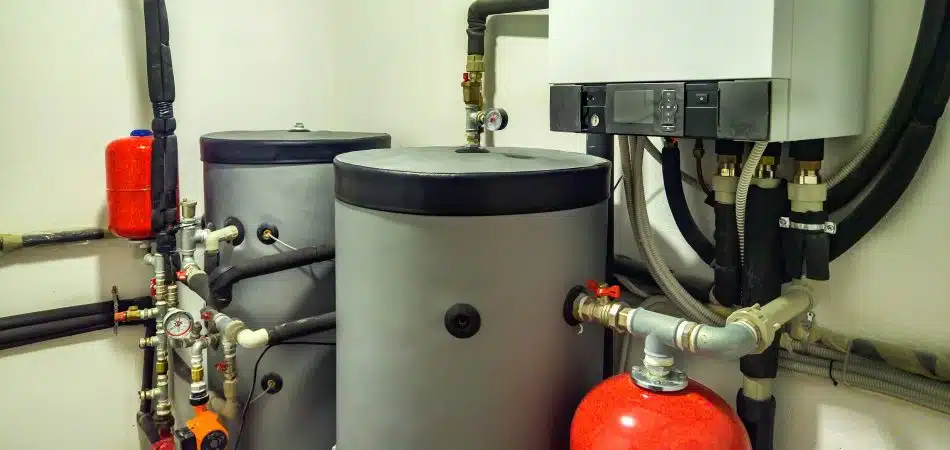
The federal Section 25C tax credit (30%, up to $2,000) for heat pump water heaters expired December 31, 2025, following the passage of HR1 — though homeowners who installed a qualifying unit between 2023 and 2025 can still claim it via IRS Form 5695. As of 2026, Tennessee homeowners’ main incentive is the TVA EnergyRight rebate at $900 per qualifying heat pump water heater, requiring replacement of an existing electric unit installed by an approved contractor. No federal extension is currently in effect.
If you have been researching heat pump water heaters in Knoxville and came across the federal Section 25C tax credit, there is an important update before you make any decisions. The Energy Efficient Home Improvement Credit, which covered 30% of installation costs up to $2,000 per year for qualifying heat pump water heaters, expired on December 31, 2025. Legislation signed into law in mid-2025 accelerated the termination of several clean energy incentives that were originally set to run through the mid-2030s.
That does not mean the conversation is over. Tennessee homeowners who installed a qualifying unit between January 2023 and December 2025 can still claim the credit when filing their federal tax return. And Knoxville homeowners installing a heat pump water heater today still have access to meaningful savings through TVA EnergyRight utility rebates and KUB on-bill financing. At Tennessee Standard Plumbing, our licensed technicians help Knoxville homeowners navigate both the equipment selection and the incentive landscape when choosing a high-efficiency heat pump water heater. Call us at (865) 352-9003 or schedule online to get started.
The Section 25C Energy Efficient Home Improvement Credit was a federal tax credit created under the Inflation Reduction Act that covered 30% of the total installed cost of qualifying energy-efficient home improvements, including heat pump water heaters, up to $2,000 per year for that category alone. The credit applied to equipment costs, labor, permits, and installation fees paid in the same tax year.
The 25C credit applied to the complete installed cost of a qualifying heat pump water heater, not just the unit itself. This meant the 30% calculation included the purchase price of the unit, installation labor, any necessary electrical upgrades, and required permits. The annual cap for heat pump water heaters was $2,000, separate from a $1,200 annual cap that applied to other 25C-eligible improvements such as insulation and windows. The combined annual ceiling across all 25C categories was $3,200 per household per tax year.
The 25C credit was originally set to remain available through 2032 under the Inflation Reduction Act timeline. However, HR1, commonly referred to as the “One Big Beautiful Bill Act,” signed into law on July 4, 2025, accelerated the expiration of several residential clean energy credits. The Energy Efficient Home Improvement Credit expired December 31, 2025. As of January 1, 2026, new heat pump water heater installations no longer qualify for this federal tax credit, and no replacement or renewal legislation is currently in effect.
Yes. If you installed a qualifying heat pump water heater at any point between January 1, 2023 and December 31, 2025, you are still eligible to claim the credit on the corresponding tax year’s federal return. Installations completed in 2025 are claimed on the 2025 return, typically filed in spring 2026. If you installed in 2023 or 2024 and did not claim the credit, you may be able to file an amended return for the applicable year. Consult a licensed tax professional to confirm eligibility based on your specific installation date, documentation, and tax liability for that year.
 To qualify for the 25C credit, a heat pump water heater had to meet specific efficiency and certification standards set by the IRS and the Department of Energy. Understanding these requirements still matters for homeowners filing for 2023 to 2025 installations, and the same specifications remain the benchmark for TVA rebate eligibility today.
Every qualifying heat pump water heater must carry the ENERGY STAR label. ENERGY STAR certification requires independent third-party testing and verification against DOE efficiency standards. Units without this certification do not qualify for the credit or the TVA rebate, regardless of their stated efficiency rating. When purchasing a unit, confirm the ENERGY STAR certification number before installation and retain all product documentation for your records.
The efficiency threshold for 25C eligibility depended on the unit’s operating voltage:
The efficiency threshold for 25C eligibility depended on the unit’s operating voltage:
| Voltage | Minimum UEF Required |
|---|---|
| 120V (standard outlet) | UEF of 2.2 or higher |
| 240V (dedicated circuit) | UEF of 3.3 or higher |
The Uniform Energy Factor is the DOE’s standardized measurement of water heater efficiency, calculated by dividing the energy delivered as hot water by the total energy consumed over a simulated draw cycle. Most residential heat pump water heaters operate on 240V dedicated circuits and achieve UEF ratings between 3.5 and 4.5 under DOE test conditions, comfortably exceeding the minimum threshold. Common qualifying models include units from Rheem, Bradford White, A.O. Smith, and Stiebel Eltron. A full review of the advantages of heat pump water heaters over conventional tank models provides helpful context when evaluating efficiency ratings.
The 25C credit applied only to improvements made at the taxpayer’s primary U.S. residence. Rental properties, second homes, and vacation properties did not qualify. The unit must have been purchased new, not used or refurbished, and installed and placed in service by December 31 of the applicable tax year. Professional installation by a licensed plumber is strongly recommended to ensure compliance with local electrical and plumbing codes, which are typically required for warranty validity and permit approval. Our guide on how to choose a water heater walks through how to match unit specifications to your home’s layout and usage.
Homeowners who installed a qualifying heat pump water heater in any year from 2023 through 2025 can claim the 25C credit by filing IRS Form 5695 (Residential Energy Credits) with their federal income tax return for the applicable year. The credit is nonrefundable, meaning it can reduce your federal tax liability to zero but will not generate a refund beyond your total tax owed for the year.
The 30% credit calculation applies to the total cost of placing the qualifying equipment in service, including:
Costs not included in the calculation: unrelated electrical work, replacement of nearby fixtures, or repairs performed at the same time but not connected to the heat pump water heater installation.
Form 5695 is a one-page IRS worksheet that calculates the allowable credit amount based on eligible expenditures. Documentation you will need includes the purchase receipt for the unit, the installer’s invoice itemizing labor and materials, and proof of the unit’s ENERGY STAR certification. The calculated credit flows to Schedule 3 of Form 1040 and reduces your federal tax liability for the applicable year. If your tax liability for the year is less than the credit amount, the unused portion does not carry forward under the 25C rules. Engage a tax professional if your installation involved multiple qualifying improvements in the same year, as the combined 25C caps require careful documentation to maximize the credit correctly.
The $2,000 annual cap for heat pump water heaters applies per tax year, not per unit. If you replaced two heat pump water heaters in the same calendar year, the combined credit is still capped at $2,000 for that category. The broader 25C system has a $3,200 total annual cap covering all eligible improvement categories combined. If you also claimed credits for qualifying insulation, windows, or other improvements in the same year, those amounts reduce the remaining available credit under the $3,200 ceiling.
With the federal 25C credit expired, the primary financial incentive available to Tennessee homeowners installing a heat pump water heater today is the TVA EnergyRight rebate program. Knoxville homeowners served by KUB participate in TVA EnergyRight and may access additional financing through the utility.
 As of February 2026, TVA EnergyRight offers a $900 rebate per qualifying heat pump water heater installation through participating local power companies, including KUB. The rebate requires:
The rebate is processed through your local utility after installation. While the $900 rebate is smaller than the expired $2,000 federal credit, a qualifying heat pump water heater will typically save a Knoxville household $300 to $550 per year in water heating energy costs compared to a standard electric resistance tank.
That payback timeline, combined with the rebate, makes the upgrade financially sound for most East Tennessee homeowners replacing an aging electric unit. Understanding why heat pump water heaters outperform traditional electric models in efficiency terms makes the long-term math easier to evaluate.
KUB offers on-bill financing of up to $7,500 for qualifying energy efficiency upgrades, including heat pump water heater installation, with repayment spread over up to 10 years through your monthly KUB bill. This option allows Knoxville homeowners to complete the upgrade with no large upfront payment, and the monthly financing charge is often partially or fully offset by the energy savings appearing on the same bill. Contact KUB directly or ask your plumber to confirm current program availability at the time of scheduling.
Tennessee’s Home Energy Rebate Program (HEAR), funded through IRA appropriations administered by the Tennessee Department of Environment and Conservation, may offer additional rebates for income-qualified homeowners installing qualifying heat pump water heaters. Rebate amounts and availability vary based on household income relative to area median income and current program funding. Visit the Tennessee Department of Environment and Conservation’s website for current details before assuming availability.
The case for a heat pump water heater in Knoxville remains strong even after the expiration of the 25C credit. Long-term energy savings, combined with the TVA rebate and KUB financing, make the economics favorable for most East Tennessee homeowners replacing an aging electric tank.
Heat pump water heaters extract thermal energy from surrounding air and transfer it into the stored water column, consuming roughly 60 to 70 percent less electricity than a conventional electric resistance tank. In Knoxville’s climate, where utility space ambient temperatures typically remain above 50 degrees Fahrenheit for most of the year, heat pump water heaters can operate in full heat pump mode rather than falling back on resistance backup heating for extended periods. This results in annual water heating savings of $300 to $550 for the average Knoxville household, with a typical payback period of 4 to 7 years depending on current KUB utility rates and hot water usage patterns.
Heat pump water heaters require at least 700 to 1,000 cubic feet of unconditioned or semi-conditioned surrounding air space to operate at rated efficiency, a 240V dedicated circuit, and a condensate drain line. Garage, basement, and utility room installations in East Tennessee homes typically meet these requirements. The units also produce a mild cooling and dehumidifying effect on the surrounding space, which can be a benefit in Knoxville’s humid summer months. Before scheduling installation, review tankless water heater installation requirements for a similar overview of site assessment considerations, and check how long a water heater installation takes to plan your day.
The expiration of the federal 25C credit changes the short-term financial calculation for heat pump water heater installation, but it does not change the underlying value of the upgrade. If you installed between January 2023 and December 2025 and have not yet claimed the credit, filing IRS Form 5695 with your applicable return is one of the most direct ways to recover federal tax liability. If you are installing today, the TVA EnergyRight rebate and KUB financing reduce the upfront cost, and ongoing energy savings make the investment sound over any reasonable planning horizon.
Tennessee Standard Plumbing’s team of 50-plus licensed plumbing technicians installs and services heat pump water heaters across Greater Knoxville, including Maryville, Oak Ridge, Lenoir City, and Clinton. With over 1,000 five-star reviews and HomeAdvisor Elite Service recognition, our team handles equipment selection, installation, permitting, and any electrical coordination from start to finish. Contact our team or call (865) 352-9003 to schedule an assessment, and visit our complete water heater services page to review all available options for Knoxville homeowners.
No. The Section 25C Energy Efficient Home Improvement Credit expired December 31, 2025, following the passage of HR1, signed into law July 4, 2025. Homeowners who install a heat pump water heater on or after January 1, 2026 are not eligible for the federal tax credit. No renewal or extension legislation is currently in effect. The TVA EnergyRight rebate ($900 per unit as of February 2026) is the primary financial incentive now available to Tennessee homeowners.
Yes. Installations completed between January 1, 2023 and December 31, 2025 remain eligible. Claim the credit by filing IRS Form 5695 with your federal tax return for the applicable year. If you installed in 2024 and did not claim the credit on that year’s return, consult a tax professional about filing an amended return. Documentation requirements include the purchase receipt, installer invoice, and ENERGY STAR certification for the unit.
The 25C credit covered 30% of the total installed cost of a qualifying heat pump water heater, including the unit, labor, electrical upgrades, and permits, up to a $2,000 maximum per tax year. The credit was nonrefundable, meaning it reduced federal tax liability dollar-for-dollar but could not generate a refund in excess of taxes owed. A $6,000 total installed cost would yield a $1,800 credit; a $7,000 installation would yield the maximum $2,000.
For the 25C credit, heat pump water heaters needed a Uniform Energy Factor of at least 2.2 for 120V models and at least 3.3 for 240V models. Most residential 240V heat pump water heaters achieve UEF ratings between 3.5 and 4.5, exceeding the minimum. The same ENERGY STAR certification requirement applies to TVA EnergyRight rebate eligibility in 2026.
The TVA EnergyRight rebate is available to customers of TVA’s local power companies, which include KUB in Knoxville and other utilities across the Tennessee Valley region. The rebate requires replacing an existing electric water heater (gas-to-electric conversions do not qualify), installing an ENERGY STAR-certified heat pump water heater, and using a TVA-approved contractor. Contact your local power company to confirm your address is within the program’s service area.
As of February 2026, the TVA EnergyRight rebate for qualifying heat pump water heater installations is $900 per unit. The rebate dropped from $1,300 in early 2026 following strong initial program uptake. Rebate amounts are subject to change by TVA. Confirm the current amount with your local utility or your Tennessee Standard Plumbing technician before scheduling.
Yes. The TVA EnergyRight heat pump water heater rebate specifically requires replacing an existing electric water heater with a qualifying heat pump model. Conversions from gas to electric do not qualify under the current program terms. If your home currently uses a gas tank water heater and you want to switch to a heat pump water heater, consult your local power company about any available conversion pathways before assuming rebate eligibility.
Heat pump water heaters use refrigerant-based heat transfer to extract ambient thermal energy from the surrounding air, requiring 60 to 70 percent less electricity than a conventional electric resistance tank to produce the same volume of hot water. In Knoxville’s climate, where utility space temperatures remain above the heat pump’s efficient operating range for most of the year, the average household can expect $300 to $550 in annual water heating savings compared to a standard electric tank. Over a 10 to 12 year service life, cumulative savings often exceed $3,000 to $6,000.
IRS Form 5695, Residential Energy Credits, is the federal worksheet used to calculate and claim the Section 25C credit and the 25D Residential Clean Energy Credit. For the heat pump water heater credit, complete Part II of Form 5695 by entering the qualified costs for the installation. The calculated credit transfers to Schedule 3 of Form 1040 and reduces your federal tax liability for the applicable year. Retain all purchase and installation documentation with your tax records in case of IRS inquiry.
Tennessee does not currently offer a state-level income tax credit for heat pump water heater installation. Tennessee has no state income tax on wages, which limits the utility of income tax credit mechanisms at the state level. The Tennessee Home Energy Rebate Program (HEAR) may offer rebates for income-qualified households through the state energy office. Visit the Tennessee Department of Environment and Conservation’s website for current HEAR program availability and eligibility guidelines.


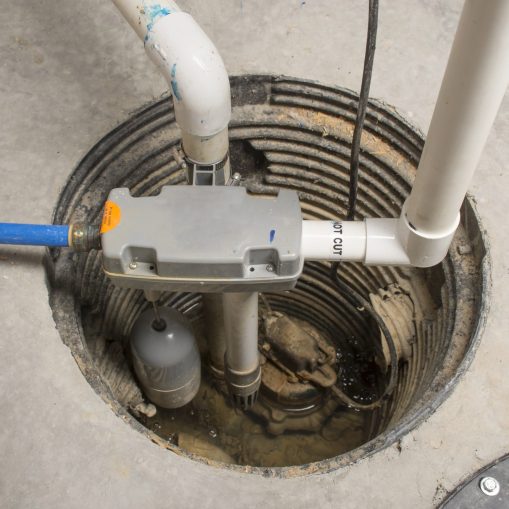
A battery backup sump pump system will often serve you for about 5–10 years, while the battery itself usually needs to be replaced every 3–5 years.... Read More

Knoxville municipal water averages around 90 mg/L hardness, which puts it in the moderately hard range. The dissolved calcium and magnesium mineral... Read More

To effectively identify a water leak, start with initial checks such as the pressure drop test or isolation test. For pinpointing the exact locatio... Read More