
What Causes Recurring Sewer Backups in Older Knoxville Homes?
Key Takeaways Recurring sewer backups in older Knoxville homes usually point to a structural problem in the sewer line, not a single clog ... Read More
Same-Day Service Available
Need a Plumber in Knoxville? We’re Ready to Help!




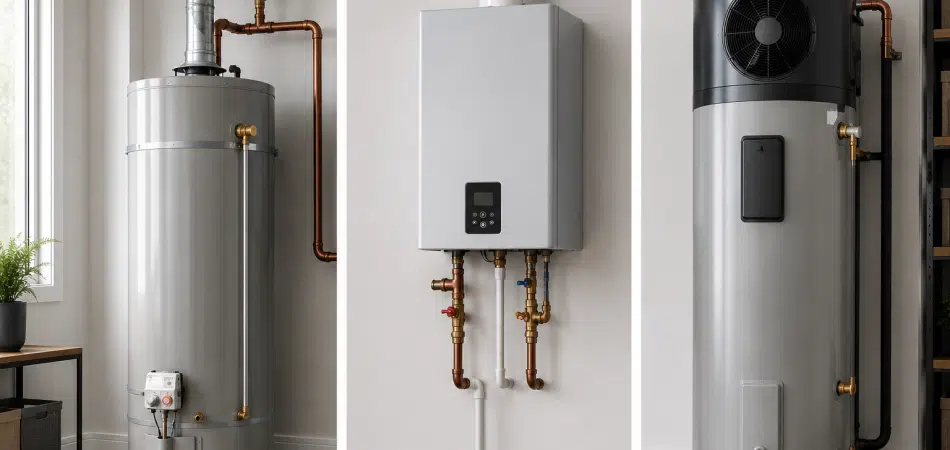
If your water heater is aging out or you’re building a new home in the Knoxville area, you’re likely facing one big question: which type of water heater is actually worth your money? The water heater cost comparison in Knoxville comes down to more than just the sticker price; it involves installation, energy efficiency, your home’s infrastructure, and how long you plan to stay in the house. This guide breaks it all down so you can make a smart, informed decision.
Water heating is one of the largest energy expenses in any household, typically accounting for 14–18% of total utility costs. For Knoxville homeowners, that number can feel even more significant during the region’s cold winters and hot, humid summers, both of which put extra demand on your system.
East Tennessee’s climate is mixed enough that all three water heater types, tank, tankless, and heat pump, can perform well here. But performance and cost vary considerably depending on your home size, energy source, existing infrastructure, and how much hot water your household uses daily.
If any of these sound familiar, it may be time to weigh your replacement options, not just repair them. Tennessee Standard Plumbing offers a water heater service and tune-up to help you assess whether repair or replacement makes more financial sense.
Tank water heaters are the most familiar option for Knoxville homeowners. They store a set amount of hot water, typically 40 to 80 gallons, and keep it heated continuously, ready for whenever you need it.
Tank heaters are the most affordable upfront option, which makes them attractive for budget-conscious homeowners or those who don’t plan to stay in the home long-term. They’re also easy to replace in most cases; a tank water heater installation can be completed in a few hours.
If you already have an older tank unit showing signs of corrosion or leaks, a tank water heater repair may buy some time, but full replacement is usually more cost-effective once a unit passes the 10-year mark.
Tankless water heaters, also called on-demand heaters, heat water only when you need it, eliminating standby energy loss. They’ve grown significantly in popularity among Knoxville homeowners who want lower long-term energy costs and a longer product lifespan.
The higher upfront investment can pay off over time — especially in a home with 2–4 people that uses hot water consistently throughout the day. Tennessee Standard Plumbing handles both tankless water heater installation and tankless water heater repair for Knoxville homeowners.
 No storage tank: frees up space in your utility room or garage
For homes in areas like West Knoxville or Farragut, where larger square footage means higher simultaneous hot water demand, sizing the unit correctly is critical to performance.
Heat pump water heaters (HPWHs) work by pulling ambient heat from the surrounding air and transferring it to the water, rather than generating heat directly. This makes them dramatically more energy-efficient than either tank or standard electric tankless models.
Tennessee Standard Plumbing installs high-efficiency heat pump water heaters and can help you determine if your home is a good candidate.
Here’s a quick reference breakdown of all three options:
The “right” choice depends on your specific situation. Here’s a simple way to think through it:
Not sure which fits your home? Tennessee Standard Plumbing can assess your current setup and walk you through your options with upfront, transparent pricing, no pressure, no surprises.
One factor that doesn’t always make it into the brochures: water quality. Knoxville’s water supply carries moderate to moderately hard water with some mineral content, which accelerates sediment buildup inside both tank and tankless systems.
For tank units, this means more frequent flushing to prevent efficiency loss. For tankless units, especially gas models, it can clog the heat exchanger over time and reduce performance.
Adding a water softener or whole-home water treatment system to your setup extends the life of any water heater type and keeps efficiency high. Tennessee Standard Plumbing also offers water quality testing so you know exactly what you’re working with before making any investment.
Ready to find the right water heater for your Knoxville home? The team at Tennessee Standard Plumbing serves Knoxville and Greater Knoxville with transparent pricing and same-day service availability. Give us a call at (865) 352-9003 or book online to get started.
Most Knoxville homeowners pay between $600 and $3,500 for a full water heater replacement, depending on the type they choose and whether any infrastructure upgrades (gas lines, electrical panels) are needed. Tank heaters fall at the lower end, while tankless and heat pump units typically cost more upfront but offer longer lifespans and energy savings.
Yes, for most Knoxville homeowners with an electric water heater and suitable space, heat pump water heaters offer significant long-term savings. Combined with the federal tax credit of up to $2,000, the total cost comes down substantially and the energy savings pay back the difference over time.
A standard tank replacement typically takes 2–4 hours. Tankless installations can take 4–8 hours or longer if gas line or electrical upgrades are needed. Heat pump water heater installations are generally similar in time to standard tank replacements when the space is already suitable.
Yes. Tennessee Standard Plumbing offers financing through GoodLeap with flexible payment plans starting as low as $48/month. The application process is quick and uses a soft credit check.


Key Takeaways Recurring sewer backups in older Knoxville homes usually point to a structural problem in the sewer line, not a single clog ... Read More
In Knoxville, it is best to call a licensed professional plumber rather than attempting a DIY repair when the issue involves structural risk (like ... Read More

The top types of drainage systems include surface drainage, subsurface (French) drains, slope drains, and downspout/gutter systems, which are commo... Read More