
How Does a Plumber Find an Underground Water Leak?
An underground water leak happens when pipes under the soil break, crack, or wear out. These leaks are hidden, so they are not easy to see with the... Read More

Same-Day Service Available
Need a Plumber in Knoxville? We’re Ready to Help!




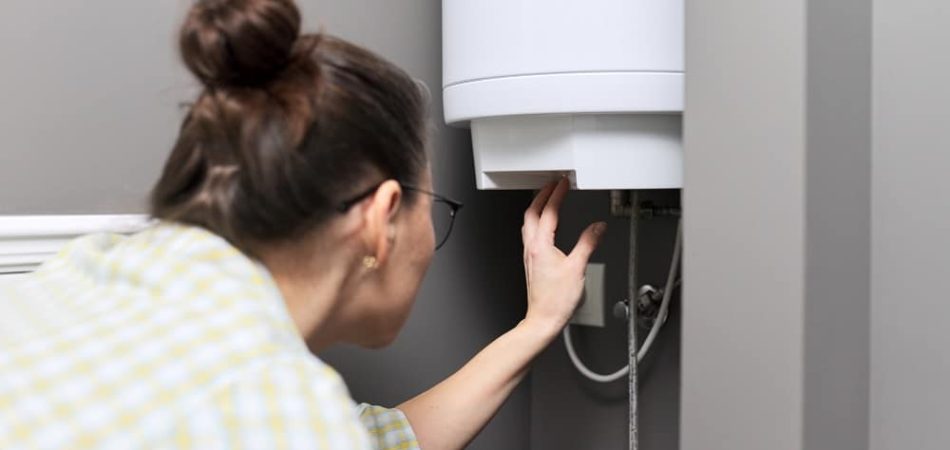
If your water heater seems to be working harder than it used to or if it gave out well before the 10-to-12-year mark hard water may be to blame. In Knoxville, the water supplied by KUB (Knoxville Utilities Board) is classified as moderately hard, ranging from 60 to 120 parts per million. That mineral content is enough to steadily degrade your water heater from the inside out. Understanding what’s happening inside your tank is the first step toward protecting one of your home’s most important appliances.
Hard water carries dissolved calcium and magnesium picked up as it moves through limestone-heavy terrain in East Tennessee. These minerals don’t stay dissolved forever. When water is heated, those minerals separate and settle right at the bottom of your water heater tank or inside the heat exchanger of a tankless unit.
Over time, this mineral buildup commonly called limescale or sediment insulates the heating element from the water it’s supposed to heat. Your unit has to run longer and work harder to reach the same temperature. That extra strain shortens the equipment’s lifespan and drives up your energy bills long before the system actually fails.
If any of these sound familiar, sediment accumulation is likely the culprit. A licensed plumber can confirm this with a quick inspection of your unit.
Knoxville’s drinking water comes primarily from surface sources, including the Tennessee River and Fort Loudoun Lake, and is treated and distributed by KUB. While KUB does treat the water to meet all EPA safety standards, the treatment process doesn’t remove calcium and magnesium minerals the compounds responsible for hardness.
East Tennessee’s Appalachian geology is rich in limestone, which readily dissolves into water as it flows through the ground and into surface sources. By the time water reaches your home, it’s carrying a measurable mineral load. KUB officially classifies Knoxville’s municipal water as moderately hard, sitting in the 60–120 PPM range. In some neighborhoods, particularly those served by private well water in surrounding communities like Maryville, Oak Ridge, and Lenoir City, levels can be even higher.
This is why water treatment isn’t just a comfort upgrade for Knoxville homeowners it’s a practical investment in protecting your plumbing and appliances.
The most effective way to stop scale from accumulating is to address the water before it reaches your heater. A whole-home water softener works by exchanging calcium and magnesium ions for sodium ions through a process called ion exchange. This makes the water chemically “soft” before it ever enters your water heater, dramatically reducing scale formation throughout your entire plumbing system.
For homeowners who prefer a salt-free option, a whole home water treatment system can condition the water using template-assisted crystallization, which changes the structure of mineral ions so they don’t adhere to surfaces as readily.
Beyond treating the source water, regular maintenance on the water heater itself also helps. Annual flushing to clear accumulated sediment, anode rod inspections, and professional tune-ups can all extend the life of your unit significantly.
 Annual water heater tune-up to flush sediment and inspect components
When you reduce the mineral content reaching your water heater, the results are measurable. Heating elements don’t have to fight through a layer of insulating scale to warm the water. The tank lining holds up longer. The anode rod lasts its intended service life. And you stop paying inflated energy bills month after month just to get hot water.
Beyond the water heater, soft water protects your entire water piping system, reduces scale on faucets and fixtures, and extends the life of dishwashers, washing machines, and other water-using appliances. Knoxville homeowners who make the switch frequently report noticeably better soap lathering, cleaner dishes, and softer skin and hair as added bonuses.
For homeowners in areas like West Knoxville, North Knoxville, or East Knoxville where water hardness can vary by neighborhood and pipe age getting a professional water quality test first is a smart starting point.
If you’re noticing the warning signs of hard water damage or your water heater isn’t performing the way it used to, Tennessee Standard Plumbing can help. Our licensed technicians serve Knoxville and the Greater Knoxville area with water heater services, water quality testing, and water softener installations designed to protect your home for the long haul. Give us a call at (865) 352-9003.
KUB officially classifies Knoxville’s municipal water as moderately hard, ranging from 60 to 120 parts per million of calcium and magnesium. This places Knoxville in the middle of the hardness spectrum not as extreme as some Western U.S. cities, but enough to cause meaningful scale buildup over time, especially in water heaters that heat the same mineral-laden water repeatedly.
The most common signs are popping or rumbling noises when the heater runs, slower hot water recovery, and higher utility bills. A licensed plumber can flush the unit to check how much sediment has accumulated and inspect the anode rod and tank lining for signs of wear or corrosion. Tennessee Standard Plumbing offers a $49 water heater tune-up that covers this inspection.
In most cases, no in fact, many water heater manufacturers recommend softened water to protect their equipment. Some high-efficiency units even specify that hard water use may affect warranty terms. It’s worth checking your specific unit’s documentation, but adding a water softener is generally considered a protective upgrade, not a modification that would void coverage.
Tankless units can be more vulnerable to scale buildup because the hard water is forced through narrow heat exchanger channels rather than sitting in a large tank. They require annual descaling in hard water areas to maintain efficiency. Both tank and tankless heaters benefit from upstream water softening. A professional can help you choose the right unit and treatment combination for your home’s specific water quality.


An underground water leak happens when pipes under the soil break, crack, or wear out. These leaks are hidden, so they are not easy to see with the... Read More

Key Takeaways Oak Ridge runs its own water system. The 2025 Annual Water Quality Report lists the source as surface water from Melton Hill Lak... Read More

A whole-home repipe in Knoxville costs between $4,000 and $10,000 for PEX, while copper runs $7,500 to $15,000. Price depends on your home's square... Read More