
CIPP Pipe Lining vs. Pipe Bursting: Knoxville’s Trenchless Options Compared
Key Takeaways CIPP pipe lining and pipe bursting are both trenchless sewer repair methods that avoid digging up most of the yard, but they... Read More

Same-Day Service Available
Need a Plumber in Knoxville? We’re Ready to Help!




Key Takeaways
Recurring sewer backups in older Knoxville homes signal that the sewer line itself has a structural problem, not just a clog that keeps coming back. Tree roots, deteriorated cast iron or clay pipes, sagging line sections, and damaged joints are the most common culprits in homes built before 1980. Each time a snake clears the line, the underlying issue remains and the next backup arrives sooner. A camera inspection identifies the actual cause and points to the right long-term fix.
When a sewer line backs up once, the cause might be a single isolated clog. When it backs up two or three times in the same year, the conversation shifts. Recurring backups in older Knoxville homes almost always point to a problem with the sewer line itself, not the drains feeding into it. Each clearing pushes through the immediate blockage, but the underlying defect that caused the buildup remains in place and creates the next problem within weeks or months.
Tennessee Standard Plumbing has worked on sewer lines across Knoxville for over 13 years. The patterns in older homes built before 1980 are remarkably consistent, and so are the long-term solutions that actually resolve the problem.

Four structural problems account for the vast majority of recurring sewer backups in older Knoxville homes: tree root intrusion through pipe joints, deteriorated cast iron or clay sewer materials, sagging line sections that trap waste, and original construction defects in pipe bedding. Each cause has telltale signs that a camera inspection can confirm, and each calls for a different repair approach.
Knoxville’s mature tree canopy is one of its defining features, but tree roots constantly search for water sources. The slight gaps at the joints of older clay or cast iron sewer pipes release small amounts of moisture, and roots grow toward that moisture until they find a way inside. Once a single root enters the line, it grows rapidly, eventually filling the pipe and catching every piece of waste that passes through. The drain clearing services in Knoxville can cut through roots temporarily, but the entry point remains, and new roots return.
Many Knoxville homes built before 1970 still have original cast iron or clay tile sewer lines. Cast iron corrodes from the inside out over decades, eventually flaking, scaling, and developing cracks. Clay tile pipes shift, separate at joints, and crack under tree root pressure or ground movement. Both materials reach the end of their service life in this era of homes, and the failures show up as recurring backups even when there’s no specific clog event.
Over decades, the soil beneath a sewer line can settle unevenly, causing a section of pipe to sag. The sag, called a “belly” in the trade, creates a low spot where waste collects instead of flowing through. Even after a snake clears the obstruction, the sag remains and the next collection event happens fast. Camera inspection reveals these bellies clearly.
Some older Knoxville homes had sewer lines installed on poorly compacted backfill or laid without proper slope. The result is recurring problems in the same section of line that no amount of clearing will permanently fix. The line itself needs to be repositioned or replaced to drain correctly.
Home age in Knoxville is one of the strongest predictors of sewer line problem type. Different construction eras used different pipe materials, and each material has its own failure pattern. Knowing the era of the home narrows down what’s likely happening before a single camera goes into the line.
| Home Era | Typical Sewer Material | Most Common Problems |
|---|---|---|
| Pre-1940 | Clay tile, vitrified clay | Joint separation, severe root intrusion, full collapses |
| 1940-1970 | Cast iron, some clay | Internal corrosion, scaling, cracking, root intrusion |
| 1970-1985 | Cast iron, early PVC, Orangeburg in some areas | Orangeburg collapse, transition joint failures, sags |
| 1985-2000 | PVC widely adopted | Far fewer issues; occasional bedding problems |
| Post-2000 | PVC and HDPE | Rare; mostly fixture-level clogs, not line failures |
Homes in older Knoxville neighborhoods like Mechanicsville, Old North Knoxville, and parts of Fourth and Gill may still have original clay tile sewer lines. After 80+ years, these lines have typically experienced significant joint separation, heavy root intrusion, and in some cases partial collapses. Camera inspection often reveals damage so extensive that full replacement is the only practical solution.
Cast iron dominated Knoxville sewer construction from the 1940s through the 1970s. Decades of waste passing through the line scale the interior, narrowing the effective diameter and creating snag points for solid waste. By the time these lines reach the 60+ year mark, recurring backups are common even in homes that have been well-maintained otherwise.
Some Knoxville homes built in the 1960s and 1970s have Orangeburg pipe, which was made from compressed wood pulp and tar. Orangeburg deteriorates and collapses over time, and any home with original Orangeburg almost certainly needs full sewer line replacement. Camera inspection identifies it immediately by its distinctive appearance.

Clearing a sewer line addresses the immediate symptom (the backup) but does nothing about the underlying cause (the structural defect). Each clearing buys time, but the time gets shorter as the underlying problem worsens. Homeowners who call for drain cleaning three times in a year are usually spending more on repeat clearings than a permanent fix would cost.
A mechanical snake or auger breaks through root masses inside a sewer line, but it cannot seal the joint where the roots entered. The roots regrow rapidly because the moisture they were tracking is still leaking. The next clearing happens within months, then weeks. Eventually the snake itself cannot clear the line because too much root mass has accumulated. Many Knoxville homeowners experience drain repair services in Knoxville as a series of escalating interventions until permanent repair becomes unavoidable.
Hydro jetting at 4,000 PSI scours the inside walls of the pipe clean, which removes far more buildup than snaking and lasts longer. But hydro jetting cannot repair cracked joints, fix sagging sections, or restore the structural integrity of a deteriorating cast iron pipe. For maintenance on a structurally sound line, hydro jetting is excellent. For recurring backups caused by structural damage, it’s still only a temporary measure.
The single most useful step in any recurring backup situation is a video camera inspection of the sewer line. A camera identifies the exact location and nature of the problem, which determines the right repair method. Homeowners who skip the camera step and just keep calling for clearings spend more money over time and never address the actual problem.
Depending on what the camera inspection reveals, long-term solutions range from targeted spot repairs to full line replacement. Modern trenchless pipe installation methods mean that many older Knoxville homes can be repaired without digging up the entire yard or driveway, which keeps cost and disruption manageable.
When the camera identifies a single damaged section, like one cracked joint or a short broken segment, a spot repair excavates just that section and replaces it. This works well for isolated problems but doesn’t address widespread deterioration along a long stretch of pipe.
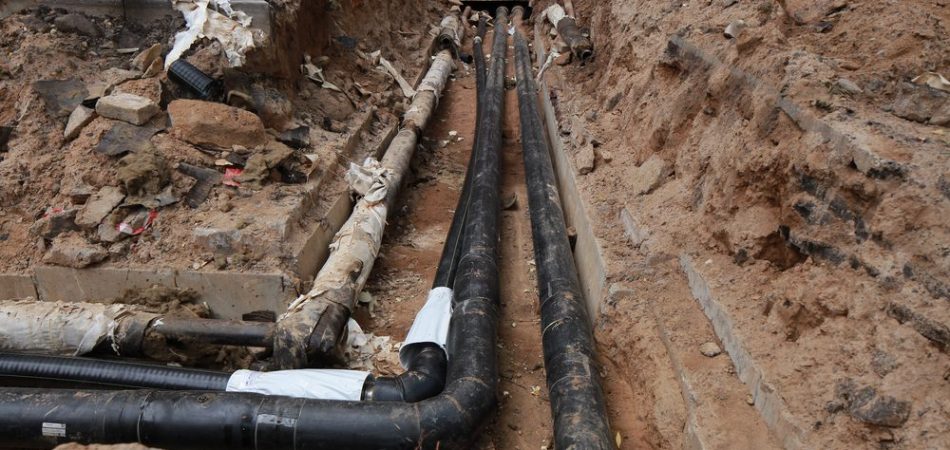
Cured-in-place pipe lining inserts a resin-saturated liner into the existing sewer pipe and cures it in place, creating a new pipe inside the old one. CIPP works well for cast iron lines with corrosion, clay lines with cracked joints, and any line where the existing pipe is still structurally intact enough to hold the liner. Minimal excavation required.
Pipe bursting pulls a new HDPE pipe through the existing damaged line, fragmenting the old pipe outward as the new one is installed. This works for fully collapsed lines, Orangeburg pipe, and severely deteriorated cast iron that cannot support a liner. Pipe bursting requires only entry and exit pits rather than full excavation.
Traditional dig-and-replace remains the right choice for sewer lines under buildings, lines that need rerouting, or lines where trenchless methods cannot work. Most Knoxville full replacements happen in homes with multiple severe issues along the line where partial fixes wouldn’t last.
For homeowners dealing with recurring sewer backups, the path forward is straightforward: a camera inspection identifies the actual cause, and the cause determines the right long-term repair. Continuing to pay for repeat clearings without diagnosing the underlying problem costs more over time and never solves the issue.
At Tennessee Standard Plumbing, our team handles sewer camera inspections, trenchless pipe lining, pipe bursting, and traditional excavation across Knoxville. The recommendation always comes from what the camera actually shows, not from assumptions. Call us at (865) 352-9003 or schedule a sewer line camera inspection to get a clear answer on what’s causing the backups in an older Knoxville home.
The most common causes are tree root intrusion through pipe joints, deteriorated cast iron or clay pipe materials, sagging line sections that trap waste, and construction defects from original installation. All four are structural problems that drain clearing cannot permanently solve.
A sewer line that backs up more than once in a year almost certainly has a structural problem. Two or three backups in the same calendar year is a strong signal that the line itself needs inspection and likely repair, not just another clearing.
Snaking or augering cuts through root masses but cannot seal the joint where the roots entered the pipe. The moisture leaking through that joint continues attracting new root growth. Until the entry point is sealed or the pipe section is replaced, roots will keep returning.
A camera shows the exact interior condition of the sewer line, including the location and nature of any damage. This identifies whether the cause is roots, deterioration, a sag, or a collapse, and points to the right repair method instead of repeated clearings.
Orangeburg is a pipe material made from compressed wood pulp and tar, used in some Knoxville homes built in the 1960s and 1970s. It deteriorates and collapses over time. Camera inspection identifies it immediately by appearance. Any home with Orangeburg needs full replacement.
Trenchless lining (CIPP) inserts a resin-saturated liner into the existing pipe to create a new pipe inside the old one. Pipe bursting pulls a new HDPE pipe through the old line while fragmenting the old pipe outward. Lining works for intact-but-damaged pipes; bursting works for collapsed or severely deteriorated pipes.
Cost varies significantly based on line length, depth, access, and method. Trenchless methods typically cost less than traditional excavation due to reduced labor and yard restoration. A camera inspection followed by a written estimate from a licensed plumber gives an accurate cost for any specific home.
Annual root treatment products help slow root regrowth in mildly affected lines. Avoiding tree planting directly over the sewer line prevents the problem from getting worse. For lines with existing significant root damage, treatment alone is not enough and structural repair is needed.
Modern PVC sewer lines typically last 50 to 100 years when properly installed. They resist root intrusion, do not corrode, and handle waste flow without scaling. Homes built after 1985 with original PVC are rarely the source of recurring backup problems.
Yes. Tennessee Standard Plumbing performs sewer camera inspections, trenchless CIPP lining, pipe bursting, spot repairs, and full sewer line replacements across Knoxville and Knox County. The team recommends repair methods based on actual camera inspection findings, not assumptions.


Key Takeaways CIPP pipe lining and pipe bursting are both trenchless sewer repair methods that avoid digging up most of the yard, but they... Read More
Backflow preventer testing costs typically range from $50 to $250, depending on the device and location. Expect annual testing, which includes a pr... Read More
Sediment pre-filtration sits at the front of a private well treatment system and removes suspended particles before they reach the equipment behind... Read More