
Is Knoxville Tap Water Safe to Drink?
Key Takeaways KUB sources Knoxville's drinking water from the Tennessee River and Fort Loudoun Lake and treats it to meet all EPA Safe Dri... Read More

Same-Day Service Available
Need a Plumber in Knoxville? We’re Ready to Help!




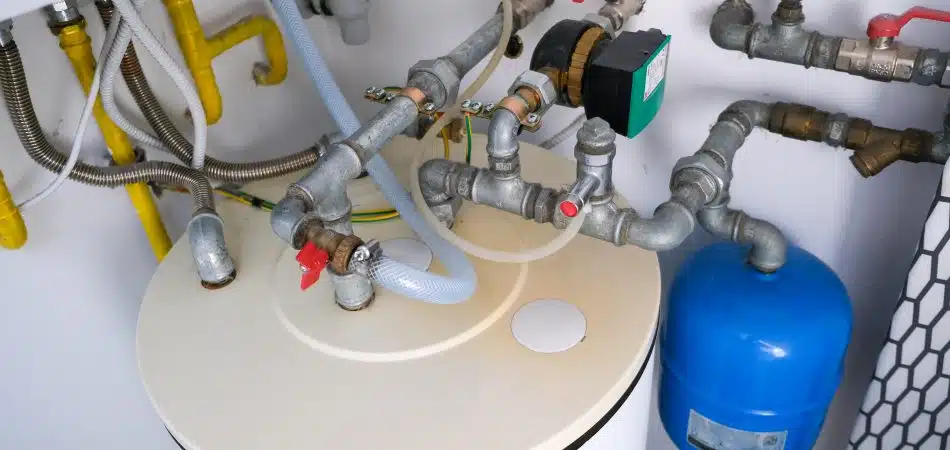
Gas and electric water heaters differ in fuel source, efficiency, operating costs, and installation needs. While electric models are generally more energy-efficient, Knoxville’s lower natural gas rates often make gas water heaters less expensive to operate. When choosing between the two, consider your existing utility connections, hot water usage, and whether your home’s electrical or gas infrastructure can support the replacement.
Choosing a water heater is one of the most consequential decisions a Knoxville homeowner makes. The unit runs every day, accounts for 14–18% of household energy consumption, and its operating cost compounds over a 10–15 year lifespan. Getting the fuel type wrong can cost hundreds of dollars annually in avoidable energy spend.
At Tennessee Standard Plumbing, our licensed technicians install and service both gas and electric water heaters across Knoxville and Greater East Tennessee every week. We have seen firsthand how the right choice depends on your home’s existing infrastructure, your household’s hot water demand, and Knoxville’s specific utility rate environment. Whether you are replacing a failed unit or planning a new installation, our water heater services in Knoxville cover every type and configuration. Call us at (865) 352-9003 or schedule an appointment online to discuss the right fit for your home.
Gas and electric water heaters both store and deliver hot water from an insulated tank, but their heating mechanisms, venting requirements, and energy pathways differ substantially. Understanding these differences is the foundation for making an informed choice.
A gas water heater uses a combustion burner assembly located at the tank base, fueled by natural gas or liquid propane, to heat stored water. Cold water enters through a dip tube, descends to the tank floor, and is heated by the burner’s open flame. Hot combustion gases travel up a central flue and exit through a vertical vent stack, either through an atmospheric draft or a power-vent configuration.
The burner is governed by a thermostat and gas control valve, typically set to 120 degrees Fahrenheit per EPA guidance. A thermocouple or thermopile serves as the safety interlock, shutting off the gas valve if the pilot light or electronic ignition fails. For a closer look at how this system behaves when something goes wrong, our water heater pilot light guide covers common failure scenarios.
An electric water heater uses two resistive heating elements, one in the upper tank zone and one in the lower, powered by a 240-volt dedicated circuit. Most residential units use a non-simultaneous heating design, where a sequential relay prevents both elements from drawing current at the same time, limiting amperage demand on the service panel.
The upper element handles quick heat recovery for the top zone, while the lower element maintains the bulk of the stored water temperature. Electric units require no venting because there is no combustion, allowing installation in closets, utility rooms, or any location with adequate electrical service.
| Feature | Gas Water Heater | Electric Water Heater |
|---|---|---|
| Heat source | Natural gas combustion | 240V resistive elements |
| Venting required | Yes (atmospheric or power-vent) | No |
| Recovery rate | 30–40 gallons/hour (typical) | 18–25 gallons/hour (typical) |
| UEF rating (tank) | 0.55 – 0.70 | 0.90 – 0.95 |
| Works during power outage | Yes (standing pilot or battery ignition) | No |
 Efficiency is the most cited factor in the gas vs. electric debate, but raw efficiency numbers tell only part of the story. Operating cost in Knoxville depends on both UEF ratings and the local price of each fuel source.
The Uniform Energy Factor (UEF) is the U.S. Department of Energy’s current standard metric for water heater efficiency, replacing the older Energy Factor (EF) rating in 2017. UEF measures the ratio of useful hot water output to the total energy consumed during a standardized 24-hour test cycle. A gas tank water heater with a UEF of 0.62 converts 62% of its fuel energy into usable hot water, while an electric model at 0.93 converts 93%.
On paper, electric units are more thermally efficient. In practice, the per-unit cost of the fuel source is equally important when calculating real annual operating expenses. A water heater with a higher UEF but more expensive fuel can still cost more to run than a lower-UEF model burning cheaper gas.
Knoxville homeowners with KUB natural gas service benefit from residential rates that averaged approximately $9.23 per thousand cubic feet (Mcf) in early 2025, roughly 25% below the national average of $12.34/Mcf according to U.S. Energy Information Administration data. This below-average gas price narrows the real-world operating cost gap between gas and electric units significantly.
A typical household of four using a gas tank water heater in Knoxville can expect monthly fuel costs of $30–$55, while an electric tank water heater in the same home may run $45–$75 per month depending on KUB electric rates and seasonal demand. Over a 10-year lifespan, that difference can total $1,200–$2,400 in favor of gas. Note that KUB approved a 3% natural gas rate increase in 2024 set to take effect in October 2025, adding approximately $1.95/month for average residential customers.
Homeowners already connected to KUB natural gas service will generally find gas water heaters more economical to operate year-over-year. Homes on electric-only service, such as those in rural Knox County or certain older neighborhoods, face a different calculation. For electric-only homes, a heat pump water heater is often the most cost-effective alternative, with UEF ratings between 3.3 and 4.1 that dramatically outperform standard resistance-element units. Our team installs high-efficiency heat pump water heaters in Knoxville for homeowners who want the lowest long-term operating cost without adding a gas line.
Upfront costs vary based on unit type, fuel source, and whether existing infrastructure supports a like-for-like swap. A direct replacement of the same fuel type is almost always the most cost-effective route.
 A standard 40–50 gallon gas tank water heater replacement in Knoxville typically costs $1,300–$1,900 installed, including the unit, labor, and connection to an existing gas line and vent stack. Units requiring a new or extended gas line installation add $300–$800 to the project total, depending on linear footage and routing complexity.
Power-vent gas models, which use a blower to exhaust horizontally through PVC piping, cost more than atmospheric draft units but offer greater installation flexibility in homes where a vertical vent stack is not accessible.
A standard 40–50 gallon electric tank water heater replacement in Knoxville ranges from $1,300–$1,700 installed. The lower end of that range applies when a 240V/30-amp dedicated circuit is already in place. Homes requiring a new circuit run from the breaker panel can add $200–$600 to the project total.
Older Knoxville homes, particularly those built before 1980 with original 100-amp service panels, may require a panel upgrade to support a new electric water heater or tankless conversion. This is a significant cost variable that homeowners often overlook during initial budget planning.
Switching from gas to electric, or electric to gas, is technically feasible but typically the most expensive route. A gas-to-electric conversion requires capping the gas supply, installing a dedicated 240V circuit, and potentially patching the existing vent chase. An electric-to-gas conversion requires routing new gas piping and establishing a compliant vent path. Our tank water heater installation team can assess your home and provide an accurate cost estimate before any commitment.
Beyond efficiency and cost, day-to-day performance separates gas and electric units for households with higher hot water demand.
The first-hour rating (FHR) measures how many gallons of hot water a water heater can deliver in the first hour of use, starting with a full tank at temperature. The recovery rate measures how quickly the heater can reheat a depleted tank. Gas water heaters consistently outperform electric models on both metrics due to the higher thermal output of combustion versus resistive heating.
A standard 50-gallon gas water heater typically delivers 60–80 gallons in the first hour at a recovery rate of 30–40 gallons per hour. A comparable electric unit delivers 55–70 gallons in the first hour with a recovery rate of 18–25 gallons per hour. For households considering on-demand delivery without storage limitations, tankless water heater installation eliminates the recovery rate variable entirely by heating water only when a fixture demands it.
Households with three or more occupants, or homes with high-demand fixtures like soaking tubs or multi-head shower systems, typically benefit from gas water heaters because of the faster recovery rate. Morning high-demand windows are less likely to deplete a gas unit’s heated reserve before everyone has finished their routine. A consistent first-hour output above 70 gallons is realistic for most 50-gallon gas units operating at the manufacturer’s rated thermal input.
Households with one or two occupants and moderate hot water demand are well-suited to electric tank water heaters. The lower recovery rate is rarely noticeable in low-demand environments, and the absence of combustion venting gives homeowners more flexibility in unit placement. For investment properties, rental units, or smaller Knoxville homes, an electric tank unit offers reliable performance at a competitive installed cost.
Both fuel types are safe when correctly installed and maintained, but they carry different risk profiles and service requirements specific to Knoxville’s housing stock and water quality.
 Gas water heaters involve combustion and require a properly sealed gas supply line, functional thermocouple or thermopile, and an unobstructed flue or vent path. Carbon monoxide accumulation from a cracked heat exchanger or blocked vent stack is the primary safety risk. Annual inspection of combustion components and venting integrity is a sound preventive measure. If you suspect a gas supply issue, our gas leak detection service should be your first call rather than DIY troubleshooting.
Electric water heaters carry no combustion risk, but the temperature and pressure (T&P) relief valve, high-limit switch, and resistive element condition should be inspected on a regular schedule. Calcium carbonate scale accumulation on lower heating elements is the most common electric water heater failure mode in Knoxville’s moderately hard water environment.
Gas tank water heaters average 8–12 years of serviceable life. Electric tank water heaters typically last 10–15 years, with the longer end achievable in homes with softer water or consistent anode rod maintenance. The sacrificial anode rod, a metal component typically made of magnesium, aluminum, or zinc-aluminum alloy that undergoes electrochemical corrosion in place of the steel tank lining, is the single most important maintenance item for extending tank life in either fuel type.
KUB-supplied water in Knoxville tests at approximately 5.3 grains per gallon (91 mg/L), classified as moderately hard. At this hardness level, calcium carbonate scale accumulation at the tank floor is a consistent maintenance challenge for both gas and electric units. Scale acts as a thermal insulation barrier between the heating element or burner and the stored water column, reducing recovery rate and increasing energy consumption over time.
Annual tank flushing to remove sediment, anode rod inspection and replacement every 3–5 years, and T&P valve testing are the core maintenance tasks for either fuel type. Households with well water sources in rural Knox County or surrounding communities may encounter higher mineral content or sulfur-reducing bacteria, which accelerates anode rod depletion significantly. For a broader set of tips on managing your home’s hot water system, see our hot water hacks resource.
For most Knoxville homeowners already connected to KUB natural gas, a gas tank water heater delivers the strongest combination of recovery performance and long-term operating cost. For electric-only homes, a heat pump water heater is the most cost-effective option if the installation environment supports it (minimum 1,000 cubic feet of surrounding air space and ambient temperatures above 40 degrees Fahrenheit). Standard electric resistance tank units remain a practical, lower-upfront-cost choice for smaller households or rental properties where the operating cost differential is less material.
Tennessee Standard Plumbing has served Knoxville and East Tennessee for five generations. Our team of 50+ licensed plumbing technicians installs and services every major water heater type, gas and electric, tank and tankless, at homes throughout Knoxville, Maryville, Oak Ridge, Lenoir City, and surrounding communities. With a 5.0 Google rating backed by 1,000+ reviews and HomeAdvisor Elite Service recognition, we deliver water heater installations with no surprises from start to finish. Contact us online or call (865) 352-9003 to schedule your water heater assessment today.
For most Knoxville homeowners on KUB natural gas service, gas water heaters cost less to operate monthly. KUB residential natural gas rates averaged approximately $9.23 per thousand cubic feet in early 2025, about 25% below the national average, which offsets gas’s lower UEF efficiency rating. Electric water heaters may be more economical for homes on electric-only service if a heat pump water heater model is selected instead of a standard resistance tank.
A standard 40–50 gallon gas or electric tank water heater replacement in Knoxville typically runs $1,300–$1,900 installed, depending on unit type and whether existing infrastructure (gas line, electrical circuit, or vent stack) is already in place. Switching fuel types or adding new gas or electrical infrastructure adds to that range.
Electric tank water heaters generally last 10–15 years versus 8–12 years for gas models. In Knoxville’s moderately hard KUB water environment, consistent maintenance, specifically annual flushing and periodic anode rod replacement, extends the serviceable life of either type regardless of fuel source.
Yes, fuel type conversions are technically possible but add cost. Gas to electric requires a new 240V dedicated circuit and gas supply cap. Electric to gas requires routing new gas piping and a compliant vent path. A like-for-like fuel type replacement is almost always the most cost-effective option for homeowners working within a standard budget.
Yes. Gas water heaters with a standing pilot light or battery-assisted electronic ignition continue to operate during power outages. This is a meaningful advantage in East Tennessee during ice storms or severe weather events when power interruptions can last multiple hours. Electric water heaters cease to function without electrical service.
The correct size depends on the number of occupants and peak hourly demand. General guidelines are 30–40 gallons for one to two people, 40–50 gallons for three to four people, and 50–80 gallons for five or more. For an in-depth sizing breakdown, see our tankless water heater sizing guide.
The Uniform Energy Factor (UEF) is the U.S. Department of Energy’s standard efficiency metric for water heaters, measuring the ratio of useful hot water output to total energy consumed in a standardized 24-hour test. Gas tank models typically rate 0.55–0.70 UEF, electric tank models rate 0.90–0.95, and heat pump water heaters achieve UEF ratings of 3.3–4.1. Higher UEF values indicate greater efficiency, but operating cost also depends on the local price per unit of fuel.
Annual flushing is recommended for both gas and electric water heaters in Knoxville. KUB water at 5.3 grains per gallon hardness causes calcium carbonate scale to accumulate at the tank floor over time, acting as a thermal insulation barrier that reduces heating efficiency and accelerates component wear. Annual flushing removes sediment before it hardens into a permanent mineral deposit on the tank interior.
Yes. The U.S. Department of Energy finalized updated minimum efficiency standards in 2024, with manufacturer compliance required by May 6, 2029. The standards effectively require most electric water heaters above 55 gallons to meet new UEF thresholds achievable only with heat pump technology. Homeowners replacing large standard electric resistance tanks after the compliance date will find their options shift toward heat pump models.
Any water heater installation involving gas line connections, new electrical circuit work, or venting modifications should be handled by a licensed plumber or electrician. Tennessee state plumbing code requires permitted work for gas appliance installations. DIY gas line connections without proper licensing create serious safety risks and typically void manufacturer warranties on the new unit.


Key Takeaways KUB sources Knoxville's drinking water from the Tennessee River and Fort Loudoun Lake and treats it to meet all EPA Safe Dri... Read More

Deciding between sewer line repair and replacement depends on the extent of damage, the age and material of the existing pipe, and long-term cost c... Read More
Plumbing issues frequently emerge after renovations because the process of remodeling—such as moving walls, updating fixtures, or changing floor he... Read More