
How to Install a Sump Pump? Step-by-Step DIY Guide
A sump pump is a pump used in a basement or crawl space to remove water that accumulates in a sump pit. It prevents flooding by pumping collected w... Read More
Same-Day Service Available
Need a Plumber in Knoxville? We’re Ready to Help!




Key Takeaways
Trenchless sewer repair methods like CIPP pipe lining and pipe bursting let Knoxville homeowners restore failing sewer lines without excavating the entire run. CIPP inserts a resin liner inside the existing pipe and cures it in place. Pipe bursting pulls a new HDPE pipe through while fracturing the old pipe outward. Both avoid extensive digging, but each fits different pipe conditions. The right choice depends on what a video camera inspection reveals about the existing line.
Sewer line replacement used to mean trenching across the front yard, tearing up the driveway, or excavating under a slab. Modern trenchless methods have changed that for most Knoxville homes. Both CIPP pipe lining and pipe bursting let homeowners restore failing sewer lines with only small entry and exit pits, minimal yard disruption, and dramatically reduced restoration costs after the work.
The two methods are not interchangeable, though. Each one fits a specific range of pipe conditions, and using the wrong method for the wrong situation either fails outright or doesn’t solve the underlying problem.
Trenchless sewer repair refers to methods that restore or replace underground sewer lines without excavating the entire pipe length. Instead of opening a continuous trench, technicians work through small access pits, usually at each end of the damaged section. For Knoxville homeowners, the appeal is preserving driveways, mature landscaping, hardscape patios, and the time and cost of restoration after traditional excavation.
Knoxville’s housing stock combines older neighborhoods with mature trees, established landscaping, decorative driveways, and tight setbacks where traditional trenching creates major collateral damage. Trenchless methods avoid that damage almost entirely. For homes in older areas like Bearden, Sequoyah Hills, and Fountain City, the value of saving the existing yard often exceeds the price difference between trenchless and excavation.
Both CIPP lining and pipe bursting require entry and exit pits, both work on most residential sewer lines between the home and the municipal connection, and both result in a sewer line that should last 50+ years when installed correctly. The trenchless pipe installation services in Knoxville from Tennessee Standard Plumbing include both methods and many spot-repair variations depending on the line condition.
Before deciding between CIPP and pipe bursting, a video camera inspection of the sewer line shows the actual pipe condition. The camera reveals whether the existing pipe is intact enough to support a liner or whether the damage is severe enough that bursting and replacement is the only viable option. Skipping this step risks choosing a method that won’t work.
Cured-in-place pipe (CIPP) lining inserts a flexible resin-saturated liner into the existing sewer pipe through a small access pit. The liner inflates against the inside walls of the existing pipe and cures in place, creating a smooth, jointless new pipe inside the old one. The result functions as a brand-new pipe even though the original casing remains in the ground.
The crew accesses the sewer line through a clean-out or small entry pit, cleans the existing pipe with hydro jetting to remove debris and prepare a smooth surface, inserts the resin-impregnated felt liner, inflates it with air or water pressure to press against the pipe walls, and cures the resin with heat, steam, or UV light. The new liner pipe is functional within hours of curing.
For most residential applications, the entire CIPP installation completes in a single day. Homeowners can use water during the curing process in some setups, though most installations have a temporary outage of a few hours.
CIPP works well for sewer lines that have suffered internal damage but where the outer pipe structure is still largely intact. Common applications include cast iron lines with significant internal corrosion and scaling, clay tile lines with cracked joints but otherwise stable pipe sections, sewer lines with root intrusion at joints, and pipes with hairline cracks that need to be sealed.
The diameter of the new lined pipe is slightly smaller than the original due to liner thickness, but the smoother interior surface actually improves flow capacity in most cases. This trade-off works well for most Knoxville residential sewer lines.
CIPP cannot work on fully collapsed pipes (there’s no structure left to support the liner), pipes with offsets larger than about 25 percent of the diameter, or pipes that need to be repositioned. For those situations, pipe bursting or excavation is required.

Pipe bursting replaces the existing sewer line entirely by pulling a new HDPE pipe through the old one. As the new pipe moves through, a specialized bursting head fractures the old pipe outward into the surrounding soil. The result is a new pipe in the exact path of the original, often with the option to increase the diameter at the same time.
Crews dig entry and exit pits at each end of the section being replaced. A steel cable threads through the existing pipe and connects to a hydraulic pulling unit at one end. The new HDPE pipe attaches to a bursting head at the cable’s other end. As the cable retracts, it pulls the bursting head and new pipe through the old line, fracturing the original pipe outward and installing the new pipe simultaneously.
The entire process can replace 50 to 100 feet of sewer line in a single day depending on access conditions and ground type.
Pipe bursting handles situations CIPP cannot: fully collapsed sewer lines, severely deteriorated cast iron where the pipe structure cannot support a liner, Orangeburg pipe found in some 1960s and 1970s Knoxville homes, and any situation where increasing the pipe diameter would improve drainage capacity. The new HDPE pipe is also resistant to root intrusion because it has no joints along its run.
Pipe bursting requires enough soil around the pipe to absorb the fragmented old pipe material. It does not work well under buildings, slabs, or in very tight spaces where the displaced pipe pieces have nowhere to go. The displaced fragments also rule out bursting in some situations where utility lines run very close to the sewer.
The right choice depends on the existing pipe condition, the home’s situation, and the homeowner’s priorities. Camera inspection results drive most of the decision. Cost, timeline, and disruption considerations finalize it.
| Factor | CIPP Pipe Lining | Pipe Bursting |
|---|---|---|
| How It Works | Resin liner cured inside existing pipe | New HDPE pipe replaces old; old pipe fragmented outward |
| Best For | Intact but damaged pipes (corrosion, cracks, root intrusion) | Collapsed, severely deteriorated, or Orangeburg pipes |
| Diameter After Repair | Slightly smaller than original (liner thickness) | Same or larger than original (upsize possible) |
| Excavation Required | Minimal — usually one access pit | Two access pits (entry and exit) |
| Typical Knoxville Cost (per foot) | $80-$250 | $100-$300 |
| Time to Complete | Usually one day | Usually one day, can extend with access challenges |
| Expected Lifespan | 50+ years | 50-100 years |
If the camera shows an intact pipe with internal damage like corrosion or cracked joints, CIPP is usually the right call. If the camera shows a collapsed line, Orangeburg material, or severe structural failure, pipe bursting is the better option. Many Knoxville sewer lines work for either method, and in those cases other factors like cost, diameter needs, and access drive the decision.
Some older Knoxville homes have undersized sewer lines that struggle with modern fixture flow rates. In those cases, pipe bursting offers the advantage of installing a larger-diameter HDPE pipe in the same path, which improves drainage capacity. CIPP cannot increase diameter and slightly reduces it.
Tight setbacks, sewer lines running under driveways or hardscapes, and homes with limited yard space all favor CIPP because of its smaller excavation footprint. Lines running through more open yards can use either method without significant disruption.
Trenchless sewer repair has made full line replacement vastly less disruptive and expensive than the dig-and-replace alternatives of past decades. CIPP and pipe bursting each solve specific problems, and the right one for a given Knoxville home depends on what’s actually in the ground. A camera inspection tells the story before a single foot of pipe gets touched.
At Tennessee Standard Plumbing, our team performs camera inspections, recommends the trenchless method that fits the actual line condition, and handles both CIPP lining and pipe bursting projects across Knoxville. The recommendation always comes from what the line shows, not from a one-method-fits-all approach. Reach out at (865) 352-9003 or schedule a trenchless sewer assessment for a clear path forward. The Knoxville plumbing experts at Tennessee Standard Plumbing can walk Knox County homeowners through every option.
CIPP inserts a resin-saturated liner into the existing sewer pipe and cures it in place, creating a new pipe inside the old one. Pipe bursting pulls a new HDPE pipe through the existing line while fragmenting the old pipe outward. CIPP keeps the existing pipe in place; bursting fully replaces it.
It depends on the existing pipe condition. CIPP works for intact but damaged pipes. Pipe bursting works for collapsed, severely deteriorated, or Orangeburg pipes. A camera inspection identifies which method fits the actual line.
CIPP typically costs $80 to $250 per linear foot in Knoxville depending on pipe diameter, line length, and access conditions. Total cost for a typical residential sewer line ranges from $4,000 to $12,000 or more.
Pipe bursting typically costs $100 to $300 per linear foot in Knoxville. Total cost for a residential line is usually higher than CIPP due to the additional excavation and the cost of new HDPE pipe.
Both CIPP and pipe bursting are typically completed in a single day for a standard residential line. Complex projects or sites with difficult access can take two days. Compared to traditional excavation, which often takes a week with full yard restoration, trenchless is dramatically faster.
Yes. Knox County requires permits for sewer line work, including trenchless replacement. Licensed plumbers pull the necessary permits as part of the project. Unpermitted work creates problems when selling the home later.
Yes, CIPP creates a seamless interior surface inside the pipe that seals the joints where roots previously entered. As long as the existing pipe is structurally intact enough to hold the liner, CIPP effectively stops root intrusion long-term.
Minimal damage. Both methods require small access pits at the entry (and exit for bursting), but most of the yard, driveway, and landscaping remains untouched. This is the main advantage of trenchless methods over traditional excavation.
Both CIPP and pipe bursting typically deliver sewer lines that last 50 years or more when properly installed. Modern HDPE pipe used in bursting can last 100 years. The longevity is comparable to or better than traditional dig-and-replace.
Yes. Tennessee Standard Plumbing performs both CIPP pipe lining and pipe bursting projects for Knoxville homeowners. The method recommendation comes from camera inspection results, ensuring the right approach for the actual pipe condition.


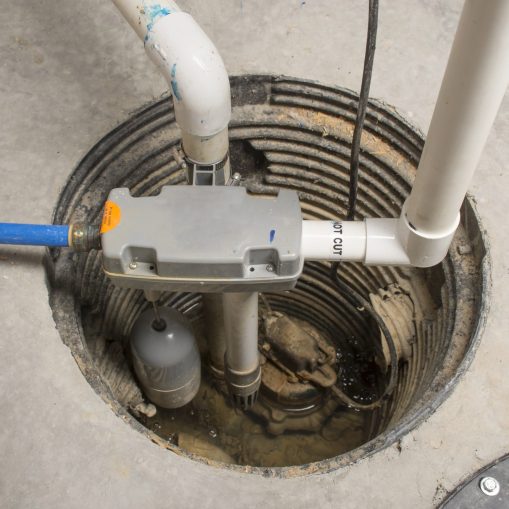
A sump pump is a pump used in a basement or crawl space to remove water that accumulates in a sump pit. It prevents flooding by pumping collected w... Read More

To unclog a bathroom sink, first try a boiling water flush, then a baking soda and vinegar mix, followed by using a plunger. If the clog persists, ... Read More

Water softeners and water filters perform two completely different jobs. A water softener solves plumbing and appliance problems by removing hard m... Read More