
How to Choose a Walk-In Shower Installer in Knoxville (What to Look For)
Choosing a walk-in shower installer in Knoxville comes down to three things: a verified plumbing license, a written and fixed price, and a workmans... Read More

Same-Day Service Available
Need a Plumber in Knoxville? We’re Ready to Help!




Key Takeaways
Preventing tree root damage to sewer lines in East Tennessee starts with avoiding tree placement near the line, treating early intrusion before it worsens, and scheduling periodic camera inspections to catch problems early. Mature trees in older neighborhoods constantly seek moisture, and the slight gaps in clay or cast iron sewer joints provide it. Annual root-inhibiting treatments and trenchless lining seal entry points and stop the cycle. Waiting until a backup happens means dealing with damage that’s already done.
East Tennessee homes sit in some of the most tree-covered residential areas in the southeastern United States. Established neighborhoods across Knox, Blount, Anderson, and Sevier counties have mature oaks, maples, sycamores, sweet gums, and pines whose root systems extend dozens of feet beyond the trunk in search of water and nutrients. When those root systems encounter a sewer line, the slight moisture leaking from pipe joints draws roots directly into the line, where they grow until they catch every piece of waste passing through.
Tree root sewer damage is a leading cause of recurring backups in older East Tennessee homes. Prevention is far less expensive than repair, but it requires understanding why roots damage sewer lines, knowing the warning signs, and taking action before a single root intrusion becomes a major collapse.
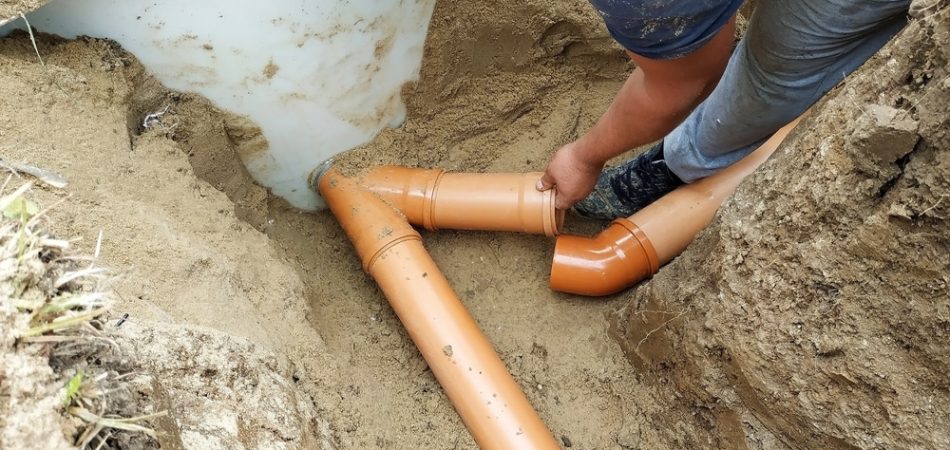
Tree roots damage sewer lines because they seek moisture, and older sewer pipes leak just enough water at their joints to attract root growth. East Tennessee’s clay-heavy soils, abundant tree species, and high rainfall create ideal conditions for aggressive root systems. Once a single root finds a sewer joint, it grows rapidly inside the pipe until it forms a mass that catches and holds waste.
Roots grow toward moisture. A sewer pipe carries water, and the slight gaps at pipe joints (especially in older clay or cast iron construction) release tiny amounts of moisture into the surrounding soil. Roots detect this moisture and grow toward it, eventually finding the joint and penetrating through it into the pipe’s interior. Once inside, the root has access to water, nutrients, and warmth, which all accelerate growth.
Some tree species are notoriously aggressive about root systems. In East Tennessee, the most common offenders include silver maples, willows, sweet gums, sycamores, and elms. These species send out broad shallow root systems that cover large areas. Other common East Tennessee trees including oaks and hickories produce deeper but slower-growing roots that can still cause damage over time.
Older clay tile and cast iron sewer lines are highly susceptible to root intrusion because of the joints in their construction. Each joint represents a potential entry point. Modern PVC and HDPE sewer pipes use sealed joints that roots cannot penetrate as easily, which is why homes built after 1985 with original PVC rarely have root problems.
Effective root damage prevention combines four practices: knowing the sewer line’s location, controlling tree planting near that location, treating early-stage intrusion before it worsens, and scheduling periodic camera inspections. Each step addresses a different stage of the problem, and together they keep root issues manageable.
| Prevention Step | What It Does | How Often |
|---|---|---|
| Locate sewer line and map it | Know where the pipe runs to inform tree placement decisions | Once, then update if line is altered |
| Avoid planting trees within 10+ feet of line | Prevents future root systems from reaching the pipe | Every time new landscaping is planned |
| Root-inhibiting chemical treatment | Slows regrowth in lines with minor existing intrusion | Annually for at-risk homes |
| Video camera inspection | Catches root intrusion early when treatment can still work | Every 2-3 years for older homes with mature trees |
| Trenchless pipe lining (preventive) | Seals all joints permanently, eliminating root entry points | Once, lasts 50+ years |
Many East Tennessee homeowners do not know the exact path of the sewer line from the home to the street. A plumber can locate and map the line using a transmitter and locator wand. Knowing the path informs every landscaping decision and prevents accidental damage during digging.
Trees should be planted at least 10 feet away from the sewer line as a minimum, and 25+ feet for aggressive species like silver maples or willows. Mature tree root systems extend two to three times the canopy width, so the apparent distance at planting time understates the eventual reach. When in doubt, consult an arborist or plumber before planting near the sewer path.
For homes with known minor root intrusion, annual root-inhibiting chemical treatments slow regrowth and keep the existing situation manageable. Most products use foaming root inhibitors that coat the pipe walls and discourage further growth. Treatments work best as ongoing maintenance, not as a one-time fix.
For older East Tennessee homes with mature trees nearby, scheduling a video camera inspection every two to three years catches root intrusion at the early stage when treatment or spot repair is still an option. The inspection identifies exactly where roots are entering and how much pipe damage has occurred.
Root intrusion rarely announces itself with a single dramatic event. The warning signs build gradually, and East Tennessee homeowners who recognize them early can take action before the damage requires major repair. The signs are subtle in the early stages and become harder to ignore over time.
When multiple drains in the home start running slowly at the same time, the problem is usually in the main sewer line, not at individual fixtures. Root intrusion that’s growing inside the main line reduces the effective diameter and slows drainage from every fixture that feeds into it. This sign often appears 12 to 24 months before a full backup event.
Gurgling means air is being pulled through the system in the wrong direction, usually because a partial blockage is restricting normal flow. Root masses inside the line are a common cause. The gurgling typically starts intermittently and becomes more frequent as the root mass grows.
A drain that clogs, gets cleared, and clogs again within weeks or months is showing classic root intrusion behavior. Each clearing breaks up the root mass temporarily, but the entry point remains and new growth follows quickly.
Long-term root intrusion can crack pipes and allow water to escape, which slowly erodes soil around the sewer line. The result is gradual sinking or visible depressions in the yard along the sewer path. By the time this sign appears, significant damage has already occurred.
If root damage has progressed beyond what prevention can address, the response depends on the extent of the damage. Camera inspection reveals what’s actually happened inside the pipe, and the right repair method follows from there. The trusted licensed plumbing professionals in Knoxville at Tennessee Standard Plumbing handle every stage of root-related repair across Knox County and East Tennessee.
For minor intrusion, mechanical removal with a snake or cable cutter clears the root mass and restores normal flow. This works as a short-term fix but does nothing to seal the entry point, so regrowth is expected within months. Mechanical removal is rarely a standalone solution for ongoing root problems.
Hydro jetting at 4,000 PSI scours the pipe walls and removes more root material than mechanical methods. Some specialized jetting heads are designed specifically for root cutting. Like mechanical removal, hydro jetting is a temporary solution unless paired with sealing the entry points.
The most effective long-term solution for ongoing root intrusion is trenchless pipe lining. CIPP creates a seamless interior surface inside the existing pipe, sealing every joint where roots previously entered. Once lined, the pipe is essentially root-proof for the lifetime of the liner (50+ years). For homes with multiple root entry points along the line, CIPP is usually the right choice.
When root intrusion has caused cracks, collapses, or sections that cannot support a CIPP liner, pipe bursting replaces the entire line with new HDPE pipe. The new pipe has sealed joints and resists root intrusion by design.
Tree root damage to sewer lines is one of the most preventable major plumbing problems East Tennessee homeowners face. A combination of smart tree placement, annual treatment for at-risk lines, and periodic camera inspections catches problems before they become full failures. Waiting for the first backup means dealing with damage that’s already substantial.
At Tennessee Standard Plumbing, our team handles every step of root damage prevention and repair for East Tennessee homes. From locating and mapping the sewer line to performing camera inspections to executing trenchless repairs that seal entry points permanently, the goal is always to address the actual problem instead of just clearing symptoms. To start with a camera inspection or to discuss scheduling preventive root maintenance, call us at (865) 352-9003. We serve Knoxville, Maryville, Oak Ridge, Clinton, and communities across East Tennessee.
Tree roots seek moisture, and older sewer pipes (especially clay tile and cast iron) leak small amounts of water at their joints. East Tennessee’s clay-heavy soils and mature tree canopy make root intrusion extremely common in homes with original sewer materials.
At least 10 feet for most species, and 25+ feet for aggressive species like silver maples, willows, and sycamores. Mature root systems extend two to three times the canopy width, so apparent distance at planting time understates eventual reach.
Silver maples, willows, sweet gums, sycamores, and elms are the most common offenders. These species send out broad shallow root systems that aggressively seek water sources. Oaks and hickories grow deeper roots but can still cause damage over time.
Yes, for prevention and slowing regrowth in lines with minor existing intrusion. Foaming root inhibitors coat the pipe walls and discourage further growth. They are not effective at reversing damage that has already broken pipe walls.
For older homes with mature trees nearby, every two to three years is recommended. The inspection catches root intrusion early when treatment or spot repair can still work, rather than after a full collapse.
Slow drains throughout the home, gurgling sounds from drains and toilets, recurring clogs in the same drains, and visible sinkholes or depressions along the sewer path. These signs build gradually and worsen over time.
Yes. Trenchless pipe lining (CIPP) inserts a resin liner into the existing pipe and seals all the joints where roots enter. Pipe bursting replaces the line entirely with new HDPE pipe. Both methods avoid extensive yard excavation.
Removing the tree stops new root growth but does not repair damage already done. Existing roots inside the pipe will die back, but the pipe will still need cleaning and likely sealing of the entry points to prevent other tree roots from finding the same path later.
Costs vary widely based on the extent of damage and repair method. Mechanical clearing or hydro jetting alone is the cheapest short-term option. Trenchless lining or pipe bursting costs more upfront but provides permanent prevention. A camera inspection followed by a written estimate gives accurate pricing.
Yes. Tennessee Standard Plumbing performs sewer camera inspections, root treatments, mechanical removal, hydro jetting, CIPP lining, and pipe bursting across Knoxville, Maryville, Oak Ridge, and East Tennessee. The recommendation always follows what the camera inspection actually shows.


Choosing a walk-in shower installer in Knoxville comes down to three things: a verified plumbing license, a written and fixed price, and a workmans... Read More

Seasonal plumbing maintenance in Knoxville follows East Tennessee's weather patterns rather than a generic national calendar. Fall focuses on outdo... Read More
Key Takeaways Cast iron drain, waste, and vent piping corrodes from the inside, so a stack can look solid from the basement while the bottom o... Read More