
Why Proper Repairs Matter More Than Temporary Fixes in Knoxville, TN
Proper repairs are crucial because they address the root cause of an issue, restoring functionality and structural integrity, whereas temporary fix... Read More

Same-Day Service Available
Need a Plumber in Knoxville? We’re Ready to Help!




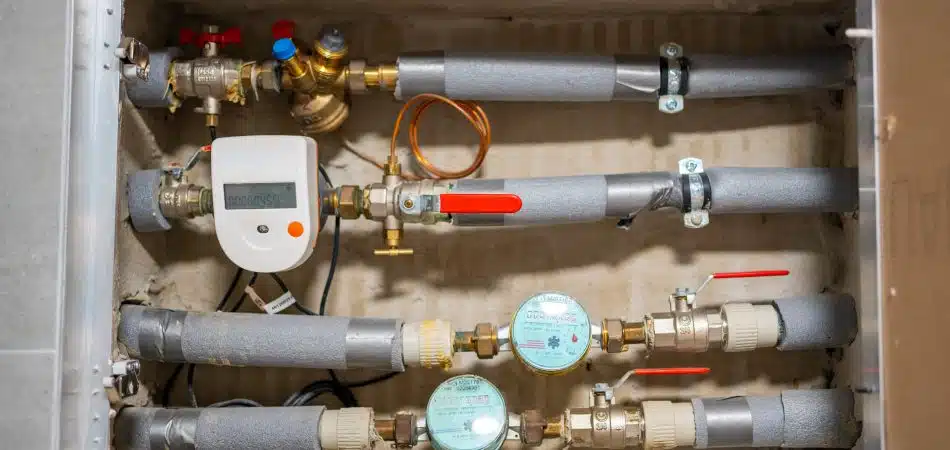
Smart leak detectors and water sensors protect Knoxville homes from seasonal pipe freezes, water heater failures, and sudden burst lines that cause the average $12,500 water damage claim. Highly recommended whole-home monitors include the Moen Flo with auto-shutoff and app-based alerts, plus YoLink sensors for larger homes with spotty Wi-Fi in basements or crawlspaces. Place localized point sensors near water heaters, sump pumps, toilets, washing machines, and beneath every sink.
A burst supply line under a kitchen sink can dump hundreds of gallons of water onto your floor in a few hours. A failed ice maker hose can do the same overnight while you sleep. The catch is that neither one announces itself the way a fire alarm does, which is why water damage now sits as the second most common homeowners’ insurance claim in the United States.
The good news is that the technology to catch these failures in the first few minutes has become affordable, simple to install, and in some cases free after insurance discounts kick in. If you already suspect a hidden leak in your home, our team at Tennessee Standard Plumbing can contact us to schedule a water leak detection visit before any new device goes in.
This guide walks through which devices actually matter for a Knoxville home, what your insurance carrier will pay you to install one, and where the technology still falls short. The piece is not a buyer’s catalog. It is a working homeowner’s read on what is worth the money and what is worth skipping.
Water damage claims average between 11,000 and 15,000 dollars across published industry data, with one nationwide study citing 12,500 dollars as the typical repair bill. Water-related claims also represent 24 to 29 percent of all homeowner claims annually, making them six times more likely than fire claims and ten times more likely than theft.
For Knoxville homes, the math is even harsher in winter, when freeze-thaw cycles in the East Tennessee climate push aging supply lines past their breaking point. A 75-dollar point sensor or a 400-dollar whole-home monitor sits somewhere between cheap insurance and an outright bargain when measured against those numbers.
Smart water protection splits cleanly into two categories, and most homes benefit from a mix of both rather than choosing one over the other. Understanding the split is the first step in spending money correctly.
Point sensors are small, battery-powered pucks that sit on the floor under sinks, behind toilets, beside water heaters, and against washing machines. They detect direct contact with water and send an alert to your phone within seconds. Most cost 25 to 75 dollars per unit, run on standard batteries that last 1 to 5 years, and require nothing more than placing them in the right spot.
Whole-home flow monitors install on the main supply line near the water meter. They measure flow, pressure, and temperature continuously, learn your normal usage patterns, and flag any flow event that breaks the pattern. Models with built-in shutoff valves can close the main automatically when a major leak is detected, even if no one is home.
A point sensor catches the localized failure: the dishwasher hose, the toilet supply line, or the under-sink connector. A flow monitor catches the line-in-wall failure or the slab leak that no surface sensor can see. A homeowner with point sensors alone may never know about a hidden slab leak detection issue until the floor warps. A homeowner with only a flow monitor may miss a slow drip from a fridge filter that takes weeks to do its damage.
The smart water market in 2026 has settled around half a dozen brands that actually hold up in long-term homeowner use. The notes below come from product reviews, hands-on testing summaries, and homeowner field reports.
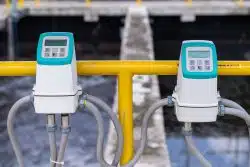 The Flo Smart Water Monitor and Shutoff is the most established whole-home system in the residential market. It learns household patterns, runs daily MicroLeak tests that can detect drops as small as one teaspoon per minute, and shuts the water off automatically when a major event is detected. Hardware runs around 400 to 500 dollars, plus plumber installation. The optional FloProtect subscription at about 5 dollars per month covers up to 5,000 dollars of deductible reimbursement.
The Phyn Plus second generation uses ultrasonic sensing rather than a turbine, which makes it slightly more sensitive to micro-leaks. The 2nd-gen unit is 25 percent smaller and roughly 200 dollars cheaper than the original. No subscription is required for full functionality. Works with Alexa, Google Assistant, Apple HomeKit, and IFTTT.
The Flume 2 clamps to your water meter without cutting any pipes, which makes it a rare whole-home option a homeowner can install without a plumber. At 99 dollars for hardware plus an optional 49-dollar annual subscription, it is the most affordable entry into flow monitoring. It does not shut off the water, but it sends alerts and tracks consumption.
YoLink uses LoRaWAN long-range radio rather than Wi-Fi, which solves a problem common in Knoxville homes with basements, crawl spaces, or detached garages where Wi-Fi signals degrade. The hub-and-sensor kit runs 80 to 150 dollars for a basic setup. Battery life on the sensors stretches to about 5 years.
Honeywell Lyric and Resideo Wi-Fi sensors are the option most often supported by insurance carrier programs because Resideo partners directly with insurers. A 2023 Nationwide-Resideo study found Honeywell Home devices reduced average claims costs by $4,000. Hardware sits in the 50 to 75 dollar per-sensor range.
For homeowners building a low-cost first layer, the Aqara Water Leak Sensor P2 supports Matter over Thread, meaning it works with most major smart home hubs without proprietary equipment. Govee Wi-Fi sensors run around 15 to 25 dollars per unit. Neither category includes shutoff, but both work for basic alerting.
Most major insurance carriers now offer discounts or rebates for installed smart water protection. The exact program varies by carrier and by state, but Knoxville homeowners with home policies through several common carriers can expect to see real savings.
Amica, Farmers, Nationwide, Chubb, Tower Hill, and Mercury all run formal smart water discount programs. Typical discounts range from 5 to 10 percent of the home premium, with Chubb offering up to 8 percent for systems that include an automatic shutoff valve. Mercury reports an average annual savings of 75 dollars for a flow monitor and 100 dollars for a system with auto-shutoff. Some carriers also subsidize the device itself, with Farmers and Nationwide running rebate programs on Moen Flo hardware.
Beyond the discount, the documented installation of a smart system can affect whether a carrier renews coverage at all in markets where water-damage payouts have spiked. The decision now is not always whether to install a device but whether your policy stays affordable without one.
Smart water devices range from peel-and-place to full plumbing projects. Knowing which category your chosen device falls into prevents surprises on installation day.
Point sensors require no plumbing work. You place them, you pair them to the app, and you replace the battery every few years. Most homeowners can deploy 6 to 10 point sensors across a home in an afternoon.
Flow monitors with shutoff valves usually require a licensed plumber to cut into the main supply line, install the device, and tie in a nearby electrical outlet. Plan on 1 to 2 hours of plumbing labor plus 200 to 350 dollars in labor costs on top of the hardware. A reliable internet connection within about 5 feet of the installation location is required for most Wi-Fi units. For Knoxville homes with the main shutoff in a damp crawlspace or unfinished basement, a pipe leak repair visit is often a sensible time to add the device while a plumber is already on site.
DIY clamp-on monitors like the Flume 2 skip the plumbing step entirely but require a clear view of the water meter and a stable Wi-Fi signal at that location.
Smart water protection only works if it is deployed correctly. A few avoidable errors account for most of the negative homeowner reviews of these devices.
Placing point sensors too far from the failure source is the most common one. A sensor stuck to a wall 18 inches behind a washing machine misses the puddle that pools in front. Sensors belong on the floor at the lowest point near each appliance, not on a shelf or behind it.
Letting batteries die quietly is the second mistake. Most sensors notify you of low battery in the app, but homeowners who turn off notifications or never check the app may lose coverage for months without realizing it.
Skipping the auto-shutoff valve in favor of alerts only is the third. An alert at 2 a.m. while you are out of town does nothing to stop a pipe that is already pouring water into your kitchen. The auto-shutoff feature is what turns a notification into actual damage prevention.
Ignoring the first false alarm is the fourth. Flow monitors learn household patterns over the first 7 to 14 days, and the first few alerts may be triggered by atypical usage. Tuning the device rather than dismissing it builds the system’s accuracy.
If you have never installed any smart water protection, a sensible starting point is 4 to 6 point sensors placed at the washing machine, water heater, dishwasher, refrigerator ice line, and the most-affected bathroom. That layer costs under 200 dollars total and catches the most common failure points in a typical East Tennessee home. A whole-home flow monitor with auto-shutoff is the next layer to add, ideally during a planned plumbing visit, so the install can be done efficiently.
If you are dealing with an active leak or a recurring water issue, no smart device replaces a licensed diagnosis. Call Tennessee Standard Plumbing for electronic leak detection and a clear path forward. We serve Knoxville, Maryville, Oak Ridge, Lenoir City, Clinton, and the surrounding East Tennessee communities. Schedule online or call (865) 352-9003 for same-day service.
Yes. One industry study cited by Tower Hill Insurance reported that smart leak detection systems reduce water leak frequency by up to 96 percent in homes where they are installed and connected to an auto-shutoff valve. The technology works by catching failures within minutes rather than hours, which is the window where most major damage occurs.
Point sensors are designed for DIY installation and require no plumbing work. Clamp-on flow monitors like the Flume 2 also install without plumber involvement. Whole-home systems with shutoff valves require a licensed plumber to cut into the main supply line and tie in electrical power.
Most point sensors run on standard batteries with a service life of 1 to 5 years, depending on the brand and how often the sensor reports temperature and humidity data. YoLink sensors lead the market at around 5 years per battery thanks to a low-power LoRaWAN radio.
The highest-value placements are the floor next to the water heater, behind or under the washing machine, under each bathroom and kitchen sink, behind the refrigerator near the ice line, near the dishwasher, and at the base of any sump pump. Crawlspace and basement floors near supply line entry points are also good candidates.
Most Wi-Fi sensors lose remote alerting when the network drops, though many still trigger local alarms. YoLink sensors use LoRaWAN and continue to function as long as their hub has power, making them the most reliable option for homes with unreliable internet. Battery backups on the main flow monitor are an additional layer of protection.
A whole-home flow monitor with daily MicroLeak testing can detect the small ongoing flow that signals a slab leak, often before any surface symptoms appear. Point sensors cannot detect leaks below a concrete slab. For a confirmed slab leak diagnosis, professional electronic detection equipment is still required.
A 25-dollar Govee or Aqara point sensor placed next to the most likely failure point in your home is the lowest-cost meaningful protection available. The next step up is the 99-dollar Flume 2 for whole-home flow monitoring without auto-shutoff. Real damage prevention starts at the whole-home shutoff level, which begins around 400 dollars in hardware.
Yes, for most modern brands. Aqara P2 supports Matter over Thread, which works with Apple HomePod, Amazon Echo, and Google Nest Hub natively. Moen Flo, Phyn Plus, and most Honeywell/Resideo sensors work with Alexa and Google Assistant. Check Matter and HomeKit compatibility, specifically if you have an Apple-based smart home setup.


Proper repairs are crucial because they address the root cause of an issue, restoring functionality and structural integrity, whereas temporary fix... Read More
Sediment pre-filtration sits at the front of a private well treatment system and removes suspended particles before they reach the equipment behind... Read More

To install a shower drain, position the drain body, connect the outlet to the waste pipe with proper slope, secure it with a locking nut, and use g... Read More