
Signs Your Drain Pipes Are Improperly Sloped: What Knoxville Homeowners Should Know
The most common signs of an improperly sloped drain pipe are slow drains, recurring clogs, gurgling sounds, and bad sewage odors. If you... Read More

Same-Day Service Available
Need a Plumber in Knoxville? We’re Ready to Help!




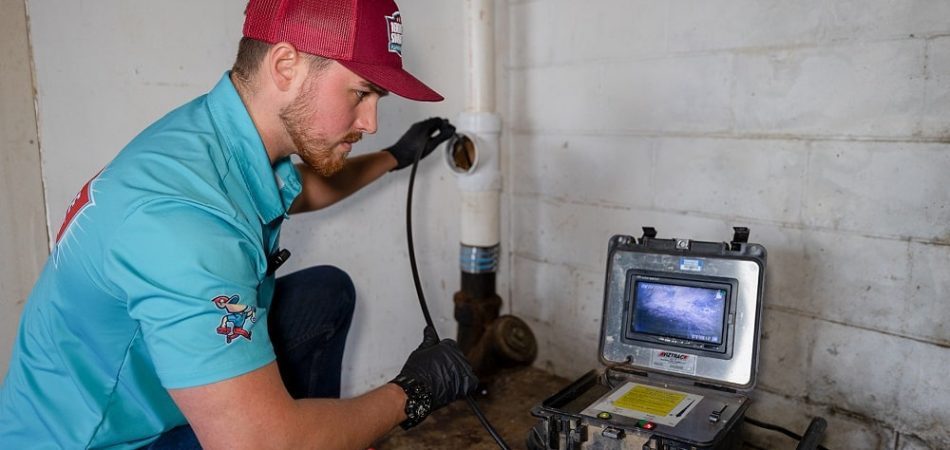
A sewer camera inspection sends a flexible cable with a small waterproof camera through the sewer line and records the interior condition end to end. The footage reveals the location and severity of any blockages, the pipe material throughout the line, signs of tree root intrusion, sagging sections (bellies), cracks, joint separation, and the overall pipe condition. For Knoxville homeowners, the footage usually answers the diagnostic question of whether a recurring drain issue is a localized clog (needs cleaning) or a structural problem (needs repair). Knowing what the camera actually shows helps homeowners interpret the inspection report and make informed repair decisions.
Sewer camera inspections turn what would otherwise be a guess into a clear diagnosis. The footage shows the actual interior condition of the sewer line, which removes the assumptions a plumber would otherwise have to make based on symptoms alone. The team behind Tennessee Standard Plumbing in Knoxville performs camera inspections across Knox County, and the patterns the camera reveals are remarkably consistent in older homes.
This guide covers what a camera inspection actually shows, how to interpret common findings, and why the footage is the most valuable diagnostic tool for sewer camera inspection decisions in older Knoxville homes.
One of the first things the camera shows is what the pipe is actually made of, which is often different from what the homeowner expects. Many Knoxville homes have mixed materials from past renovations, and the camera identifies the materials along the entire line.
Cast iron pipe shows on camera as dark, often with visible internal scaling and rough texture from decades of use. Older cast iron pipes typically have a narrowed interior diameter from accumulated scale, and the joints show characteristic bell-and-spigot connections. Cast iron from the 1940s through the 1970s is common in older Knoxville homes.
Clay tile pipe (used in many pre-1970 homes) appears as a tan or reddish-brown ceramic material on camera. The characteristic appearance is a sectional pipe with visible joints every few feet. Clay tile commonly shows joint separation, root intrusion at joints, and cracks at points where ground pressure has shifted the pipe.
Orangeburg pipe (made from compressed wood pulp and tar, used from the 1940s into the early 1970s) appears as a dark, often deformed material on camera. The pipe typically shows oval cross-sections instead of round (because the material has compressed under ground pressure) and major deterioration. Camera identification of Orangeburg almost always leads to a recommendation for full replacement.
Modern PVC pipe appears as smooth, light-colored plastic on camera with minimal interior buildup. PVC pipes typically last 50+ years and rarely show the deterioration patterns of older materials. Homes built after 1985 often have original PVC throughout.
Beyond pipe material, the camera shows what is actually causing the blockage or restriction in the line. The findings determine the right cleaning approach and whether structural issues need to be addressed in addition to clearing.
 Grease and soap buildup appear on camera as a thick, often yellowish coating on the interior pipe walls. The buildup narrows the effective pipe diameter and catches every piece of debris that follows. This finding usually points to hydro jetting as the right cleaning method, since snaking only punches through the center without removing the wall buildup.
Mineral scale from Knoxville’s hard water (averaging around 90 mg/L) appears as white or grayish crystalline buildup on pipe walls. The scale is harder than grease and resists snaking, but responds well to hydro jetting. For more on how this same mineral buildup affects the rest of the plumbing system, repeated drain clogs often signal sewer problems, which are closely related to what the camera identifies inside the line.
Tree roots appear on camera as fibrous mass-like growth entering the pipe through joints or cracks. Early-stage root intrusion shows as small root strands; advanced intrusion fills large portions of the pipe cross-section. The location of root entry helps identify which trees on the property are causing the issue and whether spot repair or full replacement is the right response.
Items that should not be in sewer lines (toys, wipes, paper towels, feminine products, and dental floss) often show on camera, caught at narrow points or junctions. Removing them and educating the household on what not to flush usually prevents recurrence.
The most valuable findings from a camera inspection are often the structural problems that homeowners cannot see from inside the home. Cracks, separations, sagging, and partial collapses all show clearly on camera and point to specific repair needs.
Joints between pipe sections that have shifted or separated show as gaps where the connection should be tight. Separated joints allow waste to leak into the surrounding soil and create entry points for tree roots and groundwater infiltration. Repair depends on the extent and location of the separation.
Cracks in pipe walls show as dark lines or visible separations. Hairline cracks may not affect flow but indicate the pipe is weakening. Larger cracks or fractures usually leak and may need targeted repair or trenchless lining to restore integrity.
A sagging section of pipe (called a belly) shows on camera as a low spot where water and waste collect instead of flowing through. The camera footage often shows standing water in the belly. Bellies cannot be cleaned permanently; they need to be excavated and repositioned, or the entire section replaced.
A partially collapsed pipe shows as a dramatically narrowed or distorted section where the pipe walls have buckled inward. Partial collapses typically require trenchless pipe bursting or full excavation repair, since the structural integrity of that section is gone.
Most professional camera inspections include a written report and recorded footage. Knowing how to read the report helps homeowners make informed repair decisions and understand whether the recommendations match what the camera actually showed.
A thorough report identifies the location and type of every issue found, with timestamps or footage references so the homeowner can see each finding on the recording. The report should also include the pipe material throughout the line, the overall condition rating, and specific repair recommendations with reasoning.
Issues that are buildup-based (grease, scale, soft obstructions) usually point to cleaning recommendations (snaking or hydro jetting). Issues that are structural (cracks, separations, sagging, collapses) point to repair recommendations (spot repair, trenchless lining, pipe bursting, or full replacement). A good report makes this distinction clear.
Homeowners should always ask for the camera footage recording in addition to the written report. The recording is the original evidence and is useful for insurance claims, home sale documentation, second opinions, and personal reference if any issue recurs later.
Camera footage transforms sewer line repair decisions from guesses to facts. Instead of choosing repair methods based on assumptions about what might be wrong, Knoxville homeowners can make informed decisions based on what the camera actually shows. The footage also documents the line condition for future reference, insurance, and home sale considerations.
Tennessee Standard Plumbing performs camera inspections, hydro jetting, trenchless lining, and full sewer line repairs across Knoxville and Knox County, with recommendations always grounded in what the inspection reveals.
Call (865) 352-9003 or schedule a sewer camera inspection to get started.
The footage shows the interior condition of the sewer line end to end, including pipe material, blockages, buildup, root intrusion, joint separations, cracks, sagging sections, and any structural problems. The camera reveals what would otherwise be invisible inside the line.
A standard sewer camera inspection typically takes 30 to 60 minutes, depending on line length and access conditions. The inspection is faster than most homeowners expect once the access point is open.
Most professional camera inspections include recorded footage that the homeowner can keep. The recording is valuable for insurance claims, home sale documentation, second opinions, and personal reference if any issue recurs later. Always ask if the recording is included.
Yes. The camera footage clearly distinguishes cast iron, clay tile, Orangeburg, PVC, and other common sewer pipe materials. The material identification is one of the most useful findings, since pipe material strongly influences repair recommendations.
Yes. Tree roots appear distinctly on camera as fibrous growth entering the pipe through joints or cracks. Early-stage root intrusion shows as small strands; advanced intrusion fills large portions of the pipe cross-section.
A pipe belly is a sagging section of sewer line where the pipe has shifted below the normal slope, creating a low spot where waste collects. The camera shows the belly clearly, often with standing water visible in the low point.
No. A camera inspection is non-invasive. The camera enters through an existing access point (clean-out or removed toilet), and the soft cable does not damage pipes of any material in good enough condition to allow camera passage.


The most common signs of an improperly sloped drain pipe are slow drains, recurring clogs, gurgling sounds, and bad sewage odors. If you... Read More

A bathroom remodeler in Knoxville should show a state license number, proof of liability and workers' compensation insurance, a written list of spe... Read More

Teflon tape seals water supply lines by filling in the gaps and grooves of the threads, and lubricating them so they can be tightened more deeply. ... Read More