
Sewage Ejector Pump vs. Sump Pump: What Knoxville Basements Actually Need
Key Takeaways Sump pumps handle groundwater seepage, while sewage ejector pumps move wastewater from basement fixtures up to the main sewe... Read More

Same-Day Service Available
Need a Plumber in Knoxville? We’re Ready to Help!




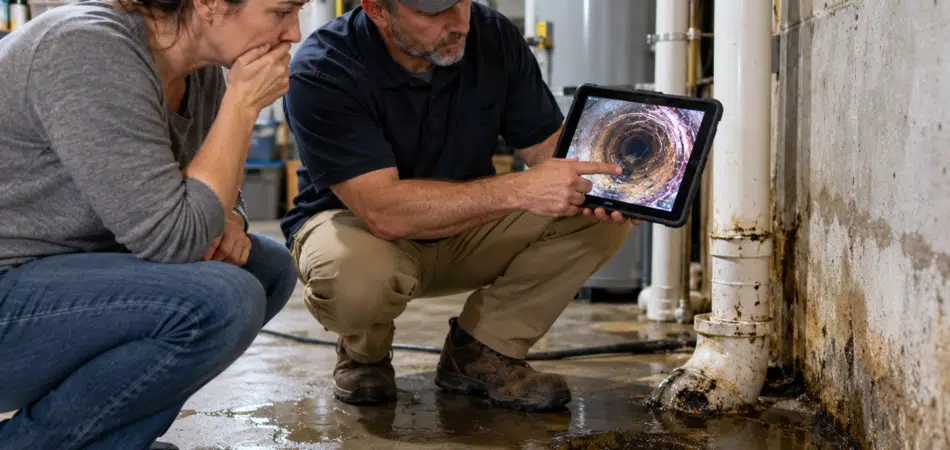
Whether a broken sewer line is covered depends on the policy’s wording and on what caused the break. Standard homeowners forms generally cover sudden, accidental water damage from plumbing while excluding wear and tear, deterioration, earth movement, and sewer backup. The damaged pipe itself is often treated separately from the damage the water causes. In Knoxville, KUB considers the private lateral the property owner’s responsibility, and optional endorsements can add backup or buried line coverage.
This article is general information, not legal or insurance advice. For your own situation, check with your insurer or a licensed insurance professional.
“So is the pipe covered, or just the mess?”
That is usually the first thing a homeowner asks once an adjuster is standing in a basement that smells like sewage. It is a sharper question than it sounds, because a homeowners policy can treat the broken line, the water that came out of it, and the digging needed to reach it as three separate items.
In Knoxville, there is a fourth piece to the answer, which is who owns the pipe in the first place. The sections below walk through ownership, the policy language that usually decides these claims, the difference between two endorsements people often confuse, and the records worth having on hand.
Most homeowners policies separate sudden, accidental water damage from gradual failure. A sample HO-3 form covers damage from an accidental discharge of water from a plumbing system, excludes loss to the system itself, and excludes wear and tear, deterioration, earth movement, and sewer backup. The exact wording in a given policy controls the answer.
The Insurance Information Institute’s consumer guide says the HO-3 covers accidental discharge of water from a plumbing system. The sample HO-3 form it publishes extends that to the cost of tearing out and replacing part of the building, but only when necessary to repair the system. Seepage, by contrast, is described as a maintenance issue.
The same sample form states that it does not cover loss to the system or appliance from which the water escaped. In plain terms, water damage to floors and walls may fall within coverage while the cracked pipe that leaked is handled differently. That split explains why “is the pipe covered” and “is the damage covered” can get two different answers under one policy.
The sample form excludes wear and tear, marring and deterioration, along with mechanical breakdown and latent defect. A separate earth movement exclusion reaches earth sinking, rising, or shifting, which matters for buried pipe. The NAIC’s consumer guide puts it simply: a homeowners policy is not a maintenance contract, and it does not pay to repair items that wear out.
The sample form does not name tree roots. Root intrusion usually develops over time, and insurers may treat it as gradual deterioration, but the specific policy wording and the facts of the loss decide it. Footage from a sewer camera inspection shows what is in the line, which helps everyone discuss the same facts.
It depends on the policy wording and the cause. Standard forms generally cover sudden, accidental water damage from plumbing and exclude wear and tear, deterioration, earth movement and sewer backup. The broken pipe itself is often treated differently from the damage its water causes.
For homes on KUB sewer, the property owner does. KUB describes the private lateral as the owner’s from the home’s plumbing to the connection with KUB’s sewer. Addresses served by another utility or by septic follow that provider’s rules.
A base policy may not, and the wording decides it. A sample HO-3 form does not name roots, but it excludes wear and tear and deterioration, and insurers may treat root intrusion as gradual. Some service line endorsements address causes a base policy does not, subject to their terms.
Start with the insurer and ask for the reason in writing, then check the policy for an appraisal clause. The Tennessee Department of Commerce and Insurance accepts complaints from consumers who believe a claim was wrongly denied. An attorney or public adjuster is another option the NAIC describes.
For homes on KUB sewer, the private lateral belongs to the property owner. KUB describes the lateral as the owner’s property from the home’s plumbing to the connection with KUB’s sewer. Repairs to that stretch of pipe are the owner’s responsibility, which is why ownership comes before any conversation about insurance coverage.
A sewer lateral is the pipe that carries wastewater from the house to the public sewer. KUB’s Private Lateral Program treats that lateral as the owner’s, and many homes also have a lateral cleanout along it. The Insurance Information Institute describes the same general arrangement nationally, noting that the owner’s responsibility can include any part of the lateral extending toward the street.
The private lateral program began under a federal consent decree that EPA announced in June 2022 had been closed, and KUB now describes the program as part of its wastewater rules. KUB’s program materials say it inspects laterals, notifies owners of defects and prohibited connections, and expects the owner to make repairs. A notice generally arrives with an enforcement schedule stating the correction period, and KUB’s regulations list termination of water service as the step for defects left uncorrected. The notice itself is the document to read closely.
KUB’s inspections also look for prohibited connections, such as roof downspouts or groundwater sump pumps tied into the sewer lateral. Those connections let rainwater into the wastewater system. A notice about a connection like this is a compliance item for the owner to correct, and it describes a condition rather than a sudden event.
Some Knox County addresses sit outside KUB sewer. Those may be served by other utility systems or use septic, and the rules for who owns what can differ by provider. Before reading a policy against a broken line, it helps to confirm which utility serves the address and where its responsibility ends.
These are two different optional endorsements. Sewer backup coverage generally addresses damage inside the home when water backs up through sewers or drains, which the standard HO-3 excludes. Service line coverage generally addresses repair of the buried line itself. A homeowner can carry one, both, or neither, subject to what the insurer offers.
The sample HO-3 excludes water that backs up through sewers or drains or overflows from a sump. The NAIC notes that homeowners may be able to buy endorsements for sewer or drain backups because most policies offer limited or no coverage for them. The endorsement is aimed at water damage inside the house, subject to its own limits and terms.
A service line endorsement, offered by many insurers under names like buried utility line coverage, is aimed at the pipe and the digging. Depending on its wording, it may address repair of underground water, sewer, or other utility lines on the property. Covered causes, exclusions, and limits vary by insurer, so the endorsement form is the document to read.
Some backups begin outside the private lateral. The EPA’s sanitary sewer overflow page explains that public sewer overflows can back up into homes and cause property damage. Where the blockage sits affects who is responsible, and a backup endorsement is typically written around the water entering the house rather than who owned the blocked pipe.
Useful questions include whether the policy already carries either endorsement, what each one’s limit and deductible are, and whether excavation and landscaping restoration are included. It also helps to ask how the insurer treats root intrusion and older pipe materials. Homeowners comparing answers with a plumber can reach Knoxville’s local plumbing team for the plumbing side of that conversation.
Clear, dated records help an adjuster see what happened and when. Homeowners commonly gather camera footage of the line, dated photos of damage, a plumber’s written findings on location and condition, repair receipts, and dated notes of conversations with the insurer. None of it decides coverage, but it keeps the discussion on facts.
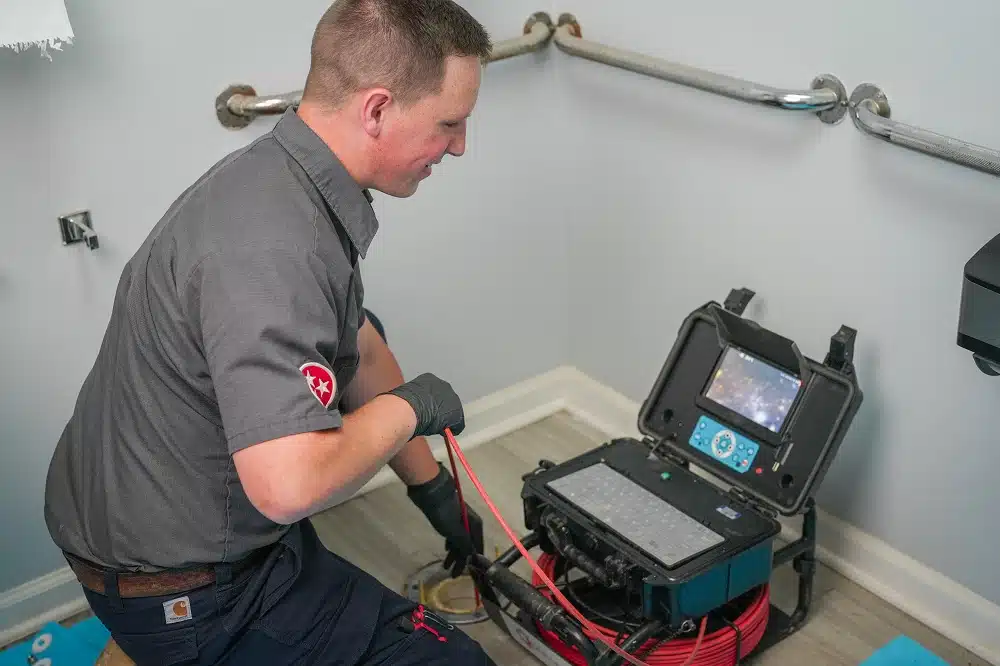 Camera footage records the inside of the line, including breaks, offsets, roots, and debris, along with an approximate location. Dated photos of any water damage inside the house cover the other half. The Insurance Information Institute suggests taking “before” photos of areas likely to be affected by a backup and “after” photos if one happens.
A short written report from the plumber who examined the line helps. Useful contents include the date, what was observed, where the problem sits relative to the house and the connection, the pipe material, and what repair options exist. Findings are most useful when they describe what was seen rather than predicting how an insurer might classify it.
The sample HO-3 lists duties after a loss, including prompt notice, protecting the property from further damage, and keeping an accurate record of repair expenses. The NAIC suggests jotting down notes and tracking the dates of conversations with the agent or adjuster. Any KUB notice belongs in the same folder.
The NAIC recommends starting with the insurer, checking the policy for an appraisal clause, and considering an attorney or public adjuster. In Tennessee, the Department of Commerce and Insurance complaint page accepts complaints about claims believed to be wrongly denied.
Keeping the policy, the denial letter, and the claim diary together makes any of those routes easier to use. A general overview of sewer line replacement and insurance covers common perils and claim steps.
Insurance questions about a sewer line usually start with a plumbing question: what is actually wrong with the pipe, and where. Tennessee Standard Plumbing handles sewer camera inspection, sewer line repair and replacement, drain cleaning and hydro jetting, and homeowners who want a line examined and documented can call (865) 352-9003 or schedule your service online.



Key Takeaways Sump pumps handle groundwater seepage, while sewage ejector pumps move wastewater from basement fixtures up to the main sewe... Read More
Key Takeaways Backflow happens when contaminated water flows backward through a plumbing system into the clean water supply, and annual te... Read More

Repeated drain clogs signal deeper sewer problems because they indicate blockages in the main line, not just a single fixture, often caused by tree... Read More