
How to Install a Bathtub Drain: Proven DIY Guide and Expert Tips?
Installing a bathtub drain in Knoxville means matching the drain to your tub, removing the old stopper and flange, cleaning the opening, sealing a ... Read More

Same-Day Service Available
Need a Plumber in Knoxville? We’re Ready to Help!




Last Updated: October 15, 2026
Key Takeaways
A pre-season gas line check in Oak Ridge has two parts: what a household can observe on its own, and what a qualified professional tests. Federal consumer safety guidance recommends a yearly professional inspection of fuel-burning heating systems, including vents and flues. Oak Ridge Utility District supplies the gas and maintains the system up to and including the meter, while the piping past the meter belongs to the customer. Any gas odor or hissing is a reason to leave the building and call the utility from outside.
On some chilly morning this fall, an Oak Ridge thermostat clicks over and the furnace lights for the first time since spring. The blower hums, warm air starts moving through ducts that sat quiet all summer, and within a few minutes nobody in the house is thinking about it anymore.
That first cycle is a good cue to look at the parts of a gas system that get ignored in July. The meter by the foundation. The dark steel pipe running along the basement ceiling. The flexible connector behind the water heater, and the carbon monoxide alarm in the hallway that may or may not have a working battery. None of it calls for worry. It calls for a short, deliberate look, plus a clear idea of which parts belong to the utility and which belong to the house.
On This Page
Gas furnaces and boilers do most of their work in the cold months, and many sit idle through summer. The U.S. Consumer Product Safety Commission recommends a yearly professional inspection of fuel-burning heating systems, including vents and flues. Scheduling that check before steady cold weather gives an Oak Ridge household room to fix anything found without urgency.
The Consumer Product Safety Commission advises scheduling a yearly professional inspection of fuel-burning home heating systems, naming furnaces, boilers, fireplaces, water heaters, chimneys, flues and vents. The Environmental Protection Agency gives similar advice, recommending that a trained professional inspect, clean and tune up the central heating system, including furnaces, flues and chimneys, once a year. Oak Ridge Utility District’s own safety page recommends the same kind of yearly professional inspection.
These two get confused often. Natural gas itself has no smell, so utilities commonly add an odorant called mercaptan. ORUD says it does this, and that the odor is frequently compared to rotten eggs. Carbon monoxide is different: it is produced by burning fuel, and the EPA describes it as odorless, colorless and toxic. A nose can warn of a gas leak. It cannot warn of carbon monoxide, which is why alarms matter.
The EPA’s carbon monoxide guidance lists sources that include leaking chimneys and furnaces, back-drafting from furnaces and gas water heaters, and worn or poorly adjusted combustion equipment. It also flags flues that are improperly sized, blocked or disconnected. Several of those appear on CPSC’s list for a yearly heating inspection, and some can be seen from the basement floor.
The CPSC lists headache, dizziness, weakness, nausea, vomiting, sleepiness and confusion as symptoms of carbon monoxide poisoning. The EPA notes that exposure can cause flu-like symptoms that clear up after leaving home. If carbon monoxide is suspected, both CPSC and ORUD say to get to fresh air right away and then call 911.
Most of a pre-season gas check at home is looking and listening, with no loosening of fittings and no moving of appliances. ORUD suggests customers make their own visual checks for improper connections, rust, stains or water build-up. The items below cover what a household can observe safely, and where looking should stop and a professional should step in.
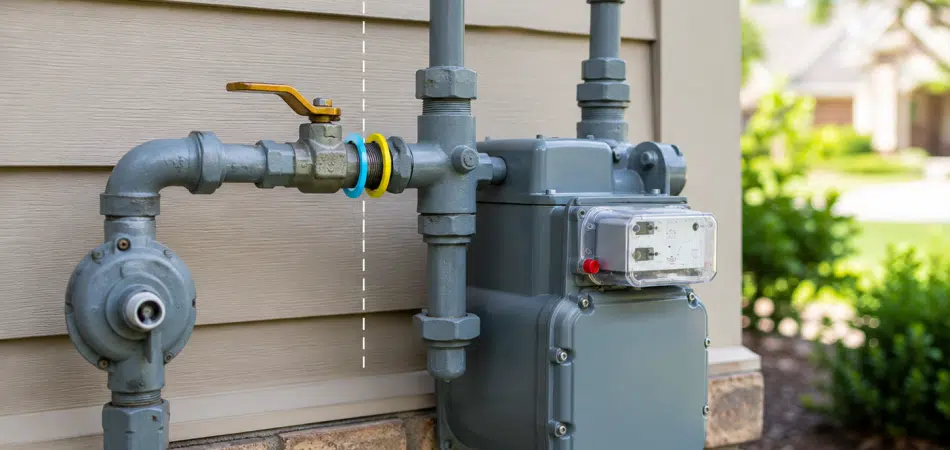
The meter and the pipe feeding it are ORUD’s responsibility, so anything wrong there is a call to the utility. A walk around the outside of the house can confirm that the meter area is visible and not damaged, and that nothing has been stacked against it over the summer. Any sign of damage to the gas line, or an odor near the meter, is a reason to call ORUD.
In basements, crawl spaces and utility rooms, gas piping often runs in plain view. Signs worth noting include surface rust, stains, water dripping onto the pipe from above, and fittings that look improvised or unfamiliar. A note and a photo are enough at this stage. Tightening or adjusting gas fittings is work for a qualified professional, and repair, replacement and leak detection for house piping are outlined on the residential gas line services page.
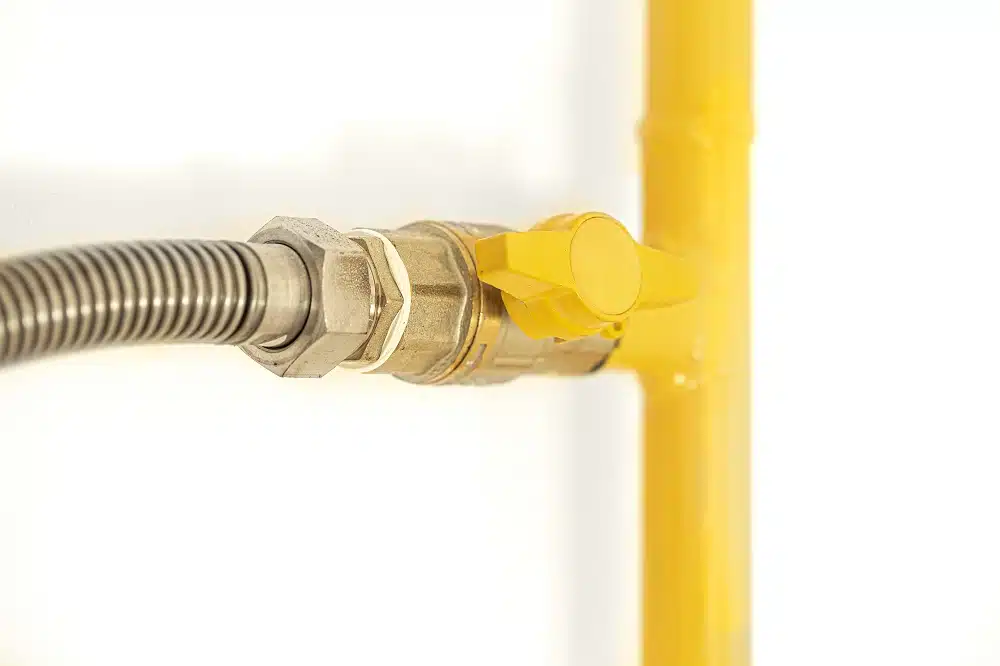
The flexible gas connector joins an appliance to the house piping. The CPSC warns that some older uncoated brass connectors can come apart, and that moving an appliance even slightly to inspect one can cause a weakened connector to fail. Its guidance is plain: do not move the appliance to check, and have a qualified professional look at the connector instead.
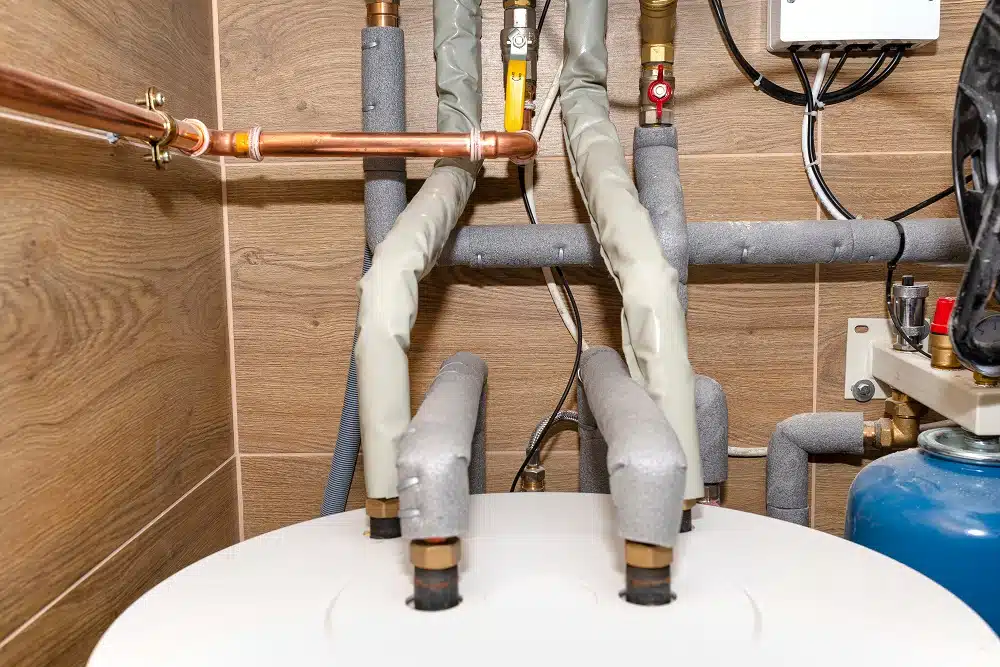
The metal vent pipe that carries exhaust from a furnace or gas water heater should be connected and intact along its visible length. Sections that look separated, heavily rusted or sagging are worth reporting to a professional, since the EPA lists disconnected or blocked flues among carbon monoxide sources. Vent pipes can get hot, so this check is visual only.
The CPSC recommends battery-operated carbon monoxide alarms, or alarms with battery backup, on each level of the home and outside sleeping areas. The pre-season walk-through is a convenient time to test each alarm and replace batteries as the manufacturer directs.
| Item | Who is responsible | What a homeowner can safely do | When to call someone |
|---|---|---|---|
| Gas meter and the line feeding it | ORUD, up to and including the meter | Look for visible damage, keep the area clear | Damage, odor or hissing: ORUD |
| Exposed piping past the meter | The customer, per ORUD | Note rust, stains, drips or odd fittings | Anything unusual: a qualified professional |
| Flexible appliance connectors | The customer | Nothing hands-on; CPSC advises not moving the appliance | Older or unknown connectors: a qualified professional |
| Vent pipes and flues | The customer | Look for gaps, separation or heavy rust without touching | Any gap or damage: a heating professional |
| Carbon monoxide alarms | The household | Test, replace batteries, confirm placement | Alarm sounding: get outside, call 911 |
| Buried line to a grill, garage or generator | The customer, per ORUD | Know roughly where it runs before digging | Periodic leak and corrosion checks: a professional |
A professional check goes further than a walk-through because it uses test methods and instruments most households do not have. The exact scope varies by contractor and by what the house contains, so asking for a written note of what was checked is a reasonable request. The heating appliance itself may fall to an HVAC technician.
The residential code builds leak testing into gas piping work. In the 2018 edition Tennessee lists as adopted, new piping installations are to be visually inspected and pressure tested before they go into service, and minor repairs can instead be checked with a noncorrosive leak-detecting fluid or another approved method. On an existing system, professionals generally check joints, valves and connections using a leak-detecting solution or a gas detection instrument.
A professional can check what kind of connector serves each appliance without the risk that comes with a homeowner pulling a range away from the wall. CPSC guidance calls for replacing any uncoated brass connector with a new plastic-coated brass or stainless steel connector, and for replacing connectors whenever an appliance is replaced or moved. Shutoff valves near each appliance are also worth confirming as present and reachable.
Some homes run buried gas lines past the meter to a detached garage, a grill, a pool heater or a standby generator. Under the federal customer notification rule administered by PHMSA, gas utilities notify customers that buried customer piping should be periodically inspected for leaks, inspected for corrosion if it is metallic, and repaired if an unsafe condition is found. That rule also names plumbing and heating contractors among those who can help.
Gas work in a house often splits three ways. The utility handles the meter and everything upstream of it. A heating professional handles the furnace or boiler and its venting. Piping and connectors past the meter are generally plumbing work. Homeowners comparing Oak Ridge area plumbers can ask up front whether a visit covers connectors, shutoff valves and any buried lines.
Natural gas in Oak Ridge comes from the Oak Ridge Utility District, known as ORUD, which serves Anderson and Roane counties. ORUD states that it maintains its system up to and including the gas meter, and that piping downstream of the meter belongs to the customer. Permits inside city limits are handled by City of Oak Ridge Codes Enforcement.
ORUD’s customer-owned lines notice says the district does not own, operate or maintain gas piping downstream of the meter, and that it does not routinely maintain or locate those fuel lines. It describes the building side of the meter as the customer’s portion of the system. ORUD cites the federal customer notification rule as the reason it publishes the notice.
ORUD’s natural gas safety page asks customers to leave the home before calling, and not to use light switches, electrical items, matches or a cell phone inside. Its 24-hour emergency line is (865) 483-1377 or (888) 483-1377. CPSC guidance adds calling the gas supplier or 911 from a neighbor’s house.
Odor is the best-known sign, but ORUD also lists hissing sounds, known damage to a gas line, and household members feeling dizzy, faint or ill. A longer run-through of common warning signs of a gas leak covers other clues, such as dead vegetation over a buried line.
The City of Oak Ridge occupies parts of both Anderson and Roane counties. City of Oak Ridge Codes Enforcement issues building permits and enforces plumbing, mechanical and electrical codes, and it lists the 2024 International Residential Code among its adopted codes. ORUD separately states that fuel piping work is expected to meet its requirements and the International Fuel Gas Code. Whether a particular repair needs a permit depends on the work, so confirming with Codes Enforcement at 865-425-3532 is the practical step. An Oak Ridge mailing address outside city limits may fall under a county office instead.
Fall yard projects such as fence posts, new shrubs and drainage work all involve digging. ORUD asks customers to call 811 before digging, and the Tennessee 811 homeowner page notes that facility operators may not locate or mark private underground facilities. A customer-owned line to a grill or garage may go unmarked, and the federal notice rule advises locating buried piping in advance and digging by hand near it.
Oak Ridge sits inside our service area, along with Clinton, Knoxville and the surrounding East Tennessee communities. A fifth-generation, family-owned Knoxville company serving the area since 2020, Tennessee Standard Plumbing employs 34 licensed plumbers as of October 2026, each holding an individual state plumbing license, and is backed by thousands of 5-star reviews. Our team handles gas line installation, repair, replacement and leak detection, and routine inspections are part of the gas line maintenance described on our site.
Homeowners who want their gas piping looked at before heating season can call our team at (865) 352-9003. Scheduling online works too, through our online booking page. Local details for the area are on our Oak Ridge plumbing page. We serve Oak Ridge, Clinton, Knoxville, and communities across Anderson County, Knox County and East Tennessee.
Oak Ridge Utility District, known as ORUD. The City of Oak Ridge lists ORUD as its gas utility contact, and ORUD describes its service area as Anderson and Roane counties. Its 24-hour line is (865) 483-1377 or (888) 483-1377.
Leave the building first, then call. ORUD asks customers to call its 24-hour line from outside the home and to avoid light switches, electrical items, matches and cell phones inside. CPSC guidance adds calling the gas supplier or 911 from a neighbor’s house.
No. ORUD states that it operates and maintains its system up to and including the gas meter, and that piping downstream of the meter belongs to the customer. It adds that it does not routinely maintain or locate those customer fuel lines.
Federal safety agencies point to a yearly professional inspection. The CPSC recommends one for fuel-burning heating systems, including vents and flues, and the EPA recommends a yearly inspection, cleaning and tune-up of central heating systems. Early fall is a practical time to schedule it.
CPSC advises against it. Its guidance warns that moving an appliance even slightly can cause an older, weakened uncoated brass connector to fail, and says only a qualified professional should check and replace connectors.
Mostly smell, sound and sight. ORUD suggests visual checks for improper connections, rust, stains or water build-up, and lists odor, hissing, damage to a gas line and feeling dizzy, faint or ill as reasons to call. Testing carbon monoxide alarms fits into the same walk-through.
The CPSC recommends battery-operated alarms, or alarms with battery backup, on each level of the home and outside sleeping areas. ORUD’s guidance similarly mentions each level, especially near bedrooms. The alarm manufacturer’s instructions cover mounting and testing.
Not necessarily. Tennessee 811 notes that facility operators may not locate or mark private underground facilities, and ORUD says it does not locate customer fuel lines. A line past the meter may need to be located privately before digging.
It depends on the work and the address. City of Oak Ridge Codes Enforcement issues building and trade permits inside city limits and can be reached at 865-425-3532. Addresses outside city limits may fall under a county office, so confirming jurisdiction comes first.


Installing a bathtub drain in Knoxville means matching the drain to your tub, removing the old stopper and flange, cleaning the opening, sealing a ... Read More

Key Takeaways An open trench replacement disturbs the yard along the length of the pipe, while trenchless methods concentrate the disturba... Read More

Hard water quietly shortens the life of dishwashers, washing machines, coffee makers, ice makers, and water heaters throughout Knoxville, leaving m... Read More