
Why Is My Water Bill Suddenly High in Knoxville?
A sudden spike in your Knoxville water bill almost always traces back to a continuous hidden leak rather than a rate change or billing error. The m... Read More

Same-Day Service Available
Need a Plumber in Knoxville? We’re Ready to Help!




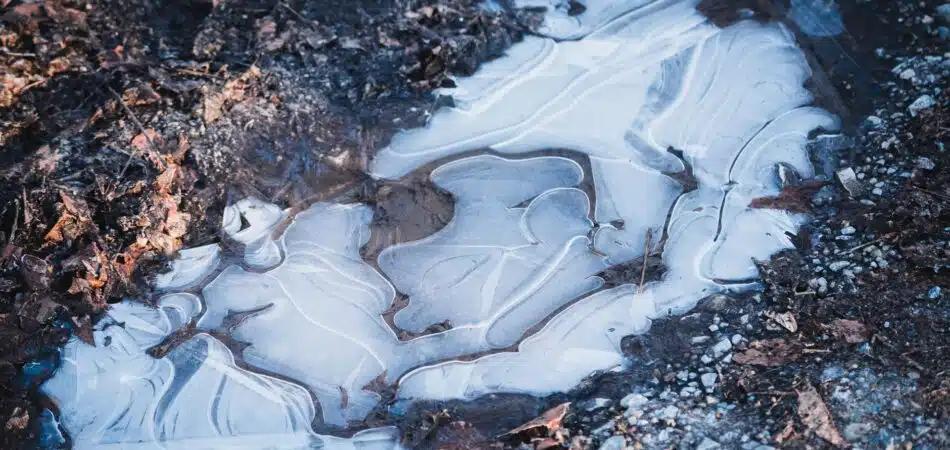
A sump pump discharge line freezes when water stays inside it after the pump shuts off, most often in a sagging section, a flat run or an exposed outlet. A fall check of the line looks at slope, low spots, the outlet, any extension hose and whether a freeze relief fitting is present. Freeze relief fittings are designed to let water escape near the house if the line beyond them is blocked by ice. Groundwater from a sump pump generally does not belong in the sanitary sewer.
By seven in the morning the grass is white, and at the end of the pipe that pokes out from the foundation there is a small, glassy fan of ice. It spread there overnight, a little at a time, each time the pump kicked on. Downstairs the pump is still cycling. Whether that water is getting out, or backing up into the pipe, is the question that sends people looking for home plumbing help in North Knox County on cold mornings.
Most of the time the answer comes down to the few feet of pipe between the house and the yard. That short run gets less attention than the pump itself, and fall is the easiest time to look at it, before the first hard freeze. Pump problems proper sit with sump pump installation and repair; this checklist stays with the line.
A sump pump discharge line freezes because water stays in it after the pump shuts off. Water that drains out between cycles has little chance to freeze, while water held in a sag, a flat section or a buried low spot can freeze in place and gradually narrow or block the line on a cold night.
A sump pump moves water in bursts. Between runs, whatever cannot drain out of the line stays where it is. Inside the house, the check valve holds the column of water above the pump, which is its job. Outside, any section that does not drain toward the outlet keeps a pocket of water sitting in cold pipe until the next cycle.
The last stretch of pipe, and the ground where it empties, sit fully exposed. On a clear, still night, surfaces and shallow ground can cool faster than the air above them. Water leaving the outlet on each cycle can freeze where it lands, which is how the fan of ice forms, and over enough cycles the ice can build back toward the pipe opening.
Liberty Pumps’ installation manual for its submersible sump pumps lists “discharge line blocked or restricted” as a cause when a pump runs or hums but does not pump, and advises checking the line “for foreign material, including ice if the discharge line passes through or into cold areas.” A pump pushing against a blocked line cannot empty the pit, and the same manual cautions against letting the pump itself freeze.
Some homes run a pump in an outdoor basin or send the discharge a long way across the yard. Those setups put more pipe in the cold. The trade-offs of an exterior pump are covered in this piece on installing a sump pump outside, and the same freezing logic applies to each foot of line beyond the foundation.
A fall check of a discharge line starts at the foundation and follows the pipe to where the water lands. The points worth looking at are the slope of the exterior run, any sags or low spots, the condition of joints and the outlet itself, and where the water goes after it leaves the pipe.
The exterior part of the line generally works best with a steady downward slope from the house to the outlet, so gravity empties it after each cycle. The exact amount of slope varies with the pipe and the site, and no single figure is offered here. What matters on a walk-around is whether the line falls the whole way or flattens out somewhere along the route.

Pipe laid on the ground can settle over time, and a buried line can sag where soil washed out beneath it. A low spot holds water between cycles, and that water is often the first to freeze. Signs include a section that stays wet, a dip visible along the run, or a line that drips back toward the house for a long time after the pump stops.
Loose couplings, cracked fittings and pipe that has pulled apart at a joint can leak close to the foundation. That water can end up back around the house, and in freezing weather it can ice over a walkway or step. A joint that shows movement is worth securing before the cold arrives rather than during it.
The outlet works best where water can run on and away from the house. An outlet that empties onto a driveway, sidewalk or step can leave a sheet of ice on a freezing morning. An outlet aimed at a neighbor’s yard or a road can raise drainage questions, which is where the county’s stormwater office becomes relevant.
| Part of the line | What to look for in fall | Why it matters in cold weather |
|---|---|---|
| Exterior run | Steady fall away from the house, no flat stretches | A line that drains between cycles holds little water to freeze |
| Sags and low spots | Dips, wet sections, settled or washed-out soil | Standing water in a low spot is often the first to freeze |
| Joints and fittings | Loose couplings, cracks, separated sections | Leaks near the foundation can return water to the house and ice a walkway |
| Outlet | Clear opening, ground that carries water away, not aimed at a walkway | Ice can build at the outlet and work back into the pipe |
| Extension hose | Kinks, flat sections, low spots where water pools | One manufacturer describes hose kits as suited to temporary installations |
| Freeze relief fitting | Whether one is present, and whether its openings are clear | Designed to let water escape if the line beyond it is blocked |
A freeze relief fitting is a section of discharge line with openings that let water escape outside if the pipe beyond it freezes or clogs. An extension hose is a flexible add-on that carries water farther from the house. The first is built as a backup outlet; the second is a convenience with winter drawbacks.
Manufacturers describe these fittings as having slots or perforations that stay out of the way while water flows normally. One manufacturer’s product description says its system “allows water to escape from a sump pump discharge line if the pipe freezes or becomes blocked for any reason,” and that flow returns to the normal route after the line thaws. Designs vary, so each product’s instructions govern.

A freeze relief fitting generally goes outside, close to the house, ahead of the part of the line most likely to freeze. When it works, the water spills onto the ground near the foundation rather than backing up to the pump. That is a better outcome than a stalled pump, and it still means water close to the house, so the fitting works best as a backup rather than the main outlet.
Flexible hoses are popular because they are easy to add and move. Liberty Pumps recommends Schedule 40 PVC pressure pipe and notes that “flexible discharge hose kits may be used for temporary installations.” Hoses can kink, flatten, or lie in low spots where water pools, and each of those holds water in the cold.
Some households remove or drain an extension hose before a hard freeze and put it back in spring. Others straighten it so it runs downhill without dips. Whichever approach fits the house, the aim is the same: no water left sitting in the hose between pump cycles when the temperature drops.
Groundwater from a sump pump generally belongs on the ground or in a storm drainage path, not in the sanitary sewer. In Powell and Halls, sewer service often comes from Hallsdale-Powell Utility District, and most addresses sit in unincorporated Knox County. Normals suggest starting the checklist in early October.
Knoxville Utilities Board lists “groundwater sump pumps” among its examples of prohibited sewer connections, noting that pumps for laundry or other household water are a different matter. Hallsdale-Powell Utility District, which provides water and wastewater service across North Knox County, lists inflow and infiltration among the major causes of sewer overflows. Rules can differ by utility, so confirming with the serving utility is sensible.
Powell and Halls are generally unincorporated Knox County, so permit questions go to Knox County Codes Administration at 865-215-2325. Questions about drainage onto roads or neighboring property sit with Knox County Stormwater Management. Requirements vary by address, and city or county jurisdiction depends on the exact property, so confirming jurisdiction first is worthwhile.
The Knoxville Experiment Station in Knox County shows a median first fall reading of 32 degrees on October 28, using 1991 to 2020 normals, with about a one in ten chance before October 13. The Norris station just north in Anderson County shows a median of October 25. Those are long term averages rather than a forecast, and they point to early October as a comfortable time to walk the line.
A quick look after the first night in the 20s shows whether the outlet is iced and whether the pump is cycling normally. If ice has formed at the outlet, clearing a path for the water and looking again at slope and hoses tends to be more useful than waiting for a thaw. Local service detail for the area is on the Powell plumbing page.
Tennessee Standard Plumbing serves Powell, Halls, Heiskell, Karns and neighborhoods across North Knox County. The company has served the area since 2020. We have 4,000+ reviews across our Google profiles and field 34 licensed plumbers (as of October 2026). Our team handles sump pump installation and repair, including pumps that struggle when a discharge line is blocked.
A few points are worth carrying into the season. Discharge lines freeze where water stays behind, so slope, sags and hoses matter most. Freeze relief fittings act as a backup outlet near the house.
Groundwater from a sump pump generally stays out of the sanitary sewer. And early October gives a comfortable margin ahead of the typical first freeze.
Homeowners who would like a discharge line looked at before winter can call (865) 352-9003.
Online booking is available as well, to book an appointment at a convenient time. We serve Powell, Halls, Knoxville, and communities across Knox County and East Tennessee.
Water stays in it after the pump shuts off. Sags, flat sections, low spots and kinked hoses hold water between cycles, and that standing water can freeze on a cold night. A line that drains fully toward the outlet holds much less water to freeze.
The pump can no longer move water out of the pit. One manufacturer’s troubleshooting guide lists a blocked or restricted discharge line, including ice, as a cause of a pump that runs or hums but does not pump. The water level in the pit can then rise.
It provides openings near the house that let water escape if the line beyond them freezes or clogs. Under normal flow, water passes the openings and continues down the line. It works as a backup outlet, and each product’s instructions govern placement.
It can work, with care. Liberty Pumps recommends Schedule 40 PVC pressure pipe and describes flexible hose kits as suited to temporary installations. Hoses that kink, flatten or sit in low spots hold water that can freeze.
Generally no, for groundwater sump pumps. KUB lists groundwater sump pumps among prohibited sewer connections, and Hallsdale-Powell Utility District names inflow and infiltration as a cause of sewer overflows. Confirming the rule with the utility that serves the address is the sensible step.
No single distance suits all lots. What matters is that the water lands on ground that carries it away from the foundation, and not onto a walkway, driveway or neighboring property. Site slope and soil decide the practical answer for each house.
Early October is a comfortable time. The Knoxville Experiment Station shows a median first freeze of October 28 in 1991 to 2020 normals, with about a one in ten chance before October 13. Those are averages rather than a forecast for any year.
Knox County Codes Administration, at 865-215-2325, for addresses in unincorporated Knox County. Jurisdiction depends on the exact property, so confirming it by address comes first.
It is a common homeowner reaction, but pipe material and manufacturer instructions set the limits on heat. Clearing ice away from the outlet so water has somewhere to go is usually the first practical step. A pump that keeps running without clearing the pit is worth a call to a plumber.



A sudden spike in your Knoxville water bill almost always traces back to a continuous hidden leak rather than a rate change or billing error. The m... Read More

To replace a toilet water supply line, first shut off the water valve, flush the toilet, and disconnect the old line from both the shut-off valve... Read More
Key Takeaways Tree roots are one of the leading causes of sewer line damage across East Tennessee, especially in older neighborhoods with ... Read More