
Same-Day Service Available
00
Hrs
00
Mins
00
Secs
Need a Plumber in Knoxville? We’re Ready to Help!
Same-Day Service Available
Need a Plumber in Knoxville? We’re Ready to Help!




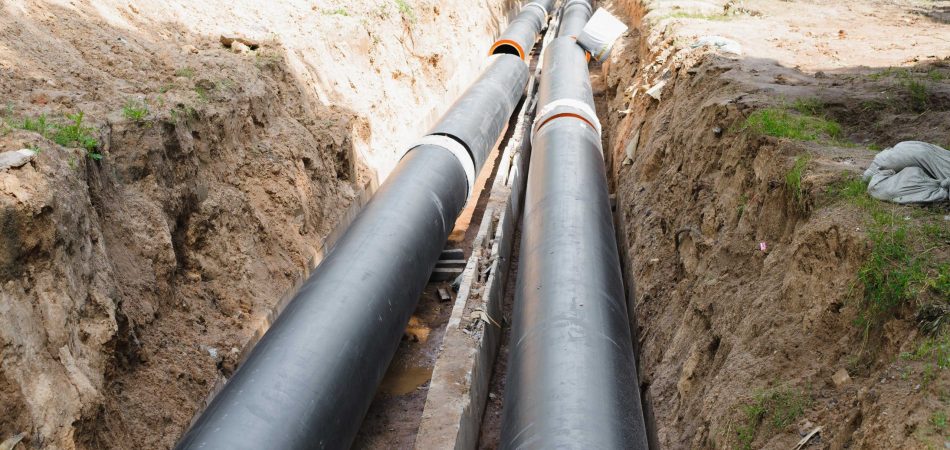
The service life of a sewer lateral in Knoxville depends mainly on the pipe material, installation quality, soil conditions, tree roots, drainage grade, and maintenance history. Older homes may have clay tile, cast iron, or Orangeburg pipe, while newer repairs and installations commonly use PVC or other approved materials.
Pipe age can provide useful context, but it does not prove that a lateral has failed. A camera inspection can identify the material, locate defects, and show whether the line is blocked, damaged, deformed, or structurally sound.
In Knoxville, property owners generally own and maintain the private sewer lateral connecting their property to the KUB sewer system. KUB’s Private Lateral Program mandates that property owners address specific defective laterals and prohibited connections upon receiving notification. KUB states that owners generally have 120 days to correct a notified problem, although the specific enforcement schedule should be confirmed from the notice received.
A sewer lateral is the underground pipe that carries wastewater from a home to the public sewer system. Since most of the line is underground, homeowners might not know what it is made of or how well it is working until they face issues like repeated backups, tree roots getting in, slow draining, or a break.
A camera inspection provides information before an emergency occurs. It can help a homeowner determine whether a defect requires monitoring, cleaning, spot repair, lining, or complete replacement.
Tennessee Standard Plumbing provides sewer camera inspections and sewer-line repair services in Knoxville and surrounding communities. Homeowners can set up an inspection when buying an older home, facing ongoing drainage issues, planning a renovation, or wanting to know the state of an existing lateral.
Material and installation quality strongly influence how long a lateral remains serviceable. Soil movement, roots, water infiltration, pipe grade, joint condition, and previous repairs also affect performance.
Knoxville’s housing stock includes homes from many construction periods, so pipe material can vary from one property to the next. The construction date can suggest what materials may be present, but a camera inspection is the most reliable way to identify the pipe.
Vitrified clay tile is a ceramic material that can remain structurally sound for many decades. Its joints are more vulnerable than the pipe body because older joints may have been sealed with mortar, bituminous material, or other methods that deteriorate over time.
Roots commonly enter through open or damaged joints and cracks. A clay line may therefore appear intact while still allowing root intrusion, groundwater infiltration, or soil entry at its connections.
A camera inspection can show whether the problem is limited to joints or whether the pipe has cracking, shifting, collapse, or loss of grade.
Cast iron was widely used in residential plumbing and sewer systems during the twentieth century. It is a strong material, but internal corrosion can create rough surfaces, reduce the inside diameter, and catch paper and other solids.
Severe corrosion can cause cracking, holes, channeling, or collapse. The condition of a cast-iron lateral cannot be determined from the home’s age alone because water conditions, soil exposure, installation quality, and prior repairs vary between properties.
 Orangeburg is a bituminized fiber pipe made from layers of wood pulp saturated with coal-tar pitch. It was used in some residential sewer systems during the mid-twentieth century.
The material can soften, deform, blister, delaminate, and lose its round shape as it ages. Joints and damaged sections may also allow root intrusion or soil infiltration.
A commonly cited design-life estimate for Orangeburg is approximately 30 to 50 years, but a design-life estimate is not a guarantee that every line fails at the same age. Some Orangeburg lines may remain functional beyond that period, while others develop serious defects earlier.
Homes with older sewer piping and no record of replacement may benefit from a camera inspection. The inspection can confirm whether Orangeburg is present and document its condition before a homeowner plans repair or replacement.
PVC sewer pipe is resistant to many forms of corrosion and can provide a long service life when it is properly installed, supported, joined, and graded. It is not immune to damage from excavation, settlement, roots at failed connections, or poor installation.
The material alone does not determine the condition of a sewer lateral. A newer PVC line can still develop a belly, separated joint, crack, blockage, or other defect.
KUB identifies a private lateral as the underground pipe connecting a customer’s property to the KUB sewer system. Property owners generally own and maintain the private lateral, while KUB operates and maintains the public sewer system.
The precise point of responsibility can depend on the applicable rules, property records, easements, and connection arrangements. Homeowners should review their KUB notice, property documents, and insurance policy when responsibility is unclear.
A private lateral may run beneath a yard, driveway, sidewalk, or public right-of-way. The fact that part of the line crosses an easement or right-of-way does not automatically transfer maintenance responsibility to the utility.
KUB’s wastewater rules state that costs associated with installing, connecting, and inspecting a private service lateral are generally borne by the property owner.
Homeowners should confirm the responsibility for a particular line with KUB or the relevant local authority before authorizing work, especially when the lateral crosses a public easement or connects to a shared system.
KUB’s Private Lateral Program aims to find broken private laterals and bad connections, like those that let stormwater mix with the wastewater system. When KUB identifies a problem, it sends the property owner information about the finding, required correction, and applicable schedule.
KUB materials state that a property owner must correct a notified defect or prohibited connection within 120 days. Failure to correct the problem may result in termination of water service, subject to the applicable process and notice.
The deadline and contact instructions are on the individual notice. Homeowners with questions about a KUB private-lateral notice should use the contact information provided by KUB. KUB’s published program information lists 865-594-8270 for questions about repair findings.
A cleanout is a capped access point that allows a plumber to inspect or clear a sewer lateral without pulling a toilet or entering through a roof vent.
Some older homes have no accessible cleanout, while others have one that is buried, damaged, or difficult to locate. Adding or repairing a cleanout may improve future access, but local plumbing requirements and site conditions determine whether one is needed and where it can be installed.
A cleanout does not repair a defective sewer line. It provides access for inspection, cleaning, and maintenance.
An aging sewer lateral may show defects before it produces a complete blockage or backup. Recurring slow drains, wastewater odors, root-related stoppages, and repeated cleaning calls can justify an inspection, but the absence of symptoms does not prove that the line is sound.
A sewer camera inspection can document:
A camera report is useful for planning, but it may not show every portion of a lateral if access is limited or the camera cannot pass a blockage. Locating equipment, cleanouts, excavation, or additional testing may be needed to confirm the extent of a defect.
For an older home purchase, a sewer camera inspection can provide information that is not available from a standard visual plumbing inspection. Buyers should review the footage and report with their inspector, plumber, and other advisers before making a decision.
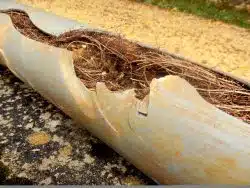 Roots commonly enter through open joints, cracks, separated connections, and other defects. They do not normally penetrate an intact section of pipe simply because a tree is nearby.
Early root intrusion may appear as fine roots crossing a joint. More advanced intrusion can form a mass that restricts flow, catches solids, and makes recurring blockages more likely.
Root cutting or cleaning may restore flow temporarily, but it does not permanently repair the opening through which the roots entered. A recurring root problem may require a spot repair, lining, or replacement depending on the pipe’s condition.
A sewer lateral depends on gravity and an appropriate slope toward the public sewer. A settled section can create a low spot, commonly called a belly, where wastewater and solids remain after flow stops.
A belly is a deformation or grade problem rather than a simple blockage. Cleaning may remove accumulated material temporarily, but it does not restore the pipe’s original slope.
The effect of a belly depends on its length, depth, location, and impact on flow. A camera inspection and, when necessary, locating or grade evaluation can help determine whether monitoring, repair, or replacement is appropriate.
Planned sewer work may give a homeowner more control over scheduling, access, restoration, and contractor selection than an emergency backup. It does not necessarily eliminate unexpected costs, and the final scope depends on what an inspection reveals.
Trenchless methods include cured-in-place pipe lining and pipe bursting. Lining installs a new structural or semi-structural lining inside an existing pipe, while pipe bursting breaks or displaces the old pipe as a new pipe is pulled into place.
Open-cut replacement excavates the line so the existing pipe can be removed and replaced. The appropriate method depends on the pipe’s material, alignment, grade, diameter, structural condition, access, property layout, local requirements, and the location of utilities.
A liner generally follows the existing path and does not correct a significant belly or restore a missing grade. Pipe bursting also requires suitable access and a viable path. A contractor should recommend a method only after reviewing the inspection findings and site conditions.
Homeowners can compare sewer-line lining and pipe-bursting options with a qualified plumbing professional.
The main cost factors commonly include:
A written proposal should identify the work area, repair method, expected access requirements, restoration included, exclusions, permits, and warranty terms. Comparing only a headline price can hide important differences in scope.
A homeowner with a known defect but no active backup may have more scheduling flexibility than someone facing an emergency. However, weather, soil conditions, contractor availability, permits, and site access can affect the timing of sewer work.
A homeowner should not postpone necessary work solely to wait for a preferred season if the line is collapsing, backing up, leaking, or creating a health concern. Ask the contractor how quickly the condition could worsen and what temporary measures are appropriate.
An aging sewer lateral is easier to plan when its material and condition are documented. A camera inspection can help homeowners decide whether they need cleaning, monitoring, spot repair, lining, or replacement.
Four points are important:
Homeowners who want a sewer lateral inspection can call Tennessee Standard Plumbing at (865) 352-9003 or contact the team online.
Peaceful Pipes, Peaceful Life.
We serve Knoxville, Fountain City, Powell, and communities across Knox County and East Tennessee.
There is no single service-life number for every sewer lateral. Clay, cast iron, Orangeburg, and PVC perform differently, and soil movement, roots, installation quality, grade, and maintenance also affect service life. Orangeburg has a commonly cited design-life estimate of approximately 30 to 50 years, but that estimate does not prove that every Orangeburg line has failed. A camera inspection is the best way to determine the material and current condition.
The property owner generally owns and maintains the private lateral connecting the property to the KUB sewer system. The lateral may pass beneath a yard, driveway, easement, or public right-of-way. KUB operates and maintains the public sewer system, but the exact responsibility for a particular connection can depend on applicable rules and property conditions. Contact KUB when the ownership or maintenance boundary is unclear.
KUB’s Private Lateral Program identifies defective private laterals and prohibited connections, including connections that allow stormwater to enter the wastewater system. KUB notifies property owners when it identifies a problem and provides information about the required correction. KUB materials state that owners generally have 120 days to correct a notified defect or prohibited connection. Failure to comply may result in termination of water service through the applicable enforcement process.
Orangeburg is a bituminized fiber pipe made from wood pulp and coal tar pitch, used in some residential sewer systems during the mid-twentieth century. A home’s construction date can suggest that Orangeburg may be present, but it cannot confirm the pipe material. A sewer camera inspection can usually identify Orangeburg and document deformation, softening, root intrusion, or other defects.
Roots commonly enter through cracks, separated joints, open connections, and other defects that allow moisture to escape. A nearby tree does not automatically mean that roots have entered the sewer line. If roots repeatedly block the line, cleaning may provide temporary relief, while permanent repair depends on the condition and location of the damaged section.
A belly is a low section of sewer pipe that has settled and lost part of its intended grade. The low spot can retain wastewater and collect solids. Cleaning may remove the accumulated material, but it does not correct the pipe’s shape or slope. The severity and recommended solution depend on the size, location, and effect of the belly.
A camera inspection can be particularly useful for an older home, a property with recurring drainage problems, or a home with unknown sewer-line material. It can identify defects that are not visible from inside the house. The inspection may not show the entire line if access is limited or a blockage prevents the camera from passing. Buyers should review the report and footage with a qualified inspector or plumber before making decisions.
Sometimes. A localized defect in an otherwise sound pipe may be suitable for a spot repair, while some structurally sound lines may qualify for lining. A line with extensive collapse, severe deformation, missing grade, or widespread deterioration may require replacement. The inspection, site conditions, local requirements, and selected repair method determine what is practical.
Coverage varies by policy. Standard homeowners insurance may exclude deterioration, roots, corrosion, wear and tear, and other conditions that develop gradually. Some policies offer service-line, sewer-backup, or other endorsements with separate limits and exclusions. Homeowners should review the policy and ask their insurance agent about coverage before a failure occurs. Do not assume that sewer backup coverage automatically covers replacement of the buried lateral.
A cleanout provides access for sewer-camera inspections and clearing equipment and may reduce the need to remove a toilet or access the line through a roof vent. A cleanout does not repair a defective pipe, and installation may require permits or must comply with local plumbing requirements. A plumber can determine whether an existing cleanout is accessible or whether an additional access point would be appropriate.
