
Licensed Plumber vs. Handyman: What Tennessee Homeowners Need to Know
When a pipe bursts or your water heater stops working, you need reliable help from someone you can trust. But who do you call: a licensed plumber o... Read More

Same-Day Service Available
Need a Plumber in Knoxville? We’re Ready to Help!




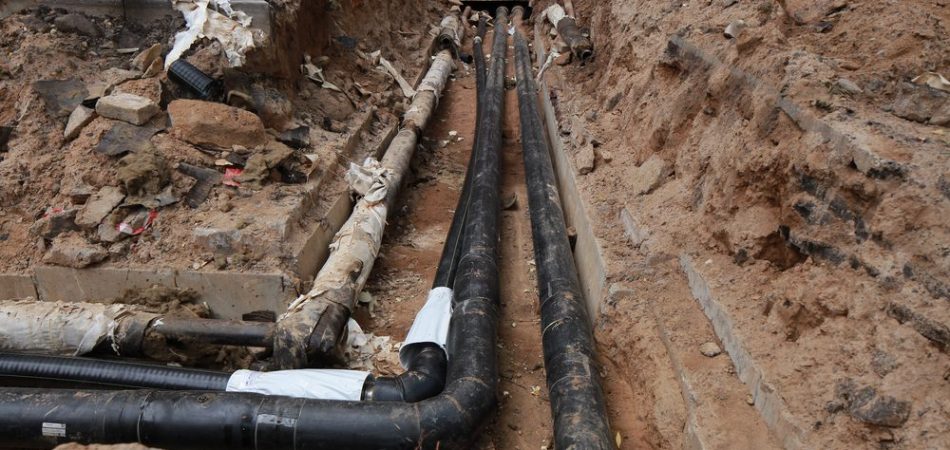
Many properties in northeastern Knox County use onsite wastewater systems because public sanitary sewer is not available at every location. Northeast Knox Utility District’s official website describes its water-treatment and water-distribution service, while Luttrell-Blaine-Corryton Utility District states that it does not provide service for sewer issues; however, sewer availability must be confirmed for the specific parcel and road frontage. Knox County’s Health Department regulates subsurface sewage disposal systems for properties not connected to public sanitary sewer. Septic ownership includes periodic pumping, inspections, repairs, and eventual replacement risk, while public sewer replaces onsite treatment with utility charges and a privately maintained building sewer.
Buyers looking at property in Corryton or Mascot often ask which is better, septic or city sewer, and get an answer shaped by whoever they asked. The honest answer is that in most of northeast Knox County the choice has already been made by geography, because the sewer main simply is not there.
Tennessee Standard Plumbing has worked on drain and sewer lines across Knox County for more than 13 years. Our team holds a 5.0 Google rating across more than 1,000 reviews, carries HomeAdvisor Elite Service recognition, and fields more than 50 technicians. We see both systems every week, and we see what happens when a property owner inherits one without knowing what it needs.
What follows covers why sewer stops where it does in this part of the county, exactly what Knox County requires before a septic system can be installed, what the system costs to own over a decade rather than on day one, and what actually changes if public sewer ever reaches the road.
 Sewer availability in northeast Knox County is set by utility district boundaries, not by county lines or zoning. Northeast Knox Utility District’s official information describes water treatment and distribution and identifies its service area around Corryton.
Luttrell-Blaine-Corryton Utility District also states that it does not provide service for sewer issues. Because service boundaries and sewer availability can vary by road and parcel, property owners should confirm water and wastewater service directly with the applicable utility and verify the property’s records with the Knox County Health Department.
Northeast Knox Utility District was incorporated in 1955 and has been in service since 1959, covering roughly 65 square miles on the north side of the Holston River, northeast of Knoxville’s corporate limits. Its published service description covers water treatment and distribution and does not include sewer collection.
The neighboring Luttrell-Blaine-Corryton Utility District, created by decree in 1964 to furnish water to parts of Union, Knox and Grainger counties, likewise does not provide sewer service in this area. A water bill without a separate sewer charge may suggest that the property uses onsite wastewater treatment, but the utility and county records should be checked before treating that as conclusive.
How to Confirm What a Specific Parcel Has
Three checks settle it quickly. The utility bill shows whether a sewer charge is being collected. A Knox County Health Department records search shows whether an SSDS permit was ever issued for the parcel and what was approved. A walk of the property usually finds the tank lids or the cleanout, and a drain field shows itself in summer as a rectangle of grass that greens or browns differently from the rest of the yard.
Collection systems run on gravity wherever possible, and gravity needs both fall and density. Extending a main into low-density rural acreage means either deep trenching across long distances or pump stations that need power and upkeep forever. The arithmetic rarely works in areas built at Corryton and Mascot densities, which is why septic remains standard there rather than a temporary condition. Anyone counting on a future connection should treat it as a possibility, not a plan. Homeowners in the area can reach plumbing service in Corryton for the house-side portion of either system.
Knox County has a county-administered Groundwater Protection program for onsite wastewater systems. The Knox County Health Department manages SSDS permits and services in the county. Tennessee laws and rules create the overall regulatory framework. The sequence is fixed: soil evaluation first, then permit, then construction. A septic permit or other required SSDS approval should be obtained before site work or building construction begins. Confirm with Knox County Codes and the Knox County Health Department how the SSDS approval must be coordinated with a building permit for the specific project.
Soil evaluation and site information determine whether a parcel can support an approved septic design. The exact soil-map, survey, site-plan, and consultant requirements depend on whether the project involves a conventional system, alternative system, subdivision evaluation, new construction, or a modification. Confirm the current requirements with the Knox County Health Department before purchasing raw land. The map determines whether the soil will accept effluent at all, how much area the drain field needs, and where it can legally sit. Buyers of raw land in Corryton or Mascot who skip this step are buying an unknown, because a parcel that cannot pass soil evaluation cannot be built on conventionally.
Knox County publishes a $40 lot-evaluation fee and a $200 fee for a verification or septic letter. Check the Knox County Health Department for the application requirements and fees for SSDS installation, repair, modification, or alternative-system permits. These details depend on the service and project type. Bedroom count matters more than square footage, because system sizing follows the number of bedrooms as a proxy for occupancy. Adding a bedroom later is a permitting event, not just a framing job.
Applicable septic repairs, alterations, modifications, and new construction require approval before work begins. Homeowners should confirm the current permit type, fee, inspection requirements, and contractor requirements with the Knox County Health Department. Knox County needs yearly permits for septic tank installers and pumpers. This helps property owners easily see if the person doing the work is allowed to do it.. The department can be reached at 865-215-5200 ext. 1 or health@knoxcounty.org.
A septic system costs almost nothing month to month and everything at once when the drain field fails. Public sewer inverts that: a predictable monthly charge, and far less catastrophic downside. Comparing the two fairly means comparing a decade of ownership rather than a single invoice.
Knox County advises pumping a septic tank every 3 to 5 years under ordinary use, and every 2 to 3 years where a garbage disposal is in service. The disposal is the single largest variable a household controls, because ground food solids go straight to the tank and build the sludge layer faster than anything else in normal use. Knox County also states plainly that additives do not need to be added to a septic tank, which is worth knowing before buying any product that promises to extend the interval.
The tank separates solids. The drain field does the actual treatment, releasing clarified effluent into soil that filters it biologically. Fields fail when solids carry over from an unpumped tank and clog the soil interface, when the field is hydraulically overloaded by more water than it was sized for, or when vehicles compact the soil above it. Inadequate pumping can allow solids to reach the drain field and contribute to failure, but system problems can also result from hydraulic overloading, soil conditions, design limitations, damage, roots, compaction, groundwater, or age. Regular pumping is one important part of maintenance, not a guarantee against failure.
The table below sets the two side by side on the terms that actually differ. Figures shown are published Knox County Health Department fees. Installation and replacement costs are deliberately not estimated here, because they depend on soil, slope, field size and access, and no authoritative local pricing source publishes them.
The Knox County verification letter, published at $200.00, is the document that turns a seller’s description into a record. The department reviews all files it holds on the property and inspects the site. For a Mascot or Corryton property with an unknown pumping history, that letter plus a dated pumping receipt is a far stronger position than a verbal assurance, and it costs a fraction of what a failed field costs. Knoxville plumbers are routinely asked to look at the house side of the system during the same window.
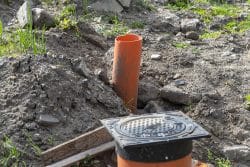 If a main is extended to a road that previously had none, the property owner faces a decision rather than an obligation, and the terms depend on the utility. What does not change is that the line running from the house out to the connection remains private property and private responsibility.
Connecting to public sewer moves the treatment burden to the utility, but the building sewer, the pipe running from the house to the point of connection, belongs to the property. Blockages, root intrusion and collapse in that run are the owner’s to fix, exactly as the septic tank was. Rural properties often have long runs to the road, which means more pipe, more joints, and more opportunity for the kind of defect a camera finds. A sewer camera inspection is the standard way to document that run before and after a conversion.
An abandoned septic tank is not simply left in place and forgotten. Proper abandonment involves pumping the tank by a permitted pumper and dealing with the empty vessel so it cannot collapse or become a hazard, and Knox County Health Department is the authority to confirm requirements with before the work happens. Doing it informally creates a problem that surfaces years later, usually during a property sale.
The clay soils across much of Knox County shrink and swell with moisture, which drives settlement in any buried line regardless of what it connects to. A new building sewer laid across ground that previously held a drain field sits in disturbed soil, which settles differently from undisturbed ground. This look at how East Tennessee soil behaves around buried pipe covers why grade loss shows up on newer lines as well as old ones.
Our team at Tennessee Standard Plumbing works on the house side of both systems across Knox County: the drain lines inside the home, the building sewer running out to a tank or a main, camera inspection of that run, and sewer line repair and replacement. Septic tank pumping and drain field work belong to Knox County permitted septic contractors, and we would rather point a homeowner to the right permitted pumper than pretend otherwise.
Four things are worth keeping. The utility district covering Corryton and Mascot supplies water and not sewer, so septic is the standing condition rather than a temporary one. Knox County Health Department permits the system, and the soil map drives everything downstream of it. Pumping every 3 to 5 years, or every 2 to 3 with a garbage disposal, is what protects the drain field. The line from the house outward is private property under either system.
Property owners who want the house-side line inspected or repaired can call our team at (865) 352-9003 or book an appointment online. Peaceful Pipes, Peaceful Life.
We serve Knoxville, Corryton, Mascot, and communities across Knox County and East Tennessee.
Generally no. Northeast Knox Utility District covers that area and supplies water only, with no sewer service listed among its offerings. Most properties there treat wastewater on site with a septic system. The utility bill is the fastest way to confirm, since a property on public sewer carries a sewer charge.
The Knox County Health Department, through its groundwater program. All repairs, alterations and new construction of a subsurface sewage disposal system require a permit from the department before work starts. The department can be reached at 865-215-5200 ext. 1 or health@knoxcounty.org.
Knox County advises every 3 to 5 years with ordinary use, and every 2 to 3 years where a garbage disposal is in service. Household size and water use shift the interval within those ranges. The county also states that additives do not need to be added to a septic tank.
Knox County Health Department publishes a $40.00 lot evaluation fee and a $200.00 fee for the SSDS installation permit and drain field layout. A repair permit is issued at no cost. A verification or septic letter for a real estate transaction is published at $200.00 and includes a file review and a property inspection.
Because the soil, not the tank, does the treatment. A high intensity soil map prepared by a soil consultant tells the county whether the ground will accept effluent, how much drain field area is needed, and where it can sit. Knox County requires the map along with a site plan before it will evaluate a lot.
Only if the permitted system supports it. Septic sizing follows bedroom count as a proxy for occupancy, so adding a bedroom can require an SSDS modification permit and possibly drain field expansion. Knox County lists renovations alongside new residences as work requiring an installation permit, which makes this a permitting question before it is a construction question.
Slow drains throughout the house rather than at one fixture, gurgling, standing water or unusually lush grass over the field, and sewage odor outdoors. These appear gradually, which is why they get explained away. A drain field that is beginning to fail is a much cheaper problem than one that has finished failing.
It shortens the pumping interval rather than ruling the appliance out. Knox County advises pumping every 2 to 3 years where a disposal is in use, against 3 to 5 years without one. Ground food solids reach the tank directly and build the sludge layer faster, so the tradeoff is convenience against more frequent service.
Neither is better in every case. Public sewer trades a monthly charge for the removal of drain field risk and the bedroom-count constraint. Septic costs nothing monthly and works well for decades when pumped on schedule, but concentrates its risk in one expensive component. In most of Corryton and Mascot, the comparison is theoretical, since no sewer main is available.
The property owner, for the building sewer running from the house to the point of connection with the public main. The utility takes responsibility from the connection onward. Rural properties often have long private runs, so the length of pipe an owner remains responsible for can be considerable.


When a pipe bursts or your water heater stops working, you need reliable help from someone you can trust. But who do you call: a licensed plumber o... Read More

A whole-home water filtration system in Knoxville costs between $850 and $5,000 installed, with basic single-stage systems running $850–$1,400, mid... Read More

The water coming into your home is far from pure. Whether it's city water, well water, or even some bottled water, there are millions of foreign pa... Read More