
How Long Does a Battery Backup Sump Pump Last? Types and Factors Explained
A battery backup sump pump system will often serve you for about 5–10 years, while the battery itself usually needs to be replaced every 3–5 years.... Read More

Same-Day Service Available
Need a Plumber in Knoxville? We’re Ready to Help!




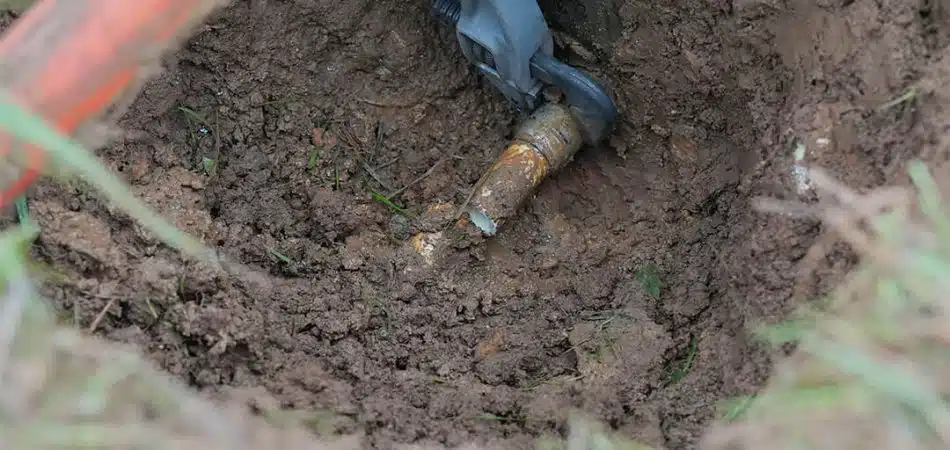
Knoxville’s predominantly clay soil creates persistent pressure on underground pipes through expansion and contraction cycles, accelerating corrosion and causing joint separation. The high mineral content in our soil also leads to faster pipe deterioration, particularly in older metal lines, while poor drainage characteristics of clay increase the risk of washouts around water lines.
If you’ve lived in Knoxville for any length of time, you know our red clay soil. It sticks to everything, turns concrete-hard in summer, and becomes a muddy mess after rain. But here’s what most homeowners don’t realize: that same soil sitting in your yard is constantly interacting with the pipes buried beneath it. And not always in a good way.
The relationship between East Tennessee’s unique soil composition and your underground plumbing isn’t something most people think about until there’s a problem. Yet the ground beneath your property plays a significant role in how long your pipes last, whether you’ll face leaks, and what kind of water quality issues might crop up.
Understanding this connection can save you thousands in unexpected repairs and help you make smarter decisions about everything from water line replacement to water filtration systems.
East Tennessee sits on some of the most challenging soil for underground infrastructure in the Southeast. Our predominant red clay soil contains high levels of iron oxide (that’s where the color comes from) and other minerals that directly impact buried pipes.
Clay soil expands significantly when wet and contracts when dry. We’re talking about volume changes of 10-15% in some cases. Your pipes don’t expand and contract with it. During our wet springs, the soil swells and puts pressure on pipes from all directions. Come summer drought, it shrinks away, leaving pipes unsupported in voids. This constant movement stresses joints, creates micro-cracks, and eventually leads to failures.
The mineral content creates another set of problems. High iron and manganese levels in our soil accelerate corrosion on metal pipes. Copper lines develop pinhole leaks faster here than in sandy or neutral soils. Galvanized steel pipes? They’re on borrowed time in Knoxville’s ground. The acidic nature of our soil (typically pH 5.5-6.5 in this area) speeds up the whole corrosion process.
Then there’s the drainage issue. Clay doesn’t drain well. When water can’t percolate through soil, it pools around pipes, creating constant moisture contact. That standing water carries dissolved minerals directly to your pipe surfaces, accelerating both corrosion and mineral buildup.
Let’s say you’ve got a rigid pipe buried three feet down. Above it, the soil is going through seasonal changes. Winter brings freeze-thaw cycles (yes, even in Tennessee). Spring brings saturation. Summer brings drought. Fall brings more rain.
Each cycle moves the soil. And when soil moves, pipes have to deal with it.
Joint separation is one of the most common issues we see. Older pipes with compression fittings or bell-and-spigot joints can pull apart when soil shifts. You might not notice it immediately because the soil itself often holds things together just enough to prevent a major break. But water starts seeping out, which erodes the soil further, which allows more movement. It becomes a cycle.
We’ve also seen soil movement cause what looks like waves or undulations in longer pipe runs. The pipe literally follows the soil as it heaves and settles. This creates low spots where sediment collects and high spots where water hammer becomes an issue.
Tree roots complicate everything. They seek out moisture and nutrients. A tiny seep from a stressed pipe joint? That’s like a beacon for roots. They infiltrate through microscopic openings and expand, turning a small leak into a major break. Our heavy clay actually makes this worse because roots have to work harder to spread, so when they find an easier path (like following a pipe or entering through a crack), they commit fully.
Here’s something that surprises people: the soil around your pipes affects what comes out of your tap, even if the pipes themselves are perfectly sound.
Groundwater moves through soil before it reaches your water line. In Knoxville’s clay, that movement is slow, giving water plenty of time to pick up dissolved minerals. 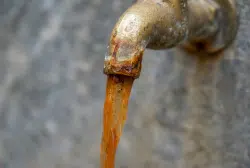 Iron, manganese, calcium, and magnesium all leach into groundwater as it percolates. If you’re on well water, this is your direct supply. Even city water can be affected if there are any compromises in your service line integrity.
The high iron content in our soil explains why so many Knoxville homes deal with rust-colored staining on fixtures and in toilets. It’s not always the pipes rusting (though that happens too). Sometimes it’s the soil-sourced iron in the water itself. A quality water filtration system addresses this at the point of entry, removing minerals before they reach your plumbing fixtures and appliances.
Clay soil also holds contaminants longer than sandy soil. If there’s been any kind of contamination event in your area—old fuel tanks, agricultural runoff, industrial activities—clay traps those substances rather than allowing them to flush through. This can lead to localized water quality issues that persist for years.
In sandy or loamy soil, a leak often announces itself quickly. Water surfaces. You see a wet spot. The problem becomes obvious.
Clay? Clay plays a different game.
Water from a leaking pipe can travel horizontally through clay for surprising distances before finding a path to the surface. We’ve located leaks 15-20 feet away from where homeowners noticed wet ground. By the time you see evidence, the leak has often been running for weeks or months.
That hidden water erodes soil around the pipe, creating voids. Your water line ends up suspended over an underground cavity. Eventually, something gives way—either the pipe breaks completely, or the soil above collapses. What started as a small leak becomes a major excavation project.
This is why professional leak detection matters so much here. Acoustic sensors, pressure testing, and thermal imaging can identify problems before they escalate. The cost of detection is minimal compared to what you’ll spend if that small leak turns into a full line collapse.
We’ve seen foundation issues, driveway settlement, and landscape damage all traced back to undetected leaks that were washing away soil in the clay layer. The longer water runs, the more soil it moves.
Sometimes repair isn’t the answer. When soil conditions have taken their toll on aging pipes, replacement becomes the smarter choice.
If your water line is original to a home built before 1980, you’re likely dealing with galvanized steel or early copper. Galvanized lines in Knoxville’s soil typically last 40-50 years before corrosion becomes severe. We’re now seeing widespread failures in homes from the 1960s and 70s. The pipes are simply done.
Multiple repairs on the same line within a few years signal broader deterioration. The soil hasn’t just affected one spot; it’s compromised the entire run. Each repair is a temporary fix when the whole system is failing.
Modern waterline replacement doesn’t always mean tearing up your entire yard. Trenchless methods work particularly well in clay soil because the soil’s density helps maintain the bore hole during installation. You get a new, corrosion-resistant pipe (typically HDPE or PEX) with minimal landscape disruption.
The choice of replacement material matters in our soil. PEX and HDPE are immune to the corrosion issues that plague metal pipes. They’re flexible enough to handle soil movement without joint failure. And they’ll outlast you and probably the next homeowner, too.
You can’t change your soil, but you can work with it intelligently.
Proper backfill during installation makes a huge difference. When contractors replace water lines, the material used to refill the trench matters. Pure clay backfill continues to have the same expansion-contraction problems. A graded sand or gravel bedding around the pipe, topped with proper backfill, provides cushioning and drainage that protects the line.
Drainage management around your foundation helps too. If water pools near your house, it’s saturating the soil around your service line. Keep gutters clean, extend downspouts away from the foundation, and grade your yard so water moves away from the structure. Less soil saturation means less expansion and movement.
Don’t ignore small signs. Water pressure fluctuations, unexplained wet spots, higher water bills, or that area of grass that stays green even in drought – these can all indicate underground issues. Early intervention costs a fraction of emergency repairs.
For homes on well water or with older municipal connections, regular water quality testing tells you what’s happening before it becomes a problem. If you’re seeing increasing iron, sediment, or hardness, your pipes or soil conditions are changing. Address it proactively.
Understanding how Knoxville’s soil affects your plumbing puts you ahead of most homeowners. You know why we see the problems we do, and you know they’re not going away on their own.
If your home is more than 30 years old and you’ve never had your water line inspected, that’s a smart place to start. A pressure test and visual inspection of exposed sections can tell you a lot about what’s happening underground. We can spot corrosion patterns, joint integrity issues, and early warning signs that help you plan rather than panic.
Already dealing with water quality issues related to soil minerals? A whole-house water filtration system addresses the root cause and protects your appliances, fixtures, and pipes from the inside out. It’s particularly valuable in areas with high iron content like ours.
And if you’re experiencing any unexplained water pressure drops, wet areas in your yard, or foundation settlement, don’t wait. Professional leak detection can pinpoint problems before they turn into full-scale emergencies. Tennessee Standard Plumbing offers same-day service for urgent situations and upfront pricing so you know exactly what you’re facing.
The soil isn’t going to change. But with the right approach, your plumbing can handle whatever East Tennessee’s ground throws at it.
Water lines in Knoxville are typically buried 18-24 inches deep, below our frost line but shallow enough to minimize installation costs. This depth puts them squarely in the active zone where our clay soil experiences the most expansion and contraction, which is why proper installation and material selection matter so much.
Soil testing can identify corrosive conditions, drainage characteristics, and mineral content that affect pipes, but it won’t predict specific failures. It’s most useful when planning new installations or deciding between repair and replacement, helping you choose materials that will perform best in your specific ground conditions.
Newer homes typically use more soil-resistant materials like PEX or HDPE for water lines, which handle our clay conditions better than the galvanized steel or copper common in older homes. However, poor installation practices can still create problems, and no material is completely immune to severe soil movement or settlement issues.
In Knoxville’s clay soil, galvanized steel typically lasts 40-50 years, copper 50-70 years, and modern PEX or HDPE can exceed 100 years. These are estimates—actual lifespan depends on specific soil chemistry, installation quality, water chemistry, and how well the property manages drainage and soil saturation.
If your property or neighborhood has a history of underground storage tanks, industrial use, or agricultural chemical application, soil contamination is worth investigating. Clay soil holds contaminants longer than other soil types. Water testing and a professional assessment of your water line integrity can determine if there’s any impact on your water supply.


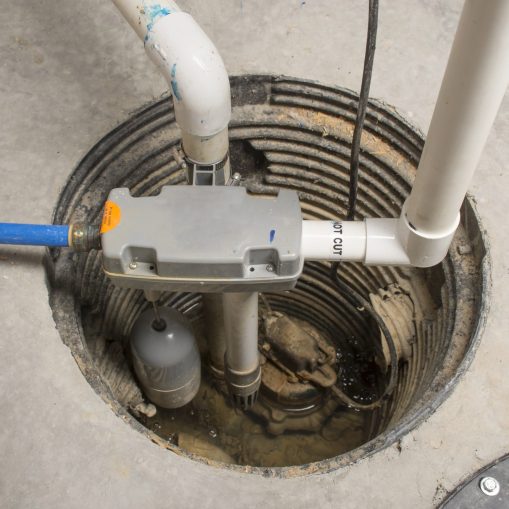
A battery backup sump pump system will often serve you for about 5–10 years, while the battery itself usually needs to be replaced every 3–5 years.... Read More

Your home's plumbing system works as two interconnected subsystems: the supply system, which brings pressurized fresh water in via pipes from the s... Read More
Key Takeaways Tub-to-shower conversions replace an existing bathtub with a walk-in shower in the same footprint, delivering real improveme... Read More