
How to Increase Water Pressure in Your Home: A Step-by-Step Guide
Installing a water booster pump is a reliable way to improve low water pressure at home. It involves choosing the right pump, preparing the area, m... Read More

Same-Day Service Available
Need a Plumber in Knoxville? We’re Ready to Help!




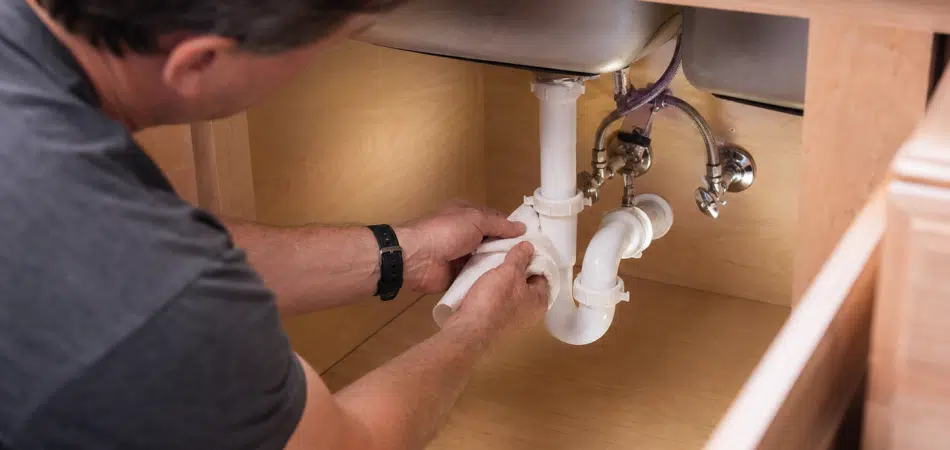
A practical home plumbing maintenance schedule has three tiers. Monthly, check toilets for silent running, inspect under-sink connections for moisture, and note any drain that has slowed. Seasonally, disconnect hoses before the first freeze, inspect washing machine hoses, and clear exterior drainage. Annually, flush the water heater, exercise the main shutoff valve, and measure static water pressure. Most costly residential water damage traces back to a component that gave warning signs for weeks before failing.
Almost nobody thinks about plumbing until it interrupts something. The failures that ruin a weekend, though, are rarely sudden. A washing machine hose bulges for months before it splits. A toilet flapper leaks quietly through two billing cycles. A water heater rumbles for a year before it drips. Homeowners who spend around fifteen minutes a month catch most issues early. Those who want extra help can hire Knoxville plumbing services once a year for areas a visual check might miss.
Tennessee Standard Plumbing has served Knoxville and Knox County for more than 13 years, holds a 5.0 Google rating across over 1,000 reviews, and carries HomeAdvisor Elite Service recognition. Our team of 50-plus technicians is called for emergencies constantly, and a large share of those emergencies are preventable. We also handle preventive drain maintenance for households that prefer to schedule the work rather than react to it.
The checklist below is organized by how often each task needs attention, so a homeowner can put the monthly items on a phone reminder and the annual items on a calendar.
Monthly checks are visual and require no tools. The goal is detecting change rather than diagnosing causes. A homeowner who knows what normal looks like under the kitchen sink will notice the difference immediately, and that noticing is worth more than any single repair skill.
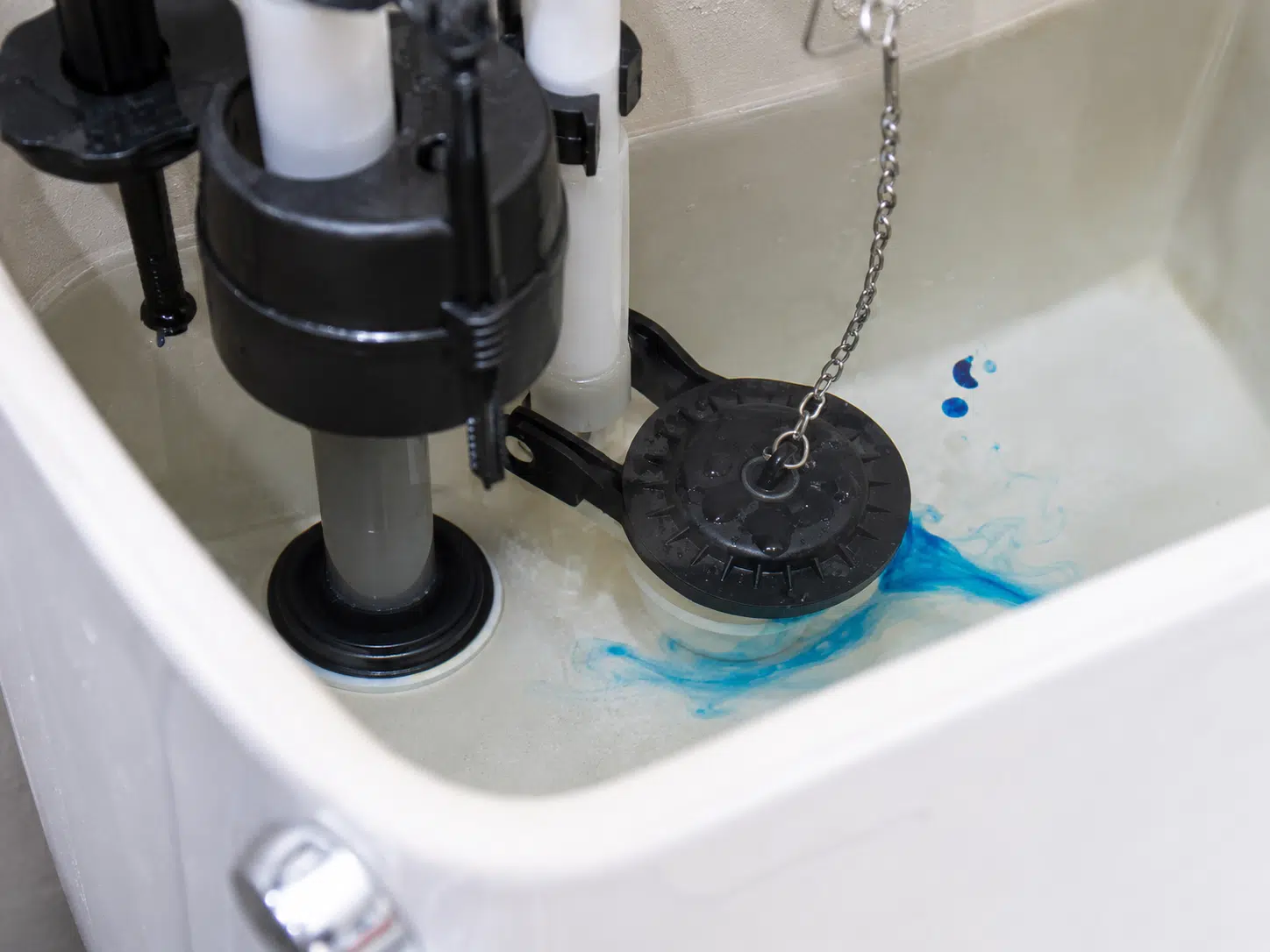 A worn flapper lets water pass from tank to bowl continuously without any audible sound. The test takes ten minutes: place a few drops of food coloring in the tank, wait without flushing, and check whether color appears in the bowl. Color in the bowl confirms a leak. A running toilet can waste hundreds of gallons a day, and the flapper itself is an inexpensive part with a typical service life of 4 to 5 years.
Cabinets under kitchen and bathroom sinks hide the supply stops, P-trap, and drain connections. A dry paper towel wiped along each connection reveals moisture that the eye misses. Mineral crust or a white ring on a fitting indicates a slow weep that has been evaporating rather than dripping. Cabinet bases that feel soft or show dark staining point to a leak that has been active a while. Anyone tracking a suspected leak they cannot locate can arrange water leak detection rather than opening walls on a guess.
Drains slow gradually, so households normalize the change without registering it. A sink that once emptied in five seconds and now takes twenty has a developing restriction. Catching it at that stage means a simple clearing rather than a main line problem. Gurgling from a nearby fixture when another one drains is a different signal entirely, pointing toward a venting issue or a partial blockage further down the line.
East Tennessee weather creates a predictable maintenance rhythm. Freeze events are typically short but sharp, humidity runs high through summer, and fall brings heavy leaf litter into exterior drainage. Each season has two or three tasks that matter more than the rest.
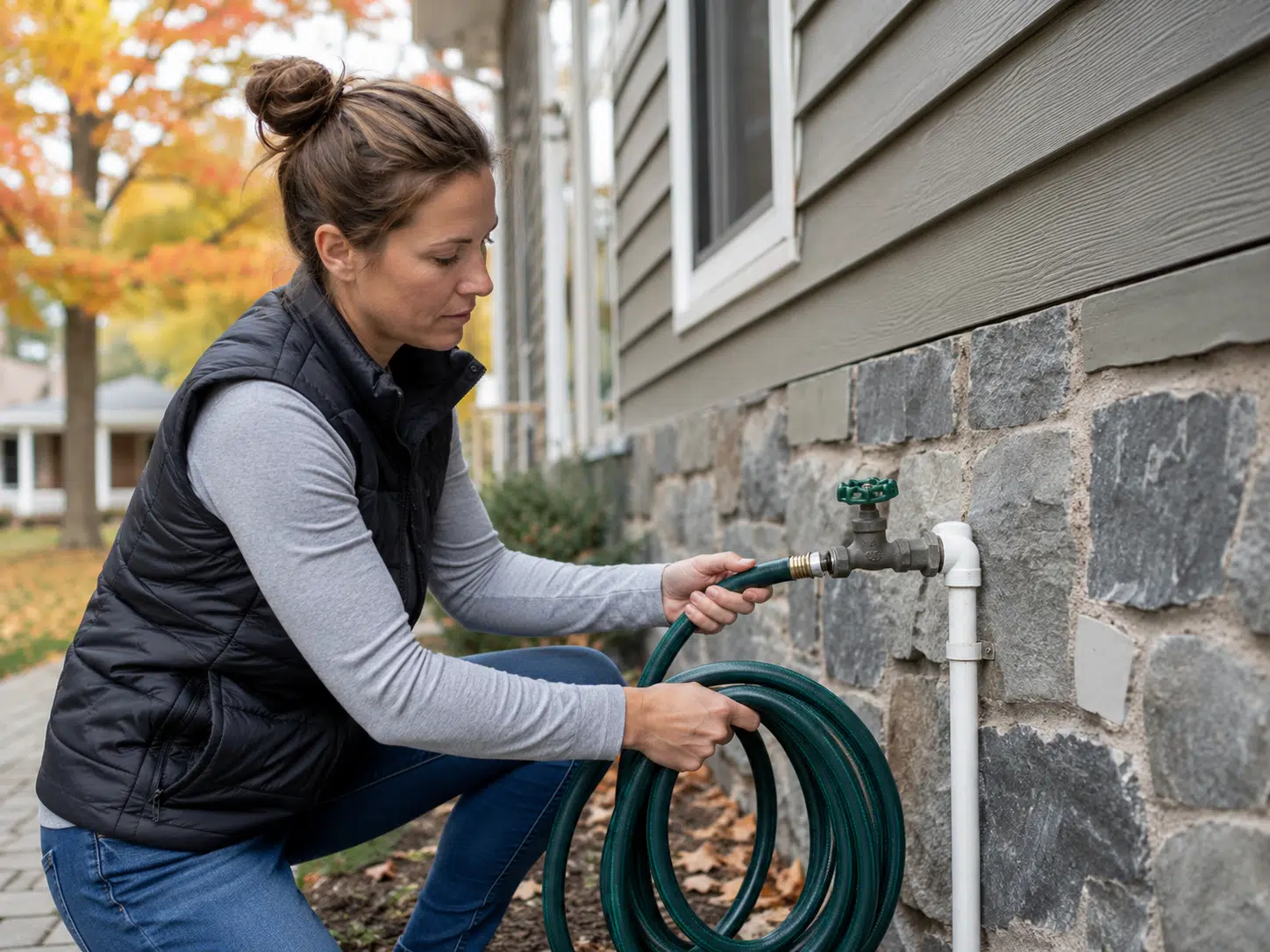 Garden hoses left connected through a freeze trap water against the hose bib, and the resulting expansion can split the pipe inside the wall where nobody sees it until spring. Disconnecting and draining hoses is the single highest-value freeze task. Insulating exposed pipe in crawl spaces and unheated garages follows close behind, and knowing where the main shutoff is located becomes far more useful before a pipe splits than after.
After the last freeze, hose bibs get tested by opening them fully and watching for a pressure drop or for water appearing inside the crawl space. A split that occurred during winter often stays hidden until the spigot is used for the first time. Spring is also when exterior drainage, gutters, and yard drains should be cleared before heavy rain arrives.
Rubber washing machine supply hoses carry constant pressure and have a service life of roughly 5 years. Braided stainless steel replacements cost little and dramatically reduce burst risk. Summer is also when condensation on cold supply lines can be mistaken for a leak, so any moisture found should be traced to its source before a repair is scheduled.
Annual tasks address components that degrade slowly and silently. None of them are urgent in any given month, which is exactly why they get skipped for years at a time until the consequence arrives all at once.
Sediment accumulates in the bottom of a tank water heater, where it insulates the water from the burner and forces longer heating cycles. The result is reduced efficiency, rumbling during operation, and a shortened service life. The sacrificial anode rod corrodes on purpose, so the tank lining does not, and once depleted the tank itself begins to rust. A yearly review of both items is covered in this water heater maintenance checklist.
A shutoff valve that has never been operated frequently seizes in place, which means the one component a household depends on during an emergency fails at the moment it is needed. Turning the valve fully closed and fully open once a year keeps it free. Gate valves with a round handle need several turns. Ball valves with a lever handle close in a quarter turn. Discovering a seized valve on a calm Saturday is a repair, while discovering it during a burst pipe is a flood.
A threaded gauge on an exterior hose bib reads household pressure in under a minute. Residential systems generally perform well between 40 and 60 psi. Readings above 80 psi place continuous stress on supply lines, appliance valves, and fixture connections, and shorten the life of every component in the system. A pressure-reducing valve corrects the condition, and homes that already have one should confirm it is still regulating rather than assuming it works.
Some symptoms mean the schedule no longer applies and attention is needed now. These signs indicate an active problem rather than a component approaching the end of its service life.
Usage that rises with no change in household routine is the most reliable early indicator of a hidden leak. Municipal billing captures the loss long before a stain appears on a ceiling. A meter test confirms it: with every fixture off, a meter that continues to advance proves water is moving somewhere it should not be.
Banging when a faucet closes indicates water hammer, which stresses joints over time. Rumbling from a water heater points to sediment. Hissing behind a wall with all fixtures off suggests a pressurized leak. Running water audible when nothing is on deserves immediate investigation.
A brown ring on a ceiling means water has been present long enough to carry material through the drywall. Sewer odor near a floor drain often indicates a dried trap, though it can also point to a venting fault. Soft flooring near a toilet or tub usually means the subfloor has been absorbing moisture for an extended period, and that repair grows more expensive every month it waits.
A maintenance routine works because it is boring and repeatable. Our team at Tennessee Standard Plumbing prefers to work with homes on a regular schedule instead of during emergencies. We are happy to help homeowners understand what their house needs.
Four items carry most of the value. Test toilets for silent running monthly. Replace rubber washing machine hoses with braided stainless every 5 years. Exercise the main shutoff valve once a year. Measure static pressure and correct anything above 80 psi.
Homeowners who want a professional inspection to cover what a visual check cannot reach can call our team at (865) 352-9003 or schedule your service online. Peaceful Pipes, Peaceful Life.
We serve Knoxville, Powell, Halls, and communities across Knox County and East Tennessee.
Once a year suits most homes, and more often for houses built before 1980 or properties on well systems. A professional inspection covers what a visual check cannot reach, including supply line condition inside walls, water heater internals, and drain line performance under load.
Add a few drops of food coloring to the tank and wait ten minutes without flushing. Color appearing in the bowl confirms water is passing through a worn flapper. The part is inexpensive and typically lasts 4 to 5 years, while the wasted water can reach hundreds of gallons per day.
Standard rubber supply hoses last roughly 5 years under constant pressure. They are a leading cause of sudden indoor flooding because they fail without warning while nobody is home. Braided stainless steel replacements cost little and substantially reduce that risk.
Between 40 and 60 psi suits most residential systems. Readings above 80 psi stress supply lines, appliance valves, and fixture connections continuously, shortening the life of every component. A threaded gauge on an exterior hose bib measures it in under a minute.
Valves that sit untouched for years frequently seize in position. That turns the one component a household relies on during an emergency into a failure point. Closing and reopening it once a year keeps it free, and finding a stuck valve during routine maintenance is a repair rather than a flood.
A water bill that rises with no change in household routine. Municipal billing detects the loss well before any visible stain appears. A meter test confirms it: with all fixtures off, a meter that keeps advancing proves water is moving somewhere in the system.
Yes, and it is one of the highest-value freeze tasks. A connected hose traps water against the hose bib, and freezing expansion can split the pipe inside the wall. That split often stays hidden until the spigot is opened in spring, by which point water has been escaping into the structure.
Sediment has collected at the bottom of the tank. The deposit insulates water from the burner, so water trapped beneath the layer boils and produces popping or rumbling during heating cycles. The condition reduces efficiency and shortens tank life, and it is addressed by flushing.
Yes, because slow drains rarely improve on their own. A sink that has gone from emptying in five seconds to twenty has a developing restriction that is far easier to clear at that stage. Gurgling from another fixture during drainage is a separate signal pointing toward venting or a main line issue.
They need additions rather than a different structure. Well systems add pressure tank checks, sediment filter changes, and periodic water quality testing to the standard schedule. Households in Union, Anderson, and outlying Knox County areas on private wells generally benefit from annual testing.


Installing a water booster pump is a reliable way to improve low water pressure at home. It involves choosing the right pump, preparing the area, m... Read More

The water coming into your home is far from pure. Whether it's city water, well water, or even some bottled water, there are millions of foreign pa... Read More

To quickly unclog an outdoor drain, start by removing the cover and clearing visible debris. Next, use a high-pressure hose or a drain sn... Read More