
How Knoxville’s Hard Water Shortens Your Water Heater’s Lifespan
If your water heater seems to be working harder than it used to or if it gave out well before the 10-to-12-year mark hard water may be to blame. In... Read More

Same-Day Service Available
Need a Plumber in Knoxville? We’re Ready to Help!




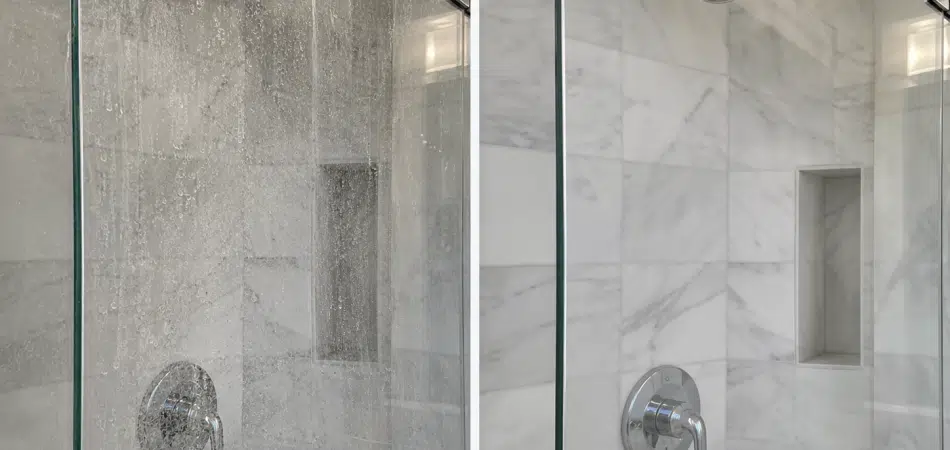
Low-maintenance shower materials share three traits: nonporous surfaces, minimal seams, and finishes that hide mineral spotting. Acrylic surrounds and solid surface panels require the least upkeep because they have almost no grout. Large-format porcelain tile is the best-performing tile option since it reduces grout line count substantially compared with mosaic tile.
Natural stone requires periodic resealing and does not respond well to acidic cleaners. In mineral-rich water, porosity is an important maintenance factor, but surface texture, grout, coating, color, finish, drainage, and cleaning habits also affect how quickly buildup becomes visible.
Most people pick a shower by how it looks in a showroom. Two years later, they judge it by how long it takes to clean on a Saturday morning. Those are different tests, and they often produce different winners. For a household running three showers before 7 a.m. on a school day, the material that wipes down in four minutes beats the one that photographs well. Homeowners weighing a bathroom project can start with Knoxville plumbing services that install these systems regularly and see how they hold up.
Tennessee Standard Plumbing has installed and serviced showers across Knoxville and Knox County for more than 13 years, backed by a 5.0 Google rating across 1,000-plus reviews and a team of 50-plus technicians. We get called back to the same surfaces for the same reasons, which gives our team a fairly clear picture of what actually holds up in East Tennessee water. Peaceful Pipes, Peaceful Life is easier to deliver when the shower is not fighting the homeowner every week.
The comparison below ranks common shower materials by how much routine attention each one demands, then covers the joints, glass, and drain details that decide whether a low-maintenance surface stays that way.
Water hardness determines how quickly a shower surface develops visible film. Dissolved calcium and magnesium precipitate out as water evaporates, leaving mineral deposits on glass, tile, and fixtures. KUB classifies its service-area water as moderately hard, and calcium and magnesium deposits may become visible on shower glass, tile, and fixtures as water evaporates. The speed and severity of spotting vary by household, surface, ventilation, cleaning habits, and water treatment.
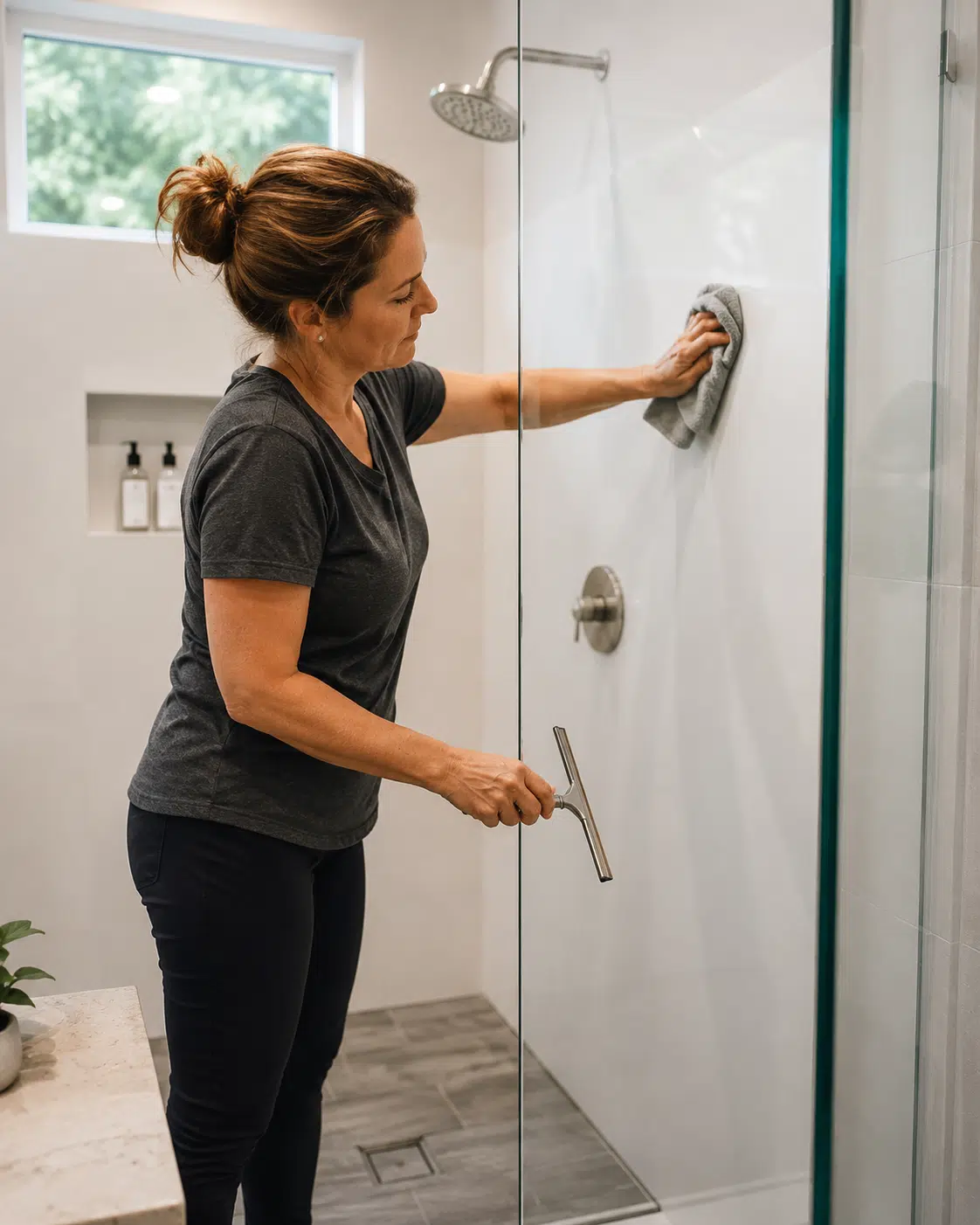 Scale is a deposit of calcium carbonate and related minerals left behind after water evaporates. Repeated evaporation can allow mineral deposits to accumulate, particularly when previous residue is not fully removed. A strong mineral buildup might need a cleaner made for limescale, but it must be safe for the shower surface. Acidic cleaners can harm some natural stones and certain materials and finishes. Homeowners curious about local water composition can review this overview of Knoxville tap water quality for context on what is in the supply.
Soap scum forms when the fatty acids in bar soap react with dissolved minerals, producing an insoluble film that clings to porous surfaces. Traditional bar soap can create more soap scum from minerals in hard water compared to synthetic or syndet cleansers. However, liquid body washes can also leave residue based on their ingredients. Households that switch from bar soap to liquid cleanser often report a noticeable drop in shower film within a few weeks, independent of any material change.
A porous surface holds moisture and minerals in its structure rather than on top of it, which puts the deposit beyond the reach of a surface wipe. Nonporous materials keep the deposit on the surface where a squeegee or cloth removes it. A smooth nonporous surface is usually easier to clean than a porous or textured one, even if the surfaces are otherwise similar. However, the color and finish still matter for how noticeable dirt is.
Shower surfaces can be categorized into four main types, each requiring different levels of maintenance. As a general maintenance comparison, acrylic and solid-surface panels often require the least routine attention, followed by well-installed large-format porcelain; ceramic tile and natural stone can require more care depending on grout, texture, sealing, and the specific stone. Seam count and porosity matter, but texture, grout type, installation quality, sealing, drainage, ventilation, and cleaning habits also affect maintenance.
Acrylic surrounds and solid-surface systems use smooth, low-porosity panels. They have fewer seams than tiled installations, but the number of seams varies based on the system and shower design. There is no grout to stain. Routine care is a wipe with a non-abrasive cleaner. The tradeoff is design flexibility, since panel systems offer fewer pattern and layout options than tile, and abrasive scrubbing pads can dull the finish over time.
Porcelain tile is usually classified by a water-absorption rate of 0.5% or less, which makes it very water-resistant. However, grout joints and installation details still need care. Moving from 4-inch tile to 12-by-24-inch format cuts grout line length dramatically across the same wall area, which removes most of the staining surface. Large-format porcelain can provide a tiled appearance with fewer grout joints than small-format tile, which may reduce routine grout-cleaning demands. Anyone comparing tiled and panel systems can review the available walk-in shower packages to see how each is configured.
Marble and travertine are generally porous and may require periodic sealing, while slate varies by type and finish. Resealing frequency depends on the stone, sealer, exposure, and manufacturer instructions rather than a universal 12-to-24-month schedule. Acidic limescale cleaners can damage calcium-based stones like marble and travertine. Therefore, homeowners should use products that are safe for their specific stone and follow the instructions from the manufacturer. Small mosaic tile generally creates substantially more grout-joint length than large-format tile covering the same area, increasing the amount of grout that must be cleaned and maintained.
Shower failures rarely begin in the middle of a panel or tile. They begin at transitions: wall-to-floor corners, curb edges, niche perimeters, and around valve escutcheons. These joints move as the structure expands and contracts, and the material filling them has a shorter service life than the surfaces around it.
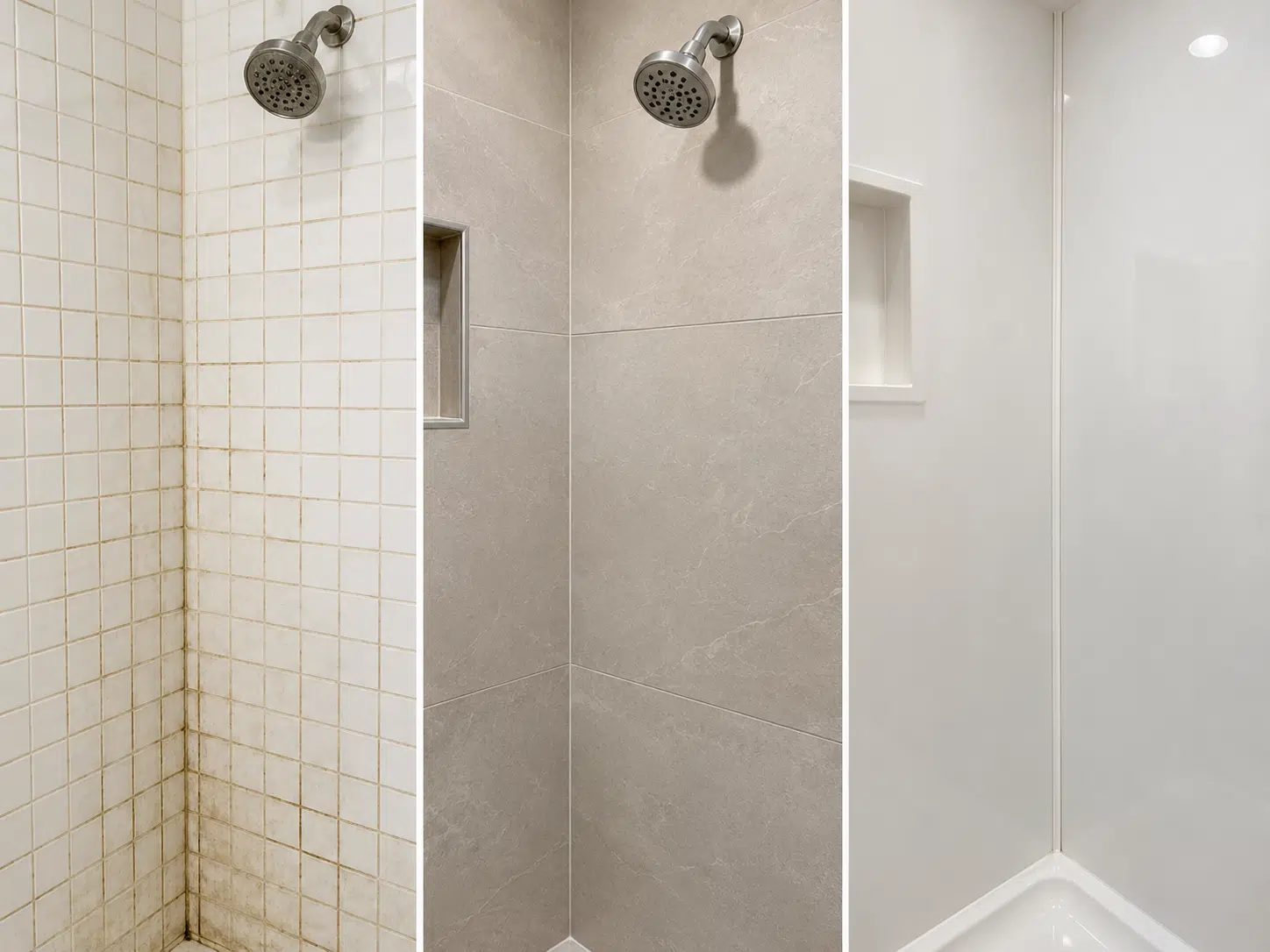 Cement grout has tiny holes, which let it soak up water and stains. Using the right sealer can help reduce this soaking and make cleaning simpler, but it won’t make the grout waterproof or remove the need for maintenance. Epoxy grout is nonporous, resists staining, and does not require sealing, though it costs more and demands faster, more precise installation. For a home that wants a low-maintenance tiled shower, using epoxy grout in a medium color is usually the best choice. This is because medium tones hide dirt and mineral stains better than white or black.
Check silicone sealant at changes of plane regularly and replace it if it shrinks, cracks, changes color, separates, or stops sticking. How long it lasts depends on the product and shower conditions. This is normal wear rather than a defect. Grout placed in a moving corner joint instead of flexible sealant will crack, and that crack becomes the entry point for water reaching the substrate. Recognizing caulk as a scheduled replacement item prevents a small maintenance task from becoming a waterproofing failure.
Built-in niches and benches add horizontal surfaces inside a wet area, and horizontal surfaces hold standing water. A niche with a slight forward slope drains rather than pools, which prevents the mineral ring that otherwise forms along its base. Bench tops fabricated from a single slab with no seams outperform tiled benches on both upkeep and long-term water resistance.
Glass is usually the most visible surface in a shower and the fastest to show spotting. Hardware finish and drain style matter less for appearance and more for how much time routine cleaning takes. Small specification choices at purchase produce measurable weekly time differences years later.
Factory-applied hydrophobic coatings reduce the surface energy of glass, so water beads and sheets are off rather than clinging in droplets. Less standing water means fewer mineral deposits when it evaporates. Factory-applied glass coatings may make water and residue easier to remove, but their performance and service life vary by product and maintenance; a squeegee and regular cleaning remain useful with or without a coating. A squeegee kept in the shower remains the single most effective habit regardless of coating.
Framed enclosures include bottom tracks and vertical channels that collect water, soap residue, and mineral deposits in places a cloth cannot easily reach. Frameless and semi-frameless panels remove most of that trapped detail. The upkeep advantage is real, though frameless systems require more precise substrate preparation during installation.
Polished chrome easily shows water spots. Brushed finishes usually hide water spots and fingerprints better than polished chrome. The look and strength of matte black depend on the product and how well it is finished. On the floor, linear drains positioned against a wall allow a single-plane slope rather than the four-way slope a center drain requires, which reduces both the cut tile count and the low spots where water lingers. Households planning fixture changes alongside a surface upgrade can coordinate that work through shower and tub services.
Material selection is easier when the decision is framed around weekly time rather than showroom appearance. Our team at Tennessee Standard Plumbing installs across the full range of these systems, and we are glad to walk a homeowner through the tradeoffs before anything is ordered.
Four points carry most of the weight. Nonporous surfaces beat porous ones in mineral-rich water. Fewer seams mean less staining surface. Epoxy grout in a mid-tone removes the sealing chore from a tiled shower. Caulk joints are a scheduled replacement item roughly every 5 years, not a permanent detail.
Homeowners weighing shower materials can reach our team at (865) 352-9003 or book an appointment online.
We serve Knoxville, Farragut, Powell, and communities across Knox County and East Tennessee.
Acrylic and many solid-surface panel systems usually need less regular care than tiled systems. This is because they are smooth, have fewer seams, and do not use grout. However, maintenance still depends on the product, how it was installed, and the cleaning guidelines. They are nonporous, arrive in large sections with very few seams, and contain no grout to stain or seal. Routine care is a wipe with a non-abrasive cleaner.
Not at all, though the format matters. Large-format porcelain at 12-by-24 inches or larger cuts total grout line length substantially compared with small tile. When paired with mid-tone epoxy grout, a tiled shower can match the low maintenance of panel systems while still offering complete design flexibility.
Cement-based grout generally needs resealing every 12 to 24 months in a regularly used shower. Epoxy grout is generally nonporous and does not require sealing, although it still requires routine cleaning and may need repair if it cracks, separates, or is damaged. Sealing frequency rises with daily use and falls in guest bathrooms.
Dissolved calcium and magnesium stay behind on the glass as water droplets evaporate, forming visible mineral deposits. Hydrophobic factory coatings help water sheet off rather than cling, and a squeegee used after each shower removes the water before evaporation can leave anything behind.
Stone works but carries the highest upkeep. Marble and travertine are porous and need resealing every 12 to 24 months, and the acidic cleaners that dissolve mineral scale will etch calcium-based stone. Households wanting a stone look with lower demands often choose porcelain manufactured to resemble it.
Silicone caulk at wall-to-floor corners and other changes of plane typically lasts about 5 years, before shrinking, discoloring, or separating. That is expected wear rather than a defect. Treating it as scheduled maintenance prevents water from reaching the substrate behind the surface.
It can. A linear drain set against one wall allows the floor to slope in a single plane rather than the four directions a center drain requires. That produces fewer low spots where water lingers and permits larger floor tile, which means fewer grout lines underfoot.
Brushed nickel and matte black disguise mineral spotting and fingerprints considerably better than polished chrome. Chrome shows every droplet mark clearly. The performance difference is cosmetic rather than functional, but it changes how often a fixture looks like it needs attention.
Usually yes. Soap scum forms when fatty acids in bar soap react with dissolved minerals to create an insoluble film. Liquid body washes and synthetic detergents produce far less of that reaction, and many households notice reduced film within a few weeks without changing anything else.
A softener exchanges calcium and magnesium for sodium, which removes the minerals responsible for scale and soap scum. Households that install one commonly report less film on glass and tile along with better lather from soap. It addresses the cause rather than the surface.


If your water heater seems to be working harder than it used to or if it gave out well before the 10-to-12-year mark hard water may be to blame. In... Read More

Key Takeaways CIPP pipe lining and pipe bursting are both trenchless sewer repair methods that avoid digging up most of the yard, but they... Read More

More than 60% of homebuyers now prefer a walk-in shower over a bathtub in the primary bathroom, according to the National Association of Realtors. ... Read More