Same-Day Service Available
00
Hrs
00
Mins
00
Secs
Need a Plumber in Knoxville? We’re Ready to Help!
Same-Day Service Available
Need a Plumber in Knoxville? We’re Ready to Help!




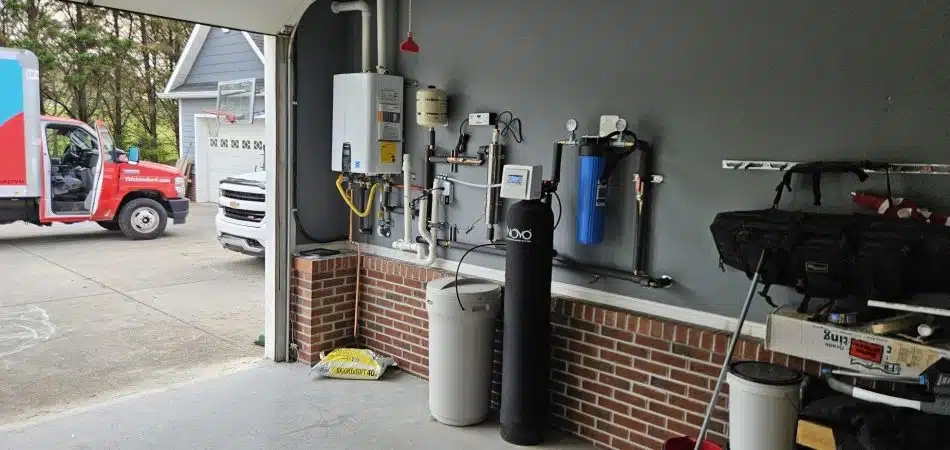
If you’ve ever filled a glass of tap water in Knoxville and noticed a faint chlorine smell, a slightly off taste, or chalky residue on your glassware, you’re not imagining it. Knoxville’s water supply meets federal safety standards, but “safe” and “great-tasting” are two very different things.
For homeowners who want genuinely clean, better-quality water throughout their house, the two most popular upgrades are whole-home filtration systems and under-sink reverse osmosis (RO) units. Both systems work, but they solve different problems, and understanding the difference can save you money and a lot of guesswork. Our team at Tennessee Standard Plumbing helps Knoxville homeowners navigate this decision every day, and this guide breaks it down clearly.
Knoxville draws its water supply from the Tennessee River. The Knoxville Utilities Board treats and tests the water regularly, and it consistently meets EPA standards. However, the treatment process itself relies heavily on chlorine and chloramine disinfectants that do their job at the plant but continue to travel through your pipes, showing up in your tap water as that familiar chemical taste and odor.
Beyond disinfectants, East Tennessee’s geology contributes elevated levels of calcium and magnesium to the water supply. The result is hard water, a common issue across Knox County that doesn’t pose direct health risks but causes real problems over time. On top of that, older home infrastructure in some Knoxville neighborhoods can introduce trace sediment or other contaminants between the treatment plant and your faucet.
These are the most frequently reported water concerns our team encounters across Knoxville and surrounding communities:
That’s why a water quality test is often the smartest first step. It tells you exactly what’s in your water before you invest in any filtration solution.
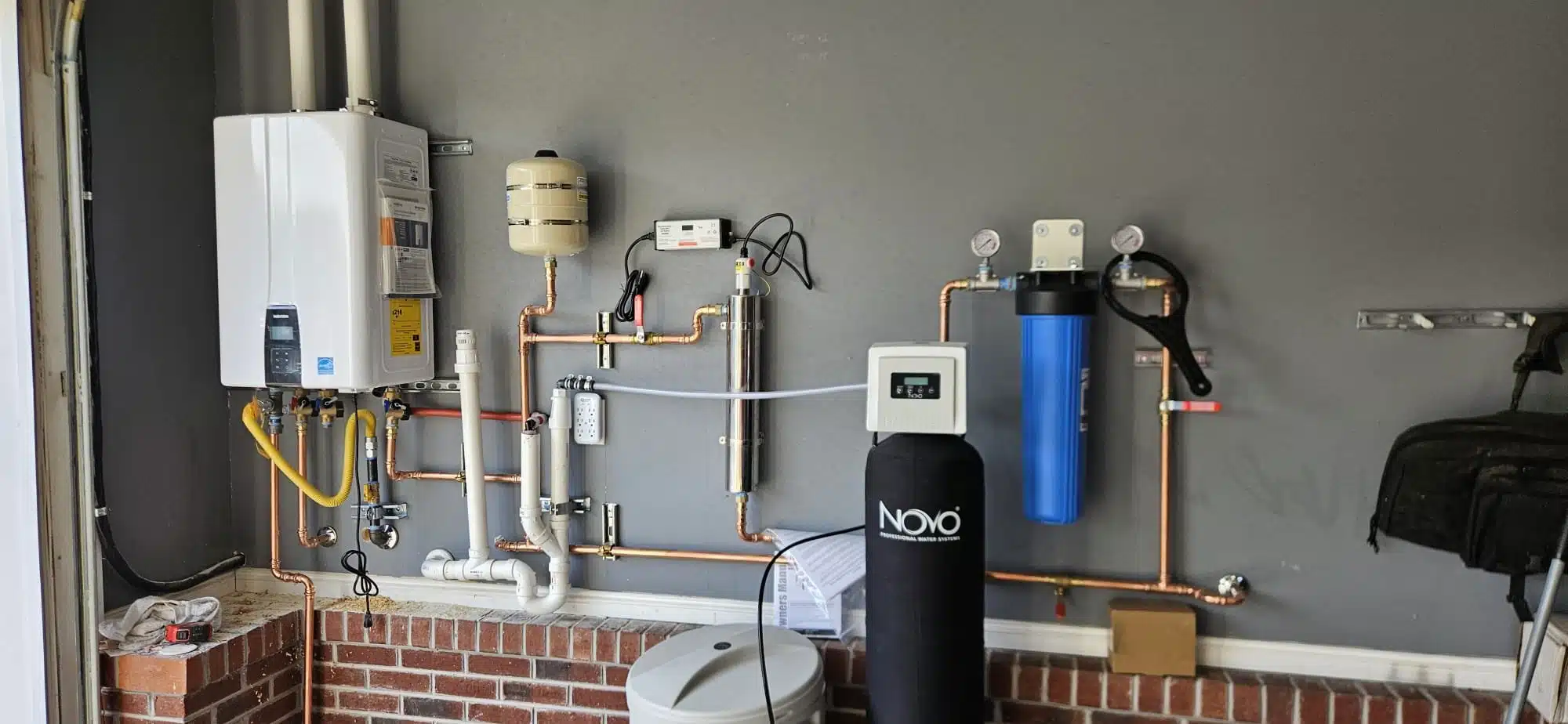 A whole-home water filtration system (also called a point-of-entry (POE) system) is installed where the main water line enters your home.
Every tap, showerhead, appliance, and fixture receives filtered water from that single entry point.
Once installed, it works passively in the background, treating every gallon that flows into your house without any extra effort on your part.
Most whole-home systems combine a sediment pre-filter with an activated carbon filter. Many Knoxville homeowners also pair their whole-home filter with a water softener to address the hard water mineral buildup that’s especially common in this region. Together, these two systems form a comprehensive first line of defense protecting your plumbing and appliances while improving the overall quality of water used for bathing, laundry, and cooking.
The one limitation worth noting: whole-home systems are excellent at broad-spectrum water improvement, but they’re not designed for the deepest level of contaminant removal. If your water test reveals elevated levels of nitrates, lead, arsenic, fluoride, or dissolved solids, you’ll want a more targeted solution, and that’s where reverse osmosis comes in.
An under-sink reverse osmosis system is a point-of-use (POU) system installed beneath your kitchen sink and connected to a dedicated faucet. Water is pushed through a semipermeable membrane under pressure, filtering out contaminants at the molecular level, a level of purification that standard whole-home systems can’t match.
RO systems typically consist of multiple stages: a sediment pre-filter, a carbon pre-filter, the RO membrane itself, and a post-filter that polishes the water before it reaches your glass. Each stage targets different contaminants, and together they produce some of the purest drinking water available for residential use.
RO filtration is among the most thorough methods available, capable of reducing:
 Total dissolved solids (TDS): the overall measure of dissolved substances in your water
For families with infants, elderly members, immunocompromised individuals, or anyone with specific health concerns about drinking water, an RO system delivers consistently high-purity results from a dedicated tap.
For many Knoxville homeowners, the best answer is a combination of both. A whole-home filtration and softening system handles the water quality issues that affect your pipes, appliances, and daily comfort, the things you feel, see, and smell throughout the house. An under-sink RO adds a precision layer at the kitchen sink, giving you drinking water that’s free from the full spectrum of contaminants, including those a whole-home filter doesn’t catch.
| Whole-Home Filtration | Under-Sink RO | |
|---|---|---|
| Coverage | Entire home | Kitchen sink only |
| Best for | Hard water, chlorine, appliance protection | Drinking & cooking water purity |
| Contaminant removal | Broad-spectrum | Deep, targeted |
| Installation | Main water line (plumber required) | Under the kitchen sink |
| Maintenance | Filters change every 3–6 months | Pre-filters annually, membrane every 2–5 yrs |
Running both systems together gives you the best of both worlds. The whole-home filter and softener handle the heavy lifting for your pipes, appliances, skin, and laundry. The under-sink RO then takes already filtered water and removes the remaining trace contaminants before it ever reaches your glass. Many families find that this combination eliminates the need for bottled water, which also adds up to meaningful savings over time.
Not sure what’s in your water? Tennessee Standard Plumbing offers water quality testing in Knoxville to help you make an informed decision before committing to any system. And if you’re ready to explore your options, our full water treatment services cover everything from water softeners to whole-home filtration and reverse osmosis installation — all backed by licensed plumbers who know Knoxville’s water inside and out.
If you’re ready to stop guessing and start drinking better water, Tennessee Standard Plumbing is here to help. Reach out to our team; we’ll test your water, walk you through your options, and install the right system for your Knoxville home.
Yes, KUB water meets all EPA regulatory standards and is considered safe for the general population. That said, “safe” and “high quality” aren’t the same thing. Many Knoxville homeowners choose filtration to remove chlorine taste, reduce hard water mineral content, or address specific concerns identified through a home water test.
Whole-home filtration systems typically require filter cartridge replacements every three to six months, depending on water usage and incoming water quality. Under-sink RO systems have multiple filter stages. Pre-filters are usually changed annually, while the RO membrane itself may last two to five years. Both systems are low-maintenance when serviced on schedule.
Some under-sink RO units are marketed as DIY-friendly, but improper installation can lead to leaks, reduced performance, or a voided warranty. Whole-home systems almost always require a licensed plumber to install correctly, especially when integrating with your main water line. Professional installation ensures the system is properly sized and configured for your home.
Costs vary based on system type and home size. Whole-home filtration cost also depends on whether a water softener is included. Contact Tennessee Standard Plumbing for a quote based on your specific setup.


