
Same-Day Service Available
00
Hrs
00
Mins
00
Secs
Need a Plumber in Knoxville? We’re Ready to Help!
Same-Day Service Available
Need a Plumber in Knoxville? We’re Ready to Help!




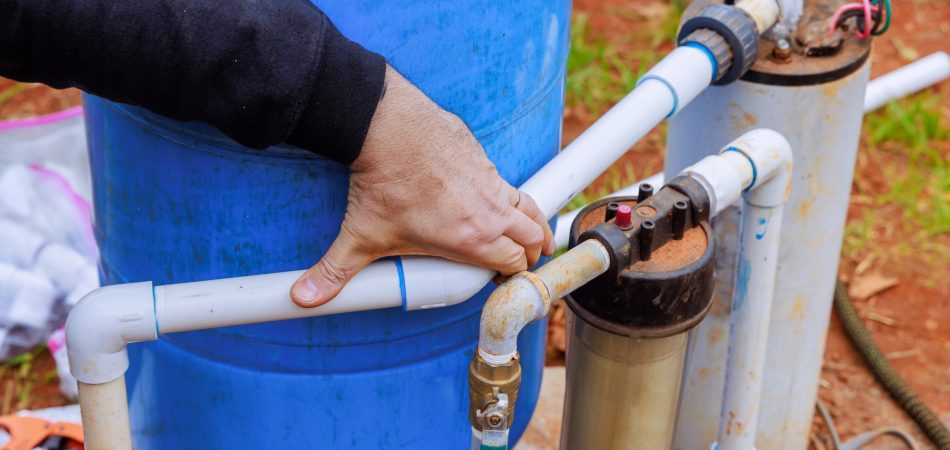
Private well owners in Greater Knoxville are solely responsible for their water quality, requiring annual testing for contaminants like iron, bacteria, nitrates, and hardness minerals common to East Tennessee groundwater. Based on those results, appropriate treatment solutions such as whole-home filtration, water softeners, UV disinfection, or reverse osmosis should be professionally installed to ensure safe drinking water.
Many families across the Greater Knoxville area rely on private wells for their homes’ water supply. From rural Knox County to homes in Clinton, Andersonville, Luttrell, and beyond, well water is a daily reality for thousands of East Tennessee households.
The challenge? Unlike city water supplied by the Knoxville Utilities Board (KUB), private well water is entirely your responsibility. No municipality tests it, treats it, or monitors it on your behalf. That puts the burden of water safety squarely on the homeowner.
At Tennessee Standard Plumbing, we work with well water systems throughout Greater Knoxville and East Tennessee every week. Our licensed plumbing technicians understand the specific groundwater conditions in this region, and we help homeowners understand what is in their water and what to do about it. If you have questions about your water quality testing needs or want to schedule a professional assessment, call us at (865) 509-4144.
Well water quality in East Tennessee is directly shaped by the region’s geology, land use patterns, and climate. Understanding what makes local groundwater unique is the first step toward effective treatment.
Knox County and the surrounding communities sit on a mix of limestone, dolomite, and shale formations. Limestone geology, in particular, contributes to elevated calcium and magnesium carbonate content in groundwater, which is the technical definition of hard water. Homes in areas like Maryville, Lenoir City, and Oak Ridge frequently see water hardness readings well above the 7 grains per gallon (GPG) threshold considered moderately hard.
 The limestone-heavy aquifers across Knox County dissolve naturally into groundwater as it moves through the rock. This mineral pickup process results in total dissolved solids (TDS) levels that vary significantly from one property to the next, even within the same neighborhood.
Iron and manganese are also naturally occurring in Tennessee’s soil and bedrock. These metals leach into shallow aquifers and appear in well water as two distinct forms: ferrous iron (soluble, invisible in water) and ferric iron (oxidized, causing orange or reddish staining on fixtures, sinks, and laundry). Both forms require specific treatment strategies.
Acidic groundwater is another regional factor. Some East Tennessee wells draw from aquifers where the natural pH falls below 6.5. Low-pH water is corrosive to copper and galvanized steel pipes, accelerating pinhole corrosion, pitting corrosion, and blue-green staining at fixtures.
Knox County and its surrounding communities include significant rural land use, including livestock operations and active farmland. Agricultural runoff introduces nitrates and nitrites into shallow groundwater. Nitrate contamination is a serious concern for households with infants, pregnant women, or immunocompromised individuals, as high nitrate levels interfere with the blood’s ability to carry oxygen.
Septic systems are nearly universal on rural well water properties. When septic systems age, develop leaks, or are located too close to the wellhead, they can introduce total coliform bacteria, E. coli, and fecal coliform directly into groundwater. Even newer systems carry this risk after heavy rainfall events, which push surface contaminants deeper into the soil column.
Tennessee has documented elevated concentrations of coal ash residuals in certain soil zones, particularly in areas near historical industrial activity. Coal ash can introduce arsenic, lead, and heavy metals into groundwater. The EPA and TDEC both identify private well testing as the only reliable way to determine whether a specific property is affected.
Testing is the non-negotiable first step before any treatment decision. Water that looks and smells perfectly normal can still contain dangerous levels of bacteria, arsenic, nitrates, or volatile organic compounds (VOCs). There is no substitute for laboratory analysis.
According to the EPA and the Tennessee Department of Environment and Conservation (TDEC), private well owners should follow this testing schedule:
The EPA’s guidance is explicit: since private wells fall outside federal drinking water protections, annual testing is the minimum standard for household safety.
Basic bacterial testing is available through county health departments in Knox County. These panels cover total coliform and E. coli. Comprehensive panels from certified private laboratories include heavy metals, iron, hardness, TDS, pH, and nitrates, and their cost depends on the scope.
DIY test kits sold at hardware stores can give rough readings for pH and hardness but are not accurate enough for safety determinations. Always confirm results through a TDEC-certified laboratory before making treatment decisions.
Our team offers professional water quality testing that provides clear, actionable results for Greater Knoxville homeowners.
Improper sampling is one of the most common sources of inaccurate test results. Follow these steps for a reliable sample:
 Once laboratory results are in hand, most Knox County well owners encounter one or more of these specific water quality problems. Each requires a targeted treatment approach.
Hard water is water with elevated calcium and magnesium carbonate concentrations, measured in grains per gallon (GPG). Readings above 7 GPG are considered moderately hard; readings above 10.5 GPG are classified as very hard. East Tennessee well water routinely falls in the 7 to 20 GPG range.
The practical effects of hard water include limescale accumulation inside water heater tanks, pipes, and appliances. Scale deposits act as a thermal insulation barrier inside water heater storage tanks, forcing the heating element to work harder and reducing efficiency. Over time, mineral precipitation shortens water heater lifespan and contributes to higher energy bills. Scale also clogs aerator screens, showerheads, and fixture supply valves.
Iron above 0.3 milligrams per liter (mg/L) and manganese above 0.05 mg/L cause the orange-brown and black staining that many Knox County homeowners recognize on their sinks, toilets, tubs, and laundry. These contaminants also produce metallic tastes in drinking water.
Because many East Tennessee wells contain both ferrous and ferric iron simultaneously, treatment requires a combined oxidation and filtration strategy. A water softener alone will not remove ferric iron, which must first be filtered out before the ion exchange resin handles soluble ferrous iron.
Bacteria in well water, including total coliform, E. coli, and fecal coliform, pose direct health risks and require immediate treatment. Shallow wells, wells with deteriorated casings, and wells located within 50 feet of a septic system are at the highest risk for microbial contamination.
Our water filtration systems and UV disinfection options address bacterial contamination at the whole-home level, providing continuous protection rather than a one-time fix.
Groundwater with a pH below 6.5 is classified as acidic and is aggressive toward copper pipe, galvanized steel, and brass fixture components. Homeowners often notice the effects before they identify the cause: blue-green staining on porcelain, small pinhole leaks in copper supply lines, and metallic taste in drinking water.
Correcting acidic well water typically requires a neutralizing filter packed with calcite (calcium carbonate) or magnesium oxide media, which raises the pH to a stable range of 7.0 to 7.5 and stops ongoing pipe corrosion.
Nitrate contamination is measured in milligrams per liter (mg/L). The EPA’s maximum contaminant level (MCL) for nitrates in drinking water is 10 mg/L. Readings above this threshold require treatment, particularly for infants under 6 months of age, pregnant women, and immunocompromised household members.
Standard whole-home filtration systems do not remove nitrates. A reverse osmosis (RO) system installed at a point-of-use location (typically under the kitchen sink) is the most reliable method for reducing nitrate concentrations in drinking water.
Matching the right system to confirmed water quality test results is the foundation of effective well water treatment. Installing a softener when the problem is bacterial contamination, or a UV system when the issue is high TDS, wastes money and leaves the real problem unresolved.
| Problem | Recommended Treatment System |
|---|---|
| Hard water (high GPG) | Salt-based ion exchange water softener |
| Iron and manganese staining | Iron filter with oxidation media, or softener with pre-filter |
| Bacterial contamination | UV disinfection system |
| Nitrates above 10 mg/L | Point-of-use reverse osmosis (RO) system |
| Low pH / corrosive water | Calcite or magnesium oxide neutralizing filter |
| Sediment and turbidity | Whole-home sediment pre-filter (5-micron or 20-micron) |
| Multiple contaminants | Multi-stage whole-home filtration package |
A salt-based water softener works through an ion exchange resin process. Calcium and magnesium ions in the incoming water bind to negatively charged resin beads, exchanging for sodium ions. The resin regenerates periodically using a brine regeneration cycle flushed from a salt storage tank. Properly sized softeners for Knox County homes typically require 30,000 to 80,000 grain capacity depending on household size and hardness levels.
Water softeners significantly extend the life of tank water heaters and tankless units by eliminating the scale formation that degrades heating efficiency and tank walls.
A reverse osmosis (RO) system forces water through a semipermeable membrane under pressure, removing dissolved salts, nitrates, arsenic, lead, fluoride, and many other contaminants. Residential RO units installed under the kitchen sink typically produce 50 to 75 gallons of purified water per day. A pre-filtration stage removes sediment and chlorine that would otherwise damage the RO membrane.
Our reverse osmosis systems are a popular choice for Greater Knoxville well water homes because they address the contaminants that whole-home systems leave behind.
A UV disinfection system exposes water to ultraviolet light at a wavelength of 254 nanometers, which disrupts the DNA of bacteria, viruses, and protozoan cysts like Giardia, rendering them unable to reproduce. UV systems are installed at the point of entry and treat all water entering the home without adding chemicals.
UV systems require pre-treatment for turbidity or iron. Suspended particles shield bacteria from UV exposure, reducing disinfection effectiveness. A sediment pre-filter upstream of the UV unit is standard practice.
If your home runs on well water in Knox County or the surrounding East Tennessee area, the most important action you can take is scheduling a professional water quality test. Groundwater conditions vary dramatically across the region, and a test panel is the only way to know what your specific well contains.
From there, the right combination of treatment systems, whether a water softener, a reverse osmosis unit, a UV system, or a multi-stage whole-home water treatment package, can be sized and installed to match your actual results.
Tennessee Standard Plumbing serves Greater Knoxville, Maryville, Oak Ridge, Lenoir City, Clinton, Andersonville, Luttrell, and the surrounding East Tennessee communities. Our team of 34 licensed plumbers (as of October 2026) has the training and experience to assess your well water situation, recommend the right treatment approach, and install it correctly. With a 5.0 rating backed by 2,500+ five-star reviews, we are the area’s most trusted name for residential water treatment. Contact us online or call (865) 352-9003 to get started with a water quality assessment today.
Both the EPA and the Tennessee Department of Environment and Conservation recommend testing private well water at least once per year for total coliform bacteria, E. coli, nitrates, pH, and total dissolved solids. A more comprehensive panel covering iron, manganese, hardness, lead, and heavy metals is recommended every 2 to 3 years. Testing should also be done immediately after flooding, well repairs, or any noticeable change in water taste, color, or odor.
The most frequently detected issues in Knox County and Greater Knoxville well water include elevated hardness (calcium and magnesium), iron and manganese staining, coliform bacteria from nearby septic systems, nitrates from agricultural runoff, and low pH from acidic aquifer formations. Coal ash residuals in certain Tennessee soil zones can also introduce arsenic and heavy metals into shallow wells.
Hard water is not a direct health risk, but elevated calcium and magnesium carbonate levels cause significant household problems over time. Scale formation inside water heaters, pipes, and appliances reduces efficiency and shortens component lifespan. Hard water also leaves white mineral deposits on fixtures, causes soap to lather poorly, and can leave laundry feeling stiff and dingy.
The best system depends on what your water quality test results reveal. A salt-based water softener handles hardness and low levels of iron. An iron filter with oxidation media addresses higher iron and manganese concentrations. UV disinfection is the standard for bacterial contamination. A reverse osmosis system handles nitrates, arsenic, and dissolved contaminants in drinking water. Many East Tennessee homes benefit from a combination of these systems.
Costs vary based on the type and scale of the treatment system needed. A point-of-use reverse osmosis unit under the sink is a smaller installation than a whole-home water softener, and the price of a multi-stage whole-home filtration package rises with system complexity. Tennessee Standard Plumbing provides an upfront flat-rate quote before any work begins.
Some homeowners attempt DIY installation of water softeners or RO units, but professional installation is strongly recommended for whole-home systems. Incorrect sizing, improper bypass plumbing, or failure to account for backflow prevention can result in reduced system performance, voided warranties, or water quality issues. Licensed plumbers ensure the system integrates properly with your home’s existing water supply piping and meets Tennessee plumbing code requirements.
A hydrogen sulfide odor in well water is typically caused by sulfate-reducing bacteria in the aquifer or chemical reactions between sulfate minerals and organic matter in the groundwater. Hydrogen sulfide is detectable by smell at concentrations as low as 0.5 parts per billion (ppb). Treatment options include oxidation filtration, chlorination injection systems, or activated carbon filtration, depending on concentration levels confirmed by testing.
A salt-based ion exchange water softener does not remove or kill bacteria. Softeners address hardness minerals and some forms of iron through the resin exchange process, but they are not designed for pathogen removal. If your water quality test reveals bacterial contamination, a UV disinfection system is required. Many East Tennessee homeowners combine a softener with a UV unit for comprehensive well water treatment.
Signs that well water quality is degrading your plumbing include blue-green staining on fixtures (indicating acidic, corrosive water), orange or brown staining (high iron), white crusty deposits on faucet aerators and showerheads (hardness scale), pinhole leaks in copper supply lines, and reduced water pressure over time. A pipe leak repair call combined with a water quality test can identify whether water chemistry is the root cause.
Tennessee Standard Plumbing serves Greater Knoxville and the surrounding East Tennessee region, including Knox County, Maryville, Oak Ridge, Lenoir City, Clinton, Andersonville, and Luttrell. Our licensed technicians handle water quality testing, softener installation, filtration systems, reverse osmosis units, and UV disinfection systems for residential well water properties. Call (865) 352-9003 or contact our team online to schedule a water quality assessment.