
Same-Day Service Available
00
Hrs
00
Mins
00
Secs
Need a Plumber in Knoxville? We’re Ready to Help!
Same-Day Service Available
Need a Plumber in Knoxville? We’re Ready to Help!




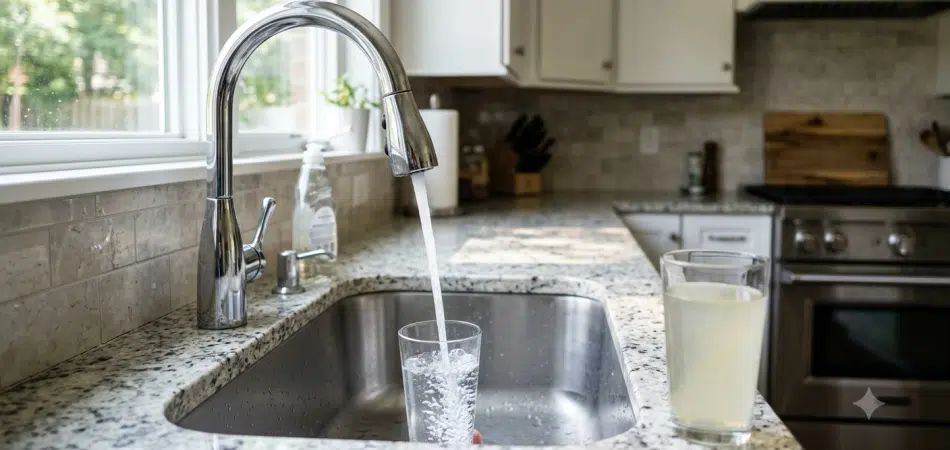
A whole-home water filter that works correctly is invisible. The water tastes clean, the fixtures stay clear of scale, and the system runs without notice. The signs that a filter needs replacement are usually subtle at first: chlorine taste returning at the tap, lower water pressure throughout the home, sediment in the water, or simply hitting the manufacturer’s recommended replacement interval. Catching these signs early prevents the filter from becoming a problem source rather than a solution. Most whole-home carbon filters need media replacement every 5 to 10 years; pre-filter cartridges typically need replacement every 6 to 12 months.
Whole-home water filtration is a long-term investment for any Knoxville home, but the filter itself does not last forever. The media inside the filter loses capacity over time, sediment accumulates, and eventually the filter starts performing worse than no filter at all if it sits past its useful life. The team behind Tennessee Standard Plumbing in Knoxville handles water filtration service and replacement across Knox County, and the signs that a filter is ready for replacement come up on most service calls.
This guide covers the specific signs that a whole-home water filter needs attention, the typical replacement intervals to plan for, and how to keep filtration working as designed across the years.
 Carbon filter media has a finite capacity to reduce chlorine, taste, odor, and certain contaminants. When that capacity is used up, the media stops working even though the physical filter is still in place. Four signs consistently indicate the media has reached the end of its useful life.
A working carbon filter removes the chlorine taste and smell from KUB municipal water. When the chlorine taste returns, the carbon has lost its ability to bind to chlorine molecules. This is the most common and earliest sign that the filter media needs replacement.
Beyond chlorine, an exhausted carbon filter can develop bacterial growth on the surface of the spent media. This can leave water with an off taste or musty smell. Once a filter starts producing worse water than no filter, replacement is overdue.
Pre-filter cartridges that capture sediment have a finite capacity. When sediment starts showing up in the water at faucets or in the toilet bowl after flushing, the pre-filter has either filled up completely or developed channels that let sediment through.
If the filter system includes softening capability, returning hardness signs (white scale on fixtures, soap not lathering, spots on glassware) indicate the softener resin or salt levels need attention.
A clogged or saturated filter can restrict water flow through the system, reducing pressure throughout the home. Pressure reduction from filter issues is often subtle at first but becomes more noticeable as the filter approaches the end of its life.
When pressure drops at multiple fixtures simultaneously (not just one), the cause is usually upstream of the individual fixtures. A clogged whole-home filter is one of the most common upstream causes of system-wide pressure reduction.
Filter-related pressure drops happen gradually as the media saturates rather than suddenly. Homeowners often adapt to the lower pressure without noticing until a visitor comments or until they compare with another home. Tracking water pressure with a gauge once a year catches this drift.
When pressure noticeably improves after a filter replacement, the previous filter was restricting flow. This pattern confirms the filter was overdue for replacement. For broader water pressure considerations and how pressure affects plumbing, high water pressure shortens pipe lifespan covers the related concerns.
Even without any of the above signs, whole-home filter components have manufacturer-recommended replacement intervals. Following the intervals catches the end-of-life point before signs appear. Most whole-home water treatment systems come with documentation specifying when each component needs replacement.
Most whole-home carbon filters need media replacement every 5 to 10 years depending on the size of the filter, the water usage of the household, and the chlorine load in the incoming water. Larger filters and lower water-use households extend the interval; smaller filters and higher water use shorten it.
Sediment pre-filter cartridges typically need replacement every 6 to 12 months. Households with higher sediment in the incoming water (often due to municipal main work or older supply lines in the area) need more frequent replacement.
Salt-based water softener resin typically lasts 10 to 15 years before it loses capacity and needs replacement. Salt itself needs refilling every 6 to 8 weeks for an average household, which is routine maintenance rather than a replacement event.
Point-of-use reverse osmosis membranes typically need replacement every 2 to 5 years. The RO pre-filter and post-filter cartridges need more frequent replacement, usually every 6 to 12 months. These are smaller components and easier to handle on routine maintenance.
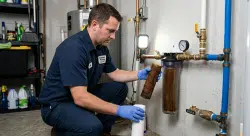 The simplest way to stay ahead of filter replacement is to combine annual visual checks with attention to the signs at the tap. A quick check of the filter housing; the pressure gauge, if installed; and the taste of the water catches most issues before they progress.
Once a year, look at the filter housing for any visible sediment buildup, leaks, or pressure changes on the gauge. The inspection takes a few minutes and identifies whether anything needs more detailed attention. Schedule it the same time as another annual home task (like water heater flushing) to make it routine.
Test the water taste at a few different faucets and compare it with what it tasted like when the filter was new. Also, check static water pressure with a gauge on an outdoor hose bib. Both checks catch the most common signs of filter wear.
Mark the manufacturer-recommended replacement intervals on a calendar or reminder app when the filter is first installed. Catching replacement on schedule prevents the filter from becoming a problem source.
Whole-home water filtration delivers reliable benefits across years when the components are replaced on schedule. The signs of filter end-of-life (chlorine taste returning, lower pressure, sediment in water, and scale returning) are usually catchable early enough to handle as routine maintenance rather than emergency replacement. Tennessee Standard Plumbing handles water filter inspection, component replacement, and full system upgrades across Knoxville and Knox County.
Call (865) 352-9003 or schedule a water filter check to get started.
Common signs include chlorine taste returning at the tap, reduced water pressure throughout the home, visible sediment in water, and fixtures showing scale or mineral buildup that the filter previously addressed. Reaching the manufacturer-recommended replacement interval is also a reason regardless of visible signs.
Most whole-home carbon filters need media replacement every 5 to 10 years depending on filter size, water usage, and chlorine load. Larger filters in lower-use homes extend the interval; smaller filters in high-use homes shorten it.
Sediment pre-filter cartridges typically need replacement every 6 to 12 months. Households with higher sediment in incoming water may need more frequent replacement; lower-sediment areas can extend slightly.
Yes, if the previous filter was clogged or saturated. A noticeable pressure improvement after replacement is also a sign that the previous filter was overdue. Tracking pressure with a gauge identifies this drift before it becomes obvious.
An exhausted filter stops removing contaminants and can begin contributing taste or odor problems of its own as bacteria grows on the spent media. Pressure can drop and the filter may need to be bypassed entirely until replacement, which leaves the home with no filtration at all.
Pre-filter cartridge replacement is often homeowner-friendly with the right tools and the system depressurized. Whole-system media replacement, softener resin replacement, and other components typically need a professional. The system documentation usually specifies what is homeowner-serviceable.
Cartridge replacement is typically a quick task once the system is depressurized. Full media replacement or resin replacement is longer. The exact time depends on the system type and what is being replaced.