
Same-Day Service Available
00
Hrs
00
Mins
00
Secs
Need a Plumber in Knoxville? We’re Ready to Help!
Same-Day Service Available
Need a Plumber in Knoxville? We’re Ready to Help!




Last Updated: October 9, 2026
Key Takeaways
Tree roots can keep growing through fall after the leaves drop, because root growth continues until the soil cools below about 40 degrees. Roots follow moisture and nutrients, and when a sewer line has a crack or loose joint, they can enter and slowly widen it. That is why a Clinton sewer line can clog in autumn even though the trees above look finished for the year. A root clog generally means an opening already existed, so clearing the line and repairing the opening are two separate decisions.
The leaves around Clinton start coming down in October. Yards that were deep shade in August turn bright and open, the gutters fill, and the trees look like they have closed up shop for the year.
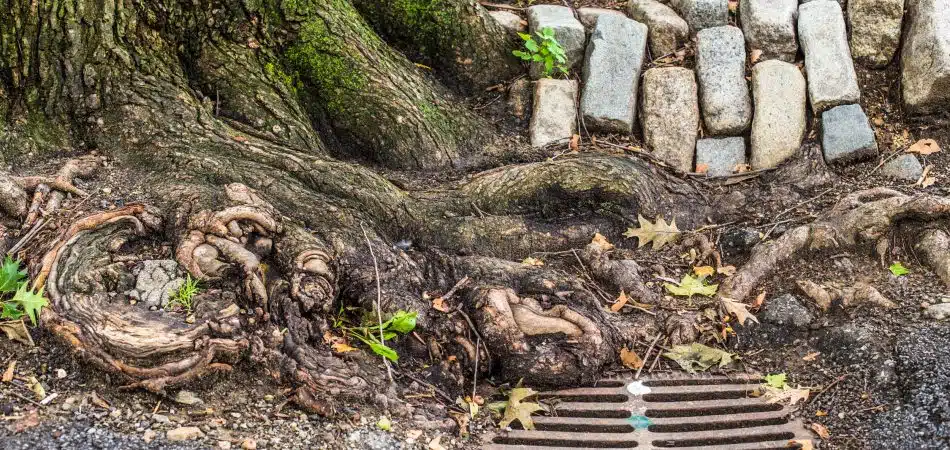
Underneath the lawn, the season runs on a different clock. Soil holds summer warmth longer than the air does, and tree roots keep working in it well after the branches go bare. They are still reaching for water and nutrients, including the moisture that seeps from a cracked joint in an old sewer line.
On This Page
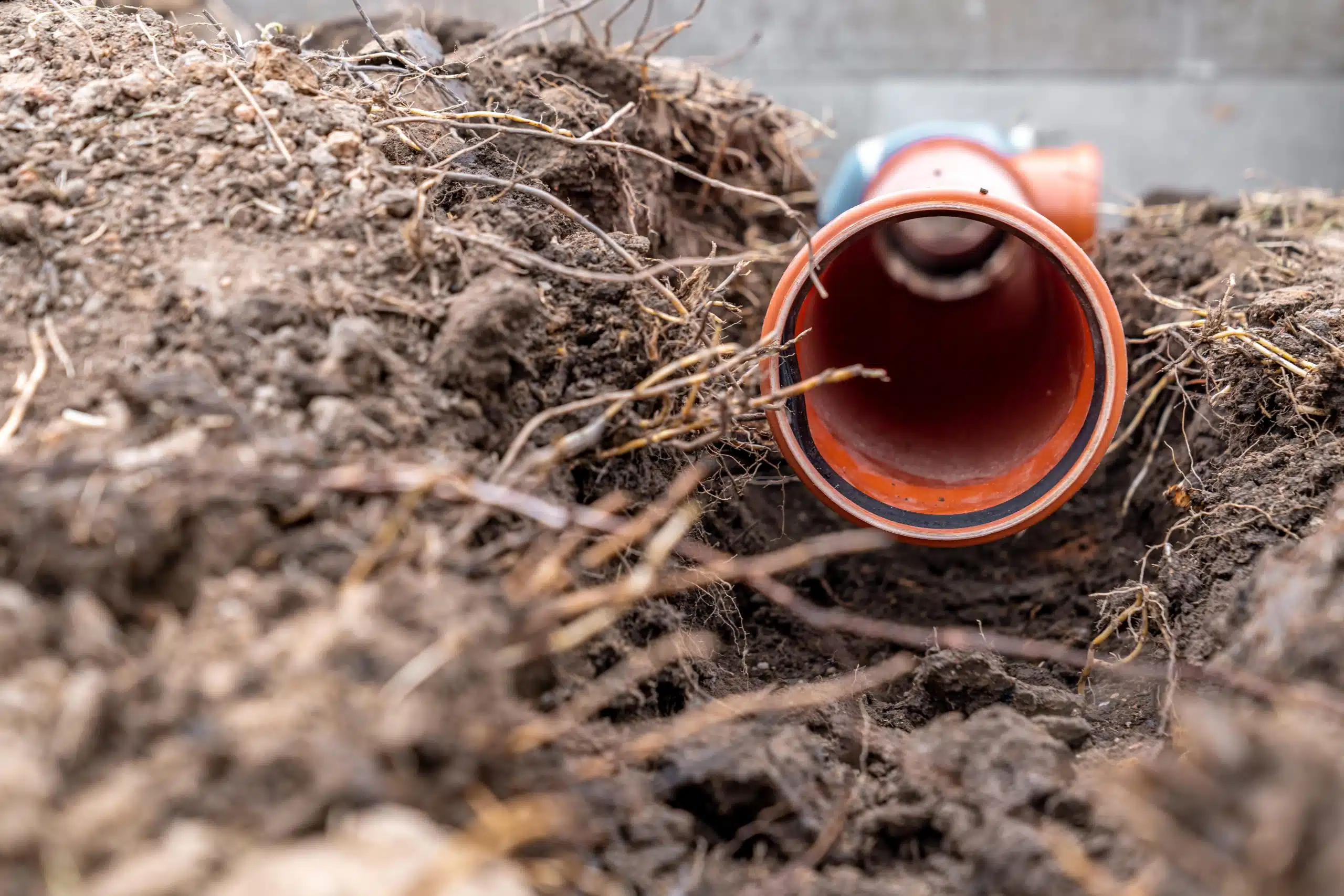
Tree roots keep growing into late fall. University of New Hampshire Extension explains that once air temperature drops below soil temperature, shoot growth stops while roots continue to develop until the soil dips below 40 degrees. Nebraska Extension says the same: root growth continues late in fall until soil temperatures drop below 40 degrees.
Leaf color and leaf drop mark the end of the growing season above ground. Root growth follows soil temperature instead, and soil lags behind the air. That gap is the reason extension services recommend fall as a planting season, and it is also why roots near a sewer line do not simply stop when the leaves do.
Using 1991 to 2020 normals, the median first fall freeze at the Norris station is October 25, and at the Oak Ridge airport station it is November 4. Those are air temperature dates for two stations near Clinton. Soil generally cools more slowly than air, so root activity near a sewer line can continue past the first frosty morning.
NC State Extension describes roots as exploring the soil in search of nutrients and moisture. A sewer line carries both. Where a joint has separated or a pipe has cracked, the soil around that spot can stay moist, and a searching root can find it. Background on the repair side of that problem is on the residential sewer line repair page.
The same NC State Extension publication notes that tree roots can grow two to three times as wide as the height of the tree. A tree at the edge of a Clinton yard can have roots under the middle of it. Distance from the trunk is a weaker guide to risk than many homeowners assume.
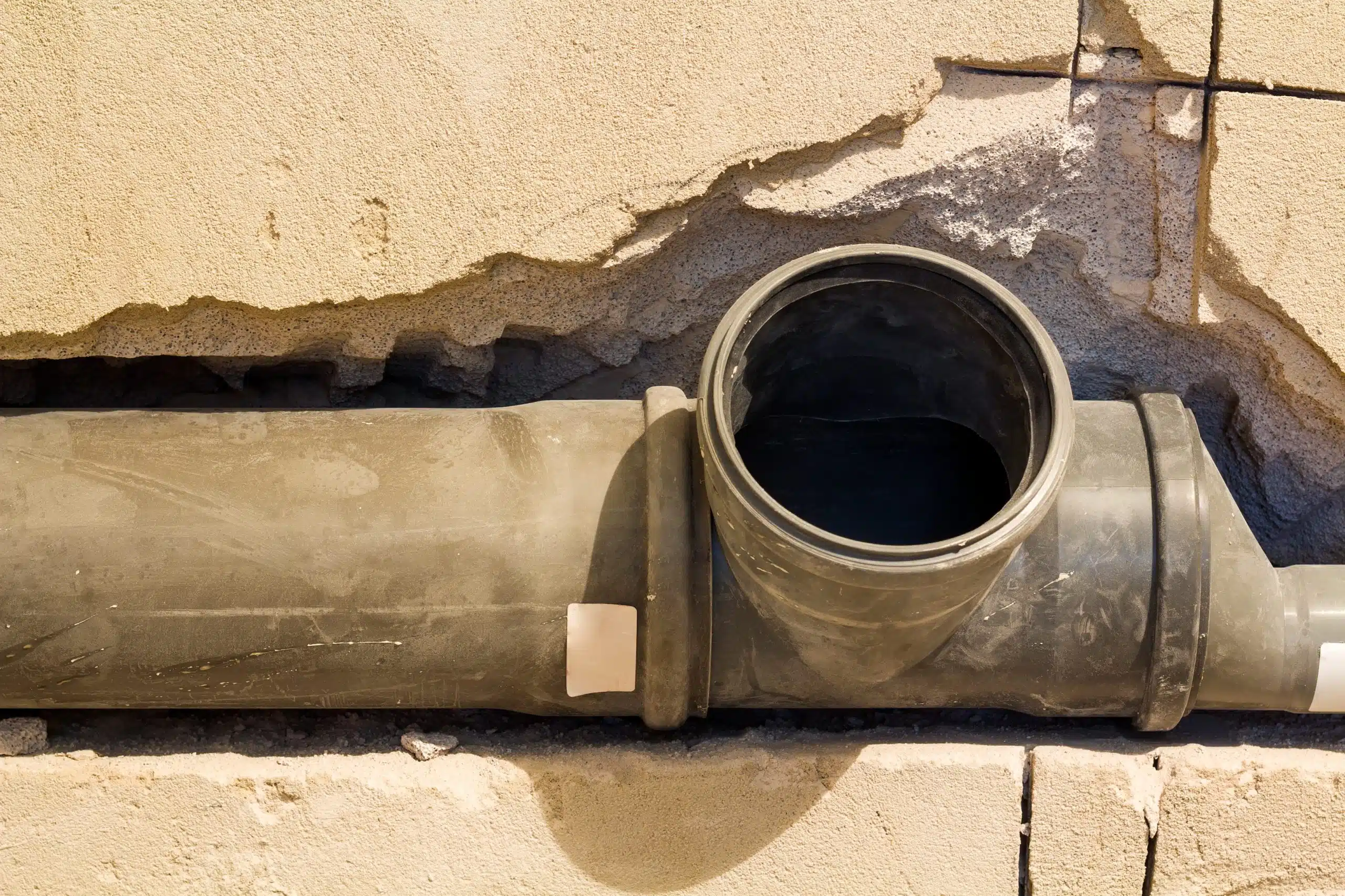
According to NC State Extension, roots cannot create cracks in a sewer pipe. They exploit cracks and gaps that already exist. A root clog that shows up in October generally means an opening was there before the roots arrived, and the roots have been growing inside it, sometimes for a long while.
Extension guidance is direct on this point: roots do not wrap around a pipe and squeeze it open. A root intrusion starts at a weak point such as a cracked section, a separated joint or a poorly sealed connection. The tree tends to get the blame, though the opening is what made the clog possible.
NC State Extension explains that once a small root gets into a crack and finds moisture and nutrients, it increases in diameter and widens that crack. Roots growing inside the pipe can catch paper and debris as it passes. Flow narrows gradually, which is why the first sign is often a slow drain rather than a sudden stop.
Clinton Utilities Board sewer rules call for building sewer joints and connections to be "gastight and watertight." Older lines with many joints, or connections that shifted over time, give roots more chances. A homeowner comparing options can talk with a plumbing contractor in East Tennessee about the condition of the line before deciding anything.
A root that entered a joint in spring can spend the whole growing season getting bigger. By fall, the mass inside the pipe may be large enough to hold back heavier flow. The timing of the clog says more about how long the root has been growing than about anything that happened that week.
Fall yard work is a practical time to look for root trouble. Raking and cleanup put homeowners near the path of the sewer line, and early signs inside the house tend to be subtle. Slow drains in more than one fixture, gurgling and backups at the lowest drain are the patterns most worth noting.
A single slow sink usually has a local cause. When tubs, toilets and sinks all drain slowly, the restriction is more likely in the main sewer line that serves them all. Roots are one possible cause among several, and a camera look is the usual way to tell them apart.
Gurgling from a toilet when a tub drains, or water appearing at a basement floor drain, can point to a partial blockage downstream. The lowest fixture in the house is often where a main line restriction shows first. For a longer list of warning signs and prevention steps, this guide to preventing tree root sewer damage in East Tennessee covers them.
Knowing roughly where the sewer line runs from the house to the street helps put nearby trees in context. NC State Extension notes that the main reason to avoid planting directly over a sewer line is so the tree does not have to come down when the line needs maintenance. Fall, with the leaves off, is an easy time to see what is growing where.
Some homes near Clinton are on septic rather than public sewer. For homes on septic, the EPA advises planting trees an appropriate distance from the drainfield to keep roots out of the system, and notes that a septic professional can advise on that distance. Tree and shrub roots can damage drainfield pipes, which is a separate problem from a sewer lateral.
| What shows up in fall | What it can point to | Reasonable next step |
|---|---|---|
| One slow sink or tub | A local clog in that fixture’s branch | Drain cleaning |
| Several fixtures slow at once | A main line restriction, roots among the possibilities | Camera look at the main line |
| Gurgling when other fixtures drain | A partial blockage downstream | Have the main line evaluated |
| Backup at the lowest drain | A main line or lateral blockage | Limit water use and call for service |
| A root clog that returns after clearing | An opening in the pipe that is still there | Discuss repairing the damaged section |
| Soggy ground over a septic drainfield | A septic system problem | Contact a septic professional |
Root problems in a sewer line generally involve three separate steps: clearing the roots so the line flows, seeing the inside of the pipe to find the opening, and deciding whether to repair that section. In Clinton, Clinton Utilities Board provides public sewer service, and the City of Clinton handles building permits.
NC State Extension mentions mechanical cleaning with a metal snake or with pressurized water as ways to clear roots from a sewer line. In the industry, hydro jetting is the common name for the pressurized water approach. Clearing restores flow, while the crack or joint the roots came through generally remains.
A camera look after clearing can show where the roots entered and what the pipe is made of. From there, the choice is between clearing on a schedule and repairing or replacing the damaged section. Which makes sense depends on the pipe, the location of the defect and the property, so it varies from one Clinton home to the next.
Foaming root control products are sold for sewer lines, and NC State Extension lists some of the ingredients they contain. These products carry labels that govern how they may be used. A product may slow regrowth inside the pipe, and it does not close the opening the roots used.
Clinton Utilities Board rules call for a written permit from CUB before anyone opens into or alters a public sewer, and CUB customer service is at (865) 457-9232. Who maintains which section of a line should be confirmed with CUB for the specific address. Building permit questions inside city limits go to City of Clinton Codes Enforcement, while addresses outside the city generally go to Anderson County’s building and codes office.
Requirements vary by address, and a home a few miles outside Clinton can fall under a different utility or a septic system. Local service details for the area are on the Clinton plumbing page. Confirming the serving utility early saves time once work is scheduled.
Tennessee Standard Plumbing offers sewer line repair, sewer line replacement, sewer camera inspection, drain cleaning and hydro jetting for homes in Clinton, Anderson County and the Knoxville area. A fifth-generation, family-owned Knoxville company serving the area since 2020, Tennessee Standard employs 34 licensed plumbers as of October 2026, each holding an individual state plumbing license, and is backed by thousands of 5-star reviews.
Households in and around Clinton who notice slow drains this fall can reach our team at (865) 352-9003. A phone call is a good way to describe what the drains are doing before anyone visits. Anyone who prefers to plan online can schedule a visit instead. We serve Clinton, Norris, Oak Ridge, Powell, Knoxville, and communities across Anderson County, Knox County and East Tennessee.
Yes. University extension sources report that root growth continues late into fall, until soil temperatures drop below about 40 degrees. Shoot and leaf growth stop earlier, once air temperature falls below soil temperature.
No source located for this article shows that root clogs peak in October. What extension guidance does show is that roots keep growing into fall, so a line with an existing opening can still develop a clog after the leaves drop. The timing mostly reflects how long the root has been growing.
According to NC State Extension, roots cannot create cracks in a sewer pipe and can only exploit existing cracks or gaps. Once inside, a root can grow larger and widen the opening. A root clog generally means the pipe already had a weak point.
Using 1991 to 2020 normals, the median first fall freeze is October 25 at the Norris station and November 4 at the Oak Ridge airport station. Those are air temperature dates, and soil generally cools more slowly than air.
Clearing restores flow, while the crack or joint the roots used generally remains. Roots can grow back through the same opening. Repairing or replacing the damaged section is the step that addresses the opening itself.
Clinton Utilities Board provides electric, water and sewer service in its area. Its rules call for a written permit from CUB before anyone opens into or alters a public sewer. Who maintains which section of a line should be confirmed with CUB for the specific address.
Addresses inside Clinton city limits go to the City of Clinton’s codes enforcement office. Addresses outside the city generally go to Anderson County’s building and codes office. Requirements vary by address and project, so confirming jurisdiction first is worthwhile.
NC State Extension notes that tree roots can grow two to three times as wide as the height of the tree. That means a tree at the edge of a yard can have roots near a sewer line in the middle of it.
They may slow regrowth inside a pipe when used according to the label. They do not seal the crack or joint the roots came through. A line that keeps clogging usually