
Is Your Water Heater Leaking? Here’s What You Need to Know
The last thing any homeowner wants is to walk into their utility room and see a puddle of water around their water heater. If this happens to you, ... Read More

Same-Day Service Available
Need a Plumber in Knoxville? We’re Ready to Help!




A whole-home water treatment system removes harmful chemicals like chlorine and pipe-damaging minerals like calcium and magnesium from your water supply before they enter any faucet in your home.
Most of us take clean water for granted. But you may be surprised to know that your water is not as clean as you think it is! Without having a personal level of quality control, like in water from private wells, there’s no telling what’s really in your water unless you regularly test it. Water from any source can potentially have unhealthy and unwanted additives – especially city water. If the thought of drinking harmful chemicals and sediments is alarming to you, don’t worry! In-home water treatment may be exactly what you’re looking for.
Did you know that much of the water pumped into your home is actually recycled sewage? It’s true! Because clean water is such a scarce resource, cities must get creative to maintain a continuous water supply. All the water from your house (even your bathroom!) gets drained into the sewer, filtered down, and pumped full of chemicals until it is “clean.” The chemicals they use, primarily chlorine, bond to the water molecules and act as a coating on every drop.
Take a guess: Which has more chlorine? Water from the city, or the water from the local swimming pool? Almost 99% of people would guess the swimming pool, but they’d be wrong! The amount of chlorine in your city water varies depending on your area. But the CDC says that up to 5 PPM (parts per million) of chlorine is safe in your drinking water. The average swimming pool contains 1 to 3 PPM of chlorine! When tested side by side, the chlorine levels of city water and your city pool are nearly identical in most places.
Shocking, we know. But the bad news doesn’t end there. The minerals infused into the water are also bad for your health and your water pipes. Some sediments are added for their purifying qualities, and there are sediments that are picked up along the way when the water is transported. Minerals like Calcium, Magnesium, and Sodium are all collected in microscopic amounts, but this creates what you may know as “hard water.” Hard water is what leaves your skin and hair feeling dry after a hot shower. But what about your pipes? Well, these minerals are basically microscopic rocks that are carried into your pipes by the city water, and they stick themselves onto your pipes, building up over time until they create drain blocks and pinholes. Untreated hard water cuts the lifespan of your pipes in half and usually starts by decreasing water pressure.
Whole home water treatment removes these harmful chemicals and sediments from the water before they enter your house. Instead of only having purified water in one or two spots (Such as in a filtered jug, fridge filter, or Berkey), you’ll know that clean water is coming out of every faucet in your home.
Our two-tank water treatment solution handles both the chemical and sediment purging from your water line, unlike other water treatment solutions that focus on one or the other. The first tank is designed to remove harmful chemicals and chlorine in your water to protect the body, skin, and hair. The second tank softens the water by removing the sediments and minerals that damage your pipes and appliances.
If you give us a call and mention this article, we will offer you a water treatment estimate absolutely free! You may not be able to see what is going on inside your pipes, but hard water is adding to the damage every single day. In Tennessee Standard Plumbing water treatment system installed by certified professionals, you’ll have peace of mind knowing that your family and your home are safe from harmful chemicals and sediments.
A whole-home water treatment system is designed to remove chemicals such as chlorine, as well as dissolved minerals like calcium, magnesium, and sodium that cause hard water. It filters the water supply at the point of entry, meaning treated water flows from every faucet and fixture in the home. This differs from point-of-use filters, which only treat water at a single outlet.
The CDC permits up to 5 parts per million (PPM) of chlorine in municipal drinking water to ensure it is safe from harmful bacteria. For context, the average swimming pool contains 1 to 3 PPM of chlorine, meaning tap water chlorine levels can be comparable to or exceed those found in a pool. Chlorine levels vary by municipality and are influenced by how far water travels through the distribution system.
Hard water is water that contains elevated concentrations of dissolved minerals, primarily calcium, magnesium, and sodium, picked up as water moves through rock and soil or is transported through pipes. These minerals can cause dry skin and hair, leave scale deposits on fixtures, and accumulate inside pipes over time, leading to reduced water pressure, blockages, and pinhole leaks.
Municipal water systems do recycle and treat wastewater as part of the broader water cycle, and in many cities, treated wastewater is reintroduced into reservoirs or aquifers that eventually supply drinking water. This water undergoes extensive filtration and chemical treatment, including chlorination, before it is classified as safe for consumption. This process is a standard practice globally due to the finite availability of freshwater resources.
A point-of-use filter, such as a pitcher filter, refrigerator filter, or countertop unit, treats water only at the specific outlet where it is installed. A whole-home (or point-of-entry) system connects to the main water supply line and treats all water entering the home, including water used for bathing, laundry, and cooking. The whole-home approach addresses pipe mineral buildup and chemical exposure throughout the entire plumbing system, not just at drinking points.



The last thing any homeowner wants is to walk into their utility room and see a puddle of water around their water heater. If this happens to you, ... Read More

According to the U.S. Environmental Protection Agency (EPA), at just one drip per second, a single plumbing leak could waste up to 3,000 gallons of... Read More
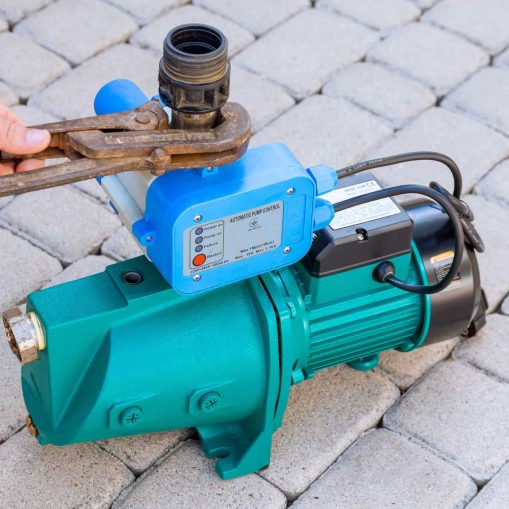
Installing a water booster pump is a reliable way to improve low water pressure at home. It involves choosing the right pump, preparing the area, m... Read More