
Same-Day Service Available
00
Hrs
00
Mins
00
Secs
Need a Plumber in Knoxville? We’re Ready to Help!
Same-Day Service Available
Need a Plumber in Knoxville? We’re Ready to Help!




Key Takeaways
Backflow happens when contaminated water flows backward through a plumbing system into the clean water supply. Annual backflow testing identifies whether a backflow preventer is working as designed and meets the local water utility requirements that most Knoxville commercial properties and many residential properties are subject to. Skipping testing risks contaminating the drinking water supply for everyone connected downstream, and most utilities can shut off service to properties that fall out of compliance. Backflow testing takes about 30 to 60 minutes and is required to be performed by a certified backflow tester.
Backflow testing is one of those plumbing requirements that quietly protects every Knoxville home and business connected to the municipal water supply. When a property has a backflow preventer (a device that stops contaminated water from flowing backward into the clean supply), that device needs annual testing to confirm it is still doing its job. The team at Tennessee Standard Plumbing in Knoxville handles backflow testing and related plumbing across Knox County, and the importance of staying current on testing comes up on nearly every commercial service call.
This guide covers what backflow is, why testing matters, who needs it, and what happens when a property falls out of compliance.

Backflow is the unwanted reversal of water flow in a plumbing system. Under normal conditions, water moves from the municipal supply into the property and out through drains. Backflow occurs when pressure changes cause water to flow in reverse, which can pull contaminated water from irrigation systems, boilers, fire sprinklers, or chemical lines back into the drinking water supply.
Two scenarios cause backflow. Back-siphonage happens when supply pressure drops (often during a water main break or heavy hydrant use), creating suction that pulls water backward. Back-pressure happens when a downstream system (like a boiler or pressurized irrigation) builds enough pressure to overcome the supply pressure and push water back into the main.
Without working backflow preventers, water from lawn sprinklers (with fertilizer and pesticide residue), boilers (with treatment chemicals), commercial dishwashers, fire suppression systems, and even garden hoses left submerged in pools or buckets can siphon back into the supply. The contamination would affect every property downstream on the same line.
Knoxville Utilities Board, like every public water utility, has cross-connection control regulations that require backflow preventers on properties where contamination risk exists. The requirement applies to nearly all commercial properties, irrigation systems, fire suppression systems, and certain residential setups. Annual testing keeps the property in compliance and the public water supply protected.
Backflow testing is required for any property with a backflow preventer installed. Most commercial properties, properties with irrigation systems, properties with fire sprinkler systems, and properties with certain auxiliary water sources fall under the testing requirement. Residential homeowners without irrigation or fire sprinklers usually do not need annual testing, but the rules vary by utility and property type.
Restaurants, medical offices, manufacturing facilities, car washes, and most other commercial properties have backflow preventers required by code due to the contamination risk from their plumbing systems. Annual testing is mandatory for these properties to remain in compliance with KUB cross-connection control.
Knoxville homes with in-ground irrigation systems are required to have a backflow preventer on the irrigation line, and that preventer needs annual testing. The same applies to homes with fire sprinkler systems. Single-family homes without these systems typically do not need backflow testing.
Any property that has a well in addition to municipal water, a rainwater collection system tied into the plumbing, or any other secondary water source needs backflow prevention between the auxiliary source and the municipal supply. Testing keeps the separation working as designed.
Properties that miss their annual backflow testing face real consequences. The utility can issue compliance notices, suspend water service, and in some cases require expensive remediation if contamination is suspected. The risk extends beyond the individual property because backflow contamination affects everyone connected to the same line.
KUB and most utilities send compliance reminders before testing deadlines. Missing the deadline typically triggers a formal notice, followed by potential service suspension if the testing remains incomplete. Commercial properties facing service suspension can lose days of operation while bringing the system back into compliance.
If a contamination event is traced back to a property with an untested or failed backflow preventer, the property owner can face serious liability for any health consequences and cleanup costs. The annual test is far less expensive than the legal and remediation exposure that follows a documented backflow incident.
Backflow contamination has caused real harm in cities across the country. Documented cases include pesticide poisoning from irrigation backflow, chemical contamination from commercial systems, and bacterial contamination from various sources. Annual testing is the front line that prevents these events.
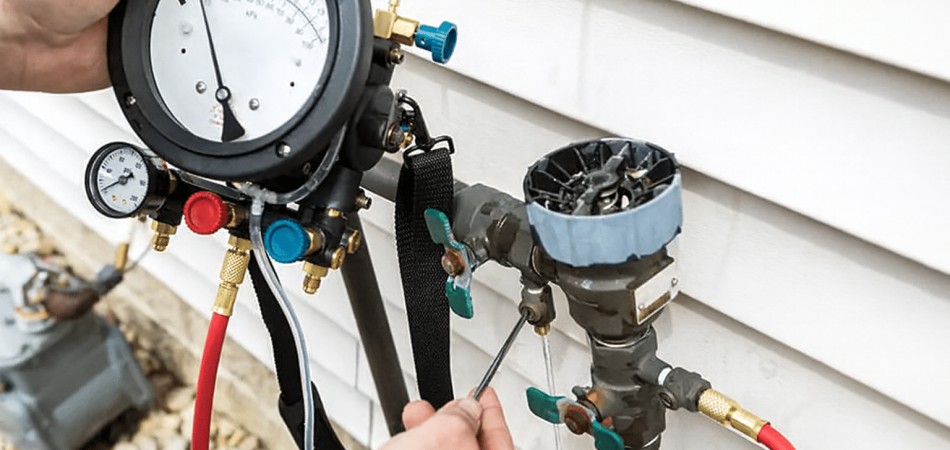
Backflow testing must be performed by a certified backflow tester using calibrated test equipment. The test confirms whether the device opens, closes, and seals as designed under specific pressure conditions. The whole test typically takes 30 to 60 minutes per device, with results submitted to the local utility as proof of compliance.
Tennessee Standard Plumbing performs backflow testing across Knoxville and Knox County, along with backflow preventer installation, repair, and replacement when test results indicate the device is no longer functioning correctly. For ongoing backflow preventer health, see the team’s detailed breakdown of backflow preventer leak repair, causes, and prevention, which covers the failure patterns that show up between annual tests and what they mean for compliance.
| Property Type | Testing Required? | Typical Frequency |
|---|---|---|
| Single-family home (no irrigation, no fire sprinklers) | Usually not | N/A |
| Home with in-ground irrigation | Yes | Annual |
| Home with fire sprinkler system | Yes | Annual |
| Home with well + municipal water | Yes | Annual |
| Restaurant or food service | Yes | Annual |
| Medical or dental office | Yes | Annual |
| Manufacturing or industrial | Yes | Annual (sometimes more) |
| Multi-family residential (5+ units) | Yes | Annual |
Backflow testing protects every Knoxville property connected to the municipal water supply. For property owners with backflow preventers installed, scheduling the annual test on time is the simplest way to stay in compliance, avoid service suspension, and keep the drinking water supply protected from contamination. Tennessee Standard Plumbing handles backflow testing across Knoxville and Knox County for both commercial and qualifying residential properties.
Call (865) 352-9003 or schedule a backflow test to get started.
Backflow is the unwanted reversal of water flow in a plumbing system that can pull contaminated water (from irrigation, boilers, chemicals, or other sources) back into the clean drinking water supply. The contamination affects every property downstream on the same line, which is why utilities require backflow prevention.
Most backflow preventers require annual testing in Knoxville. Some high-risk commercial properties may require more frequent testing depending on the specific system and water utility requirements.
Most single-family homes without irrigation or fire sprinkler systems do not need backflow testing. Homes with in-ground irrigation, fire sprinklers, wells alongside municipal water, or certain other auxiliary systems do need annual testing.
Backflow testing must be performed by a certified backflow tester using calibrated equipment. Test results are submitted to the local water utility (KUB in Knoxville) as proof of compliance.
Most backflow tests take 30 to 60 minutes per device. The test involves isolating the device, taking pressure readings, and confirming the valve assemblies open, close, and seal as designed.
A failed test means the device is no longer protecting the water supply as designed. The device needs repair or replacement before the property is back in compliance. Most failures are repairable; severe damage may require a full replacement of the preventer.
Yes, KUB can suspend water service to properties that fall out of compliance with backflow testing requirements. The utility typically sends compliance reminders before deadlines, and service suspension follows if the testing remains incomplete after the grace period.


