
Same-Day Service Available
00
Hrs
00
Mins
00
Secs
Need a Plumber in Knoxville? We’re Ready to Help!
Same-Day Service Available
Need a Plumber in Knoxville? We’re Ready to Help!




Last Updated: October 20, 2026
Key Takeaways
Leaf litter clogs yard drains by matting over grates and washing into the pipes behind them, especially during the first heavy rains after leaves fall. In Fountain City, the first step is working out which drain is involved: a private yard drain, a downspout line, or a public storm inlet maintained by the City of Knoxville. Storm drains are separate from the sanitary sewer. City leaf collection runs November through February, and leaves are meant to stay out of storm drains.
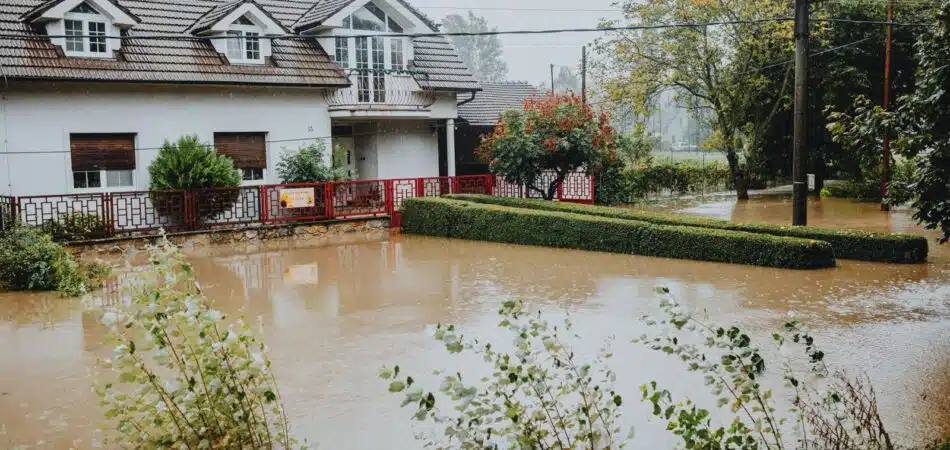
Rain all night, and by morning the low corner of the backyard is a shallow brown pond. Somewhere under it is the grate that is supposed to drain that corner, now wearing a flat, soaked blanket of leaves. Out front, water is pooling at the curb too. Sorting out whose drain is whose comes first, because some of these puddles are a job for East Tennessee plumbing services.
Others are not. When water in the yard lines up with a slow floor drain or a backed-up laundry line inside the house, the house’s own drain lines are part of the picture, and residential drain cleaning is a separate question from the yard. The rest of this article is about the yard itself.
On This Page
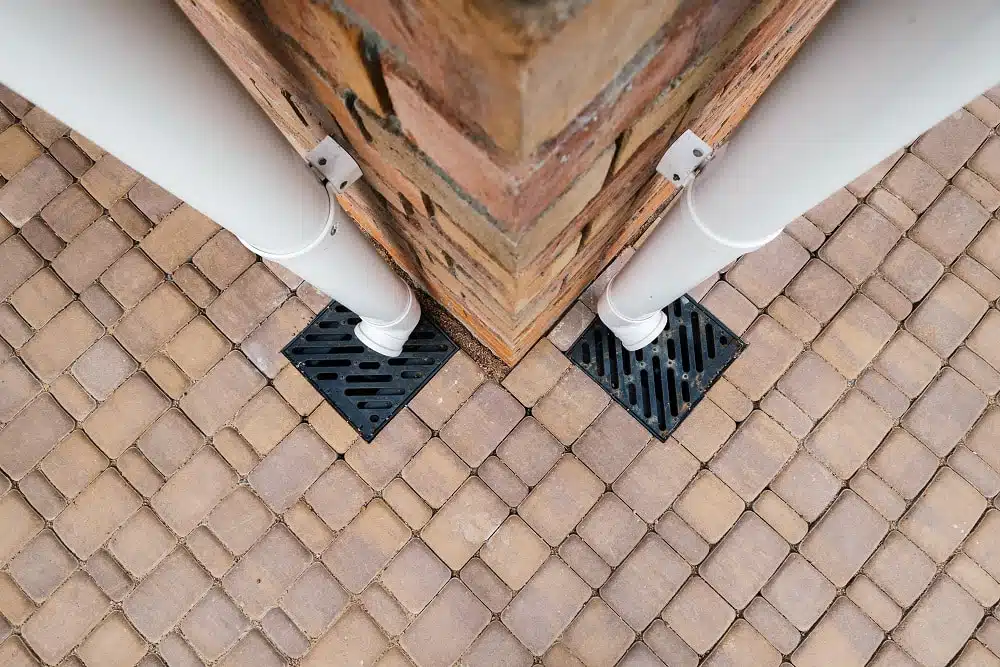
Three different drains can sit within a few steps of each other on a Fountain City lot: a private yard drain that collects surface water, a buried downspout line that carries roof water away from the house, and a public storm inlet at the curb. Each one is built, owned and cleared differently.
A yard drain, sometimes called an area drain or catch basin, is a grate set into a low spot in the lawn or patio. It collects surface water and carries it through a buried pipe to a lower point on the property or toward the street. It sits on private property and belongs to the property owner.
Many homes send gutter water into a buried pipe at the base of each downspout. That downspout line often ends at an outlet further down the yard or at the curb. Because it carries whatever the gutters send down, a gutter full of leaves can feed debris straight into it.
The grated opening at the street curb is a storm inlet, part of the City of Knoxville storm drain system. The City’s Public Service Department services that system, including drain pipes, grates and the ditches that feed them. It is public infrastructure, even when it sits right in front of a house.
The drain that is clogged decides who clears it and how. A private yard drain or downspout line is the owner’s to maintain, and a public inlet is the City’s. Step-by-step clearing for a private outdoor drain is covered in this guide to unclogging an outdoor drain system.
Leaves that fall on a grate get wet, flatten and overlap into a mat that water struggles to pass through. Pieces that slip through the grate can collect inside the pipe with soil and grit. The EPA advises against raking leaves into storm drains for exactly this reason, noting that leaves can cause clogs and debris that lead to flooding.
Dry leaves blow around. Wet leaves stick together and lie flat, and a grate covered by a layer of them can hold back water that would otherwise drain in minutes. The pond in the yard can form even though the pipe below is clear.
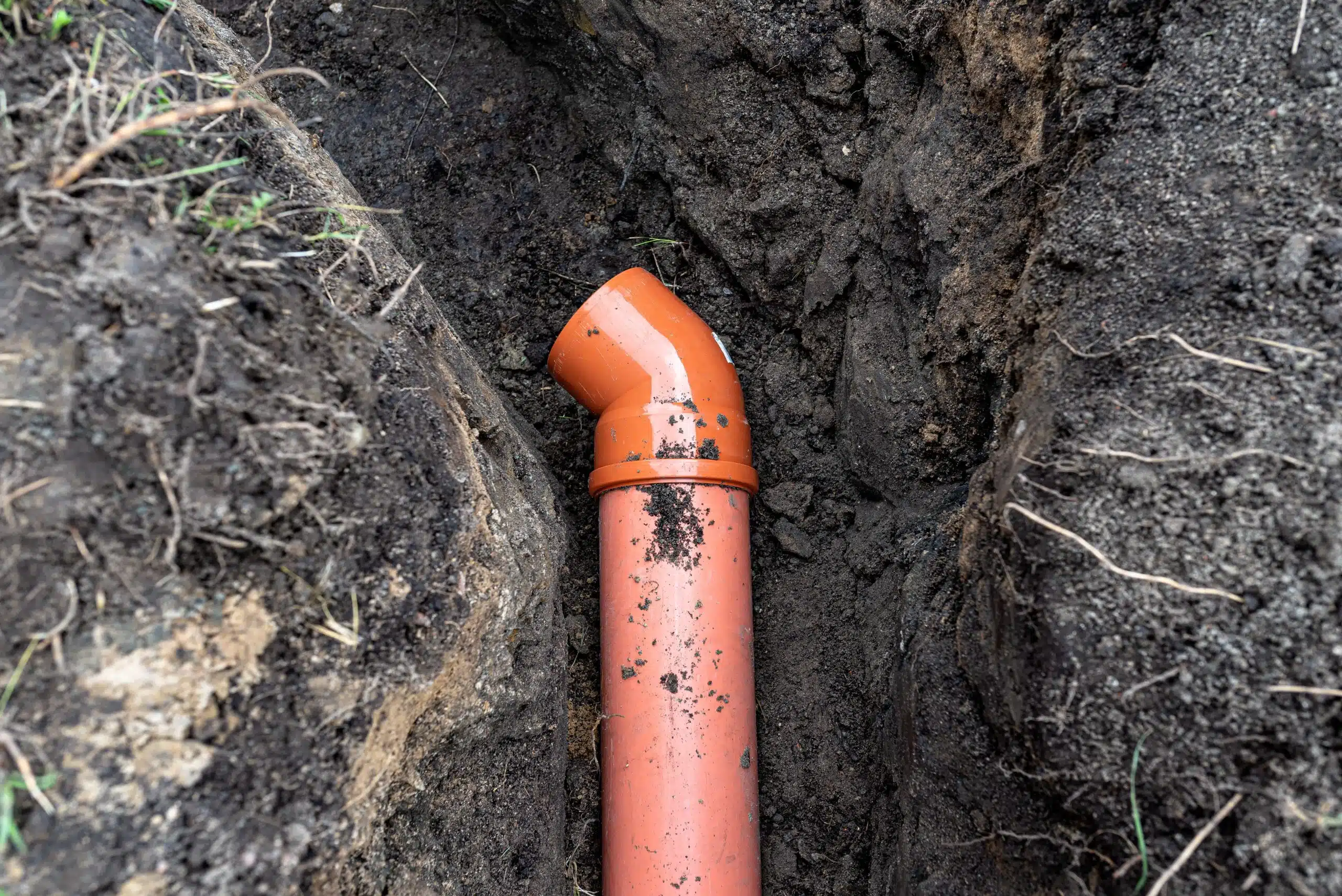
Smaller pieces of leaf, along with soil and grit washed off the lawn, can slip between the grate bars and settle inside the pipe. Over a season or two, that material can narrow a buried drain line. Clearing the grate restores flow only when the pipe behind it is still open.
A downspout line is only as clean as the gutter above it. When gutters fill with leaves, the next heavy rain can wash that debris down into the buried line, where it has nowhere to go. Clearing gutters is often the first step in keeping a downspout line flowing.
A yard drain can sit under leaves for weeks without anyone noticing, because nothing asks it to work. The first heavy rain after the leaves come down is often when the problem shows. That timing makes early fall cleanup of grates and gutters a practical step for many Fountain City homeowners.
| Drain | Where it is | Who generally maintains it | Reasonable first step when leaves clog it |
|---|---|---|---|
| Private yard drain | Low spot in lawn or patio | Property owner | Clear the grate, then check whether the pipe flows |
| Downspout line | Base of each downspout | Property owner | Clean the gutters first, then the line |
| Public storm inlet | Curb or roadside | City of Knoxville Public Service | Report a clogged drain to 3-1-1 |
| Creek on private property | Running through a lot | Owner clears overgrowth, per the City | Contact 3-1-1 with questions |
| House drain lines | Inside and under the home | Property owner | A plumber, if indoor drains are also slow |
Inside Knoxville city limits, the City’s Public Service Department services the public storm drain system, and its Stormwater Engineering Division takes drainage requests through 311. Drainage problems on private property are often the owner’s responsibility. Storm drains and the sanitary sewer are separate systems, so yard water and sewage take different paths.
The City of Knoxville states that its Public Service Department routinely inspects and cleans storm drains and responds when heavy rain and debris clog them. A clogged public ditch or drain can be reported by calling 3-1-1 or 865-215-4311. When a problem traces to a city-owned drainage system, the City’s Stormwater Engineering Division describes writing a work order to correct it.
The same Stormwater Engineering Division notes that in many instances the drainage problem occurs on private property, for which the City does not incur responsibility. The City also states that owners with creeks running through their property are responsible for clearing overgrowth. A private yard drain or downspout line falls on the owner’s side of that line.
A City of Knoxville stormwater brochure describes storm drains as a completely different system than the sanitary sewers. Storm drains carry untreated runoff to local creeks, while sanitary sewers carry wastewater from homes to a treatment plant. That is why leaves and yard waste in a storm drain end up in a creek rather than at a treatment plant.
Because the systems are separate, connecting a yard drain or downspout to a sewer line creates a different kind of problem. KUB describes looking for prohibited connections such as roof downspouts that let rainwater into a sewer lateral, and the City asks residents to report illicit connections to the storm system through 311. Any change to how a drain connects is worth confirming first, and permit questions for addresses inside city limits go to City of Knoxville Plans Review & Inspections.
The City of Knoxville collects loose leaves from November through February. Residents are asked to rake leaves into rows at the edge of the street without blocking sidewalks or other public infrastructure. Keeping leaves off grates, out of gutters and away from curb inlets is the simplest way to head off leaf-related yard drain trouble.
Fountain City was annexed into the City of Knoxville in 1962, according to the Knoxville History Project. Neighborhood names and mailing addresses can differ from city limits, though, so confirming that a specific address is inside the city settles which leaf collection and stormwater services apply. Addresses outside the city fall under Knox County instead.
The City asks for loose leaves in rows at the edge of the street, in an unobstructed area, with sidewalks and other public infrastructure kept clear. A curb inlet is public infrastructure. The EPA advises against raking leaves into storm drains, and the City’s stormwater guidance asks residents not to blow clippings into the street and storm drains or dump yard waste in ditches.
A few minutes pulling leaves off a yard drain grate before a forecast storm can keep the backyard pond from forming. Gutters matter just as much, since they feed downspout lines directly. If water still stands after the grate is clear, the pipe behind it may be partly blocked.
The City asks that leaves be left loose rather than bagged, because the bags compromise mulching, and it recycles collected leaves into mulch. Questions about collection go to 3-1-1 or 865-215-4311. Local service details for the neighborhood are on the Fountain City plumbing page.
Tennessee Standard Plumbing offers drain cleaning, hydro jetting and video camera inspection for the drain lines that serve homes in Fountain City, Knoxville and Knox County. A fifth-generation, family-owned Knoxville company serving the area since 2020, Tennessee Standard employs 34 licensed plumbers as of October 2026, each holding an individual state plumbing license, and is backed by thousands of 5-star reviews. Grading and surface drainage design are often handled by a drainage or landscaping contractor, and a clogged public inlet is a call to 3-1-1.
Households whose yard water lines up with slow drains inside the house can reach our team at (865) 352-9003. Describing both the yard and the indoor drains on the call helps sort out where the problem sits. Anyone who prefers to plan online can contact our team instead. We serve Fountain City, North Knoxville, Halls, Powell, and communities across Knox County and East Tennessee.
Wet leaves flatten into a mat over the grate and hold water back. Smaller pieces can slip through with soil and grit and collect in the pipe. The first heavy rain after leaf drop is often when the problem shows.
The City of Knoxville Public Service Department services the city’s storm drain system, including pipes, grates and ditches. A clogged public drain or ditch can be reported by calling 3-1-1 or 865-215-4311.
Usually not. The City’s Stormwater Engineering Division notes that in many instances drainage problems occur on private property, for which the City does not incur responsibility. A private yard drain or downspout line is generally the owner’s to maintain.
No. A City of Knoxville stormwater brochure describes storm drains as a completely different system from the sanitary sewers. Storm drains carry untreated runoff to local creeks, while sanitary sewers carry wastewater to a treatment plant.
Yes, within limits. The City asks residents to rake loose leaves into rows at the edge of the street, in an unobstructed area, without blocking sidewalks or other public infrastructure. Leaves are not meant to go into a storm inlet.
The City of Knoxville leaf collection season runs from November through February. Leaves are collected loose rather than bagged and recycled into mulch. Collection questions go to 3-1-1 or 865-215-4311.
Fountain City was annexed into the City of Knoxville in 1962, according to the Knoxville History Project. Mailing addresses can differ from city limits, so confirming a specific address is worthwhile before relying on City services.
That is generally treated as a prohibited connection. KUB describes looking for connections such as roof downspouts that let rainwater into a sewer lateral. Any change to how a downspout drains is worth confirming with the utility and the applicable codes office first.