
Same-Day Service Available
00
Hrs
00
Mins
00
Secs
Need a Plumber in Knoxville? We’re Ready to Help!
Same-Day Service Available
Need a Plumber in Knoxville? We’re Ready to Help!




Last Updated: September 13, 2026
Key Takeaways
On This Page
Laundry plumbing gets designed once and then asked to do more every year as a household grows. A washing machine discharges a large volume quickly, and a drain that was marginal at four loads a week overflows at twelve. The Tennessee Residential Code sets a standpipe height range, calls for discharge through an air break, and keeps waste receptors accessible rather than buried. Beyond the code minimum, a recessed outlet box, quarter-turn valves, braided supply hoses and a floor pan with a drain prevent most of the damage a laundry room can cause.
A washing machine is the only appliance in a house that empties twenty or more gallons into a drain in well under a minute, then does it again, and again, on whichever day the household has decided is laundry day.
Most Maryville homes cope with that for years without a word of complaint.
Then the family grows, the machine gets bigger, four loads a week becomes twelve, and a drain that was quietly marginal the whole time starts putting water on the floor. Nothing broke. The demand simply moved past what the installation was built around.
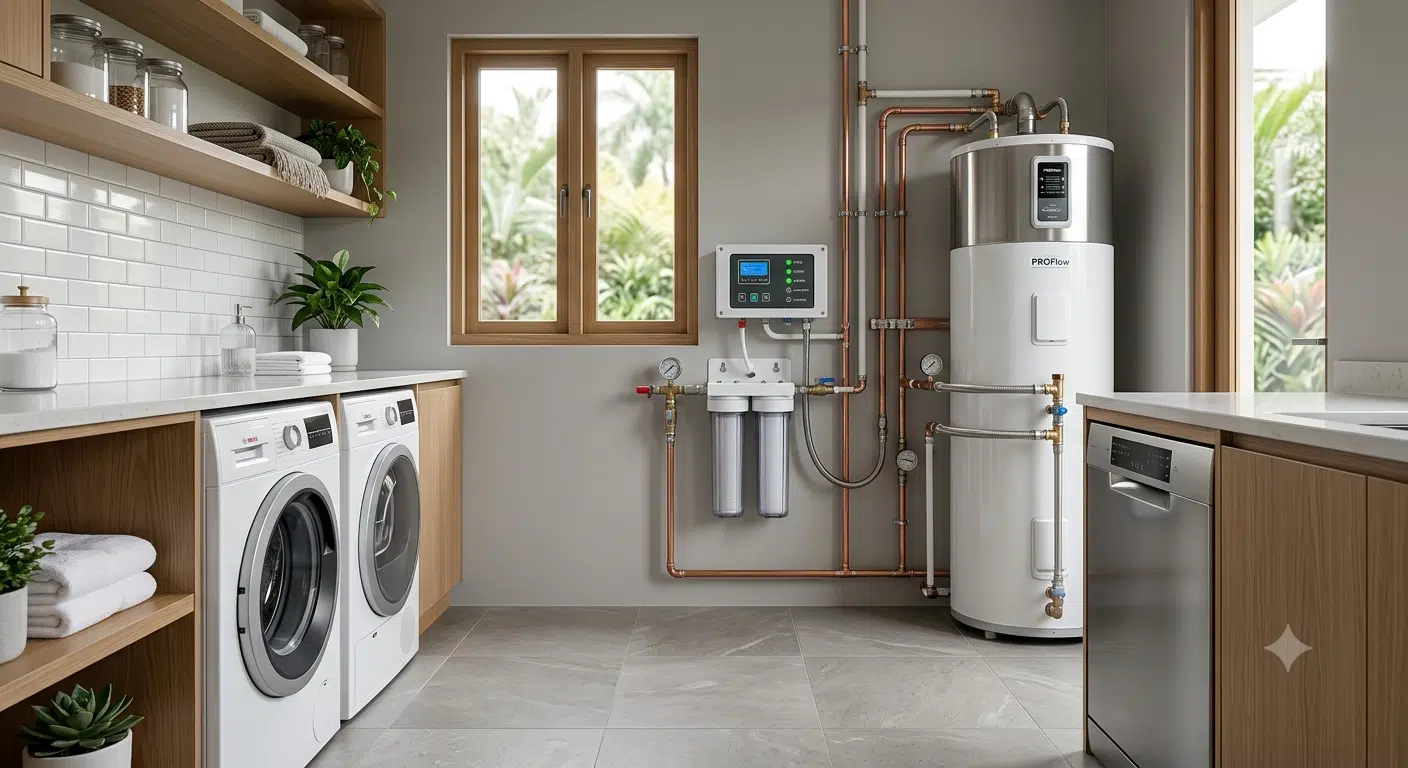
More people means more loads, and more loads expose a marginal drain. Washing machines discharge fast rather than steadily, and the drain has to accept that surge without backing up out of the standpipe. Frequency also matters, because a system gets less recovery time between discharges across a busy Saturday.
The problem is rarely how much water a machine uses. It is how quickly the pump moves that water into a two inch pipe. A partially restricted drain still passes a slow trickle from a sink and still fails a washer discharge, which is why a laundry drain can back up while every other fixture in the house behaves normally.
Laundry water carries lint, fibre and detergent residue that coat the inside of a drain line over years. That coating narrows the pipe gradually and gives future material something to catch on. Households in Maryville and the surrounding Blount County area often see the first overflow years after the family size changed, because the buildup and the demand rose together.
Laundry frequently ties into a line shared with a kitchen or a bathroom group. A restriction downstream of that junction shows up first at the fixture with the highest discharge rate, which is the washer. That is why a laundry overflow sometimes points at a problem that has nothing to do with the laundry room itself.
A drain needs air to replace the water leaving it. Under a slow flow an undersized or partly blocked vent goes unnoticed. Under a washer discharge it produces gurgling, slow draining and, in some cases, a trap that siphons dry and lets odour back into the room afterward.
Tennessee has adopted the 2018 International Residential Code for one and two family dwellings, effective April 17, 2025. Several of its provisions apply directly to a laundry connection, and they explain why a correctly built installation looks the way it does rather than being a matter of preference.
Section P2706.1.2 states that standpipes “shall extend not less than 18 inches (457 mm) and not greater than 42 inches (1067 mm) above the trap weir.” Too short and the machine can siphon or overflow. Too tall and the pump works against more head than it was designed for. The range exists to keep both failure modes out of the picture.
Section P2718.1 states that “the discharge from a clothes washing machine shall be through an air break.” That is the physical gap between the washer hose and the standpipe, and it keeps drain water from being drawn back toward the machine. Sealing the hose into the standpipe to stop a smell defeats it, and the smell is better addressed at its actual cause.
Section P2706.1 calls for a removable strainer or basket covering the waste outlet on a waste receptor, requires waste receptors to be readily accessible, and states they shall not be installed in concealed spaces, plenums, attics, crawl spaces or interstitial spaces. Enclosing a laundry connection behind finished wall with no access runs against that provision and makes future service far more expensive.
Section P2706.1.2.1 addresses a standpipe serving a laundry tray connection, calling for it to extend not less than 30 inches above the standpipe trap weir and above the flood level rim of the laundry tray. Households adding a utility sink alongside a washer are changing the configuration the original installation was built for, which is worth checking rather than assuming. Editions currently adopted are listed by the Tennessee State Fire Marshal’s Office.
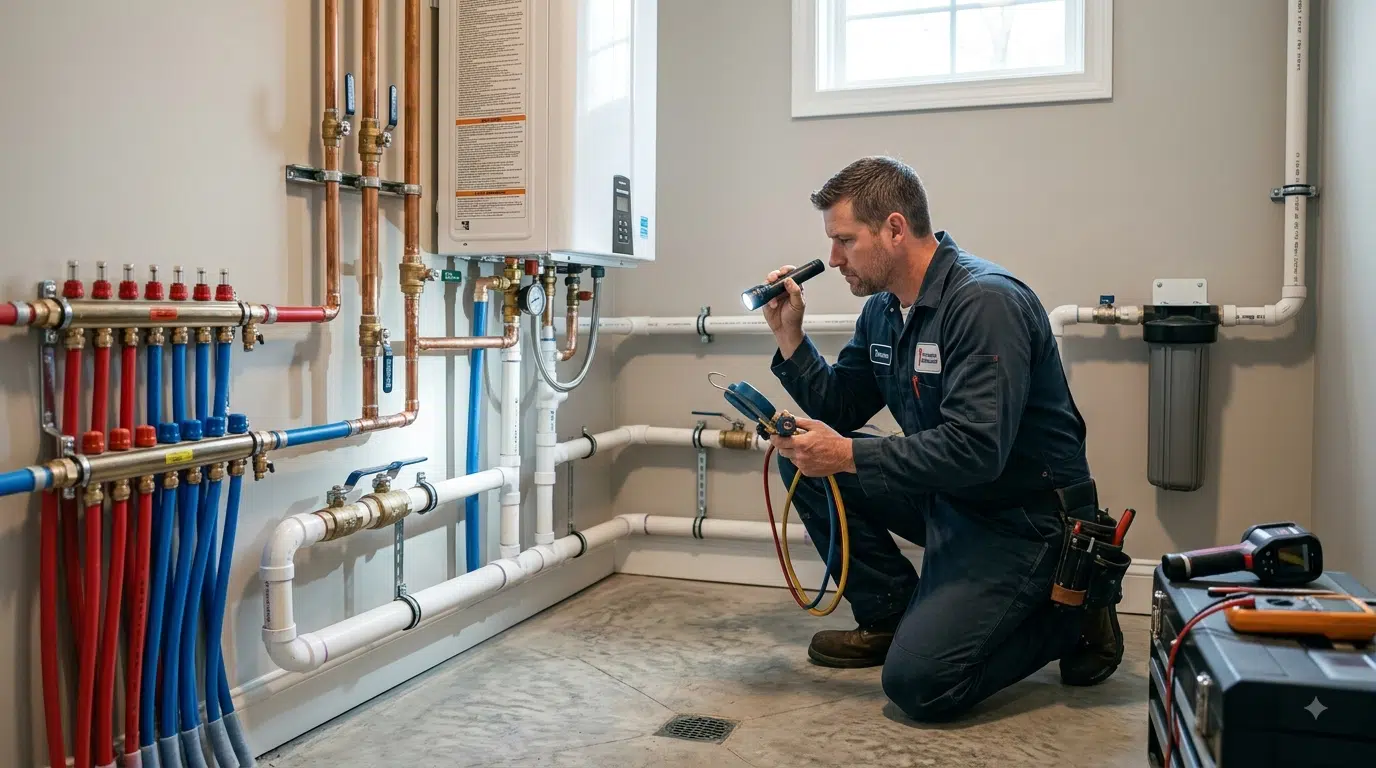
Laundry upgrades divide into two groups: those that prevent damage and those that add convenience. The damage-prevention group pays for itself the first time something goes wrong, and it costs very little relative to what a laundry room flood does to a floor and a ceiling below it.
A recessed box keeps the hoses, valves and standpipe connection in one accessible place set into the wall, so the machine sits closer to the wall and nothing gets crushed behind it. Quarter-turn ball valves replace old multi-turn stops that seize open after a decade, which matters because a valve nobody can close is a valve that will not help during a burst hose. Details are covered on the laundry plumbing service page.
Rubber supply hoses age, and a failure sends supply pressure into the room until somebody notices. Braided stainless hoses are inexpensive and widely available. Replacing them on a schedule rather than on failure is one of the higher return maintenance habits available to a household, and the manufacturer’s own replacement guidance governs the interval.
A pan under the machine catches a slow leak and a moderate overflow and directs it to a drain rather than to the subfloor. On a second-floor laundry room, which many newer homes have, that pan is the difference between a mopping job and a ceiling repair. Where a pan drain is not practical, a leak sensor with a shutoff valve covers a similar risk.
| Symptom in the laundry room | What it commonly points at | Sensible next step |
|---|---|---|
| Standpipe overflows during the spin drain | Restriction in the drain line rather than an appliance fault | Clear and inspect the line, then check slope and venting |
| Gurgling from a nearby sink when the washer drains | Venting that cannot supply air fast enough under surge | Inspect the vent serving that branch |
| Odour in the room between wash days | Standpipe trap losing its water seal | Check trap and vent before sealing anything |
| Slow drain that improves after clearing, then returns | Lint and detergent coating, or a slope problem in the run | Camera inspection of the branch line |
| Water at the base of the machine with no overflow | Supply hose, valve packing or the appliance itself | Isolate at the valves and inspect hoses and connections |
Drain slope in particular is worth understanding before assuming a clog, and this look at signs that drain pipes are improperly sloped covers the symptoms that separate the two.
Relocating laundry upstairs, or adding a second set in a finished basement, is one of the more popular changes growing families make. It is also the point where drainage, venting and permitting all come into play at once, and where assumptions carried over from the old location tend to cause trouble.
A new location calls for a drain of the right size at the right slope, and a vent that serves it properly. Those two constraints, more than anything else, determine which rooms are practical. Deciding the location first and solving the plumbing afterward is the sequence that produces compromises nobody likes.
A leak on a ground floor over a slab is a nuisance. The same leak on a second floor travels through a ceiling and into rooms below. A floor pan with a drain, a leak sensor with automatic shutoff, and accessible valves all matter more upstairs than they do in a basement. Households working through options can start with general Knoxville area plumbing services.
Relocating drainage generally involves a plumbing permit and inspection, and the requirement depends on the address and the scope. Maryville sits in Blount County, so a property inside the city limits goes to the City of Maryville and an unincorporated property goes to Blount County. Knox County requirements do not govern a Maryville address, and confirming with the office that actually inspects the work is the reliable step.
EPA reports that the average American family uses more than 300 gallons of water per day at home, with roughly 70 percent of that used indoors. Laundry is a meaningful share of that indoor total in a large household, which is why appliance efficiency and drainage capacity tend to become relevant at the same stage of family life. Information on labelled fixtures and appliances is published on the EPA WaterSense products pages.
Our team at Tennessee Standard Plumbing has served Maryville, Alcoa, Blount County and the surrounding East Tennessee communities since 2020 on laundry plumbing, drain repair, water lines and leak detection. We’ve earned thousands of 5-star reviews, and every job is handled by one of our 34 licensed plumbers (as of October 2026).
Four things are worth holding onto. Washer discharge is about rate rather than total volume, so a marginal drain fails there first. The adopted residential code sets standpipe height and calls for an air break at the discharge. A recessed outlet box, quarter-turn valves and a floor pan prevent most of the damage a laundry room can cause. And for a Maryville address, the permit question goes to the city or to Blount County.
Families planning a laundry upgrade or a relocation can reach our team at (865) 352-9003 or book an appointment online. We serve Maryville, Alcoa, Rockford, Knoxville, and communities across Blount County, Knox County and East Tennessee.
Related Reading
The Tennessee Residential Code section P2706.1.2 states that standpipes shall extend not less than 18 inches and not greater than 42 inches above the trap weir. Below that range a machine can siphon or overflow, and above it the pump works against more head than it was designed for.
A washing machine discharges a large volume very quickly, so it stresses a drain harder than any other fixture. A partly restricted line still passes a slow trickle from a sink while failing a washer discharge. The overflow is usually a drain problem rather than an appliance fault.
That removes the air break the code calls for. Section P2718.1 states that discharge from a clothes washing machine shall be through an air break, which keeps drain water from being drawn back toward the machine. Odour is better traced to a trap losing its water seal or to a vent problem.
On an upper floor it usually is, because a leak there travels through a ceiling into rooms below. A pan catches a slow leak and a moderate overflow and directs it to a drain. Where a pan drain is impractical, a leak sensor with an automatic shutoff valve covers a similar risk.
The manufacturer’s guidance for the specific hose governs the interval. What matters practically is replacing on a schedule rather than after a failure, since a burst supply hose delivers full pressure into the room until someone closes a valve. Braided stainless hoses are inexpensive and widely available.
Section P2706.1 calls for waste receptors to be readily accessible and states they shall not be installed in concealed spaces, plenums, attics, crawl spaces or interstitial spaces. A recessed outlet box is the arrangement that keeps the connection tidy and reachable at the s