
How to Install a Sump Pump Battery Backup System
To install a sump pump battery backup, disconnect the power, mount the backup pump, attach the check valve, connect the discharge piping, wire the ... Read More
Same-Day Service Available
Need a Plumber in Knoxville? We’re Ready to Help!




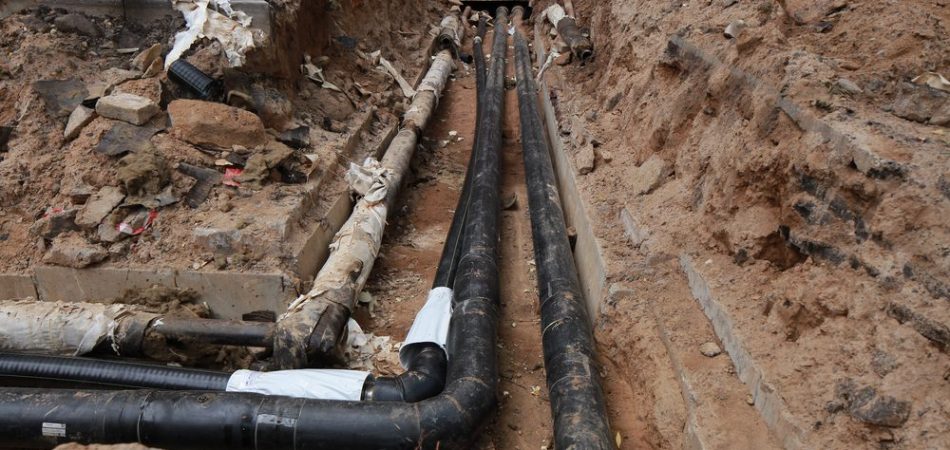
Sewer pipes come in several materials, each offering different levels of strength, durability, and resistance to corrosion or soil conditions. The most common options for modern homes are PVC, ABS, cast iron, clay, concrete, and HDPE, perform differently depending on your home’s needs and environment. Understanding how these materials compare helps homeowners choose a sewer line that lasts longer, flows better, and reduces the risk of expensive failures. Tennessee Standard Plumbing guides Knoxville homeowners in selecting the safest and most reliable pipe material for long-term performance.
Sewer pipes come in different materials, and each type has its own strengths and limits. The six most common choices used in modern homes are PVC, ABS, cast iron, clay, concrete, and HDPE. These materials are selected because they provide durability, safety, and effective wastewater flow. Each sewer pipe material carries benefits and risks that affect long-term performance. Homeowners in Knoxville and across the U.S. benefit from knowing these options before installation or replacement.
Tennessee Standard Plumbing provides expert guidance to help homeowners choose the most reliable sewer pipe material for their property. Contact us today to schedule your inspection and get the right solution for your home.
PVC pipe is one of the best options because it is lightweight, affordable, and dependable for sewer systems. PVC is widely used in residential sewer lines, stormwater drainage, and venting systems. Under normal soil and load conditions, PVC lasts 50 to 70 years, with some systems reaching 100 years when maintained well.
Advantages include resistance to corrosion, smooth interior walls that help prevent clogs, and low installation cost. PVC is also easy to transport. Installation involves cutting the pipe, applying primer and solvent cement, and connecting fittings to create a watertight system.
ABS pipe is another top choice because it is strong, long-lasting, and performs well in cold environments. ABS is commonly used for residential sewer lines, underground drains, and vent systems, with a typical lifespan of 50 years or more.
Advantages include high impact resistance, durability during temperature swings, and ease of handling. ABS does not warp in freezing weather, making it ideal for colder climates. Installation requires priming the surface and using solvent cement to join sections securely. Because ABS pipes are black and sensitive to UV exposure, they must be buried or protected from sunlight.
Cast iron pipe is one of the best materials for strength, fire resistance, and noise control. Cast iron is used in residential, commercial, and multi-story buildings where quiet operation is important. The lifespan ranges from 75 to 100 years, and some systems last even longer with proper care.
Advantages include structural strength, fire resistance, and reduced sound from wastewater flow. Cast iron is heavy, so installation requires more labor. Plumbers cut the pipe to size and secure sections with couplings, clamps, or gaskets. The main risk is rust and internal buildup, which can narrow the pipe over time.
Clay pipe is valued for being eco-friendly, chemically resistant, and time-tested. Clay is mostly used in municipal systems and older residential sewer lines. These pipes last 50 to 60 years, with some lasting over a century.
Advantages include natural composition, resistance to acidic wastewater, and long-term durability. However, clay is brittle and can crack under heavy soil movement. Installation involves lowering heavy pipe sections into place and sealing them with mortar or flexible joints. Skilled labor is essential to prevent misalignment and leakage.
HDPE pipe is flexible, corrosion-proof, and nearly leak-free. HDPE is widely used in municipal sewer lines, stormwater systems, and new residential projects. These pipes last 50 to 100 years depending on soil and water conditions.
Advantages include heat-fused joints that eliminate leaks, excellent corrosion resistance, and flexibility that allows the pipe to bend with soil movement. This makes HDPE one of the safest long-term options. Installation requires specialized heat-fusion tools to weld sections into a continuous pipeline. Professional installation ensures durability.
Concrete pipe is one of the best materials for large-scale sewer systems because it is extremely strong and reliable. Concrete pipes are mainly used in municipal systems, storm drains, highways, and commercial projects. Their lifespan ranges from 75 to 100 years, with some exceeding that under stable soil conditions.
Advantages include high structural strength, the ability to handle heavy loads, and fire resistance. Concrete pipes are heavy, requiring cranes or lifting equipment during installation. Sections are joined with gaskets or mortar to maintain a watertight seal. The main risk is interior surface wear over decades of wastewater exposure.
Using the right sewer pipe material ensures a long-lasting, safe, and efficient plumbing system. The correct choice minimizes failure risks and helps homeowners avoid costly repairs.
The benefits of using the right sewer pipe material include:
 Using the wrong sewer pipe material increases the chances of system failure, unexpected repairs, and health risks. Outdated or unsuitable pipes deteriorate quickly and do not meet modern performance standards.
The risks include:
Some sewer pipe materials are outdated and prone to failure. These materials increase repair costs and pose safety risks. Tennessee Standard Plumbing replaces these systems with reliable alternatives to protect homes in Knoxville and nearby areas. Materials to avoid include:
Made of wood fibers and tar, Orangeburg pipes were popular in the mid-1900s but collapse easily under soil pressure. Their lifespan is about 30 years, and most existing systems are already failing.
Galvanized steel pipes corrode quickly once the zinc coating wears off, leading to leaks, restricted flow, and rust buildup. These pipes often fail within 40 to 50 years.
Commonly used between the 1970s and 1990s, polybutylene pipes break down when exposed to chlorine and water-treatment chemicals. Failures occur frequently, often before 20 years.
 Homeowners should consider durability, flow performance, safety, and long-term costs before selecting sewer pipe materials. The right choice improves system lifespan and prevents expensive repairs. Tennessee Standard Plumbing provides expert guidance to ensure each home receives the most reliable option, backed by our reputation as a trusted and professional plumbing company in Knoxville.
Key factors include:
Pipes should resist corrosion, chemical damage, and soil pressure. Durable options such as PVC, HDPE, and cast iron offer long service life.
Sewer pipes must move wastewater smoothly without buildup or blockages. Materials with smooth interiors, like PVC and HDPE, support efficient flow and reduce clog risks.
Initial price and long-term upkeep both matter. PVC and ABS are affordable and easy to maintain, while cast iron and concrete last longer but require more installation effort.
Modern pipes help prevent leaks, root intrusion, and groundwater contamination, protecting homes and the environment.
The most durable sewer pipe materials are PVC, HDPE, and cast iron. PVC and HDPE resist corrosion and chemical damage and last 50–100 years. Cast iron is extremely strong and often lasts 75 years or more. Clay and concrete also last 50–100 years but are more prone to cracking. Tennessee Standard Plumbing installs these durable options throughout Knoxville.
PVC and HDPE resist root intrusion best due to their watertight, flexible joints and smooth interiors. Clay and Orangeburg pipes have weak joints that allow roots to enter.
Corrosion resistance keeps pipes strong and prevents leaks. Corroded pipes weaken, develop holes, and leak sewage into the soil. PVC, ABS, and HDPE resist corrosion completely. Cast iron is durable but may corrode in acidic soil if unlined.
PVC and HDPE last 50–100 years, cast iron lasts 75–100 years, clay lasts 50–60 years, and concrete lasts 75–100 years. Older materials like Orangeburg and polybutylene often fail within 30 years.
Sand, gravel, and hard waste scrape pipe interiors when water flows quickly. Concrete and clay wear faster due to rougher walls. PVC and HDPE resist abrasion because of smooth, nonporous surfaces.
PVC and ABS are the most cost-effective options because they cost less to install and require minimal labor. Both last 50+ years and resist chemical damage.
Yes, HDPE pipes handle acidic soil. The plastic material resists both acidic and alkaline chemical reactions, which makes it suitable for soils with harsh pH levels. While concrete and clay pipes deteriorate in acidic conditions, HDPE remains flexible and intact. This resistance allows HDPE to perform well in industrial areas, regions with acidic groundwater, or locations exposed to chemical waste.
Tree roots, corrosion, heavy soil pressure, and poor installation are the most common causes. Over time, these issues lead to leaks, backups, and system breakdowns. Tennessee Standard Plumbing helps commercial properties in Knoxville detect issues early and perform reliable repairs.
PVC and ABS are the easiest to repair because they are lightweight and simple to cut and reconnect. Cast iron and concrete require more labor and specialized tools.
Sewer pipes in cold climates need freeze resistance and flexibility. PVC and HDPE expand slightly in cold temperatures without cracking. Cast iron, clay, and concrete are more likely to fracture. For cold-weather installation, Tennessee Standard Plumbing recommends PVC or HDPE for reliable winter performance.


To install a sump pump battery backup, disconnect the power, mount the backup pump, attach the check valve, connect the discharge piping, wire the ... Read More

The water coming into your home is far from pure. Whether it's city water, well water, or even some bottled water, there are millions of foreign pa... Read More
Installing a water booster pump is a reliable way to improve low water pressure at home. It involves choosing the right pump, preparing the area, m... Read More