
Why you should professionally get your cracked toilet repaired?
You should have a cracked toilet professionally repaired to prevent major damage like costly water leaks, structural damage to your subflooring, an... Read More
Same-Day Service Available
Need a Plumber in Knoxville? We’re Ready to Help!





Annual backflow testing is required for Knoxville businesses primarily to protect public health by preventing contaminated water (chemicals, sewage, bacteria) from entering the clean drinking supply, ensuring compliance with local health codes and EPA standards, and preventing costly damage by catching device failures early.
If you own or manage a commercial property in Knoxville, annual backflow testing may feel like a recurring requirement that raises more questions than answers. Many business owners only learn about it after receiving a notice from the local water authority.
The requirement is not arbitrary, and it is not limited to a small group of businesses. It exists to protect the public water supply and to verify that certain plumbing systems are not creating a contamination risk.
If you need clarification, testing, or help with compliance, contact us at Tennessee Standard Plumbing. Our team works with Knoxville businesses every day to manage backflow testing and reporting in a clear, straightforward way.
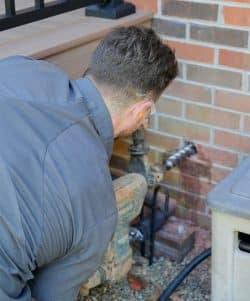 Backflow occurs when water flows in the opposite direction than intended. Instead of clean water moving from the public supply to a building, water from inside a property can be pulled back toward the municipal system.
This reversal typically happens when pressure conditions change. A sudden drop in pressure caused by a water main break, firefighting activity, or high system demand can create suction inside the piping. When that happens, contaminants can enter the public water supply if protective devices are not working properly.
Commercial plumbing systems present a higher level of concern because they often involve equipment, chemicals, irrigation systems, fire suppression lines, or specialized water use. These setups increase the chance that non-potable water could come into contact with the drinking water system.
Backflow prevention devices are installed to stop reverse flow before it reaches the public supply. These devices rely on internal components such as valves, springs, and seals that must operate under specific pressure conditions.
While these devices are built to last, their performance cannot be confirmed through visual inspection alone. Internal components can be affected by debris, mineral buildup, pressure fluctuations, or mechanical wear. A device that worked correctly in the past still requires verification to confirm it performs as intended today.
Annual testing exists because water utilities need documented proof that installed devices continue to function properly. Without testing, there is no reliable way to confirm protection is still in place.
In Knoxville and surrounding service areas, backflow prevention programs follow state plumbing standards and public health rules designed to protect drinking water. Annual testing is the standard verification interval required by many water authorities once a backflow prevention device is installed.
Local utilities rely on certified test reports to confirm compliance. These reports allow utilities to track devices, confirm proper operation, and address issues before they affect the water system.
For many Knoxville businesses, the requirement applies because a backflow prevention device was installed after the property was evaluated for potential cross-connection risk. Once a device is required and installed, routine testing becomes part of ongoing compliance.
Not every business automatically requires annual backflow testing. The requirement depends on whether a property has an installed backflow prevention device based on its hazard classification.
In Knoxville, businesses commonly subject to testing include properties such as:
If a backflow prevention device is present, annual testing is usually required regardless of whether the business has experienced problems in the past.
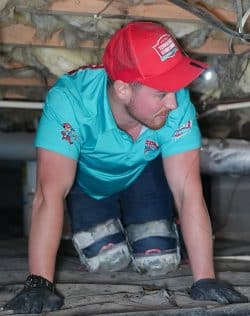 Backflow testing must be completed by a certified tester using calibrated testing equipment. The process evaluates how the device responds under controlled pressure conditions.
During testing, the technician verifies that internal valves close properly and that pressure levels meet required standards. If the device does not pass, repairs or replacement may be needed before it can be retested.
Once testing is complete, results are documented and submitted to the appropriate water authority, such as Knoxville Utilities Board or the applicable service provider for the property’s location.
When annual backflow testing is not completed on time, utilities typically issue reminder notices. These notices explain the need for testing and provide a deadline for compliance.
If testing continues to be delayed, additional notices or administrative fees may follow. In extended cases of non-compliance, utilities may restrict or suspend water service until required testing is completed.
For businesses that rely on water for daily operations, this can cause disruptions that affect staff, customers, and revenue. Addressing testing early helps avoid these complications.
Annual backflow testing is not only about meeting utility requirements. It also plays a role in risk management.
If a backflow incident occurs and testing records are missing or outdated, determining responsibility becomes more complex. While testing records alone do not assign fault, they are often reviewed when water quality issues arise.
Keeping current documentation helps demonstrate that reasonable steps were taken to protect the water supply.
Knoxville water authorities maintain records of backflow devices and testing schedules. Reminder notices are common, but they are not unlimited.
Properties with multiple devices or complex plumbing layouts often require closer tracking. Businesses that manage several locations can easily lose sight of deadlines without a consistent process in place.
Working with a local plumbing provider familiar with Knoxville reporting procedures can reduce delays and repeated notices.
 Treating backflow testing as part of routine property maintenance makes compliance easier. Scheduling testing before deadlines allows time for repairs if needed and avoids last-minute issues.
For Knoxville businesses, a consistent annual schedule helps maintain compliance and protects the public water supply without disruption.
At Tennessee Standard Plumbing, we work with Knoxville businesses across a wide range of industries. Our team handles backflow testing, documentation, and communication with local water authorities so business owners can focus on operations.
We understand local compliance expectations and how to resolve failed tests efficiently. That familiarity helps reduce downtime and administrative stress.
If you are unsure whether your property requires annual testing or want help planning ahead, call us today! We are happy to review your setup and explain the next steps clearly.
Many Knoxville businesses are required to complete annual backflow testing because their plumbing systems include a backflow prevention device. Local water authorities require yearly verification to confirm the device still protects the public water supply from contamination.
If annual testing is missed, utilities usually send reminder notices with a compliance deadline. Continued delays can result in additional notices, administrative fees, or restricted water service until testing is completed.
A business typically needs backflow testing if a backflow prevention device is installed on the property. These devices are required when a property is classified as having a potential cross-connection or contamination risk.
Yes. Once a backflow prevention device is required and installed, most water authorities require annual testing regardless of whether the plumbing system appears unchanged or has worked properly in the past.
Backflow testing must be completed by a certified tester using approved and calibrated testing equipment. Certification confirms the tester is trained to evaluate device performance correctly.
Businesses that often require backflow prevention devices include restaurants, medical facilities, industrial sites, office buildings with irrigation systems, car washes, and properties with fire sprinkler systems.
Most backflow tests take less than an hour, depending on the number of devices and accessibility. Additional time may be needed if repairs or retesting are required.
If a device fails, repairs or replacement may be required before it can pass inspection. After repairs are completed, the device must be retested and documented for compliance.
Water service restriction is usually a last step after repeated notices and missed deadlines. Utilities may suspend service until required testing is completed in extended cases of non-compliance.
Many businesses stay compliant by scheduling testing in advance each year and working with a local plumbing provider familiar with Knoxville reporting procedures. Keeping records current helps avoid missed deadlines.


You should have a cracked toilet professionally repaired to prevent major damage like costly water leaks, structural damage to your subflooring, an... Read More
Inconsistent hot water, characterized by sudden temperature drops, often indicates internal tank issues like severe sediment buildup, a broken dip ... Read More
Commercial drain cleaning involves routine inspections, enzyme-based treatments, proper staff practices, and scheduled professional maintenance to ... Read More