
Same-Day Service Available
00
Hrs
00
Mins
00
Secs
Need a Plumber in Knoxville? We’re Ready to Help!
Same-Day Service Available
Need a Plumber in Knoxville? We’re Ready to Help!




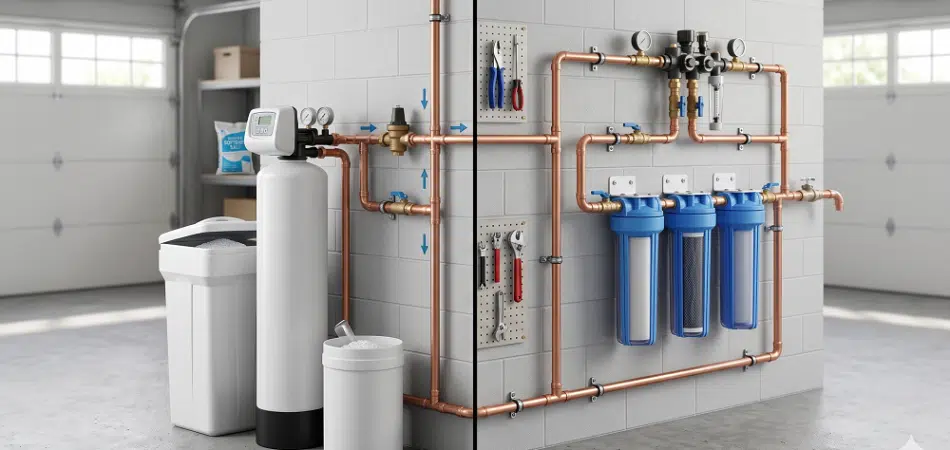
Water softeners and water filters perform two completely different jobs. A water softener solves plumbing and appliance problems by removing hard minerals like calcium and magnesium. A water filter solves health and aesthetic problems by removing contaminants like chlorine, lead, sediment, and volatile organic compounds (VOCs).
A water softener and a water filter are not the same machine, even though they often share a closet in the garage. A softener removes the hard minerals that leave scale on your faucets and spots on your dishes. A filter removes the contaminants that change how your water tastes, smells, and what you would rather not drink. Two different problems, two different fixes, and plenty of Knoxville homes have both.
At Tennessee Standard Plumbing, we have spent five generations in the plumbing trade, and we test and install water treatment across Knoxville and the Greater Knoxville Area. The question we hear most is some version of softener or filter, and the honest answer starts with geology. Knoxville sits on limestone and dolomite, the bedrock that makes groundwater hard, so what your water needs depends more on where it comes from than on any product label.
The only way to know which system fits your home is to find out what is in the water first. We install both softeners and whole-home filtration, with no guessing and no pressure to buy a machine your water does not call for.
Contact us today to set up a water quality test, and we will point you to the right fix for your home.
Water complaints around Knoxville fall into two buckets that homeowners often blur together. The first is hardness, the dissolved calcium and magnesium that cause scale. The second is contaminants, everything from chlorine taste to sediment to the iron that stains a sink orange. A softener handles the first bucket and a filter handles the second, so knowing which one your complaint lives in is the whole decision.
Hardness is measured in milligrams per liter. The U.S. Geological Survey classifies water as soft below 60 mg/L, moderately hard from 61 to 120, hard from 121 to 180, and very hard above 180. Knoxville Utilities Board (KUB) city water sits in the moderately hard range, which can leave some spotting and light scale but rarely the buildup that ruins appliances. For most KUB customers, the louder complaint is the chlorine taste of treated water, and that is a filter issue, not a softener one.
Well water is a different story. Much of the rural Greater Knoxville Area, from Corryton and Halls out toward Maynardville and Luttrell, draws from limestone and dolomite aquifers, so wells in Knox, Anderson, and Union counties often test harder than city water. They also frequently carry iron, which stains fixtures rusty orange, and hydrogen sulfide, the rotten egg smell. Neither of those is fixed by softening alone.
Here is where the two systems separate. They use different mechanics, target different things, and fail at each other’s jobs. Once you see how each one works, the water softener vs. water filter decision stops being confusing.
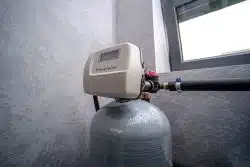 A water softener works by ion exchange. Hard water flows through a tank of resin beads coated with sodium. The beads grab the calcium and magnesium and release a small amount of sodium in trade, so the water leaving the tank is soft. Periodically the system rinses itself with a brine solution from a salt tank, which is why a softener needs salt refills and a drain.
The payoff is no scale on your fixtures, softer-feeling water, and longer life for your water heater. What a softener will not do is change how your water tastes or remove anything unsafe, because it swaps minerals rather than cleaning the water. If scale is your only issue, our water softeners are the direct fix.
A water filter does the opposite job. Instead of trading minerals, it captures contaminants as water passes through filter media. The most common whole-home choice is activated carbon, which removes the chlorine and chloramine that give city water its taste and smell, along with some volatile organic compounds.
A sediment filter screens out the sand, silt, and rust particles that make water look cloudy or gritty, and for drinking water, a reverse osmosis system pushes water through a fine membrane that removes dissolved solids, lead, nitrates, and a long list of other contaminants. None of these filters reduce hardness, because the calcium and magnesium are dissolved rather than suspended, so they pass right through.
You will also see salt-free conditioners marketed alongside softeners, and the distinction matters. A conditioner uses a process called “template-assisted crystallization,” which turns hardness minerals into tiny crystals that do not stick to surfaces. It reduces scale without salt or a drain, but it does not remove the minerals, so it is not technically softening, and it does nothing for contaminants. Think of it as a scale-management option, not a water-quality fix.
| System | What It Targets | Problem It Solves | What It Won’t Do |
|---|---|---|---|
| Water softener (ion exchange) | Calcium and magnesium (hardness) | Scale, spotty dishes, dry skin and hair, appliance wear | Won’t remove chlorine, lead, sediment, or bacteria |
| Salt-free conditioner | Hardness minerals (crystallized, not removed) | Reduces scale buildup with no salt or backwashing | Won’t truly soften water or remove contaminants |
| Whole-home carbon filter | Chlorine, chloramine, taste, odor, some VOCs | Better-tasting, better-smelling water at every tap | Won’t reduce hardness or stop scale |
| Sediment filter | Sand, silt, rust particles | Cloudy water, grit, clogged fixtures | Won’t remove dissolved minerals or chemicals |
| Reverse osmosis (point-of-use) | Dissolved solids, lead, nitrates, many contaminants | Clean drinking and cooking water at one tap | Won’t treat the whole home or soften water |
The fastest way to decide is to match the symptom to the system. Most homeowners already know their main complaint; the trick is reading it correctly.
Signs your home needs a softener:
Signs your home needs a filter:
The pattern across the Knoxville area is fairly predictable. City homes on KUB usually get the most noticeable improvement from a carbon filter for taste, with a softener or conditioner as an optional upgrade for the moderate hardness.
Well, homes in places like Seymour, Powell, and Karns more often need a combination because they are dealing with hardness and iron or sulfur at the same time. The surest way to know is to measure it, not guess from the symptom alone.
Yes, and across much of the Knoxville area that is the smart setup. Softeners and filters are not competitors; they are teammates that cover each other’s blind spots. The real questions are how they connect and in what order.
When a home needs both, the order of installation matters. Sediment and iron filters usually go first in the line, so grit and metals are removed before they can foul the softener resin.
The softener comes next to handle hardness, a carbon filter for taste and odor often sits in the same lineup, and a reverse osmosis unit gets added at the kitchen sink for drinking water. Sequenced correctly, each unit protects the next, and the whole system lasts longer. Our whole-home water filtration setups are built around this layered approach.
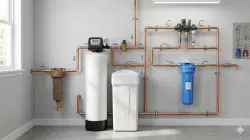 Not every problem needs whole-home treatment. Whole-home systems treat every drop entering the house, which makes sense for hardness, chlorine, sediment, iron, and sulfur.
Those are the issues you want gone from showers, laundry, and water heaters alike. Point-of-use systems, like reverse osmosis, treat water at a single tap, usually the kitchen, where you actually drink and cook. Pairing a whole-home filter with a point-of-use unit is a common Knoxville solution: broad protection for the house, plus polished drinking water where it counts.
Before any of this, the water gets tested. A test tells us your exact hardness number, whether iron or sulfur is present, and what contaminants are in play, which turns a guessing game into a clear plan.
We schedule a water quality test, walk you through the results in plain English, and recommend only what your water profile calls for. That is the heart of our 4 Steps. No Surprises.™ process: measure first, explain second, install third, with no upsell for a machine you do not need.
Softener or filter is the wrong first question; the right one is what is actually in your water, because the answer points straight to the fix, with a softener for hardness, a filter for taste and contaminants, and often both for a well.
At Tennessee Standard Plumbing, we run the test, explain the results in plain language, and install the right combination for your home and budget. Call us today to schedule a water quality test for your Knoxville-area home.
Yes, but only moderately. Knoxville Utilities Board water falls into the moderately hard range in the U.S. Geological Survey scale, which runs from soft up through very hard. “Moderately hard” means you may see some spotting and light scale over time, but it is rarely severe. Noticeably, appliance-damaging hardness is far more common on well water in the surrounding rural areas than on the KUB city supply.
Not necessarily. KUB’s moderate hardness is manageable, so a softener is optional rather than essential for most city homes. If spotty dishes or fixture scale bothers you, a softener or a salt-free conditioner helps, but many KUB customers actually get more value from a carbon filter that removes the chlorine taste. A quick water test settles it.
No. Filters remove contaminants like chlorine, sediment, and iron, but they do not reduce the dissolved calcium and magnesium that cause scale. Those minerals pass straight through a standard filter. To stop scale, you need a softener or a salt-free conditioner, not a filter.
No. A softener only swaps hardness minerals for a small amount of sodium. It does not remove chlorine, lead, bacteria, or other contaminants, and it does not turn unsafe water into safe water. If your goal is cleaner drinking water, you want a filter, and reverse osmosis is the usual choice for the kitchen tap.
The rotten-egg smell is hydrogen sulfide gas, and the orange or brown staining is dissolved iron. Both are common in well water around Knoxville because of the area’s limestone and dolomite geology. Neither is solved by a softener alone, so they need targeted iron and sulfur filtration, and a water test confirms the levels so the right filter is matched to the problem.
A water softener uses ion exchange to actually remove calcium and magnesium, which requires salt and a periodic flush. A salt-free conditioner does not remove anything; it crystallizes the minerals so they are less likely to stick as scale. A softener gives you truly soft water, while a conditioner reduces buildup without the salt and maintenance. Neither one removes contaminants.
These are two different systems. Reverse osmosis is a point-of-use setup, almost always installed at the kitchen sink, that produces highly filtered drinking and cooking water. Whole-home filtration treats all the water entering the house for things like chlorine, sediment, and iron. Many Knoxville homes use both: a whole-home filter for the house and an RO unit at the tap for drinking.
Start with a water quality test. The results show your hardness level and any contaminants present, which tells you whether you need a softener, a filter, or both. We test, explain the numbers in plain language, and match the system to your water, so you are never buying a machine your home does not need.


