
Tankless Water Heaters vs. Tank Water Heaters: Pros, Cons & Best Options
Tankless water heaters offer impressive energy efficiency and a longer lifespan than traditional tank units. However, they come with limitations li... Read More

Same-Day Service Available
Need a Plumber in Knoxville? We’re Ready to Help!




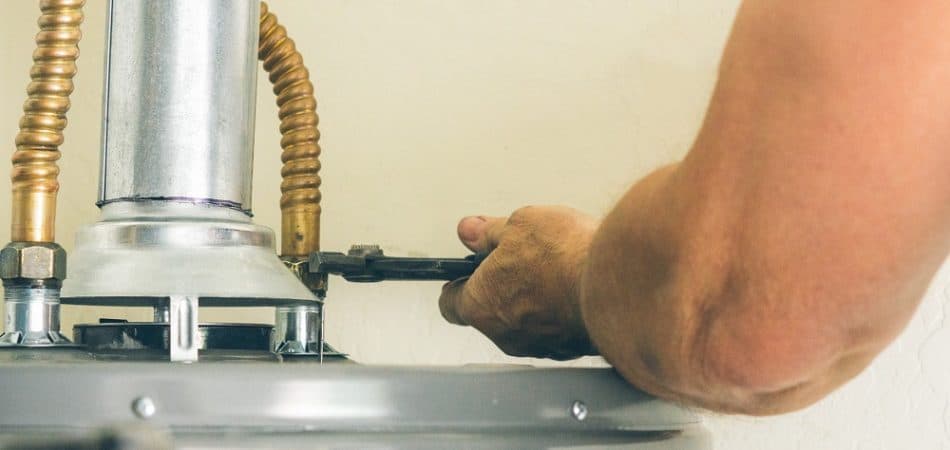
Inconsistent hot water, characterized by sudden temperature drops, often indicates internal tank issues like severe sediment buildup, a broken dip tube, or failing heating elements. These problems, exacerbated by mineral-heavy water, prevent proper heating and consistent hot water storage.
Nothing disrupts a morning faster than a shower that starts warm and turns cold halfway through. If this is happening in your Knoxville home, the culprit is almost certainly a degraded component inside the storage tank itself, not your supply lines or water pressure.
At Tennessee Standard Plumbing, our licensed technicians have diagnosed thousands of water heater failures across Knoxville and East Tennessee. Most internal tank problems produce recognizable warning signs well before total system failure, and addressing them early is the difference between a single service call and a costly unit replacement.
If your hot water output has been erratic, contact us today to schedule a water heater inspection and get a definitive diagnosis.
Understanding the normal heating sequence makes it easier to identify which component is responsible when hot water output becomes unreliable. Every stage of the thermal cycle depends on the one before it, and a failure at any point in that chain produces noticeable temperature fluctuations at the fixture.
 Cold water enters through a dip tube that directs it to the tank floor, where a resistance heating element (electric) or gas burner raises the water temperature. Through thermal stratification, heated water rises naturally to the top of the tank while cooler water stays near the bottom, ensuring the hottest water exits first whenever a fixture is opened.
A thermostat acts as a temperature-activated switch, energizing the heat source whenever the stored water drops below the programmed set point. The U.S. Department of Energy and EPA both recommend 120 degrees Fahrenheit as the standard setting for most households, balancing energy efficiency, scald prevention, and bacterial control.
Knoxville sits on a limestone and dolomite geological formation that leaches elevated calcium and magnesium carbonate into the local water supply. Under heat, those dissolved minerals precipitate out of solution and accumulate as limescale along the tank floor and heating surfaces.
This chronic mineral exposure is why local homeowners often need water heater repair well before the national average tank service life of 8 to 12 years.
Sediment accumulation is the single most prevalent internal cause of hot water temperature fluctuations in storage tank water heaters. Before any electrical component or structural part is evaluated, scale buildup at the tank floor is the first condition a licensed plumber will assess in a Knoxville home.
Every heating cycle triggers dissolved calcium and magnesium to crystallize and precipitate to the tank floor as calcium carbonate scale. In Knoxville’s hard water environment, this mineral layer accumulates at a measurably faster rate than in regions served by softer water supplies, shortening the interval between required maintenance flushes.
Once a substantial scale layer blankets the tank floor, it acts as a thermal insulation barrier between the heating element and the surrounding water column. The element must sustain a longer duty cycle to push adequate heat through that insulating deposit, disrupting the normal recovery rate and producing hot water that drops to lukewarm shortly after the initial burst.
Annual tank flushing removes accumulated mineral deposits before scale reaches the layer thickness that compromises heating efficiency. If your unit has not been flushed in two or more years and your home has hard water, sediment remediation is the logical first step.
Two of the most frequent component-level failures behind hot water temperature variance are a miscalibrated thermostat and a degraded resistance heating element. Both are central to the thermal regulation cycle inside the tank, and deterioration of either one produces erratic output temperatures at every fixture in the home.
When mineral scale coats the thermostat sensor housing, the component loses accurate thermal contact with the tank wall and begins misreading stored water temperature. A sensor reading too low will terminate the heating cycle prematurely, leaving water below the desired set point.
A thermostat with a fused contact stuck in the closed position will drive the water to dangerously high temperatures, repeatedly activating the temperature and pressure relief valve as a safety response.
 In dual-element electric water heaters, a non-simultaneous heating design means the upper thermostat governs the sequential relay of power to the lower thermostat. Upper thermostat failure interrupts the entire heating sequence, cutting power to both elements and leaving you with no usable hot water at all.
Lower thermostat failure confines heating to the top third of the tank volume, causing the hot water supply to exhaust far faster than normal household demand would otherwise require.
Limescale accumulation on the element surface progressively reduces its heat transfer efficiency over time, forcing the element to operate at higher temperatures to compensate. When one of the two resistive elements burns out, the remaining element cannot meet full household hot water demand on its own.
A licensed plumber can confirm element integrity and thermostat calibration by testing each component with a multimeter under load conditions.
Not every internal tank failure is rooted in the heating system. A fractured dip tube and a spent sacrificial anode rod are two structural degradation issues that quietly undermine hot water consistency in ways most homeowners overlook entirely during routine maintenance.
The dip tube functions as a cold water injection pipe, directing incoming supply water to the tank floor so it does not commingle with the thermally stratified hot water zone at the top. When the tube fractures or separates, cold supply water short-circuits directly into the hot zone near the outlet, disrupting thermal stratification and causing water temperature at the fixture to spike briefly before dropping well below the desired set point.
Small white or translucent polypropylene fragments collecting in faucet aerators or appliance inlet screens are a diagnostic indicator of dip tube disintegration. Temperature variance at the tap that follows a predictable pattern of a short warm burst followed by a rapid drop to cold water confirms the disrupted thermal stratification caused by a compromised inlet tube.
The sacrificial anode rod, typically composed of magnesium, aluminum, or zinc-aluminum alloy, undergoes electrochemical corrosion in place of the steel tank lining, a process that protects tank integrity through galvanic action. Once the rod is fully consumed, aggressive dissolved minerals shift their corrosive activity directly to the tank walls, compounding scale accumulation and accelerating overall heating inefficiency.
Indicators of anode depletion include reddish-tinted hot water from oxidizing tank steel, a metallic odor in the hot water supply, or a unit over 5 years old that has never had the rod inspected. Anode rods should be inspected on a 3 to 5 year cycle. Pairing a new rod with water treatment in Knoxville lowers the mineral aggressiveness of the incoming water supply and extends the service interval of the replacement rod significantly.
Component-level repair is the correct path when the tank is under 8 years old and one or two discrete failures are present. Once the unit reaches 10 to 12 years of service life with compounding internal degradation across multiple systems, cumulative repair costs typically converge with the installed price of a new, higher-efficiency unit.
| Condition | Recommended Action |
|---|---|
| Mineral scale buildup, tank under 8 years old | Flush & Descale |
| Single failed heating element, under 8 years old | Replace Element |
| Miscalibrated or failed thermostat, under 8 years old | Replace Thermostat |
| Fractured dip tube, tank under 8 years old | Replace Dip Tube |
| Depleted anode rod, no tank wall corrosion | Replace Anode Rod |
| Active internal corrosion or oxidized water supply | Replace Tank |
| Multiple component failures, tank over 10 years old | Replace Tank |
| Visible tank wall cracking or pooling at base | Replace Tank Immediately |
If you have been evaluating tankless water heater installation, a storage tank presenting multiple concurrent internal failures is the optimal transition point. On-demand units carry an average service life of 15 to 20 years, eliminate standby heat loss, and do not accumulate mineral scale the way pressurized storage tanks do.
Erratic hot water output is a measurable signal that one or more internal tank components are operating outside their design parameters. In Knoxville, East Tennessee’s elevated water hardness accelerates scale formation, electrochemical corrosion, and component wear at a rate that regularly catches homeowners off guard.
 The longer a degraded part continues operating under stress, the greater the likelihood that a straightforward component repair escalates into a full water heater replacement in Knoxville.
Tennessee Standard Plumbing brings five generations of plumbing expertise to Knoxville and East Tennessee. Our licensed technicians arrive stocked with the most common service parts to resolve most failures in a single visit and provide a clear, upfront diagnosis before any work begins.
Call us today to schedule a water heater inspection! Peaceful pipes start with a tank that actually works.
The most likely causes are mineral scale insulating the heating element, a fractured dip tube disrupting thermal stratification in the tank, or a failed lower heating element that cannot sustain the full volume of stored water at the set temperature.
In Knoxville’s hard water conditions, measurable performance changes from scale accumulation are often noticeable between years 3 and 5 in a unit that has never been flushed. Annual descaling flushes prevent mineral deposits from reaching the layer thickness that compromises recovery rate and output consistency.
Upper thermostat failure disables the sequential power relay to both heating elements, producing a complete loss of hot water output. Lower thermostat failure restricts active heating to the top third of the tank volume, causing the usable hot water supply to deplete much faster than normal household demand requires.
Reddish discoloration or a metallic odor in the hot water supply are the clearest indicators of an exhausted sacrificial anode rod and progressing internal tank corrosion. Any unit over 5 years old without a prior rod inspection should be evaluated by a licensed plumber.
Component repair is the right choice for a tank under 8 years old with one or two isolated failures. Once a unit reaches 10 to 12 years of service with multiple concurrent degradation points, the cumulative cost of repairs typically converges with the installed price of a new energy-efficient unit.
Elevated calcium and magnesium carbonate levels from East Tennessee’s limestone geology precipitate as limescale inside the tank under heat, reduce heating element efficiency, and accelerate electrochemical corrosion of the tank lining. A whole-home water softener or filtration system reduces mineral aggressiveness before the supply water reaches the tank.
A fractured dip tube is not externally visible. The diagnostic indicator is small white or translucent polypropylene fragments in faucet aerators or appliance inlet screens, combined with a pattern of brief hot water followed by a rapid temperature drop at the fixture.
Contact a licensed plumber if you observe rust-colored water at the hot tap, standing water pooling at the tank base, a weeping temperature and pressure relief valve, or audible banging and rumbling from inside the tank. These are indicators of advanced internal degradation or pressure system failures that carry real safety risk.


Tankless water heaters offer impressive energy efficiency and a longer lifespan than traditional tank units. However, they come with limitations li... Read More

To find a plumbing leak in a slab, first, look for signs like a high water bill, the sound of running water, or warm spots on the floor. To confirm... Read More
Bathroom sink leaks often result from loose pipe connections, deteriorated seals or washers, and clogged drains that increase pressure. Simple solu... Read More