
How to Fix a Leaking Kitchen Sink: DIY Guide & Pro Tips
A kitchen sink leak can cause a lot of damage to your home if left unaddressed, leading to mold growth, water damage, and costly repairs. That's wh... Read More

Same-Day Service Available
Need a Plumber in Knoxville? We’re Ready to Help!




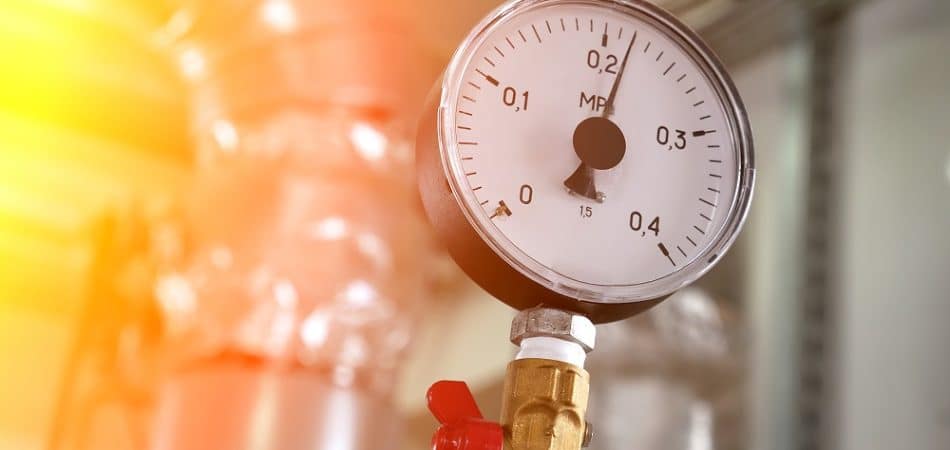
High water pressure, commonly exceeding 80 PSI, acts as a constant, destructive force that accelerates wear and tear on plumbing systems in Knoxville homes, leading to premature pipe failure, leaks, and damage to fixtures.
Most homeowners never check water pressure until something fails. There are no warning lights, no error codes, and no obvious signs until a pipe joint starts leaking or a supply line gives out. When pressure runs too high, pipes absorb constant stress cycles that build into real damage over time.
Our team at Tennessee Standard Plumbing has seen it all. Leaking joints, corroded fittings, and failed supply lines that all traced back to one thing: pressure no one measured and no one fixed. High water pressure is the most common and most overlooked cause of premature pipe failure in Knoxville homes.
Contact us today to schedule a plumbing evaluation, we’ll check your pressure as part of a full inspection.
The safe range for residential water pressure is 40 to 60 PSI, with 80 PSI as the maximum most plumbing components are rated to handle. Above that, damage shifts from gradual to active. A pressure gauge costs under $10 at any hardware store and threads onto an outdoor hose bib or laundry faucet. Test with no fixtures running and leave it on for 24-48 hours to catch spikes throughout the day.
| PSI Range | Status | What It Means |
|---|---|---|
| 40-60 PSI | Ideal | Safe for all pipes, fixtures, and appliances |
| 60-80 PSI | Acceptable | Adds gradual wear to fittings and supply lines |
| Above 80 PSI | Dangerous | Active pipe damage, leaks, and appliance failures likely |
Knoxville homes can run above safe pressure for several reasons. Municipal systems are pressurized to serve large buildings and fire hydrants, so what your utility delivers may exceed what your plumbing was designed to handle.
Homes at lower elevations see higher pressure from gravity on the supply line. When a water heater heats a full tank in a closed system, pressure spikes. Homes without an expansion tank are especially vulnerable.
High water pressure physically wears out pipes faster than normal. Above-normal pressure erodes pipe walls, loosens joints, and degrades fittings with every cycle of water use.
Every time a faucet opens or closes, pressure surges through the system. At normal levels, plumbing absorbs that movement. At elevated pressure, each surge hits pipe walls and joints harder than they were built to handle.
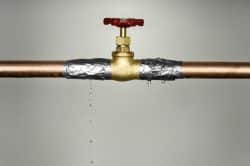 High-pressure water acts as a slow abrasive against the inside of your pipes. Copper is durable under normal conditions but develops pinhole leaks under constant high-pressure flow. These leaks form at elbows and joints where water changes direction. By the time a water stain appears on a wall or ceiling, the leak has usually been active for weeks.
Pipe material matters here. Older galvanized and copper lines carry far more pressure-related risk than modern PEX, which flexes to absorb stress.
Water hammer is the banging sound that occurs when fixtures shut off quickly, and it is one of the clearest signs pressure is too high. The force transfers to pipe joints, valve seats, and fixture heads with each shut-off. Internal air chambers cushion this under normal conditions, but they cannot compensate for pressure well above the safe range.
Repeated water hammer loosens threaded joints, cracks solder connections, and damages fixture valves.
Supply lines to dishwashers, washing machines, refrigerators, and water heaters are rated up to 80 PSI. When pressure consistently exceeds that, the braided or rubber material fatigues ahead of schedule.
A failed supply line behind a washing machine or under a sink can release significant water before anyone notices. The water damage bill from one burst line typically far exceeds the cost of fixing the pressure problem first.
A gauge test is the most reliable method, but these symptoms in daily use signal a problem worth investigating:
 Running toilets: Continuously running or filling unusually fast. The fill valve can’t hold back water when incoming pressure exceeds its design limit.
If you’ve had unexpected water pressure drops followed by spikes, or multiple fixtures showing stress at the same time, the cause is likely a pressure regulation problem rather than individual fixture failures.
A pressure-reducing valve (PRV) installs on the main supply line and drops incoming pressure to a safe level before it reaches any fixture or appliance.
Under the International Residential Code, a PRV is required any time incoming static water pressure exceeds 80 PSI. PRVs have a functional lifespan of 10-15 years. A failing regulator can allow pressure to climb back above safe levels without warning.
If your home’s PRV is more than 10 years old or you’re testing above 80 PSI, a PRV inspection or replacement is a straightforward fix. Installation runs $275-$400 and typically recovers the cost quickly through lower water bills and fewer repairs. An expansion tank should be installed alongside any PRV. Without one, thermal expansion can spike pressure inside a closed system even with a regulator in place.
Homes with aging water piping that has run above safe pressure for years may need more than a regulator. If pipe walls are already compromised, a water repipe with modern PEX is often the better long-term investment.
High pressure wastes water at every fixture, even when nothing appears to be running. Homes with consistently above-normal pressure can waste tens of thousands of gallons per year, and for Knoxville homeowners on KUB water service, that waste shows directly on monthly bills.
When pressure exceeds what fixture valves are designed to handle, they can’t close completely. The result is a slow, constant drip that runs up your bill without you noticing.

High pressure forces water past the fill valve seal, keeping the toilet in a low-level refill cycle throughout the day. It’s easy to miss because the sound is faint, but the water loss adds up quickly.
Sprinkler heads overspray, drip lines lose their calibration, and hose bib connections develop slow leaks at the threads. Fixing pressure protects your pipes and lowers your utility costs at the same time.
Call a licensed plumber if your gauge reads above 80 PSI, if you hear banging pipes regularly, or if you’ve had two or more supply line or appliance failures in recent years.
DIY testing is a reasonable first step. Replacing a PRV, installing an expansion tank, or diagnosing why pressure is spiking despite an existing regulator all require a licensed plumber. Pressure problems in your home’s plumbing system often have more than one cause, and accurate diagnosis prevents replacing the wrong components.
At Tennessee Standard Plumbing, we diagnose pressure problems accurately and fix them right the first time. Call us today to have your water pressure inspected by a licensed Knoxville plumber.
The ideal range is 40 to 60 PSI. Pressure up to 80 PSI is within acceptable limits, but staying near 50 PSI is better for long-term pipe and appliance health.
Attach a water pressure gauge (under $10 at any hardware store) to an outdoor hose bib or laundry faucet with no fixtures running. Leave it on for 24-48 hours to capture spikes during peak usage.
The most common causes are a failing or absent PRV, high municipal supply pressure, and thermal expansion from a water heater in a closed system. Homes at lower elevations also receive elevated pressure from gravity.
Water hammer is the banging sound pipes make when high-pressure water is suddenly stopped. The hydraulic shock damages pipe joints, valve seats, and fixture connections over time.
PRV installation typically costs $275 to $400. An expansion tank is usually recommended alongside it. Most homeowners recover the investment through lower water bills and fewer repairs.
Yes. Dishwashers, washing machines, refrigerators with water lines, and water heaters all have supply connections rated up to 80 PSI. Sustained pressure above that threshold wears out supply lines and internal components ahead of schedule.
Most PRVs last 10 to 15 years. The International Residential Code requires one any time incoming pressure exceeds 80 PSI, but age and use can degrade performance. If yours hasn’t been inspected recently, have a plumber check it.
Yes. Pressure consistently above 80 PSI causes pipe joints to fail, supply lines to burst, and pinhole leaks to form in copper pipes. The water damage from a single burst line typically costs far more than addressing pressure early.
A PRV controls incoming pressure from the municipal supply line. An expansion tank handles the internal pressure increase when heated water expands in a closed system. Both are often needed together because a PRV alone can make thermal expansion spikes worse.
If your pipes already show corrosion, pinhole leaks, or joint failures, a PRV stops future damage but does not repair what is already compromised. A plumber can assess whether targeted repairs or a full repipe with modern PEX is the better investment for your situation.
A full repipe typically runs $1,500 to $15,000, with most homeowners paying around $7,500 depending on home size, pipe material, and accessibility. Homes with significant pressure damage may also need drywall repair after the job. Getting an inspection first helps determine whether a full repipe or targeted section replacement is the right call.



A kitchen sink leak can cause a lot of damage to your home if left unaddressed, leading to mold growth, water damage, and costly repairs. That's wh... Read More

To safely install a gas line, always turn off the gas, hire certified professionals, and follow best practices like using proper materials, conduct... Read More
Frequent plumbing repairs can indicate that your pipes are aging, corroded, or near the end of their lifespan. In such cases, replacement is often ... Read More