
How to Replace a Toilet Water Supply Line
To replace a toilet water supply line, first shut off the water valve, flush the toilet, and disconnect the old line from both the shut-off valve... Read More

Same-Day Service Available
Need a Plumber in Knoxville? We’re Ready to Help!





Plumbers eliminate guesswork by combining traditional diagnostic skills with advanced, non-invasive technology to pinpoint the exact location and cause of a problem.
Plumbing problems rarely announce themselves clearly. A drain slows down. Water pressure feels different. A pipe starts making sounds that were not there before. These changes can be frustrating, especially when the cause is not immediately clear.
Many homeowners wonder how a professional plumber can arrive, ask a few questions, observe the situation, and identify the source of a problem without relying on trial and error. That level of clarity comes from experience, structured evaluation, and proper testing.
At Tennessee Standard Plumbing, our assessments follow a methodical approach built on observation, testing, and proven diagnostic practices.
Contact us today to schedule a professional plumbing assessment.
Plumbing systems function as connected networks rather than isolated parts. When one component changes, symptoms may appear elsewhere in the system.
A slow drain might seem straightforward, yet the cause could involve buildup, venting restrictions, pipe slope, or damage far from the fixture. Guesswork focuses on what is visible. Professional diagnosis focuses on what is responsible.
When the wrong cause is addressed, symptoms often return and sometimes worsen. Accurate diagnosis reduces repeat repairs and limits unnecessary disruption.
Professional plumbers rely on structured reasoning rather than assumptions. Their diagnostic approach follows a consistent mental framework designed to reduce uncertainty.
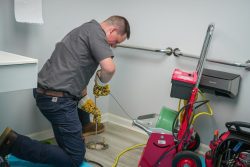 Plumbers begin by observing how the system behaves during normal use. They note which fixtures are affected, how often the issue occurs, and whether it is consistent or intermittent. Sounds, moisture signs, and visible wear provide early direction, but none confirm a cause on their own.
Targeted questions establish context that observation alone cannot provide. Plumbers ask when the issue started, whether it developed gradually, and whether recent changes occurred. Renovations, appliance installations, and shifts in water usage all influence diagnostic direction.
Plumbing systems operate as integrated assemblies rather than independent parts. Drainage, venting, and supply conditions influence one another. Professional diagnosis accounts for these interactions before focusing on individual components.
Once initial reasoning forms a working theory, plumbers move into verification. This stage replaces assumptions with measurable evidence.
Testing answers specific diagnostic questions rather than exploring randomly. Pressure testing, flow testing, and dye testing are used to confirm or rule out suspected causes. When results contradict the theory, the diagnostic direction changes accordingly.
Professional tools support diagnosis when selected intentionally. Drain cameras, moisture meters, and pressure gauges provide confirmation rather than conclusions. Using tools without direction can create misleading information rather than clarity.
Elimination is central to professional diagnosis. Plumbers rule out potential causes methodically before confirming the source. This process prevents unnecessary repairs and protects system integrity.

Even with experience, testing, and structured evaluation, plumbing diagnostics are not always immediate. Some issues reveal themselves only under specific conditions, such as active use, pressure changes, or gradual system failure.
Hidden leaks, intermittent blockages, and underground line issues often require staged evaluation. A plumber may need to observe how a system behaves over time or perform multiple tests before confirming the source. This approach avoids premature conclusions and reduces the risk of unnecessary repairs.
Clear diagnosis is not about speed. It is about allowing enough information to surface so decisions are based on evidence rather than assumption.
Experience influences how efficiently plumbers interpret information. It guides focus without replacing verification.
Plumbers with extensive field experience recognize recurring system behaviors. Certain drainage patterns or pressure symptoms often correlate with specific issues. This recognition helps prioritize testing without skipping confirmation.
Homeowners often treat symptoms rather than sources. Temporary improvements may hide deeper issues or introduce new ones. Professional diagnosis focuses on identifying the cause rather than managing surface effects.
Professional plumbers work under licensing and code requirements. Repairs must be performed reliably and meet established standards. This responsibility reinforces careful diagnosis and discourages rushed conclusions.
Plumbing behavior is influenced by conditions beyond the piping itself. Professional diagnosis accounts for these external variables.
Soil movement, temperature changes, and groundwater conditions can affect underground piping. Building design and foundation type also shape access, drainage behavior, and pressure distribution.
Accurate diagnosis supports long-term reliability rather than short-term fixes. It reduces repeat repairs and unexpected failures.
 Plumbers explain what was observed, what testing revealed, and what options exist. Clear explanations allow homeowners to make informed decisions. Understanding the situation removes uncertainty from the process.
Addressing the correct issue from the start reduces secondary damage and repeat service calls. Professional evaluation often prevents larger expenses later. Accuracy protects both property and finances.
Recurring issues, unexplained changes, or problems affecting multiple fixtures often point to conditions that benefit from professional evaluation. Addressing these signs early can help prevent added disruption and avoid more complex repairs later.
At Tennessee Standard Plumbing, we work with homeowners who want clear answers and a straightforward assessment of their plumbing systems. Call us to schedule your professional plumbing assessment today!
Plumbers rely on observation, targeted questions, and testing to narrow down possible causes. This process replaces assumptions with evidence before any repair begins.
Plumbers may use pressure gauges, drain cameras, moisture meters, and flow tests. These tools are used selectively to confirm findings rather than to search blindly.
Plumbing systems are interconnected, so a change in one area can cause symptoms elsewhere. Drainage, venting, and supply conditions often influence multiple fixtures at once.
In many cases, yes. Observation, testing, and non-invasive tools often provide enough information to identify the source before any opening is needed.
Some issues only appear under certain conditions, such as active use or pressure changes. Staged evaluation helps confirm the cause without rushing to conclusions.
Diagnosis focuses on identifying the cause of a problem. Repair addresses the issue once the cause is confirmed.
Yes. Experience helps guide focus, but testing is still required to confirm findings and rule out other possibilities.
DIY fixes often address symptoms rather than causes. Without proper diagnosis, the underlying issue may continue to develop.
Plumbers use elimination by checking fixtures, lines, and system components step by step. Each eliminated option brings them closer to the source.
Recurring issues, unexplained changes, or problems affecting multiple fixtures are signs that professional evaluation may be needed.



To replace a toilet water supply line, first shut off the water valve, flush the toilet, and disconnect the old line from both the shut-off valve... Read More

At [company_name], we understand the importance of a well-functioning plumbing system for homeowners in Tennessee. As experts in the field, we aim ... Read More

A professional drain camera inspection uses a high-definition, waterproof camera mounted on a flexible cable to navigate your plumbing lines. This ... Read More