
What to Expect During a Professional Plumbing Inspection in Knoxville
A professional plumbing inspection in Knoxville is a detailed, typically one-to-two-hour assessment of your home's entire water supply and drainage... Read More

Same-Day Service Available
Need a Plumber in Knoxville? We’re Ready to Help!





Sudden drops in water pressure are most commonly caused by major plumbing leaks, a failing pressure-reducing valve (PRV), municipal supply issues (like water main breaks), or, for well owners, a failing pump.
Sudden drops in water pressure are typically caused by leaking pipes, faulty pressure regulators, partially closed valves, clogged fixtures, or issues with your municipal water supply. When water pressure falls unexpectedly, identifying the source quickly prevents further damage and restores normal function to your home’s plumbing system.
If your faucets have slowed to a trickle or your shower has lost its force, you’re dealing with a problem that affects daily life in frustrating ways. At Tennessee Standard Plumbing, we’ve helped thousands of Knoxville-area homeowners diagnose and resolve water pressure problems quickly and accurately.
If you’re experiencing sudden pressure loss, contact us today for professional evaluation.
Normal water pressure for residential homes ranges between 40 and 80 PSI (pounds per square inch), with most experts recommending around 60 PSI for optimal performance. Pressure below 40 PSI feels noticeably weak and may indicate a problem, while pressure above 80 PSI can damage pipes, fixtures, and appliances over time.
You can measure your home’s water pressure using an inexpensive pressure gauge from any hardware store. Attach the gauge to an outdoor hose bib or laundry faucet, turn off all water-using appliances, then open the faucet fully and read the gauge. This simple test helps determine whether your pressure problem affects the entire house or specific fixtures.
Understanding your baseline pressure makes it easier to recognize when something changes and identify potential causes.
The most common causes of sudden water pressure drops include leaking pipes, faulty pressure regulators, partially closed shut-off valves, clogged fixtures, corroded pipes, water heater malfunctions, and municipal supply issues. Each cause presents differently and requires a specific approach to diagnose and repair.
Pipe leaks are among the most frequent causes of sudden pressure loss. When water escapes through a crack, hole, or failed joint, less water reaches your fixtures. Even small leaks can produce noticeable pressure drops, and hidden leaks behind walls or underground may go undetected until water damage appears.
Signs of a leak include unexplained increases in your water bill, damp spots on walls or ceilings, the sound of running water when fixtures are off, and water pooling in your yard. A licensed plumber can use leak detection equipment to locate hidden leaks without unnecessary demolition.
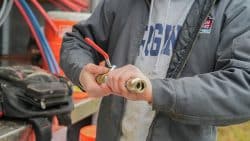 A pressure regulator (also called a pressure-reducing valve or PRV) controls the water pressure entering your home from the municipal supply. When this device fails, water pressure can drop suddenly throughout the entire house. Pressure regulators typically last 10 to 15 years before requiring replacement.
If your pressure drop affects all fixtures simultaneously, a failing regulator is a likely cause. Testing involves attaching a pressure gauge to an outdoor spigot and comparing the reading to what your regulator should deliver. Replacement requires a licensed plumber to install the correct unit and calibrate it properly.
Your home has two main valves that control water flow: the main house shut-off valve and the water meter valve near the street. If either valve is partially closed, water pressure drops throughout the house. This often happens after plumbing repairs when valves aren’t fully reopened.
Locate your main shut-off valve (typically in the basement, crawlspace, or garage) and verify it’s completely open. For gate valves, turn counterclockwise until the handle stops. For ball valves, the handle should be parallel to the pipe. If adjusting the valve restores pressure, you’ve found the problem.
When pressure loss affects only one faucet or showerhead, the problem usually lies with the fixture itself rather than your plumbing system. Mineral deposits from hard water accumulate in aerators and showerhead openings, restricting water flow and reducing pressure at that specific location.
Remove the aerator from the affected faucet and inspect it for white or greenish buildup. Soak the aerator in white vinegar overnight to dissolve mineral deposits, then scrub away remaining residue with an old toothbrush. Showerheads respond to the same treatment. If cleaning doesn’t restore flow, the fixture may need replacement.
Older homes with galvanized steel pipes often experience gradual pressure loss as corrosion and mineral buildup accumulate inside the pipes. This narrowing restricts water flow and reduces pressure throughout the house. Homes built before the 1960s are particularly susceptible to this problem.
Unlike sudden failures, pipe corrosion develops over time but can reach a tipping point where pressure drops noticeably. If your home has aging pipes and pressure has declined gradually, a whole-house repipe with modern materials may be the most effective long-term solution.
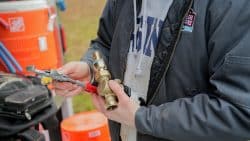 If low pressure affects only your hot water while cold water flows normally, the problem likely originates with your water heater. Sediment buildup inside the tank, a failing inlet valve, or a malfunctioning dip tube can all restrict hot water flow and reduce pressure at hot water fixtures.
Annual water heater maintenance, including flushing the tank to remove sediment, helps prevent this problem. If flushing doesn’t restore pressure, a plumber can inspect the water heater components and recommend repair or replacement based on the unit’s age and condition.
Sometimes pressure drops originate outside your home entirely. Municipal water systems occasionally experience pressure fluctuations during maintenance, repairs, or high-demand periods. If neighbors report similar problems, the issue likely lies with the public water supply rather than your plumbing.
Contact your local water utility to report the problem and ask whether any maintenance or repairs are underway. Municipal issues typically resolve within hours or days without requiring action on your part.
You can diagnose where a pressure problem originates by testing different fixtures, comparing hot and cold water flow, and checking with neighbors. This process of elimination helps identify whether the issue affects your whole house, specific fixtures, or the entire neighborhood.
Test Multiple Fixtures: Turn on faucets in different rooms and note which have low pressure. If only one fixture is affected, the problem is localized. If all fixtures have low pressure, the issue lies with your main supply, valves, or pressure regulator.
Compare Hot and Cold Water: Run hot and cold water separately at the same fixture. If only hot water pressure is low, the problem involves your water heater. If both are equally affected, look elsewhere in your plumbing system.
 Check Your Valves: Verify that your main shut-off valve and any fixture-specific valves are fully open. A partially closed valve is one of the easiest problems to fix.
Ask Your Neighbors: If neighbors report similar pressure issues, contact your water utility. A municipal problem requires patience rather than plumbing repairs.
Call a professional plumber when basic troubleshooting fails to restore your pressure, when you suspect a hidden leak, or when the cause isn’t obvious. Pressure problems rarely fix themselves, and delaying diagnosis gives small issues time to become expensive repairs. Whether the culprit is a failing regulator, corroded pipes, or a leak you can’t see, professional diagnosis gets you answers faster than guesswork.
Tennessee Standard Plumbing brings five generations of plumbing expertise to every Knoxville-area home we serve. Our team will pinpoint pressure problems accurately and explain your options honestly. Call us today!
Test your home’s water pressure by attaching a pressure gauge to an outdoor hose bib or laundry faucet. Turn off all water-using appliances and fixtures inside the house, then open the test faucet fully and read the gauge. Normal residential pressure ranges from 40 to 80 PSI, with 60 PSI considered ideal for most homes.
Sudden whole-house pressure drops typically result from a failing pressure regulator, a partially closed main shut-off valve, a significant pipe leak, or a municipal water supply issue. Check your main valve first to confirm it’s fully open, then contact neighbors to determine if the problem is widespread before calling a plumber.
Yes, a water heater can cause low water pressure, but only for hot water. Sediment buildup in the tank, a failing inlet valve, or a broken dip tube can restrict hot water flow. If cold water pressure is normal but hot water pressure is low, your water heater likely needs maintenance, repair, or replacement.
Pressure regulators typically last 10 to 15 years before requiring replacement, though lifespan varies based on water quality and usage patterns. Signs of a failing regulator include sudden pressure changes affecting the whole house, water hammer noises, and inconsistent pressure that fluctuates without explanation.
Yes, hard water causes low water pressure over time by depositing minerals inside pipes, fixtures, and appliances. These deposits gradually narrow the internal diameter of pipes and clog aerators, showerheads, and valves. Homes with hard water benefit from water softening systems and regular fixture cleaning to maintain proper flow.
Low water pressure in only one faucet usually indicates a clogged aerator, a partially closed supply valve beneath the sink, or mineral buildup inside the faucet cartridge. Remove and clean the aerator first, then check the supply valve. If pressure remains low, the faucet cartridge may need cleaning or replacement.
Fixing low water pressure costs between $50 and $350 for simple repairs like replacing an aerator or adjusting a valve. Pressure regulator replacement typically costs $250 to $500. If corroded pipes are causing the problem, repiping sections or the whole house can cost $1,500 to $15,000 depending on home size and pipe accessibility.
Yes, a significant water leak can cause low pressure throughout the house by diverting water away from your fixtures. The larger the leak, the more noticeable the pressure drop. Signs include higher water bills, wet spots, and the sound of running water when all fixtures are off. Hidden leaks require professional detection equipment to locate.
Water pressure below 40 PSI is considered too low for comfortable home use and may not meet minimum building code requirements in some areas. Pressure between 20 and 30 PSI makes daily tasks difficult and indicates a problem requiring professional diagnosis. Contact a plumber if your pressure consistently reads below 40 PSI.
Consider installing a water pressure booster pump if your home consistently experiences low pressure despite having no leaks, open valves, and a functioning pressure regulator. Booster pumps are particularly helpful for homes at higher elevations, properties far from municipal water mains, or homes with well water systems that cannot maintain adequate pressure.


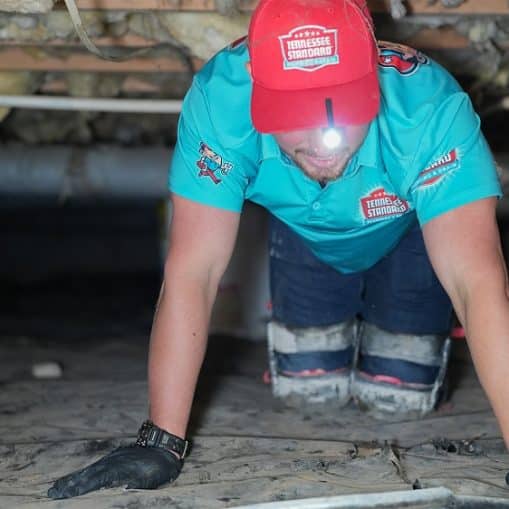
A professional plumbing inspection in Knoxville is a detailed, typically one-to-two-hour assessment of your home's entire water supply and drainage... Read More
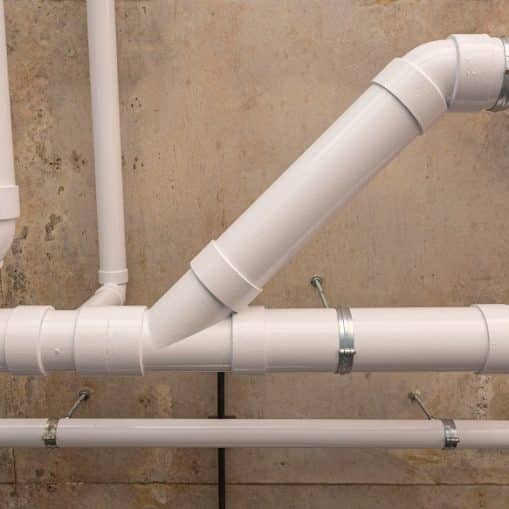
Improperly sloped drain pipes are a common, serious issue in many Knoxville homes, often leading to recurring plumbing failures, structural damag... Read More

The type of gas piping used in homes and buildings determines how safe and strong it remains. A homeowner wants steady gas for cooking, hot water, ... Read More