
Smart Leak Detectors and Water Sensors for Knoxville Homes
Smart leak detectors and water sensors protect Knoxville homes from seasonal pipe freezes, water heater failures, and sudden burst lines that cause... Read More

Same-Day Service Available
Need a Plumber in Knoxville? We’re Ready to Help!





Groundwater levels shift with the seasons, and a private well reflects that shift directly. When rainfall runs below normal for an extended stretch, the depth to water in a well increases, and a household drawing at its usual rate can start noticing weaker showers and longer recovery between demands. The same symptoms can come from a waterlogged pressure tank, a clogged screen or a failing pump. Sorting the seasonal cause from the mechanical one is what decides whether anything needs fixing at all.
The shower is the first thing to show a well is struggling. Sometimes in October it stops being a shower and starts being a rinse. Nothing broke overnight. The laundry still runs, the sink still fills, and if anybody mentioned it at all, they probably blamed the shower head.
Then two people try to get ready at the same time and the second one gets almost nothing.
Households on public water rarely think about where their pressure comes from. On a private well outside Clinton, the answer sits about thirty feet under the backyard and moves with the weather.
A private well pulls from saturated ground rather than from a tank with a fixed level. The United States Geological Survey describes the top of that saturated zone as the water table, and it does not hold still. It rises and falls with rainfall, streamflow, and the geology around it.
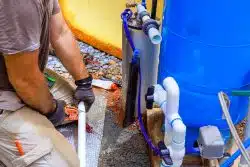 The USGS puts it plainly: “The level of the water table can naturally change over time due to changes in weather cycles and precipitation patterns, streamflow, and geologic changes.” That movement is expected. A well that has performed well for twenty years is still sitting in ground whose water level was different last spring than it is this October.
On what happens when rain runs short, the same agency states: “When rainfall is less than normal for several weeks, months, or years, the flow of streams and rivers declines, water levels in lakes and reservoirs fall, and the depth to water in wells increases.” Depth to water increasing is the technical way of saying the water in the well sits further from the surface than it did.
Recharge from rainfall is not evenly spread across the year, and growing vegetation draws heavily on soil moisture through the warm months. By the tail end of a warm season, ground that has been giving up water for months has had comparatively little chance to take any back. That is why complaints cluster in the fall rather than in March.
Rate matters as much as total volume. According to the USGS, “Pumping too much water too fast draws down the water in the aquifer and eventually causes a well to yield less and less water and even run dry.” Where withdrawal outpaces replenishment, a cone of depression can form around the well, and recovery between periods of heavy use takes longer than it once did.
Seasonal pressure loss has a particular signature. It shows up under load rather than at rest, it gets worse as the day goes on, and it recovers after a quiet stretch. Recognising that pattern separates a seasonal explanation from a mechanical fault fairly quickly.
A single tap opened in a quiet house may behave normally. Two showers, a dishwasher and an irrigation zone together are a different demand entirely. When pressure holds fine alone and collapses under simultaneous use, the constraint is about supply rate rather than about a blocked fixture.
Morning is usually the strongest performance of the day, because the well has had all night to recover. If pressure is good at six and poor at six thirty, and good again the next morning, that daily rhythm points at the well recovering slowly rather than at a component that has failed. Whole-system context sits on the well plumbing page.
Air spitting from a tap, or water that runs cloudy and then clears, can mean the pump is drawing near the water level and picking up air. Sediment appearing where there was none before can point the same direction. Both are worth reporting accurately, because they change what a professional checks first.
Notes beat impressions. Writing down the time of day, which fixtures were running, how long the weak pressure lasted and how long recovery took turns a vague complaint into a usable history. A week of that is often more diagnostic than a single visit during a quiet afternoon.
Blaming a dry autumn is satisfying and sometimes wrong. Several mechanical faults produce almost identical symptoms, and a few of them are far cheaper to correct than anything involving the well itself. Working through them in order avoids paying for the expensive answer to a simple problem.
A pressure tank stores water under pressure so the pump is not called for every small draw. When the air charge is lost, the tank holds little usable water and the pump cycles rapidly. Households often read that as low pressure. This look at how a bad pressure tank leads to air in a plumbing system covers the symptoms in detail.
The switch decides when the pump runs and when it stops. Contacts wear, settings drift, and a switch operating outside its intended range delivers weak or erratic pressure regardless of how much water sits in the ground. It is a small component with an outsized effect on how a system feels.
Sediment filters and treatment equipment restrict flow as they load up. A filter that was changed on schedule in spring may be well past due by late autumn, particularly if the water has carried more sediment than usual. Restriction there mimics a supply problem convincingly. Local service context sits with Knoxville area plumbing services.
Pumps wear, and a tired pump delivers less than it used to. Worth knowing before calling anyone: work inside the well, including the pump and the drop pipe, often falls to a well contractor, while the pressure tank, switch, treatment equipment and household piping are plumbing scope. Confirming who covers which part avoids two trips and two invoices.
Where the season is genuinely the cause, the practical response is about spreading demand rather than about repairs. A well that struggles with four simultaneous draws may be entirely comfortable with the same total volume spread across the day, which costs a household nothing but a little scheduling.
Running laundry, the dishwasher and long showers at different times gives the well room to recover between demands. It is an unglamorous adjustment, and in a genuinely marginal season it is often the difference between a household that notices nothing and one that complains every evening.
Irrigation, pressure washing and filling anything large are the heaviest draws a household makes, and they tend to happen in exactly the months when the water table sits lowest. Scaling those back through a dry stretch protects indoor pressure at the times of day it matters most.
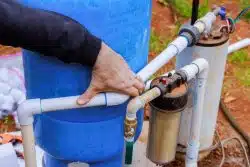 A running toilet or a dripping outdoor spigot draws continuously and pulls the pump into cycles nobody asked for. On public water that is a bill. On a well it is also demand on a limited supply, and it is worth chasing sooner. Households in the area can find local service detail on the Clinton plumbing page.
Changing conditions in a well are a reason to stay current with water testing rather than to skip it. A shift in taste, odour, colour or clarity, or any change in how the well behaves, is a sensible prompt to test through a certified drinking water laboratory rather than to wait for the next annual reminder.
Our team at Tennessee Standard Plumbing has worked across Clinton, Anderson County, Knoxville and the surrounding East Tennessee communities for more than 13 years. According to the company, we carry a 5.0 Google rating across more than 1,000 reviews, hold HomeAdvisor Elite Service recognition, and field more than 50 technicians. On well systems we handle pressure tanks, switches, treatment equipment, household piping and leak detection.
Four things are worth holding onto. Groundwater levels fall through a dry stretch, and depth to water increasing is the normal consequence. Seasonal pressure loss fails under load and recovers overnight, which is its signature. A waterlogged pressure tank imitates the same complaint year round and is worth ruling out first. And work inside the well may belong to a well contractor rather than to a plumber.
Households near Clinton watching their pressure fade can reach our team at (865) 352-9003 or book a visit online. We serve Clinton, Norris, Oak Ridge, Powell, Knoxville, and communities across Anderson County, Knox County and East Tennessee. Peaceful Pipes, Peaceful Life.
Groundwater levels respond to rainfall and to how much water vegetation has drawn from the soil through the warm months. The USGS notes that when rainfall runs below normal, the depth to water in wells increases. When recharge returns, levels tend to recover, and household pressure usually recovers with them.
Not by itself. A waterlogged pressure tank, a worn pressure switch, a loaded sediment filter or a restriction at one fixture can all produce similar symptoms. Those are worth ruling out before assuming the pump is at fault, because several of them are simpler to correct.
The USGS describes it as the lowered area of the water table that can form around a well when water is withdrawn faster than the aquifer replenishes it. In a household it tends to appear as pressure that falls away during heavy use and returns after a quiet period.
Rapid cycling commonly points at a pressure tank that has lost its air charge, so it holds very little usable water between pump starts. It can also come from a pressure switch operating outside its intended range. Both are worth evaluating promptly, since frequent cycling is hard on equipment.
Spreading demand across the day rather than concentrating it usually helps more than cutting total volume. Running laundry, dishwashing and showers at separate times gives the well room to recover. Trimming outdoor use during dry months protects indoor pressure at the hours that matter most.
It can be, since a pump drawing near the water level may pick up air. It can also come from a failed pressure tank bladder. Because the two causes call for very different responses, the symptom is worth reporting precisely rather than acted on with a guess.
It depends on where the problem sits. Pressure tanks, switches, treatment equipment and household piping are generally plumbing scope. Work down inside the well, including the pump and drop pipe, often falls to a well contractor. Describing the symptoms first usually settles which trade should attend.
A private well sits outside the municipal water system, so a city water utility is not the authority for it. Clinton is in Anderson County, and questions about a private well generally go to a well professional, with water quality questions handled through a certified drinking water laboratory.
A change in how a well behaves, or any shift in taste, odour, colour or clarity, is a sensible prompt to test rather than to wait. Testing through a certified drinking water laboratory gives a result that can be compared against earlier records for that same well.
Sometimes, and sometimes not, since it depends on the geology and on where water is actually available at that site. It is a substantial decision that belongs to a well professional working from the specific well record and local conditions rather than to a general rule.


Smart leak detectors and water sensors protect Knoxville homes from seasonal pipe freezes, water heater failures, and sudden burst lines that cause... Read More
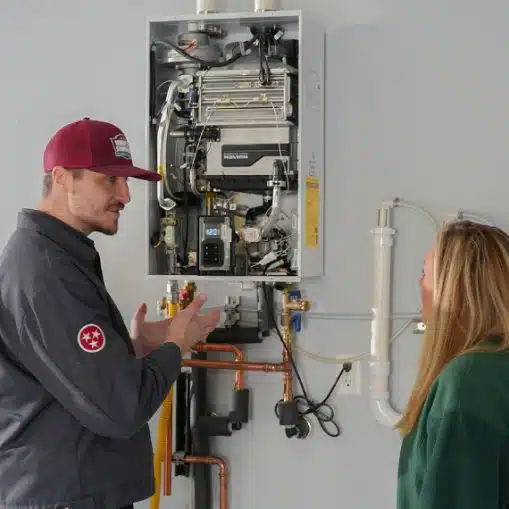
Complex plumbing repairs demand experienced professionals who can deliver accurate, long-lasting solutions while preventing costly damage and safet... Read More
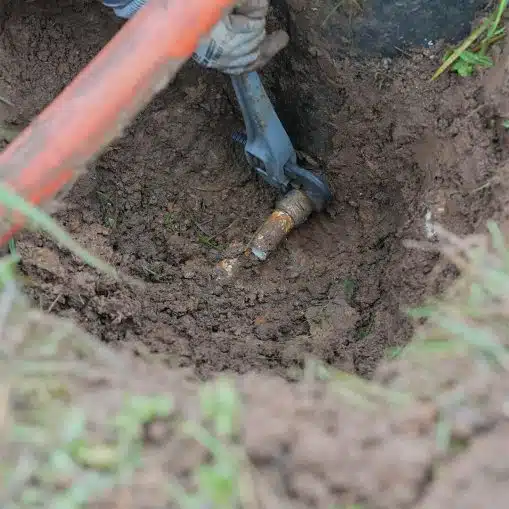
Knoxville's predominantly clay soil creates persistent pressure on underground pipes through expansion and contraction cycles, accelerating corrosi... Read More