
The 9 Best Types of Plumbing Pumps Used in Homes
The most common and essential plumbing pumps used in homes fall into several key categories designed for different applications, primarily dealing ... Read More
Same-Day Service Available
Need a Plumber in Knoxville? We’re Ready to Help!




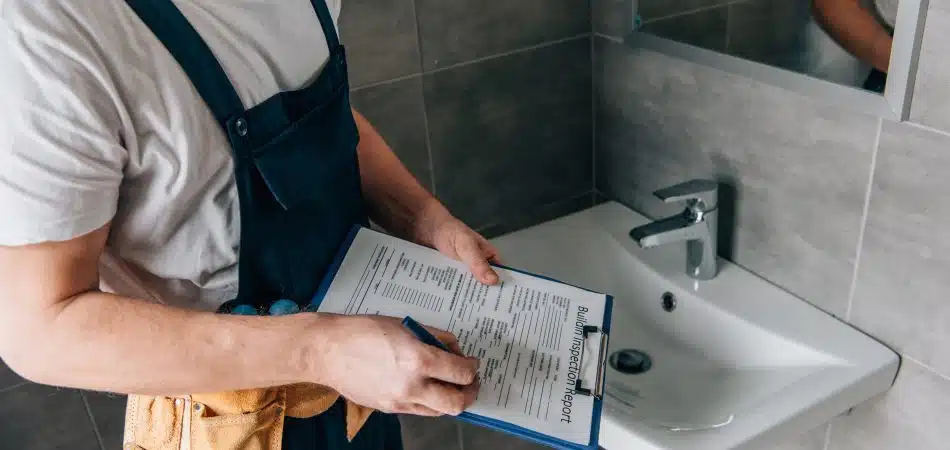
Plumbing rarely closes a restaurant on its own, but it appears on a food service inspection in more places than most operators expect. The Knox County self-inspection checklist covers water source, water pressure, hot water at peak demand, backflow devices, sewage backups, handwashing sinks and grease accumulation in ventilation. Nearly all of those conditions decline gradually rather than failing outright. A kitchen that checks them on a schedule tends to meet an inspector with far fewer surprises.
Ask a Knoxville restaurant owner what worries them before an inspection and the answer is usually hot holding, or the walk-in, or whoever ends up on the line that morning. Plumbing rarely makes the list. Then an inspector crouches down by the dish pit, watches a floor drain for a few seconds, and the conversation changes. That is often the moment somebody starts hunting for a Knoxville plumbing team at four o’clock on a Friday.
What makes it frustrating is that hardly any of it arrives without warning. A handwashing sink slowly becomes a shelf for prep pans. A floor drain that used to clear in seconds starts taking a minute. A backflow device ages quietly behind a mop sink where nobody looks. Each of those has a matching line on the county checklist, and how that work gets scoped for food service is covered on the restaurant managers page.
The Knox County Health Department publishes a self-inspection checklist that food service operators can work through on their own. Reading it as a plumbing document is a useful exercise, because plumbing conditions turn up in several separate groups rather than sitting together in one tidy section.
 Three items sit here directly. The checklist asks that “Water and ice are from an approved source,” that “Hot and cold water are available, water pressure is adequate, and hot water sufficient to meet peak demand,” and that the “Plumbing system is properly maintained with operational backflow devices.” A fourth asks that “Sewage and wastewater disposal systems are working properly and no sewage back-ups are occurring.”
Handwashing has its own item asking that “Handwashing sinks are operational, accessible, and properly equipped with soap and hand drying provisions.” The word doing the quiet work in that sentence is accessible. A sink that functions perfectly but sits behind a stack of sheet pans is not accessible, and that is a condition a busy service creates without anyone deciding to create it.
The checklist also asks that “Hot water is at sanitizing temperature/sanitizer test strips available and used.” That item ties the plumbing system to the sanitation program. A water heater that recovers too slowly for the dish pit during peak service can turn into a sanitation finding rather than an equipment complaint.
One more item asks that “Ventilation is preventing accumulation of condensation, grease, and buildup.” Grease on surfaces around a hood is the same grease that ends up coating drain lines, so the two tend to tell the same story about a kitchen. What that looks like inside the pipe is covered in this piece on grease buildup inside kitchen drain pipes.
Very few kitchens fail an inspection because of a sudden plumbing event. The conditions that draw attention are usually ones that developed slowly enough that the staff stopped noticing them, which is exactly why an outside set of eyes finds them so quickly.
The checklist language is about devices being operational, not merely present. A device can be installed, visible and completely past its useful service life. Hose connections at mop sinks and can wash areas, carbonator connections and chemical dispensers are common locations where protection is either missing or no longer functioning as intended.
A floor drain that runs fine at ten in the morning can surcharge during a dinner rush when the dish machine, the prep sinks and the mop sink all discharge together. Because inspections often happen outside peak service, a drain problem can hide in plain sight and then appear on the one visit that catches the kitchen working hard.
Grease is the recurring theme in commercial kitchen drainage. The Environmental Protection Agency lists “Fats, oils and grease (FOG), and some household products (including some marked ‘flushable’) such as baby wipes, facial wipes, sanitary pads, and tampons” among the materials that “may create blockages” in a sewer system. Inside a restaurant line that arrives as a coating that narrows the pipe long before anything backs up.
A handwashing sink holding a thawing pan, a sanitizer bucket or a stack of utensils reads as unavailable for handwashing. So does one where the soap dispenser is empty or the hot water side has quietly stopped delivering. This is the most frequently self-correctable item on the list and also the easiest to let slide during a hard week.
The gap between one inspection and the next is where every one of these conditions forms. Nothing dramatic happens. Line pressure drifts, grease accumulates, a device ages past its useful life, and storage habits shift as menus and staffing change through the year.
Grease coats the inside of a drain line in thin layers. For a long time the line still drains and nobody thinks about it. Then the remaining opening gets small enough that peak discharge exceeds what it can carry, and a line that seemed fine becomes a backup during the busiest service of the week.
A kitchen that adds fryer capacity, extends hours or shifts toward higher volume changes what its drainage system handles daily. The plumbing was sized for the operation that existed when it was installed, and nothing about a menu change updates that sizing automatically.
Backflow prevention assemblies have internal components that wear regardless of how carefully a kitchen operates. Testing and maintenance intervals are set by the device type, the applicable requirements and the water purveyor rather than by how the kitchen feels about its condition.
Service records, device test reports and grease service records are easy to lose track of across a change in management. Keeping them in one place, current and retrievable, costs almost nothing and answers a question quickly when somebody asks it during a visit.
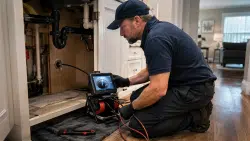 The self-inspection checklist exists precisely so an operator can find these conditions before an inspector does. Treating the plumbing items as a short standing routine, rather than as a reaction to a bad visit, is the practical difference between the kitchens that get surprised and the ones that do not.
Pull the plumbing items out of the checklist and walk the kitchen against them during a quiet hour. Water source, water pressure, hot water at peak demand, backflow devices, sewage backups, handwashing sinks, sanitizing temperature and grease accumulation. Each one has an observable condition attached, so the walk produces findings rather than impressions.
Drainage and hot water both behave differently when the kitchen is working. Checking the dish pit late in a heavy service, and watching floor drains while multiple fixtures discharge, reveals problems that a quiet mid-morning inspection will miss entirely.
Empty soap dispensers, obstructed sinks and lapsed cleaning schedules are operational and can be corrected the same day. Undersized drainage, a venting defect, a failed device or a water heater that cannot meet peak demand are different problems with different lead times. Sorting the list into those two groups shows what genuinely has to be scheduled.
Food service questions in Knox County go to the Knox County Health Department Environmental Health Division at 140 Dameron Ave in Knoxville, reachable at (865) 215-5200. Plumbing repair scope for commercial kitchens is described on the commercial plumbing repairs page. Commercial plumbing work in Tennessee falls under the 2021 International Plumbing Code.
Our team at Tennessee Standard Plumbing has worked with Knoxville and Knox County businesses for more than 13 years on drain lines, grease-affected piping, backflow devices, water heaters and leak detection. According to the company, we carry a 5.0 Google rating across more than 1,000 reviews, hold HomeAdvisor Elite Service recognition, and field more than 50 technicians. Most of the restaurant calls we take come in during service, which is exactly when a marginal drain stops being marginal.
Four things are worth holding onto. Plumbing shows up in several separate places on the Knox County checklist rather than in one section. The checklist asks for backflow devices that are operational and for sewage systems working with no backups occurring. Grease accumulation connects the hood and the drain line, and both deserve a schedule. And the numbers beside checklist items are item references, not points.
Restaurant operators who want the plumbing items reviewed before an inspection can reach our team at (865) 352-9003 or book a service visit online. We serve Knoxville, Farragut, Powell, Maryville, Oak Ridge, and communities across Knox County, Blount County and East Tennessee. Peaceful Pipes, Peaceful Life.
The published self-inspection checklist covers approved water and ice source, hot and cold water with adequate pressure and enough hot water for peak demand, a plumbing system maintained with operational backflow devices, and sewage systems working with no backups. Handwashing sinks, sanitizing water temperature and grease accumulation in ventilation appear as separate items.
No. The numbers shown beside items on the Knox County self-inspection checklist are item references. Knox County does not publish a scoring formula or pass threshold on its food protection page, so any point value quoted elsewhere should be confirmed directly with the health department before relying on it.
The checklist item asks that handwashing sinks be operational, accessible, and properly equipped with soap and hand drying provisions. Accessibility is part of the wording, so a working sink that cannot be reached or used during service does not satisfy the item as written.
A partially restricted line still carries a light flow without complaint. During peak service the dish machine, prep sinks and mop sink can discharge close together, and the combined rate exceeds what the restricted line can pass. That is when the backup appears.
That varies with menu, volume, fryer use and the design of the drainage system, so no single interval fits every kitchen. An interval set from the kitchen’s own history of restrictions is more reliable than a general recommendation. Local pretreatment requirements may also apply.
The wording asks that the plumbing system be properly maintained with operational backflow devices, which is about function rather than presence. A device that is installed but past its service life, damaged or unsuitable for the connection it protects does not meet that description.
It can. One checklist item ties hot water at sanitizing temperature to the sanitation program, and another asks for hot water sufficient to meet peak demand. A heater that recovers too slowly for the dish pit late in service can therefore surface as a water or sanitizing finding.
They are separate systems, but they reflect the same cooking volume and the same cleaning discipline. A kitchen with visible accumulation around ventilation often has grease moving into drain lines as well, which is why reviewing both schedules together tends to be productive.
The Knox County Health Department Environmental Health Division, at 140 Dameron Ave in Knoxville, reachable at (865) 215-5200. Questions about permits, inspections and requirements for a specific establishment are best answered by that office rather than by a contractor.
Soap and drying provisions at every handwashing sink, clear access to those sinks, hot water performance late in a heavy service, floor drain behaviour while several fixtures run together, visible condition of backflow devices, and current service documentation. Structural issues such as venting or drainage sizing take longer and should be scheduled separately.


The most common and essential plumbing pumps used in homes fall into several key categories designed for different applications, primarily dealing ... Read More
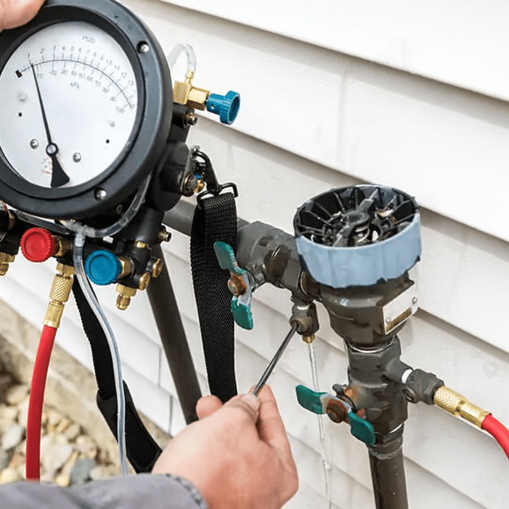
Backflow preventer testing costs typically range from $50 to $250, depending on the device and location. Expect annual testing, which includes a pr... Read More
The federal Section 25C tax credit (30%, up to $2,000) for heat pump water heaters expired December 31, 2025, following the passage of HR1 — though... Read More