
Backflow Preventers in Knoxville, TN: Understanding Local Plumbing Codes
Backflow preventers are required in Knoxville to stop contaminated water from flowing into the public supply. Most properties must install, test, a... Read More

Same-Day Service Available
Need a Plumber in Knoxville? We’re Ready to Help!




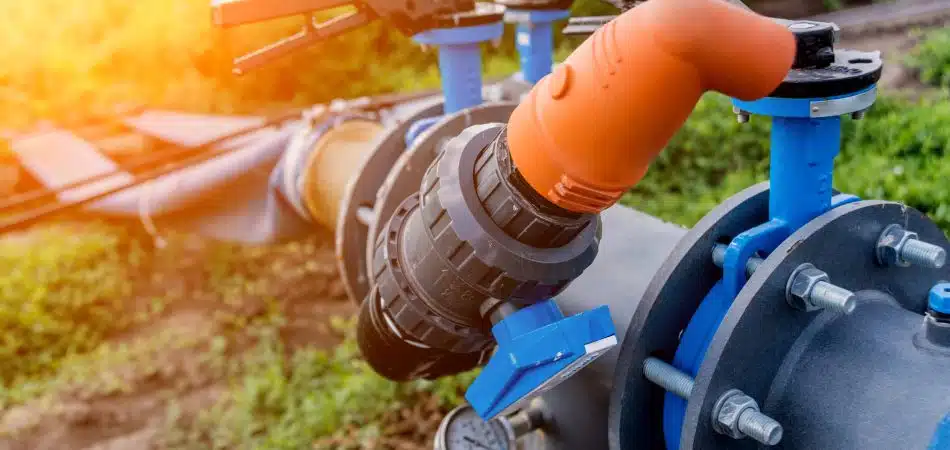
Irrigation backflow assemblies are mounted above ground, which puts them ahead of buried pipe in the order things freeze on a property. The National Weather Service Morristown office reports the first freezing temperatures generally reach the Tennessee Valley somewhere between mid-October and mid-November, so early fall is the planning window rather than the reaction window. Shutdown is a sequence: the controller comes off its schedule, the supply is isolated, water is relieved from the assembly and lateral lines, and test cocks are left as the manufacturer directs. Annual testing rules come from the serving utility and vary by address.
There is a narrow window every autumn where an irrigation backflow assembly goes from being nobody’s problem to being a cracked brass casting sitting in a puddle. It is one of the more avoidable repairs in West Knoxville and Farragut, and it happens on a schedule that is broadly predictable.
The assembly sits above ground by design, so it can be tested. That same exposure is what makes it the first thing on the property to find a hard freeze.
Timing the shutdown is the whole job. Too early and the lawn misses weeks it could have used. Too late and the repair is booked before anyone has noticed there is water on the ground.
Everything about an irrigation shutdown is straightforward except when to do it. Too early, and the lawn loses weeks of watering it could have used through a dry fall. Too late and one cold night ends the conversation. The window is the interesting part, and it moves every year.
The National Weather Service Morristown office reports that freezing temperatures generally arrive across the Tennessee Valley somewhere between mid-October and mid-November. Those are climate normals, meaning medians across many years rather than a prediction for any given autumn. Planning against the early end of that window costs a little watering. Planning against the late end costs an assembly.
An above-grade assembly holds a small volume of water in a rigid brass or bronze body. It does not take a prolonged deep freeze to crack it. A single night at or slightly below freezing, with clear skies and no wind, can be enough. Waiting for a forecast that mentions a hard freeze is past the event that actually causes damage.
The practical trigger is the first forecast with an overnight low near freezing, not a calendar date. Households that check the ten-day outlook in early October and act on the first cold night in it come out ahead of those working from last year’s date. The NWS Morristown frost and freeze normals give the seasonal shape without pretending to be a forecast.
Cool-season turf slows down as temperatures drop and rainfall generally increases through the fall in East Tennessee. The watering being protected by a late shutdown is usually worth less than the assembly being risked. That trade tilts toward shutting down earlier rather than later in most seasons.
An irrigation system splits into two very different exposure zones. Lateral lines and heads sit shallow underground where soil provides some thermal buffer. The backflow assembly, its isolation valves, and the riser feeding it sit in open air, unprotected, usually against a wall or in a corner of a yard.
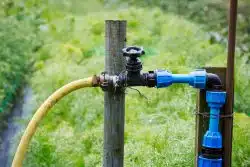 Air temperature drops faster than soil temperature and recovers more slowly overnight. A brass assembly body radiates heat to a clear sky and can sit colder than the air around it. That combination means the assembly reaches freezing well before the shallow buried lines it feeds, which is why the assembly is the part that usually breaks.
Water expands as it freezes. Inside a closed brass body with valves shut on both sides, that expansion has no relief path, and something has to give. The crack often opens at a body seam or at a test cock rather than somewhere obvious, so the damage may not be visible until the system is pressurized again in spring. Details on assembly configuration and local requirements appear in residential backflow prevention services.
An insulated pouch or foam cover slows heat loss. It does not add heat, and it does not drain the assembly. Covers help most as protection against an unexpected early cold snap before a scheduled shutdown, and they help least as a substitute for removing water from the assembly. Treating a cover as a full solution is a common reason assemblies still crack in a covered installation.
Assemblies mounted close to a heated exterior wall often survive nights that crack an assembly out in the open, which teaches homeowners a lesson that stops being true in a colder-than-usual year. Position helps. It does not remove the need for a shutdown, and the exceptions tend to arrive in the years with the worst weather.
Shutdown is a short sequence performed in a specific order. Doing the steps out of order leaves water where it should not be, or leaves a valve in a position that traps it. The sequence below reflects standard practice, and the manufacturer’s instructions for the specific assembly govern where the two differ.
Setting the controller to off, or to a rain or seasonal setting, stops the system from cycling after the water is shut off. Skipping this leaves a controller commanding valves in a dry system through the winter. Most controllers keep programs in memory so the schedule is still there in spring.
Closing the isolation valve upstream of the assembly stops water reaching it. That valve is typically inside a basement, crawl space, or meter box rather than at the assembly itself. Homeowners who cannot locate it are the ones who get stuck partway through the job on the evening of the first freeze warning, which is an argument for finding it in September.
Water has to leave the assembly and the lines it feeds. Systems differ: some drain by gravity through manual drain valves, some use automatic drains, and some are cleared with compressed air. Compressed air work carries real injury risk and can damage components at the wrong pressure, so it belongs with someone who does it routinely rather than with a borrowed compressor and a video.
Manufacturers generally direct that test cocks be left partly open and shutoff valves left at an angle so no water is trapped in a closed chamber. The exact instruction varies by assembly type and by manufacturer. Following the label on the device beats following a general rule, and the relevant local requirements are covered in this guide to Knoxville backflow preventer codes and installation.
| Order | Action | Why It Sits Here in the Order |
|---|---|---|
| 1 | Controller off schedule | Stops zone valves cycling once the water is gone |
| 2 | Close the upstream isolation valve | Cuts supply before anything downstream is opened |
| 3 | Relieve water from assembly and laterals | Removes the water that expands and cracks the body |
| 4 | Set test cocks and valves per the label | Prevents water from being trapped in a closed chamber |
| 5 | Insulate what remains exposed | Slows heat loss after the water has already been removed |
Testing and shutdown are separate jobs that share a season. Tennessee rules prohibit unapproved cross-connections and require community water systems to run an approved cross-connection control program, and those utility programs are where testing frequency actually comes from. The requirement therefore varies by serving utility rather than being uniform statewide.
TDEC Rule 0400-45-01-.17 prohibits unapproved cross-connections and requires community water systems to adopt a TDEC-approved cross-connection control policy. That sets the framework. The specific obligation on a property owner, including how often a testable assembly is tested and who receives the report, comes from the serving utility’s program. The TDEC cross-connection control manual sets out the state framework.
Testing on a testable assembly is performed by a certified backflow prevention assembly tester holding a Tennessee certificate of competency. That credential is separate from a general plumbing credential. Property owners can ask the serving utility which testers it accepts and where reports are filed, since utilities differ on both.
Spring is the crowded end of the testing calendar because everyone restarts irrigation at once. Scheduling a test in early fall, before shutdown, spreads the work out and has a second advantage: if the test reveals a fault, the repair happens before the assembly sits through a winter with a known problem. This is a scheduling preference rather than a requirement, and the utility’s due date governs.
Because programs differ by utility, a West Knoxville address and a Farragut address may not carry identical obligations. Asking the serving utility directly settles it in one call, and it also confirms whether an irrigation connection is classified in a way that calls for a testable assembly at all. Homeowners across West Knoxville and nearby neighborhoods frequently find the answer differs from what a neighbor assumed.
Our team at Tennessee Standard Plumbing has served West Knoxville, Farragut, Knox County, and the surrounding East Tennessee communities for more than 13 years on backflow assemblies, water lines, and leak detection. The company reports a 5.0 Google rating across more than 1,000 reviews, HomeAdvisor Elite Service recognition, and more than 50 technicians on the team.
Four things are worth holding onto. The Weather Service window for the first freeze in the Tennessee Valley generally runs from mid-October to mid-November, and it moves. The assembly above grade freezes before the buried pipe it feeds. Shutdown is a sequence, and the manufacturer’s label governs the valve positions. And annual testing obligations come from the serving utility, so confirming for a specific address beats assuming.
Households that want the irrigation assembly handled before the first cold night can reach our team at (865) 352-9003 or book an appointment online. We serve West Knoxville, Farragut, Karns, Knoxville, and communities across Knox County and East Tennessee. Peaceful Pipes, Peaceful Life.
Work from the first forecast overnight low near freezing rather than a fixed date. The National Weather Service Morristown office reports that freezing temperatures generally reach the Tennessee Valley somewhere between mid-October and mid-November, and the date moves year to year. Early October is a reasonable time to have the plan in place.
The backflow assembly sits above ground in open air without the soil buffer that protects buried pipes. Its metal body can radiate heat to a clear night sky, causing it to freeze before shallow buried lines. Water trapped inside a closed brass body has no relief path when it expands, which can cause the assembly to crack.
An insulated cover slows heat loss but does not add heat or remove water from the assembly. It can provide useful protection against an unexpected early cold snap before a planned shutdown. Relying on a cover instead of removing water from the assembly can still leave trapped water that freezes and causes cracking.
Not every irrigation system needs to be cleared with compressed air. Some systems drain by gravity through manual drain valves, some use automatic drains, and others are cleared with air. Compressed air work carries injury risks and can damage components if the pressure is incorrect, so it is better suited to someone experienced with irrigation winterization than a first attempt with a borrowed compressor.
Manufacturers generally direct that test cocks be left partly open and shutoff valves left at an angle so water is not trapped inside a chamber. The exact procedure varies by backflow assembly type and brand, so the label and manual for the specific device should govern rather than a general rule.
Tennessee rules prohibit unapproved cross-connections and require community water systems to adopt an approved cross-connection control policy. The specific testing frequency for a property comes from the serving utility’s program, so requirements can vary by address. Contacting the serving utility can confirm the testing schedule that applies to your property.
Testing a testable backflow prevention assembly is performed by a certified backflow prevention assembly tester who holds a Tennessee certificate of competency. This is a separate credential from general plumbing qualifications. Utilities may differ in which testers they accept and how test reports must be submitted, so check with the serving utility for its requirements.
The utility’s due date governs when testing is required. Where there is flexibility, testing in early fall before shutdown can help avoid the spring rush and identify a fault before the assembly sits through winter with a known problem. This is a scheduling preference rather than a general testing requirement.
This is a common situation and a good reason to locate the valve in September rather than during a freeze warning. The isolation valve is typically in a basement, crawl space, or meter box rather than directly at the backflow assembly. Locating and labeling it ahead of time makes the shutdown process easier each year.
Winter damage can remain hidden until the irrigation system is pressurized again. A crack may develop along a body seam or at a test cock rather than in an obvious location. Watch the assembly closely during spring startup before leaving the area. A failed spring test is another common way winter damage is discovered.


Backflow preventers are required in Knoxville to stop contaminated water from flowing into the public supply. Most properties must install, test, a... Read More

A practical home plumbing maintenance schedule combines monthly checks, seasonal tasks, annual reviews, and prompt attention to warning signs. Mont... Read More
The cost of a backflow preventer depends on the device type, size, and installation setup. A backflow preventer is a safety device that prevents co... Read More