
Why Does Experience Matter in Complex Plumbing Repairs?
Complex plumbing repairs demand experienced professionals who can deliver accurate, long-lasting solutions while preventing costly damage and safet... Read More
Same-Day Service Available
Need a Plumber in Knoxville? We’re Ready to Help!




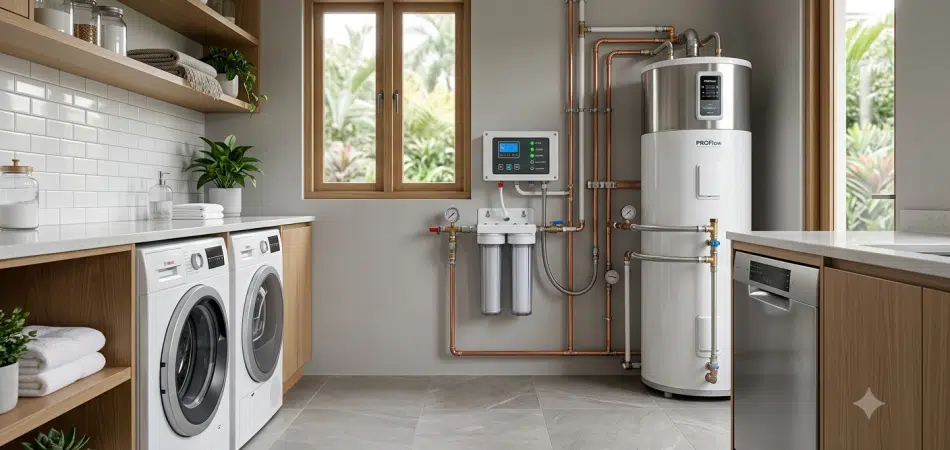
Hard water quietly shortens the life of dishwashers, washing machines, coffee makers, ice makers, and water heaters throughout Knoxville, leaving mineral scale behind that clogs valves, coats heating elements, and forces every appliance to work harder than it should. Knoxville’s water runs moderately hard, and homes on private wells often carry an even heavier mineral load, which means most households are dealing with this without realizing it.
Knoxville sits on a mix of KUB city water and private wells, and both can leave mineral deposits behind in dishwashers, washing machines, coffee makers, and ice makers. The appliances themselves are usually not the problem; what’s coming through the pipes often is.
At Tennessee Standard Plumbing, we help Knoxville homeowners understand what’s actually happening inside their appliances when water quality is the real culprit. A dishwasher or washing machine that seems to be failing early is often just fighting hard water it was never built to handle.
This August, we’re crediting the value of an anti-scale filter toward a new tankless water heater install or a whole-home filtration system paired with one. Contact us today to see how it can help protect your appliances before hard water does more damage.
Most home appliances are built to last well into their second decade under normal conditions. Hard water changes that timeline, and the effect compounds the longer it goes unaddressed.
Water heaters, tank or tankless, are often the first appliance to show wear from hard water because they process the most water in the house. Scale builds up inside a tank unit or across a tankless system’s heat exchanger, and both lose efficiency as that buildup grows.
A tankless system paired with an anti-scale filter avoids much of this wear from the start. Without protection, a water heater in a hard-water home typically shows performance issues well before one on softened water does.
 Dishwashers and washing machines both rely on hot water and detergent working together, and hard water interferes with both. Mineral deposits build up inside valves, spray arms, and pumps, while detergent has a harder time dissolving and rinsing clean.
Over time, that combination shows up as reduced performance long before either appliance reaches the end of its expected lifespan. Homes on well water often see this happen faster than homes on treated city water.
Smaller appliances feel the effects too, even though they use far less water than a dishwasher or washing machine. Mineral buildup inside a coffee maker’s internal lines can affect both performance and taste, and the same happens inside an ice maker’s water lines.
These appliances are often the first place homeowners notice something is off, simply because a change in taste or ice quality is easy to spot. It’s usually an early warning sign worth paying attention to.
Some signs of hard water damage are easy to see once you know where to look. Others take longer to notice but are just as telling.
Dishes and glasses coming out of the dishwasher with a cloudy film or white spots are one of the clearest hard-water signs in the house. That residue is a mineral deposit left behind as the rinse water dries, not a sign the dishwasher itself is failing.
Running an empty cycle or switching detergents rarely fixes it for long, because the mineral content of the water is the actual cause. It tends to get more noticeable over time, not less.
Laundry that feels stiff or looks duller than it used to is often a hard-water symptom rather than a washing machine problem. Minerals interfere with how detergent dissolves and rinses out, leaving a residue behind in the fabric itself.
Whites can look grayed out, and colors can fade faster than expected, even with a newer machine. It’s a subtle sign that’s easy to blame on the detergent brand instead of the water quality.
Chalky white buildup around faucets, showerheads, or an appliance’s visible parts is hard water scale in its most obvious form. If it’s visible there, it’s also building up in places you can’t see, like the internal components of a dishwasher or washing machine.
This buildup narrows water pathways over time, which is part of why appliances start working harder to do the same job. Catching it early is easier than waiting until it affects performance.
Performance changes are usually more gradual than physical signs, which makes them easier to miss. They’re worth watching for anyway.
 A dishwasher or washing machine that suddenly takes longer to finish a cycle than it used to may be compensating for reduced water flow. Scale buildup inside valves and pumps restricts flow, and the appliance’s internal system responds by running longer to get the same result.
This tends to happen gradually, which is why it’s easy to attribute to age instead of water quality. A sudden jump in cycle time is worth a closer look.
Weaker spray pressure inside a dishwasher, or a washing machine that seems to fill slower than before, points to the same underlying cause. Scale narrows the internal pathways water moves through, and that reduction shows up as weaker performance well before an appliance actually fails.
It’s often mistaken for a mechanical issue when the real cause is what’s coming through the water line. A water test settles the question quickly.
Appliances that need more frequent repairs, especially for the same recurring issue, are often fighting a water-quality problem rather than a mechanical one. Replacing a part without addressing the mineral buildup behind it usually means the same repair comes up again.
This pattern is one of the more expensive ways homeowners discover hard water is the real issue. Addressing the water itself tends to be the more lasting fix.
Knoxville’s water carries its own specific challenges depending on where it comes from, and whole-home water filtration is usually the most direct way to address all of them at once. The table below breaks down the main factors and what actually helps.
This August, pairing a tankless water heater install with an anti-scale filter is one of the most direct ways to protect a new system from day one.
Appliances that seem to be failing early are more often fighting hard water than showing their age. Tennessee Standard Plumbing helps Knoxville homeowners protect dishwashers, washing machines, and water heaters from that wear before it gets expensive.
This August, we’re crediting the value of an anti-scale filter toward a new tankless water heater install or a whole-home filtration system paired with one. The sooner hard water gets addressed, the less wear your appliances take on. Call us today to protect your home’s appliances.
These offers cannot be combined with other offers.
*EXCLUSIONS APPLY, CALL FOR DETAILS
Hard water leaves mineral deposits inside valves, spray arms, and pumps, which reduces performance over time and leaves dishes and laundry looking less clean. Detergent also has a harder time dissolving fully in hard water, which compounds the effect. Both appliances tend to show wear earlier than they would on softened water.
Yes, mineral buildup inside a coffee maker’s or ice maker’s internal lines can affect both performance and taste over time. These smaller appliances often show the effects sooner than larger ones, simply because the difference is easier to notice. A change in taste or ice quality is often an early warning sign.
Common signs include white spots or film on dishes, stiff or dull laundry, visible scale buildup around fixtures, longer cycle times, and more frequent repairs for the same issue. These signs tend to develop gradually rather than all at once. A water test confirms whether hard water is the actual cause.
A properly matched water softener or whole-home filtration system protects every appliance the water reaches, not just the water heater. Treating the water at the source is generally more effective than trying to protect appliances individually. Which system fits best depends on the home’s specific water source and demand.
Most home appliances are built to last well into their second decade under normal conditions, but hard water shortens that timeline considerably. The exact impact depends on the appliance, the water source, and how much mineral load it’s carrying. Homes on private wells often see faster wear than homes on treated city water.
Whole-home filtration treats the water before it reaches any fixture or appliance, while a single-appliance filter only protects the one unit it’s attached to. For homes trying to protect multiple appliances at once, treating the water at the source is usually the more effective approach. The right choice still depends on the home’s specific setup.
This August, the value of an anti-scale filter is credited toward any new tankless water heater install, or off a whole-home filtration system paired with one. Exclusions apply and the offer cannot be combined with other offers, so the exact details get confirmed when you reach out.
A water quality test is the most reliable way to confirm whether hard water is behind an appliance’s performance issues. It replaces guesswork with actual data about what’s in your home’s water. From there, the right protection, whether that’s a softener, filtration, or both, becomes a much clearer decision.


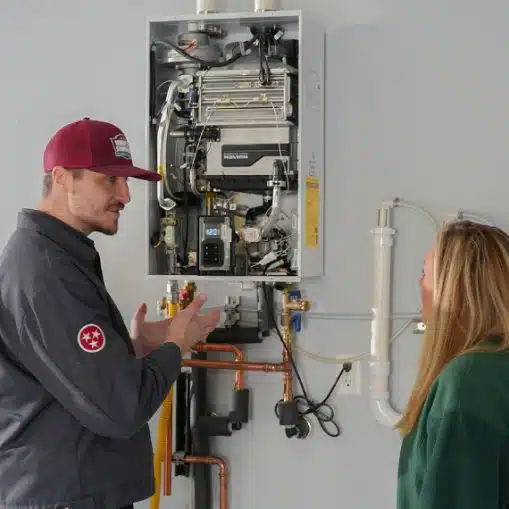
Complex plumbing repairs demand experienced professionals who can deliver accurate, long-lasting solutions while preventing costly damage and safet... Read More

Gas pipe size calculation follows a standardized workflow that ensures safe pressure, code compliance, and reliable appliance performance for both ... Read More

Inconsistent hot water, characterized by sudden temperature drops, often indicates internal tank issues like severe sediment buildup, a broken dip ... Read More