
Why Plumbing Issues Often Appear After Renovations
Plumbing issues frequently emerge after renovations because the process of remodeling—such as moving walls, updating fixtures, or changing floor he... Read More

Same-Day Service Available
Need a Plumber in Knoxville? We’re Ready to Help!




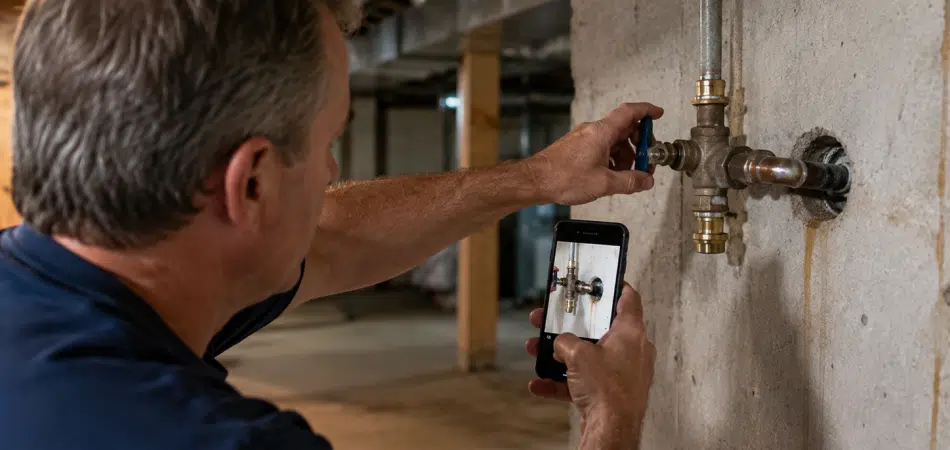
The main water shutoff valve in a Knoxville home sits where the water service line enters the structure, most often on an interior wall of a basement, crawlspace, garage, or utility closet on the side of the house facing the street. A second valve sits in the meter box near the curb, but that one belongs to the utility. Building code requires the interior valve to be accessible and full-open type. A valve that has not been operated in several years may seize, so turning it twice a year is what keeps it usable.
Nobody looks for the main water shutoff on a calm Tuesday. They look for it at 11 p.m. with water coming through a ceiling, holding a phone flashlight, in a crawlspace they have entered twice in nine years. The valve is usually right where it should be. The problem is that finding it takes eight minutes, and eight minutes of an open supply line is a great deal of water.
Tennessee Standard Plumbing has answered emergency calls across Knoxville and Knox County for more than 13 years, holds a 5.0 Google rating across over 1,000 reviews, carries HomeAdvisor Elite Service recognition, and fields a team of more than 50 technicians. The single most useful thing we tell homeowners has nothing to do with a repair: find the valve now, turn it now, and tell everyone in the house where it is.
This text explains where the valve is located in different types of homes, how to test it without damaging it, which smaller valves are better at fixing most leaks than the main valve, and the order of activities in the first five minutes.
The main shutoff sits where the water service line enters the building, on the side of the house facing the street. Section P2903.9.1 of the International Residential Code says that the valve must be easy to reach and should be a full-open type. This means you can access and use it without taking apart any part of the building. Foundation type determines where that lands. Homeowners who need water line and piping work often discover the valve’s condition during that visit.
In slab-on-grade buildings, found in Farragut, Hardin Valley, and newer parts of Powell, the service line comes up through the slab. The valve is usually in a garage, utility closet, laundry room, or behind a panel near the water heater. It is frequently within a few feet of the water heater, since both sit near the point of entry. In finished garages, the valve is sometimes boxed in behind drywall, which is a code accessibility problem worth correcting before it matters.
Older houses in North Knoxville, Fountain City, Bearden, and most of Knox County have a basement or crawlspace. The valve is located on the inside of the foundation wall where the line goes through it. In a crawlspace, this often means a valve at the end of a dark, low area. This is the last thing any homeowner wants to find during a leak. Locating it in daylight and marking the access hatch is a twenty-minute job.
A second valve sits in the meter box near the curb or lot line, and it is not the homeowner’s valve. KUB’s Water Division Service Procedures say that only KUB and its contractors can operate utility valves. Meter box lids, meter yokes, and the setting are all utility equipment. Property owners with questions about what may be operated at a specific address can confirm the policy with KUB customer service at 865-524-2911. The interior valve is the one a household should know.
A shutoff valve is mechanical, and mechanical parts that never move stop moving. Valves in East Tennessee homes sit in hard water, and mineral scale builds on the stem and seat over years of stillness. A valve that has not been turned since installation is a valve of unknown condition, which is the same as no valve at all during an emergency.
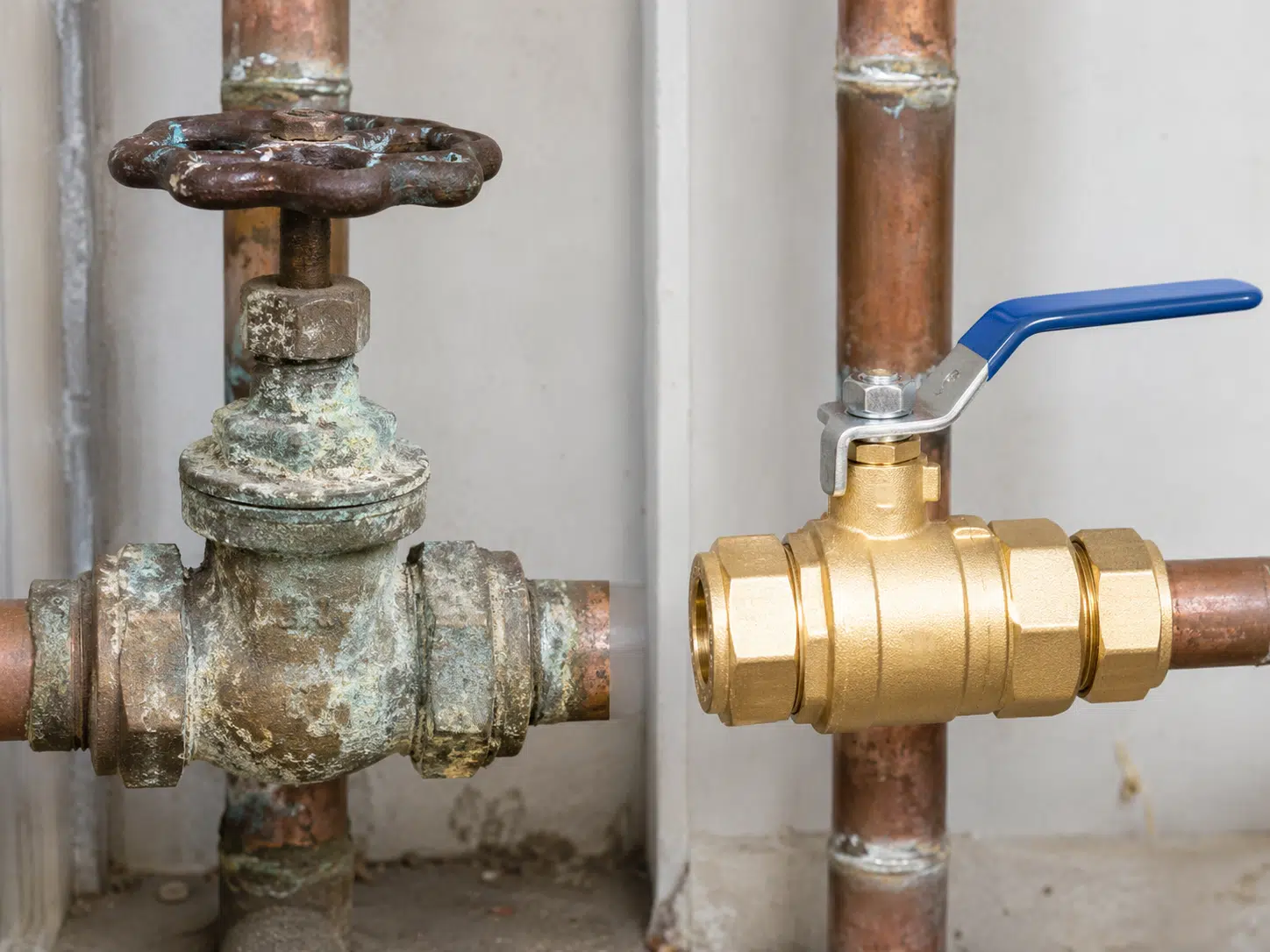 A gate valve has a round multi-turn handle and raises a wedge out of the flow path. These are the valves found in most pre-1990 Knoxville homes, and they are the ones that fail. The stem corrodes, the wedge separates, or the handle turns freely while the gate stays put.
A ball valve uses a quarter-turn lever to rotate a bored ball, has far fewer parts to seize, and closes fully in one motion. When a gate valve is discovered on a main, replacement is a small job compared with what it protects. The case for that swap is laid out in this look at upgrading a whole home shutoff valve.
Twice a year is the interval most plumbers name, and pairing it with a smoke detector battery check gives it a date that gets remembered. Exercising means closing the valve fully, opening a fixture to confirm flow has stopped, then reopening the valve fully. Gate valves should be backed off a quarter turn from hard open so the stem is not left under tension. The whole test takes five minutes and produces information worth far more than that.
Three outcomes mean a valve needs attention. A handle that will not budge means a seized stem. A handle that spins without resistance means the stem has parted from the gate. Water still running at a fixture after the valve is closed means the valve no longer seats. There is also a fourth outcome worth watching for: a valve that weeps from the packing nut after being turned, which is common on old gate valves and usually means the valve was holding only because it had never moved.
Shutting the main stops everything, including toilets, drinking water, and any appliance mid-cycle. Most household leaks originate at a single fixture or appliance, and a smaller valve isolates the problem while the rest of the house keeps working. Knowing which valve handles which failure turns a whole-house outage into a contained repair.
Every sink, toilet, and most refrigerators and dishwashers have a local stop valve on the supply. Toilet stops sit on the wall behind the tank, sink stops under the cabinet, and appliance stops behind or beneath the unit. These are the correct valves for a running toilet, a failing supply line, or a dripping angle stop. Older multi-turn stops seize just as gate valves do, so they belong in the same twice-yearly exercise routine, particularly in homes where a cabinet has never been emptied.
A water heater has a shutoff on the cold inlet at the top of the tank, and closing it stops the flow into a leaking tank without touching the rest of the house. A tank leaking from the shell is not repairable and will keep releasing its full volume until the inlet is closed. Households in Knox County running gas units should also know where the gas control sits, since a tank being drained should not be firing. Homeowners scheduling water heater tank repair can ask about the inlet valve condition during the visit.
Irrigation systems and hose bibs usually branch off ahead of the interior distribution and carry their own valves, often in a basement, crawlspace, or an exterior box. A stuck irrigation zone or a split hose bib after a freeze can be isolated there without shutting the house down. This matters most in West Knoxville and Farragut, where in-ground systems are common and a broken head can run unnoticed for hours. Anyone unsure which branch feeds what can trace it with a helper and one open fixture at a time, or ask plumbers in Knoxville to map it during other work.
Order matters more than speed. Water spreading across a floor is damaging property by the second, but a wrong first move can add an electrical hazard or destroy the evidence an insurance adjuster needs. Three actions, in sequence, cover almost every scenario a Knoxville household will face.
Stop the water first, at the smallest valve that will do it. Then cut power to the affected area if water is anywhere near outlets, fixtures, or the panel. Then start removing standing water, since drying time drives whether flooring and drywall are salvageable. Calling for help fits between the first and second step, because the sooner a plumber is dispatched, the shorter the total exposure. Anything that involves moving furniture can wait.
Standing water in contact with outlets, baseboard heaters, or a panel is treated as energized until proven otherwise. Nobody should walk into standing water to reach a breaker panel located in that same water. The correct move is to cut power from a dry position if one exists and to stay out of the area if one does not. Ceiling water pooling above a light fixture deserves the same caution, since fixture boxes and junctions sit directly in that path.
Photographs taken before cleanup begins carry more weight than any description written afterward. Useful images include the source of the leak, the extent of standing water, affected contents, and the closed valve. Homeowners should also note the time the leak was discovered and the time the water was stopped, since insurers weigh how quickly the loss was contained. Receipts for emergency mitigation belong in the same file.
The valve tour is the least expensive way to protect your plumbing. Our team at Tennessee Standard Plumbing is happy to show Knoxville homeowners how it works during any visit. We can even highlight an old gate valve on the main line before it causes an emergency.
Four things are worth doing this month. Find the interior main shutoff and photograph its location. Turn it, confirm flow stops, and turn it back. Locate the water heater inlet valve and the stops under every sink and toilet. Tell everyone in the household where the main is, including anyone who house-sits.
Homeowners who want the valves checked or replaced can call our team at (865) 352-9003 or book an appointment online. Peaceful Pipes, Peaceful Life.
We serve Knoxville, Halls, Karns, and communities across Knox County and East Tennessee.


Plumbing issues frequently emerge after renovations because the process of remodeling—such as moving walls, updating fixtures, or changing floor he... Read More
Sudden drops in water pressure are most commonly caused by major plumbing leaks, a failing pressure-reducing valve (PRV), municipal supply issues (... Read More
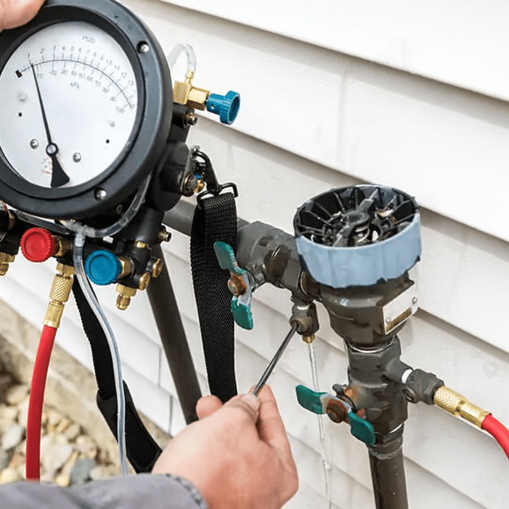
Key Takeaways Backflow happens when contaminated water flows backward through a plumbing system into the clean water supply, and annual te... Read More