
What Are the Best Small Bathroom Remodel Ideas for Older Knoxville Homes?
Older Knoxville homes (especially those built before 1980) often have bathrooms in the 30 to 50-square-foot range. These small footprints respond w... Read More

Same-Day Service Available
Need a Plumber in Knoxville? We’re Ready to Help!




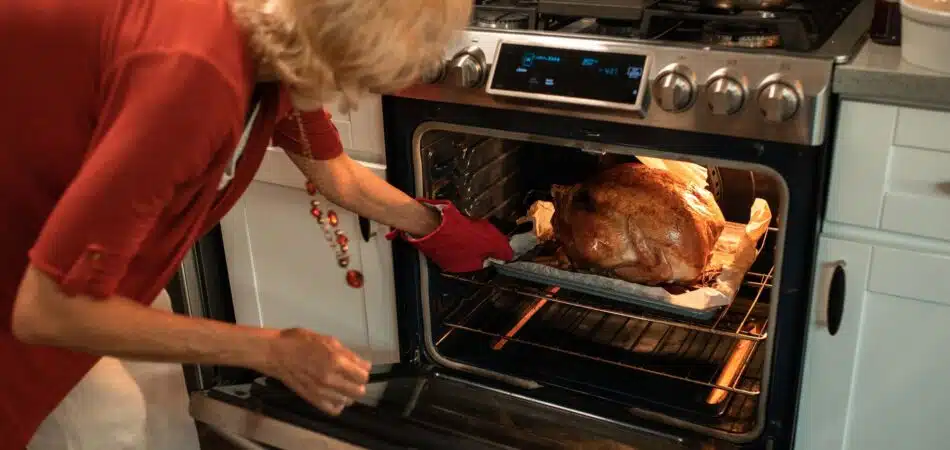
Holiday cooking puts more food waste through a kitchen sink in two days than an ordinary month produces. The disposal is only the first stage, since whatever it grinds still has to travel through a drain line that may already carry a coating of grease. Fibrous vegetable trimmings, starchy sides and warm fat are the combination most likely to cause a backup. Where a home is on a septic system, guidance from the EPA notes that disposal use can change how often the tank needs pumping.
Everyone has left the table. There are three casserole dishes soaking, a colander of potato peelings on the counter, and a roasting pan somebody has already decided to deal with tomorrow. Somewhere in the next twenty minutes most of that is going into the sink, and the disposal is going to be asked to do a month of work in one evening. This is roughly when people start looking up emergency plumbing services in Knoxville on a holiday.
The disposal usually is not the thing that fails. It grinds what it is given and keeps going. The failure shows up ten or fifteen feet downstream, in a drain line that has been quietly narrowing all year and simply cannot take what an evening like that sends through it. Background on how these units are serviced sits on the garbage disposal services page.
A disposal does not make food waste disappear. It reduces the size of the pieces and sends them into the drain line with water, which means the real question is not what the unit can grind but what the pipe beyond it can carry away without collecting a deposit along the way.
The name oversells it. What the unit does is mechanical size reduction. Everything that goes in still leaves through the same drain that serves the sink, so the capacity that matters is the capacity of the whole path rather than of the appliance bolted under the basin.
Kitchen drain lines accumulate a film over time, mostly from fats and oils that entered warm and cooled inside the pipe. Ground food particles catch on that film. The opening narrows gradually, performance stays acceptable for a long while, and then a heavy evening arrives and the remaining passage is not enough.
Fat poured down a drain while it is liquid does not stay liquid. It cools in the pipe and sets on the walls, and it takes ground particles with it. The EPA lists fats, oils and grease among the materials that may create blockages in a sewer system, and its guidance advises against putting cooking oil or grease down a drain at all. More on that sits in this piece on what homeowners should pour down the drain.
Running cold water while grinding is sensible practice, because fat that is already solid moves through as a particle rather than coating the pipe. It helps. It does not remove a deposit that formed over previous months, and it does not turn a restricted line into a clear one.

Three categories account for most kitchen drain failures, and a holiday menu draws heavily on all three at once. Knowing which scraps belong in a bin rather than a sink removes most of the risk without changing how anybody cooks.
Celery, corn husks, artichoke, asparagus ends and onion skins are stringy. Fibres wrap and tangle rather than breaking down cleanly, and they bind other material into a mass. Potato peelings deserve their own mention, since a colander of them is a common holiday byproduct and a common cause of a blocked kitchen line.
Rice, pasta, oatmeal and mashed potato absorb water and expand. What passes as a thin slurry can settle into a paste inside a pipe, especially where the line runs level or nearly level. Starch and grease together form a deposit that resists a plunger and often resists a small hand auger too.
Bones, fruit pits and shells are hard enough to stress the unit and to arrive downstream as fragments that lodge in a fitting. Turkey carcasses and ham bones are the seasonal version of this, and they belong in a bin or a stockpot rather than in a sink.
Coffee grounds behave like fine sediment, settling where flow slows. Combined with the grease film that lines many kitchen drains, they build a dense deposit. EPA guidance for septic systems lists coffee grounds among the things that should not be sent down a drain, alongside cooking grease and oil.
| Holiday kitchen item | Why the drain struggles with it | Better destination |
|---|---|---|
| Potato and vegetable peelings | Fibrous and starchy, binds into a mass | Bin or compost, not the sink |
| Turkey fat and pan drippings | Enters warm, sets on the pipe wall as it cools | Cool in a container, then discard in the bin |
| Rice, pasta, stuffing, mashed potato | Absorbs water and settles as a paste | Scrape into the bin before rinsing |
| Bones, pits and shells | Hard fragments stress the unit and lodge downstream | Bin, or a stockpot for the carcass |
| Coffee grounds | Settles like sediment and binds with grease | Bin or compost |
| Everything at once, late in the evening | Peak load on a line that is already restricted | Spread cleanup across the evening |
What happens beyond the property line changes the calculation. A home connected to public sewer and a home on a septic system have different tolerances for food waste, and the septic case carries a consequence that shows up long after the holiday is over.
The EPA states that “Household septic tanks are typically pumped every three to five years,” and notes that using an in-sink disposal can affect how often that pumping is needed. Food solids that reach the tank add to the scum and sludge layers, and its guidance suggests eliminating or limiting disposal use to reduce the fats, grease and solids arriving there.
A connected home sends the same material into a shared collection system, where grease from many households accumulates in the same lines. That is the reason utilities run public education on the subject at all, and why the material that causes a private backup is the same material implicated in wider sewer problems.
Alcoa is in Blount County, and properties in the area may be on public sewer or on a septic system depending on the address and when the home was built. Anyone unsure should confirm with the serving utility rather than assume, since the answer changes both the habits worth adopting and who to call when something goes wrong. Local service information sits on the Alcoa plumbing page.
EPA guidance for septic systems advises avoiding chemical drain openers for a clogged drain, suggesting boiling water or a drain snake instead. Beyond the septic question, a caustic product sitting in a line that is fully blocked creates a hazard for whoever opens that pipe next, which is worth mentioning to a plumber before work starts.
Autumn is the sensible time to deal with a kitchen drain that has been sluggish, while a slow line is an inconvenience rather than an emergency. A drain that already hesitates in September is being asked to do something considerably harder in November.
A sink that empties slowly, gurgles, or sends water into the second basin is reporting a restriction. Those signs are easy to live with and easy to ignore. They are also the clearest available warning, and they tend to arrive weeks or months before a full blockage.
Clearing a restricted line before the season is straightforward scheduling. Clearing it during a holiday is an emergency call, at a moment when a kitchen is full of people and a sink is out of service. The work is the same. The circumstances are not comparable.

Most of this risk is handled with a bowl. A container for fat and drippings, a bin within reach for peelings and bones, and a plate scrape before anything is rinsed will keep the large majority of problem material out of the drain without anyone thinking hard about it.
Sending every dish through the sink in one concentrated push is the peak load that finds a marginal line. Washing in stages across the evening gives the drain time to clear between rounds. It is a small habit, it costs nothing, and it removes the exact condition that turns a restriction into a backup.
Our team at Tennessee Standard Plumbing has served Alcoa, Maryville, Blount County, Knoxville and the surrounding East Tennessee communities since 2020. We have 4,000+ reviews across our Google profiles and field 34 licensed plumbers (as of October 2026). Kitchen drain calls are among the most common we take, and the holiday ones are rarely a surprise to the household that placed them.
Four things are worth holding onto. The disposal is a grinder, and the drain line beyond it is the actual constraint. Fibrous, starchy and greasy scraps cause most of the trouble, and holiday menus are built from all three. On a septic system, disposal use can change how often the tank has to be pumped. And a sink that is already slow in autumn is the warning worth acting on.
Households who want a sluggish kitchen drain sorted before the cooking starts can reach our team at (865) 352-9003 or book a service call online. We serve Alcoa, Maryville, Rockford, Louisville, Knoxville, and communities across Blount County, Knox County and East Tennessee.
A unit will grind most of what it is given. The question is whether the drain line beyond it can carry that material away. Fibrous peelings, starchy sides and warm fat are the three categories most likely to cause a backup, and holiday menus produce all three in quantity.
Cold water is the usual recommendation, because fat that stays solid travels through as a particle instead of coating the pipe. Hot water can carry fat along in liquid form until it cools somewhere further down the line. Cold water helps, though it does not clear a deposit that already exists.
Cooking grease and oil, bones, fruit pits, shells, coffee grounds, and fibrous items such as celery, corn husks and onion skins. Starchy foods including rice, pasta and mashed potato are also worth scraping into a bin, since they swell with water and settle inside the pipe.
EPA guidance notes that using an in-sink disposal can affect how often a septic tank needs pumping, because food solids add to the scum and sludge layers. It states that household septic tanks are typically pumped every three to five years, and suggests limiting disposal use to reduce fats, grease and solids reaching the tank.
Not usually, since the limitation is generally the drain line rather than the grinder. A stronger unit sends finer particles into the same restricted pipe. Where a line has a slope, venting or accumulation problem, upgrading the appliance leaves the actual constraint untouched.
A sink that drains slowly, gurgles while emptying, backs up into the second basin, or smells between uses is reporting a restriction. Those signs typically appear well before a full blockage, which makes autumn a good time to act on them.
EPA guidance for septic systems advises avoiding chemical drain openers, suggesting boiling water or a drain snake instead. There is also a safety point: caustic product standing in a fully blocked line is a hazard for anyone who opens that pipe afterwards, so a plumber should be told if any has been used.
Letting them cool in a container and putting them in the bin keeps them out of the drain entirely. EPA guidance advises against pouring cooking oil or grease down a drain, and fat poured while warm sets on the pipe wall as it cools, catching ground particles as it does.
It depends on the address and on when the home was built. Alcoa is in Blount County, and properties in the area may be on public sewer or on a septic system. Confirming with the serving utility is worthwhile, because the answer changes both the habits worth adopting and who to contact about a problem.
Deal with any drain that is already sluggish while it is still an inconvenience, set a container out for fat and a bin within reach for scraps, scrape plates before rinsing, keep peelings and bones out of the sink, and spread the washing up across the evening rather than sending everything through at once.



Older Knoxville homes (especially those built before 1980) often have bathrooms in the 30 to 50-square-foot range. These small footprints respond w... Read More
Both baking soda and vinegar are highly caustic. They are, in fact, able to dissolve certain materials that one would not normally think of as bein... Read More

High water pressure, commonly exceeding 80 PSI, acts as a constant, destructive force that accelerates wear and tear on plumbing systems in Knoxvil... Read More